Pygmalion (1938) starring Leslie Howard & Wendy Hiller

This isn’t exactly like My Fair Lady (sorry, if you’re looking for that)! There are NO songs (plus or minus, depending on the viewer), it’s in B&W, and considered a more realistic version of George Bernard Shaw’s story (inspired by Greek myth of Pygmalion and Galatea). In contrast to Audrey Hepburn’s Eliza, Brit actress Wendy Hiller (who some of you may know from the beloved Canadian Anne of Avonlea mini-series) is more of a plain Jane, though tall and elegant in bearing (when she has to be). Leslie Howard’s Prof. Higgins is younger (a plus, IF you want to play up the romance angle) than Rex Harrison. His speech is less showy, more matter-of-fact, yet still cutting (esp. towards Eliza).

Howard also co-directed this film (as I learned from TCM); he’s much more than Ashley from Gone with the Wind.  Though his looks and usual style of acting are NOT my favorite, you have to respect a guy w/ such a long line of (mostly well-made) films. There are a few points in this film where my attention drifted (just being real- it’s a ’30s film after all). I think fans of this story (and classics in general) should give it a watch. 

There’s lots of women has to make their husbands drunk to make them fit to live with. -Eliza explains at tea (to Mrs. Higgins’ guests)

Walk? Not bloody likely. I’m going in a taxi. -Eliza declares to Freddy when he offers to walk her home 

Some Trivia re: the Film:

Shaw was the first person to have won both the Academy Award and the Nobel Prize. 

The first British film to use the word “bloody” in its dialogue; this word was an expletive , so considered extremely vulgar.

In the British version, Howard says “damn;” in the American one, he says “hang” or “confounded.” This was a year before David O. Selznick fought the Hays Office over permission for Clark Gable to say “Frankly, my dear, I don’t give a damn” at the end of Gone with the Wind (1939).

The scene in which Eliza accidentally swallows a marble during an elocution lesson does not appear in the original play. During rehearsals for this scene, a pained expression came over Hiller’s face; when she spat out the marbles she had in her mouth she said, “Leslie, I’ve swallowed one!” Howard replied: “Never mind, there are plenty more.” This caused such amusement among the crew that it was added to the film, then later to its musical version, My Fair Lady.

Heaven Knows, Mr. Allison (1957) starring Robert Mitchum & Deborah Kerr

I watched his film (w/ my mom) this past week at AFI in Silver Spring, MD (theater across the street from my current apt). I’d seen it before (on TCM), BUT let’s face it- Mitchum is a big man meant for the big screen. This film was shot on location in the Caribbean (Trinidad and Tobago) in Cinemascope. This film is rightly compared to The African Queen w/ a female being a religious missionary and a hell-raising male thrown together in wartime. The African Queen was set during WWI; this film is set on a small Pacific island in WWII.

John Wayne, Kirk Douglas, Clark Gable and Marlon Brando all wanted to play, or were sought for, the part of Mr. Allison before Robert Mitchum was cast. Mitchum worried that Kerr would be like the prim characters she often played; after she swore at director John Huston during one take, Mitchum (who was in the water) almost drowned laughing. The two actors were friends until Mitchum’s death in 1997.

Deborah Kerr is a nun who hasn’t yet taken her final vows.  Being alone on the island with Mitchum is a temptation, no doubt- LOL! At that time, the Catholic church imposed strict censorship laws on films dealing with religious situations/characters. In the original book by Charles Shaw (inspiration for this film), the marine and the nun fell in love. Huston created a resolution in which the marine and nun gain strength, hope and determination from each other. There’s a great parallel between Cpl. Allison and the Sister. Each dedicated themselves to their respective vocations- he is dedicated to the Marines; she is dedicated to the Catholic Church. Mitchum shows what depth and sensitivity he could bring to a part. Kerr earned an Oscar nom! 

The script called for several Japanese-speaking officers and a company of troops to be on the island. There were no Japanese men on the islands of Trinidad and Tobago; a few who spoke the language were eventually found in an emigrant community in Brazil. For the non-speaking Japanese troops, 50 Chinese men (who worked in the restaurants and laundries of T&T) were hired. Some locals were upset b/c work didn’t get done while these men had their 15 mins of fame.

[1] If you are looking for a movie with heart and real content, this could be perfect. The acting is top-notch, as is the cinematography. The plot flows beautifully and holds your attention to the very end. 

[2] It’s the subtlety that makes this film work they way it does. 

[3] Mitchum- an actor who only really has one persona, and yet is a good actor all the same. It didn’t matter whether he was playing… he was still the same sturdy, laconic Robert Mitchum. But within that one persona, he has a full range of expressiveness and credibility. This is among his best performances.

[4] Kerr- she conveys every thought and emotion through tiny gestures, facial twitches and changes in posture. Above all, she brings a very warm and believable character out beyond the stereotype.

-Viewer comments from IMDB

The Heiress (1949) starring Olivia de Havilland & Montgomery Clift

In the late 1800’s, the wealthy Sloper family- surgeon Dr. Austin Sloper (Ralph Richardson), his daughter Catherine (Olivia de Havilland), and the doc’s recently widowed sister- Lavinia Penniman (Miriam Hopkins)- live in a spacious house at Washington Square in Manhattan. Despite lessons in various social graces, Catherine is awkward and shy; in contrast, her deceased mother had a LOT of charm and beauty, as her father and their social circle often comment. Lavinia attempts to get her niece to be more social and hopefully meet the a suitable man to marry. Enter handsome, smooth-talking Morris Townsend (Montgomery Clift), recently returned from Europe.

Morris dances w/ Catherine at a party, NOT minding her clumsy feet, and manages to put her at ease briefly. He comes to call for several days in a row; she is surprised and nervous, even skipping out one morning hoping to avoid him. In no time, Morris declares his love to Catherine and asks to for her hand in marriage. She is thrilled, b/c she NEVER expected anything like this to happen to her. The air-headed/hopeful Lavinia (who serves as chaperone) greatly approves of the man, though cold/aloof Dr. Sloper is suspicious of Morris’ motives. The young man has potential, BUT doesn’t have a job. Above all, the father can’t fathom that a man would want the daughter that he continually puts down. Dr. Sloper, after learning more re: Morris’ character, refuses to give his permission for the marriage. Catherine, angry yet determined, forms a plan to elope ASAP. 

As one viewer wrote:

There are no easy answers in this movie. You can think Dr. Sloper is right about Morris and only wants to protect his daughter, or you can see his actions as those of a vindictive man who blames her for the death of his beloved wife (in childbirth). Morris could be a fortune hunter, or he could be a man who does care for Catherine, in his own way, and would make her happy. Or all of the above. 

After seeing The Heiress on Broadway, de Havilland approached William Wyler about directing her in a screen adaptation (which won 4 Oscars). He agreed and encouraged Paramount execs to purchase the rights from the playwrights (Ruth and Augustus Goetz) and have them also write the screenplay. They were asked to make Morris less of a villain than in the play and the original novel (Washington Square by Henry James); the studio wanted to capitalize on Clift’s reputation as a romantic lead. Wyler’s idea was to pair de Havilland with frequent co-star Errol Flynn, but studio execs favored Clift (w/ a more subtle acting style). Though Flynn and de Havilland had great chemistry, execs felt that the actor’s real-life womanizer rep would’ve worked against him.


North by Northwest (1959) starring Cary Grant, Eva Marie Saint, James Mason, & Martin Landau

While filming Vertigo (1958), Alfred Hitchcock described some of the plot to its star/frequent collaborator James Stewart, who naturally assumed that Hitchcock meant to cast him in the Roger Thornhill role. This time, the director wanted Cary Grant, who he thought looked younger (though, at 55 y.o. was 4 yrs older than Stewart). By the time Hitchcock realized the misunderstanding, Stewart was so eager to play the lead that rejecting him would’ve caused a great deal of disappointment. Hitchcock decided to delay production until Stewart was already committed to Anatomy of a Murder before officially offering him the North by Northwest role. Stewart had to turn down the offer, allowing Hitchcock to cast Grant.

Now you listen to me, I’m an advertising man, not a red herring. I’ve got a job, a secretary, a mother, two ex-wives and several bartenders that depend upon me, and I don’t intend to disappoint them all by getting myself “slightly” killed. -Roger describes himself

A Madison Ave ad man, Roger Thornhill (Grant), finds himself in the world of spies when he is mistaken for someone named George Kaplan. A British man, Philip Vandamm (James Mason), along w/ his henchman Leonard (Martin Landau) and others try to kill Roger. In a meeting room somewhere, a group of FBI agents (headed by The Professor), are discussing the dilemma of Mr. Kaplan- a decoy, not a real man. Roger investigates, though even his mother is skeptical, and eventually gets framed for murder. He manages to flee the police and runs on board the 20th Century Limited (a train) headed for Chicago. Roger meets a beautiful blond, Eve Kendall (Eva Marie Saint), who decides to hide him in her sleeper berth. He wonders why she’s being so helpful. Vandamm and his men continue to pursue Roger. 

The moment I meet an attractive woman, I have to start pretending I have no  desire to make love to her. -Roger admits sheepishly

What makes you think you have to conceal it? -Eve asks, matter-of-factly

She might find the idea objectionable. -Roger explains

Then again, she might not. -Eve replies

Though this film is fast-moving and efficiently made, MGM wanted the film cut by 15 mins (to be under 2 hrs). Hitchcock’s contract gave him control over the final cut (which is the most power that can be given to a director). Eva Marie Saint said that Alfred Hitchcock was unhappy with costumes MGM had designed for her, so marched her to Bergdorf Goodman (a department store) and personally picked out clothes for her character. When Landau’s character first sees Grant’s, he comments: “He’s a well-tailored one.” All of Landau’s suits for the film were made by Grant’s personal tailor. The clothes are fabulous (esp. the black and red floral evening dress worn by Eve in Chicago). Grant even has a shirtless scene, proving that clothes don’t only make the man. 

[1] This film has something for everyone within it: a little comedy, a little romance, great snappy dialogue and action… 

[2] There is great acting and a great story. You should be engaged and intrigued, and always surprised and what will occur next. 

[3] Of course the famous crop dusting plane scene and the Mount Rushmore chase are terrific. The former is really more notable for the amount of time taken to build up to the action than the action itself, while the technical work on the latter still looks pretty good. 

[4] Roger Thornhill is one of the best roles Mr. Grant played, during his long career. His chemistry with Eva Marie Saint is perfect. 

[5] Cary Grant’s debonair manner is displayed to the full in this film, even though the peril that his character goes through would cause any normal dude to break into a maddening sweat. 

-Excerpts from IMDB reviews

The Bishop’s Wife (1947) starring Cary Grant, Loretta Young, & David Niven

The only people who grow old were born old to begin with. -Dudley says to Julia

Episcopal bishop Henry Brougham (David Niven) has been working for months on plans for a cathedral which he hopes will be paid for by his wealthy new parishioners, including cranky widow- Mrs. Hamilton (Gladys Cooper). He is losing sight of his family, wife Julia (Loretta Young) and young daughter, Debbie. Dudley (Cary Grant), an angel who everyone seems to admire (incl. Matilda- the family housekeeper), comes to assist Henry w/ his work. Julia tells Dudley about when the family lived in a different (more humble) neighborhood, where Henry was connected w/ the people; she misses their life in that parish. They go on outings together and become friends (though Dudley begins to wish it were more). Dudley even manages to warm the heart of Mrs. Hamilton by uncovering something from her youth. Henry begins to believe that Dudley is trying to replace him!

We all come from our own little planets. That’s why we’re all different. That’s what makes life interesting. -Dudley explains to Julia and Prof. Wutheridge

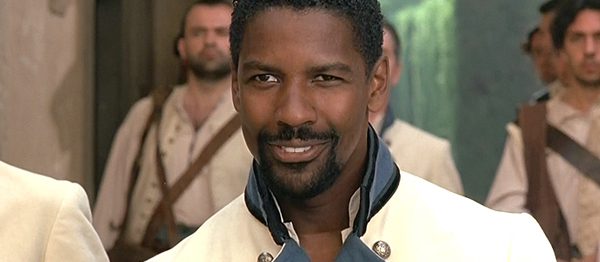
This movie was remade as The Preacher’s Wife (1996) starring Denzel Washington, Whitney Houston, and Courtney B. Vance. I thought that Julia (Houston) was much more interesting; she performed charity, sang in the choir, and (eventually) decided to take in her young son’s friend. Loretta Young’s character doesn’t really get to do much; she is a pretty, elegant woman who is kind to others. 

Originally Grant played the bishop and  Niven the angel. When original director left the film, Henry Koster replaced him, then realized that the actors were in the wrong roles. Grant wanted the title role of the bishop; he eventually accepted the change and his role as the angel was one of the most widely praised of his career. Robert J. Anderson, one of the kids throwing snowballs in the park played young George Bailey in It’s a Wonderful Life (1946). Debbie is played by Karolyn Grimes (Zuzu in It’s a Wonderful Life).

[1] The special effects are wonderful for a time when special effects were pretty much in their infancy.

[2] …Niven gets to showcase his British stiff upper lip while at the same time display some very funny slapstick pratfalls. It’s a charming movie that has lots of holiday atmosphere. 

[3] …its presentation of the characters, especially Dudley and Henry, ring true. You can believe that Henry, underneath his bitterness and myopia, really loves his wife. He’s just… forgotten his direction in life, is all. 

[4] Cary Grant is so underrated, but here he does some fabulous acting even when he’s not speaking. His face is even more expressive in his younger years which works to his advantage and is a sign of good directing as well.

-Excerpts from IMDB reviews