[1] The writing is a bit too well-structured, almost like clockwork, the characters are a bit too symbolic and easy to categorise. The comic relief kicks in just on schedule. The psychological diagnosis is too precise. And yet, this is one of the greatest films ever made. It has a sense of respect for the totality of life, and makes tragedy almost poetic.
[2] Kirk Douglas carries the burden of McLeod and makes the tormented policeman painfully believable–it is almost a nonstop, swirling performance…
[3] The abortion angle of the original play was taken to the screen, partly because of censorship, and partly because the close-up, immediacy of the camera requires rage to be clearly more explained than on the stage…
-Excerpts from various reviews (Amazon & IMDB)

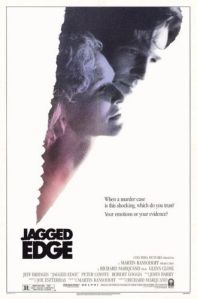
- A poster for the film
Evil’s got a smell of its own. A child could spot it. -McLeod says, before giving some info re: his father/parents’ relationship
In this film, abortion is sinful, criminal, horrifying (personally and socially)- a tragedy. It appears from different angles: the Dutch abortion doctor (w/ his clever lawyer), the detective’s wife, her ex-boyfriend (who got her pregnant), and eventually, the detective. When Mary (Eleanor Parker) finally tells her husband (Kirk Douglas) about it, his worldview is too black and white to handle it. He calls her a “tramp”- she’s wasn’t expecting that reaction. All that matters is that she was intimate with someone before being married to him. She says she’s leaving him forever. He doesn’t go after her, as his fellow detectives urge. Mary gets her freedom.
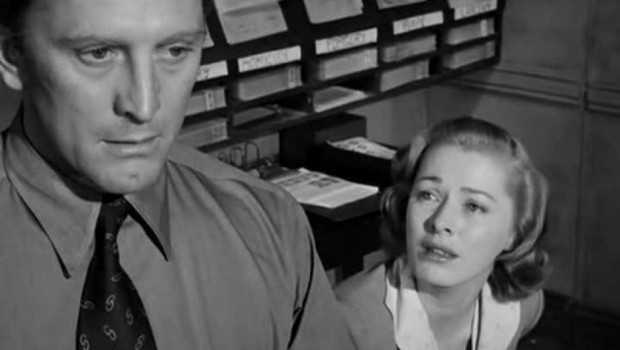
Mary (Eleanor Parker) begs and cries, but McCleod (Kirk Douglas) doesn’t see her virtues.
This may be one of the early “typical day” genre- several different stories occurring over one day in the same location, but melded into a whole (as on the TV shows, Hill Street Blues and Barney Miller). A key ongoing side plot involves an unlikely/lovelorn first offender and the younger sister of his former girlfriend. He stole from his employer to win back his (model) girlfriend who has moved on to a different circle. McCleod’s partner, Det. Brody (William Bendix) is more gentle/understanding; this man reminds him of his dead (WWII hero) son.
Oscar nominations were given out for William Wyler’s direction, the screenplay, and for Parker and Lee Grant, lead and supporting actresses respectively. At a little over 20 minutes, Parker’s performance in this movie is the shortest to ever be nominated for a Best Actress Oscar.
I built my whole life on hating my father. All the time he was inside me, laughing. -McLeod finally realizes the truth about his personality
Since it was impossible to film the movie without portraying the killing of Detective McLeod, so this movie resulted in another amendment to the Production Code. From December 20, 1938 to March 27, 1951, there was a rule forbidding the display of law enforcement officers (EX: detectives, security guards, etc.) dying at the hands of criminals. From March 27, 1951 onward, the Production Code allowed such portrayals, if they were “absolutely necessary to the development of the plot” (as noted in the book The Dame in the Kimono by Leonard Jeff and Jerold Simmons).