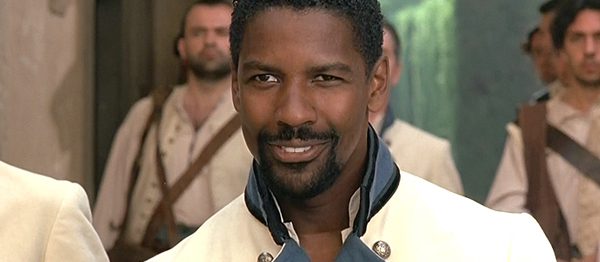
“Les Miserables in Concert: The 25th Anniversary” (2010)

The story is one we know and very simple: a former convict, Jean Valjean (Alfie Boe), tries to rebuild his life w/ adopted daughter Cosette after the death of her mother, Fantine (Lea Salonga). Valjean is pursued for years by a police inspector, Javert (Norm Lewis). Against the backdrop of student rebellions in Paris, a student named Marius (Nick Jonas) and the grown-up Cosette (Katie Hall) fall in love. The songs are also very memorable, incl. Who Am I? and Bring Him Home (sung by Valjean), I Dreamed a Dream (sung by Fantine), and On My Own (sung by Eponine). In a time when there are protests in cities (around the world) calling for racial equality and justice reform, this story still resonates.

Fans of the musical will notice that Salonga previously played Eponine in Great Performances: Les Misérables in Concert (1995)- the musical’s 10th anniversary. The petite (yet powerful) singer is the first full-blooded Filipina to have won the Olivier (1990), the Tony, Drama Desk, Outer Critics Circle, and Theatre World Awards (1991) for Best Actress in a Musical for Miss Saigon. In recent years, she was a guest star on Crazy Ex-Girlfriend, a comedy w/ musical numbers. Most famously, Salonga was the singing voice of Princess Jasmine in the Disney animated movie Aladdin (1992). Not only is she an amazing singer, she also acts out every moment of her role here!

Samantha Barks (Eponine) played the same role in the 2012 film version. Jenny Galloway previously played Madame Thenardier (a crowd favorite) in 1995 and repeated her role in this production. Ramin Karimloo (Enjolras) went on to play the title role in The Phantom of the Opera 25th Anniversary Concert a year later opposite Hadley Fraser (Grantaire) as Raoul. Karimloo (who fled Iran w/ his parents when the shah was overthrown in the early ’80s) made his Broadway debut as Valjean in the 2014 revival and earned a Tony nomination for Best Actor in a Musical. Lewis is perhaps best known as Edison, a senator and one of the ex-boyfriend’s of Olivia Pope on the ABC TV series- Scandal. He became the first Black actor to play the phantom in The Phantom of the Opera on Broadway. Unlike most of the other phantoms, he has a baritone voice (which is rich and very impressive).

At the end of the concert, we see the original 1985 cast, the international tour cast, and the current cast. We hear Colm Wilkinson (considered the best singer to portray Valjean), John Owen-Jones, Simon Bowman, and Boe sing Bring Him Home. There is an appearance by Michael Ball (the original Marius in the London production; a big star in the UK), composers, lyricist, and producer (Cameron Mackintosh). You can rent this show on YouTube; it’s a must-see for fans of the theater (esp. since we’re stuck at home)!

The casting of Nick Jonas, of Jonas Brothers fame, is little more than a casting publicity stunt, and one which almost backfires catastrophically. Quite simply, Jonas is leagues out of his depth, and his voice has not the power nor range to do justice to the role…

So many excellent singers have brought such depth and strength to the character of Jean Valjean and Alfie Boe does an admirable job. His beautiful rendition of “Bring Him Home” really proves he has the chops to handle this role.

Norm Lewis, whose subtle facial expressions and genuine passion commanded the stage/screen, sang Javert with such power and depth that I actually, for the first time, empathized with his character.

No other musical has the power to raise hairs and bring goosebumps throughout, and at the same time bring entire audiences to tears…

-Excerpts from IMDB reviews

Hitchcock on Catholic Guilt: “I Confess” (1953) starring Montgomery Clift, Anne Baxter, & Karl Malden

German refugees, Otto Keller (O.E. Hasse) and his wife Alma (Dolly Haas), work as caretaker and housekeeper at a Catholic rectory in Québec City, Canada. While robbing the house of a lawyer (who he sometimes works for), Otto ends up killing the man. Racked w/ guilt, he heads to the church where Father Michael Logan (Montgomery Clift) is up late. Otto confesses to murder; he says he wore a cassock that night as a disguise. After two schoolgirls come forward as witnesses, the police question all the local priests. Inspector Larrue (Karl Malden) suspects Fr. Logan from the start, sensing that he’s hiding something. It turns out that the deceased was blackmailing Ruth (Anne Baxter), who grew up w/ Logan and loved him before he went off to fight in WWII. She loves him still, though is married to a politician.

Fr. Logan: I never thought of the priesthood as offering a hiding place.

Sir Alfred Hitchcock (who was raised Catholic) told a New York Times reporter in August 1952, that he chose Québec for filming because “in no American city do you find a priest walking down the street in a cassock.” This movie was based on the 1902 play “Nos deux consciences” by Paul Anthelme, a journalist. In the play, the priest and his lover had a baby, and the priest was hanged at the end. These elements had to be removed from the movie b/c of the Hays Code. I Confess was banned in Ireland b/c it showed a priest having a relationship w/ a woman (even though it took place before the character took orders). The screenwriter (George Tabori) wanted the script to be a subtle dig at the McCarthy hearings, as it centered on a man unable to tell the truth when questioned by authorities. Tabori found that Hitchcock only wanted to make a thriller. Peter Bogdanovich noted that this is a favorite of French New Wave directors.

Hitchcock created detailed storyboards for each scene, as was his custom. He couldn’t understand Clift’s Method acting technique; he became frustrated after the actor blew take after take, failing to follow instructions. Tension occurred over Clift’s insistence on having his acting coach (Maria Rostova) by his side. Hitchcock found that Clift didn’t listen to him at all. Karl Malden, who was friendly w/ Clift, found the process difficult. Clift would immediately turn to Rostova for feedback after each scene. Clift was drinking heavily also; he’d come on-set hungover (which wasn’t unusual for leading men in Hollywood’s Golden Age). As a closeted gay man, I’m sure he had a lot of pressure on his shoulders.

This isn’t your typical Hitchcock- it lacks the sly humor, memorable music, and (of course) the suspense he was known for. However, it’s atmospheric, moody, w/ a thread of foreboding running throughout. French is spoken a bit by supporting characters. There are towering old churches, crosses and crucifixes of all styles, marble statues, and houses of Parliament. There is a flashback section that’s quite engaging, where you see a lighter side of Clift and Baxter. I liked Clift and Malden together; they project very different energies. Malden famously played a priest in On the Waterfront; fans of The West Wing know him as President Bartlet’s priest. Baxter has her hair dyed blonde (which I thought was distracting) and wears some stylish outfits, thanks to Orry Kelly.

[1] Forced into complicity with the murderer, Father Logan behaves as though he is guilty despite his innocence…

[2] The movie is a somber psychological drama, and the story of a forbidden love, and perhaps a Christ allegory (the priest has to suffer for another man’s sins- he has to bear his own cross).

[3] When the camera sweeps up to a full screen view of Clift’s face and you see those glowing, brooding eyes, you fall under their collective spell.

-Excerpts from IMDB reviews

“What We Do in the Shadows” (2014) starring Taika Waititi & Jemaine Clement

[1] The more you “know” about vampires, the more you’ll enjoy this!

[2] It pokes fun at every part of the vampire mythology without resorting to simply being a parody of other movies.

[3] …the wide range of comedy used, from slapstick to satire and everything in between, is probably the biggest reason why this movie does not feel forced.

[4] Some comedies try too hard to make you laugh and end up the character are being ridiculously stupid and unlikeable, but this isn’t the case, their character’s goofiness is so believable that you find their stupidity quite adorable.

-Excerpts from IMDB reviews

The story follow the lives of Viago (Taika Waititi- before he hit it big in Hollywood), Deacon (Jonathan Brugh), and Vladislav (Jemaine Clement from Flight of the Conchords) – three flatmates who are just trying to get by and overcome life’s obstacles, like being immortal vampires who must feast on human blood. Hundreds of years old, the vampires are finding that beyond sunlight catastrophes, hitting a victim’s main artery, and not being able to get a sense of their wardrobe w/o a reflection-modern society has them struggling w/ the rent, chores, getting into clubs, and overcoming personal conflicts.

About 125 hrs. of footage was shot for this comedy/horror/mockumentary (which I saw on Amazon), most of which was improvised by the cast. Editing that down to a 90-minute movie took almost a year. Waititi and Clement (who are also the writers/directors) held screenings in the US after a successful Kickstarter campaign. This is the kind of fun/quirky movie that we need in these difficult (quarantine) times! There are a few scenes which include blood. The humor can get dark, which I’ve read is common in New Zealand. The actors- professional and amateur- have easy chemistry w/ each other. I was surprised by the quality of the special effects, which seemed quite good for a low-budget movie.

Each vampire is modeled on one from a famous vampire movie. Petyr (the oldest one) is silent/scary, resembling Count Orlok from Nosferatu. Deacon is like Bela Lugosi’s flamboyant Dracula. Vlad is like Gary Oldman’s Dracula. Nick compares himself to Edward from Twilight. Viago is sensitive/stylish like Louis- Brad Pitt’s character in Interview with the Vampire. Vlad refers to himself as “Vlad the poker,” a joke on “Vlad the impaler,” the 15th-century Transylvanian who was the main inspiration for Dracula. There is also a housewife/wannabe vampire (Jackie), a low-key IT guy (Stu) who befriends the vampires, and a pack of werewolves (headed by Rhys Darby- one of New Zealand’s top comics). Watch the trailer below.

“Star Trek: The Motion Picture” (1979)

Well, that’s it. We gave it our best shot, it wasn’t good, and it will never happen again. -William Shatner’s first thoughts on viewing this movie

[1] Everything is very straight-faced and sincere. To introduce someone to Star Trek with this film would be a bad idea.

[2] The Enterprise is much more of a physical ship traveling in space, and less of a device to facilitate storytelling.

[3] ...most of the film has the crew standing on the bridge, gazing out in awed-wonderment at all the expensive, and impressive, special effects…

-Excerpts from IMDB comments

I learned that this movie is often derided as Star Trek: The Motionless Picture. So, what’s good about this movie!? The original TOS actors, particularly Nimoy, do the best w/ what they get (which is not much good dialogue). We don’t see much of their chemistry or friendship; everyone seems cold and distant. If you love TOS and/or grew up w/ it in the ’60s or saw reruns in ’70s, then this isn’t a total waste of time. If you’re not much of a fan, then go ahead to the second film (which is great). They basically pretend like this one never happened- LOL! There is a fun scene where Dr. McCoy (DeForest Kelley) is sporting a full beard and (very ’70s) casual outfit w/ chunky gold necklace. Also, Gene Roddenberry loved the (now iconic) main theme from the musical score, which he reused for Star Trek: The Next Generation (TNG). Below this review is the scene which I thought was done very well.

The original script was written by Roddenberry and titled “The God Thing” though it was rejected by Paramount executives b/c of the storyline in which the Enterprise crew meet God. Many other story ideas were considered: preventing JFK’s assassination, becoming the Greek Titans, and trying to prevent a black hole from swallowing the galaxy. The popularity of Star Wars: Episode IV – A New Hope (1977) had a big impact on the story, pacing, and marketing of TMP. Many sci-fi fans (incl. writers) viewed Star Wars as fantasy and fluff. Roddenberry always saw Star Trek as a more serious endeavor. The story was pushed toward more complex ideas; the decision was made to have no battle scenes (which hurt the movie). The early promos for newspaper ads had as the line “There is no comparison.”

Orson Welles narrated trailers for this film- a voice familiar to classic film fans! Director Robert Wise was also the editor on Citizen Kane (1941); he also reedited and reshot The Magnificent Ambersons (1942). Welles held a grudge against Wise b/c of the latter work; he probably recorded the trailers b/c he needed money. Wise (who was unfamiliar w/ Star Trek) was convinced to take on the directing job by his wife Millicent (a huge fan of TOS). She also convinced Wise to campaign for Leonard Nimoy’s return. Nimoy agreed to do the film only after Paramount agreed to a settlement of his lawsuit for allowing his TV series likeness to be used by advertisers. Wise (best known for West Side Story and The Sound of Music) is sadly not in his element here; his directing style contributes to its slow pace.

The producers and cast were worried about their appearances after being away from TOS for 10 yrs. In the later movies, the aging of the crew became part of the story. The cast hated the uniforms (as did viewers). One of the cast’s conditions for returning for a sequel was to have new uniforms. It was understood in the script, but not said outright, that Cmdr. Will Decker (Stephen Collins- who also didn’t watch TOS) was the son of Commodore Matthew Decker from The Doomsday Machine. Persis Khambatta (who played Lt. Ilia) was a model from India; she had her head shaved for the role. She has very little to do, though it is rare to see a Hollywood newcomer/woman of color at that time in such a big production. The abandoned TV series (Phase II) was to have three new main characters. Paramount was concerned that Shatner might ask for too much money (if the series was extended). Decker was created, so that once Kirk had to be written out, he could take on the new lead role. Will Riker and Deanna Troi on TNG were later incarnations of Decker and Ilia.

As many have pointed out before, Klingons continue to be the one-note baddies; they were not developed until TNG. The Klingon words spoken by the Klingon captain were invented by James Doohan (Cmdr. Scott). Linguist Marc Okrand later devised grammar and syntax rules for the language, along w/ more vocabulary words in Star Trek III: The Search for Spock (1984), and wrote a Klingon dictionary. Doohan also devised the Vulcan words heard during Spock’s Kolinahr ceremony. The scenes were first shot in English, but when it was decided to use Vulcan, Doohan wrote lines (to fit the existing lip movements).

Diving Deeper: 10 More Noir Films to Watch

Forget rom coms- noir is where it’s at! Someone (much wiser and succinct than me) noted film noir is about “a woman with a past and a man with no future.” This is a follow-up to my April 10, 2020 post Getting Started with Film Noir:[https://knightleyemma.com/2020/04/10/noir-start]

The Lady Vanishes (1938)

I haven’t seen this (early Hitchcock) movie in a many yrs, BUT I do recall enjoying it! It has Brits in the ensemble cast, and (no doubt) inspired later TV series (which some of you watched on PBS) w/ mysteries/murders happening on train trips.

Gaslight (1944)

[https://knightleyemma.com/2020/03/29/gaslight]

Double Indemnity (1944)

[https://knightleyemma.com/2011/10/30/two-great-classics]

Just try to forgive the terrible (platinum blonde) wig they gave Stanwyck; everything else about this film is top-notch!

Leave Her to Heaven (1945) [https://knightleyemma.com/2010/10/19/recent-views-and-more]

This is domestic noir (in Technicolor) b/c hey, dark events happen in the daylight, too!

Mildred Pierce (1945)

This is an iconic film that packs some punches! Mildred (Joan Crawford) is a smart, beautiful, working-class woman whose goal is to better the life of her daughter (who is the real femme fatale) NO matter what it takes! HBO made a pretty good miniseries in 2011 starring Kate Winslet, Guy Pearce, and Evan Rachel Wood.

Gilda (1946)

[https://knightleyemma.com/2012/10/30/gilda-1946/]

This is one of the most famous/successful noirs out there w/ two terrific leading performances; the actors were once romantically involved (and remained lifelong friends)! When Gilda slaps Johnny hard across both sides of his face, Rita Hayworth broke two of Glenn Ford’s teeth. He held his place until the take was finished. Wow!

The Postman Always Rings Twice (1946)

This one is for all of you who think B&W/classic films are too tame; the chemistry between Turner’s working-class housewife and Garfield’s drifter almost pops off the screen! It took 12 years to adapt the explicit material (by 1940 standards) of the novel into a screenplay which would comply with the Production Code prevalent at the time. You can skip the remake; it just doesn’t measure up anything close to the original.

The Lady from Shanghai (1947)

This is one of the first films that got me interested in the noir genre (before I knew much about it). It’s unique (as one would expect from Orson Welles) and was not a box-office hit; in later years, it has been appreciated by critics and viewers alike. Welles (who has a quirky Irish accent) really knows how to set a mood!

Criss Cross (1949)

[https://knightleyemma.com/2014/02/17/criss-cross-1949]

If you liked The Killers (also w/ Burt Lancaster), you’ll also enjoy this film. I discovered it a few years ago (thanks to film fest). Be on the lookout for Tony Curtis as one of the young dancers in the club!

Sunset Boulevard (1950)

[https://knightleyemma.com/2010/12/19/three-must-see-classics]

Honestly, I didn’t get what was the big deal re: this movie (until I got older)! You need to see it twice to appreciate all that’s going on; it was “meta” before that became popular. William Holden is one of my mom’s faves; he does a fine job here. FYI: Gloria Swanson was only playing an actress 50 yrs old (which is certainly not “old” by our modern standards)!