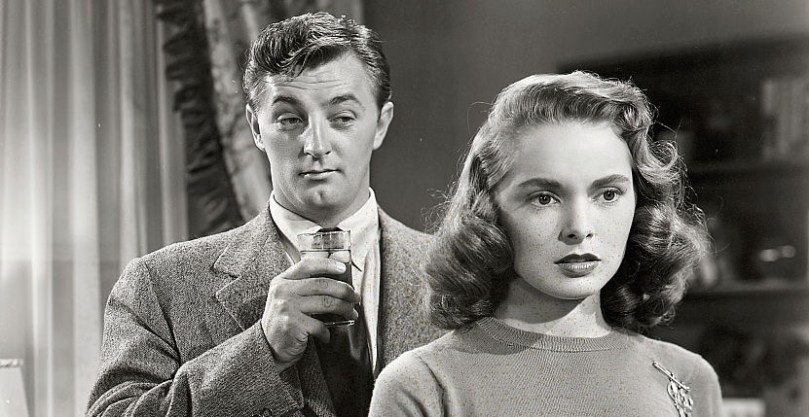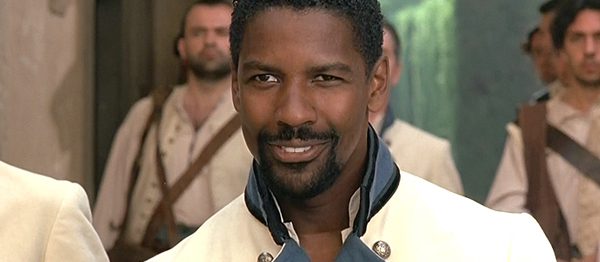
Alias Grace (2017) starring Sarah Gadon & Anna Paquin

Hollywood may still be a (dysfunctional) man’s world, BUT this Canadian 6 episode miniseries (streaming on Netflix) puts women in the forefront; they’re also behind the camera. The screenwriters are Sarah Polley (who started out as an actress, BUT garnered critical acclaim w/ her writing and directing) and Margaret Atwood (who wrote the historical novel upon which this series is based). Polley, who is also an executive producer, first tried to acquire the rights when the book came out in 1996. If you liked The Handmaid’s Tale (Hulu), check out Alias Grace; they share many common themes. I looked up the veteran director (Mary Harron); she was at the helm of American Psycho, as well as eps of two of my favorite shows (Homicide; Oz). The star of the series, Sarah Gadon, is a 30 y.o. actress who I’ve seen in a few films (A Royal Night Out, Maps to the Stars, and Belle). She is one of those women who can easily pass as a teen girl, if the role demands. And yes, ALL the women mentioned so far are Canadians!

The story focuses on a retelling of the events leading up to the (real-life) murders of Thomas Kinnear (Paul Gross from Due South and Slings and Arrows) and Nancy Montgomery (Oscar winner Anna Paquin). An Irish immigrant maid in Victorian era Toronto, Grace Marks (Gadon), is questioned many years after her conviction at the Kingston Penitentiary by a young psychoanalyst, Dr. Simon Jordan (Edward Holcroft). Grace (along with stable-hand James McDermott) was convicted of murder, but doubts surrounding her guilt remain. Dr. Jordan (who was created by Atwood for this series) was brought to town by a Spiritualist society, headed by Rev. Verrenger (famed director David Cronenberg). 

I started watching Alias Grace after an acquaintance posted about it on Facebook; she has written for TV herself. When some people watch period dramas, they’re looking for an escape (Downton Abbey is a popular example from PBS). However, Alias Grace is NOT all stiff upper lips, spotless clothing, and nice scenery; it has troubling (and sometimes bloody) scenes. This show is also providing  commentary on contemporary times; issues such as immigration, abortion, and harassment come up. 

[1] Sarah Gadon manages to simultaneously convey purity and malevolence with a single glance, and the dynamic between she and Dr. Jordan is laden with wonderful tension. 

[2] The main character, Grace, is a complex study in not only the human mind and its darker recesses, but also the power of the survival instinct in all of us. 

[3] Grace’s inner voice is strong and true. Also, she has no control over her life, but she is not broken. I often think that is the greatest sin of woman of her kind in the eyes of society.

[4] …the filmmakers here really paint a visceral picture of what life likely consisted of for women (and men) of that time period.

[5] The directing is precise and shows you what you need for the story. The horrific and painful parts of the story are such that it could not have been shown in such detail if it was adapted many years ago. What a perfect balance of beauty and horror.

–Excerpts from IMDB reviews


Page 3 (2005) starring Konkona Sen Sharma

Delving below the glitz and glamour of celebrity lifestyle to touch upon such dark subjects… Page 3 doesn’t shy away from tackling controversial issues. -Excerpt from BBCi Films

[1] Clever writing, skillfully incorporated songs, able performances and a genuine feeling of sincerity are what make this film worthy in spite of its lack of finesse and poor production values. 

[2] The movie defines so many characters who are completely with completely different priorities and different ideologies and yet they are all a part of the system which is all the more apathetic. …one of the most mature films of the recent times.

-Excerpts from IMDB reviews

This is currently streaming on Netflix; it’s worth a look (esp. if you’re looking for intelligent, thought-provoking Hindi cinema). If you’re bored w/ (or NOT a fan of) Bollywood, check this out. The dialogue is written with great attention to detail; characters from different social classes are represented (and get their own voices). Kareena Kapoor Khan was offered the lead role, which she turned down (thank goodness)!  

I don’t know what has happened to journalism. -Madhavi comments in the newsroom

Who told you that you are a journalist? This is what you write in the page 3 column, isn’t it? Who went in whose party, with whom who went… And with whom who came back… What one wore, ate and drank what… And what one didn’t wear. Miss Madhavi Sharma, this is called entertainment, not journalism. -Vinayak retorts

Madhavi Sharma (Konkona Sen Sharma- one of my fave actresses) is a 22 y.o. journalist living in Mumbai who covers page 3 (gossip, celebs, parties) for Nation Today (an English language newspaper). After just 6 mos, she’s disillusioned w/ her beat; she wants to do something more meaningful. Madhavi admires the work of crime reporter, Vinayak Mane (Atul Kulkarni), who rides around town on his motorcycle, meeting w/ snitches, and embedding himself w/ cops. This movie is not only about Madhavi, BUT also about her editor- Mr. Suri (veteran character actor Boman Irani), disillusioned socialite- Anjali Thapar (Soni Razdan from Monsoon Wedding), and her two roommates- tough-taking air hostess- Pearl (Sandhya Mridul) and naive aspiring actress- Gayatri (Tara Sharma), as well as others. 

Nothing can be achieved w/o being a former Miss India/Miss World or being connected to a somebody, Pearl explains to Gayatri. Madhavi thinks that a Bollywood hero she knows, Rohit Kumar (Bikram Saluja), can help Gayatri get an audition w/ a famous producer. A male model, Tarun (Jai Kalra), notices Madhavi while she’s sitting in the audience of a fashion show. They keep running into each other, so decide to start meeting up more. Rohit discusses show biz w/ Gayatri; they become romantically involved. Pearl meets an older NRI businessman who could be her ticket out of singlehood and working for a living. 

Big in Bollywood (2011) starring Omi Vaidya

How would it be like if the unassuming, humble, “boy-next-door” made it big in a Bollywood film? This is the premise of this doc (now streaming on Netflix) by former college friends of 27 y.o. Indian-American actor Omi Vaidya. Though he spoke very little Hindi, Omi was chosen by a famed producer (Vidhu Vinod Chopa), then a respected director (Rajkumar Hirani) to play a pivotal role in 3 Idiots (2009). The SoCal-raised actor, who attended UC Santa Cruz and NYU, is referred to as “the fourth idiot” during public appearances by co-star/superstar Aamir Khan. 

A few months after their wedding, Omi’s PhD student wife (Minal), his mom, and friends  join the actor for the 3 Idiots premiere. Minal has to return to school after only 2 weeks in Mumbai. The film was a box office success- the biggest grossing film in India up until that time. Omi notices people looking and wanting to talk to him (for the first time in his career). He gets honors due to his well-loved role, yet also notices the dark side of fame. 

Omi’s mother (Bharati- who once aspired to be an actress herself) and three friends (Bill, Kenny, and Kevin) attend the Star Film Awards ceremony. They’re full of enthusiasm and high hopes for Omi, though he is NOT quite certain about his dance number, or if he’ll win an award (being nominated for two). 

AFI showed this film last week, then there was a Q&A session w/ Omi. He and Minal are currently living in Rockville, MD with their toddler son and new baby. Minal is a post doc at NIH; she studied Biochemistry. Though his young family comes first, Omi is still acting in TV and movies. His next film (releasing in 2018) is starring Irrfan Khan. Omi was part of the ensemble cast of Netflix’s Brown Nation (a comedy series starring desi actors). 


The Problem with Apu (2017) starring Hari Kondabolu

Last WED night, Hari Kondabolu was in DC (Baird Auditorium at The Smithsonian Natural History Museum) to discuss his first documentary film w/ NPR reporter Elizabeth Blair and a diverse audience (which included MANY South Asian immigrants and 1st gen adults in their 20s-40s). This was a free event; I signed up 2 weeks ahead of time (and got a kick out of seeing /chatting w/ MANY familiar faces attending). This film is NOT only funny, it’s smart and thought-provoking (delving into issue of South Asian representation in the media). You can watch this film on truTV  tonight (SUN, 11/19). 

So, what’s the big deal re: Apu here? Well, he’s a stereotype of an immigrant Indian man who runs a convenience store, and voiced by a white actor (Hank Azaria, who refused to appear in the film). The Simpsons is a nearly 30 y.o show on the FOX network which is watched/loved by millions. As Maryland-raised actor/musician Utkarsh Ambudkar (Pitch Perfect; The Mindy Project) summed it up: “The problem is- we didn’t have any other type of representation.” Hari interviewed MANY people incl: his parents, Aziz Ansari (Master of None), Kal Penn (Designated Survivor), Hasan Minhaj (Homecoming King), Aasif Mandvi (best known from The Daily Show), Maulik Pancholy (Star Trek: Discovery),  Aparna Nancherla (stand-up comic/actor/writer from Virginia), Sakina Jaffrey (House of Cards), Noureen DeWulf (Anger Management), Dr. Vivek Murthy (former Surgeon General under Pres. Obama), W. Kamau Bell (Hari’s friend/collaborator on various projects), Dana Gould (a producer of The Simpsons) and Hollywood trail-brazer Whoopi Goldberg (who speaks on America’s minstrel era, featuring “blackface”).

The audience was laughing all through the film. They were pleasantly surprised to see Whoopi and Dr. Murthy (a trailblazer in his own right). I esp. enjoyed the Q&A afterwards; Hari mentioned his idea for a future doc- focusing on Bengali filmmaker Satyjit Ray. 

Watch the trailer for The Problem with Apu below:


Mudbound (2017) starring Carey Mulligan, Garrett Hedlund, Jason Clarke, Jason Mitchell, & Mary J. Blige

NOTE: This review contains MILD spoilers for the film (which opens in theaters on NOV 17th).

I was lucky enough to attend a pre-screening of this film (produced by Netflix Studios) at Landmark E St in DC last week. I ran into two friends/movie fans there; we ALL liked it (though it contains some dark, gritty, and violent moments). It will stay in your mind for some time, no doubt. The director is Dee Rees, an openly gay African-American woman, who made the critical indie coming-of-age drama, Pariah. (I read about this film, BUT haven’t seen yet.) At Sundance, Mudbound received a standing ovation. 

The story is one part fiction (based on a novel w/ a white female protagonist) and one part fact (based on real events in the life of a black family). In the hands of another screenwriter, two different films would’ve been made from this material- one focusing on genteel/educated Tennessee spinster turned wife/mother, Laura McAllan (British actress Carey Mulligan) and her straight-talking/stubborn husband, Henry (Jason Clarke, an Aussie); the other on the African-American family farming part of the McAllan’s ancestral land in Mississippi, headed by Hap Jackson (Rob Morgan) and his wife, Florence, Mary J. Blige (the R&B singer). What ties these two threads together is the unlikely (and potentially dangerous) friendship between Laura’s charming/handsome brother-in-law, Jamie (Garrett Hedlund, giving a strong/layered performance), and the Jackson’s eldest son, Ronsel (Jason Mitchell, a fresh/compelling young actor recently in Straight Outta Compton).

Both Jamie and Ronsel, though of different ages and races, are WWII vets suffering through symptoms of PTSD after returning home to rural America. Jamie takes to drinking and wasting time, which greatly disappoints Henry, the responsible older brother and family man. Laura has strong feelings for Jamie, though she has long repressed them. Unlike his father, Ronsel can’t quietly acquiesce to the white people in town (whether it be Henry, his blatantly racist father- Pappy, shop owners, or even the sheriff). Hap and Florence worry about their son, who quietly seethes upon realizing the (very limited) role he will have as an adult black man in the segregated South.