“Sibyl” (2019) starring Virginie Efira, Adele Exarchopoulos, Gaspard Ulliel, & Sandra Huller

This French film (made for ONLY 5M euros) from Justine Triet (director/co-writer) and partner, Arthur Harari (co-writer/supporting actor), follows a 30-something psychotherapist, Sibyl (Virginie Efira). She is also wife to Etienne (Paul Hamy) and mom to 2 young kids. Sibyl decides to return to writing (her 1st career), yet still keeps a few patients. Harari plays Dr. Katz (Sibyl’s therapist), as is required in the mental health profession. One night, while dealing w/ writer’s block, Sibyl gets a (frantic) call from 20-ish/up-and-coming actress, Margot (Adèle Exarchopoulos). As Sibyl becomes more… and more wrapped up in Margot’s (turbulent) life, she starts to blur her past from the present… and reality from fiction!

I became curious re: this (genre-defying) film b/c it involved Triet, Harari, and Huller; it was made before they achieved international fame/critical acclaim w/ Anatomy of a Fall (2023). This is the last film released during his lifetime for Gaspard Ulliel (who plays Igor); he died in a ski accident in 2022 at just age 38. I hadn’t seen Efira’s acting before; she hails from Belgian. Efira and Niels Schneider (who plays Gabriel) are a couple IRL w/ one child. Exarchopoulos (then only 26 y.o.) has a French mother and Greek father; she co-starred in several well-known indies. The movie w/in the movie (starring Margot and Igor) was shot on the island of Stromboli (a part of Sicily, Italy).

From the trailer, I was expecting the tone of a dark/thriller; however, there are funny moments! This is free on streaming, so check it out (if in the mood for something unusual). Some viewers wondered: “Who is the patient and who is the therapist?” Gathering from reviews (IMDb; Letterboxd)- ppl are conflicted re: on this movie. Some called it a “hot mess” w/ “hot people”- LOL! Some expected more, yet did enjoy Huller’s performance as a perfectionist/Type A director. As in Anatomy of a Fall, Huller speaks more in English than in French. How cool is it that she can act in 3 languages!?

[1] You have to suspend your disbelief quite a lot and go with the flow. Having a love for making movies and understanding what can go on behind the scenes (it almost feels like someone is doing their own curing by doing the movie – the writer, the director, producers … all of the above and more?)

[2] I can’t recall seeing a film with so many good and great elements: cinematography, acting, a good deal of great dialogue, that was assembled into such a let down of total experience.

[3] The most enjoyable scenes for me were those with Sandra Huller, playing a film director, especially her reactions to the difficulties the actors are creating on her set. Her sensible response to the psychotherapist’s behaviour is long awaited and ultimately very satisfying.

-Excerpts from IMDb reviews

“Port Authority” (2019): From Executive Producer Martin Scorsese

Port Authority is a love story set in New York’s ballroom scene, and follows Paul, a 20 y.o. from Pittsburgh, who arrives at the central bus station and quickly catches eyes w/ Wye, a 22 y.o. voguing on the sidewalk. After Paul seeks her out in secret, an intense love btwn them blossoms. But when Paul discovers Wye is trans, he is forced to confront his own identity and what it means to belong. -Synopsis (Variety)

Here is a brief description of Ball culture (via Wikipedia): The Ballroom scene (AKA Ballroom community, Ballroom culture, or just Ballroom) is an African-American and Latino underground LGBTQ+ subculture. Its origins can be found in drag balls of the mid-19th C. US, such as those hosted by William Dorsey Swann, a formerly enslaved Black man in D.C. By the early 20th C, integrated drag balls were popular in cities such as New York, Chicago, New Orleans, Baltimore, and Philadelphia. In the mid-20th C, as a response to racism in integrated drag spaces, the balls evolved into house ballroom, where Black and Latino attendees could “walk” in a variety of categories for trophies and cash prizes. Most participants in ballroom belong to groups known as “houses”, where chosen families of friends form relationships and communities separate from their families of origin, from which they may be estranged.

This coming-of-age drama is the directorial debut of Danielle Lessovitz; she made the movie w/ grants from the Torino Film Lab, CNC Cinema du Monde (France), and New York Council of the Arts. Paul is played by Fionn Whitehead, a dark-haired/brown-eyed Brit who was cast (at just 19 y.o.) in Dunkirk (2017) directed by Christopher Nolan. Whitehead began acting at 13 in youth theaters in his native London; he hails from a family of creatives. He is also the lead in Black Mirror: Bandersnatch; I haven’t seen this movie yet (though do like the Black Mirror streaming series). Wye is played by Leyna Bloom (a trans model/actress) who appeared in the FX series Pose; I’ve seen S1 (so far). Bloom hails from Chicago; she has a Black American father and Filipina mother. She trained in various styles of dance since 6th grade; at only 14 y.o. – she performed at the American Ballet Theater w/ Misty Copeland.

Martin Scorsese served as one of the executive producers; I learned this while listening to a Screen Drafts podcast ep on his work. Why would Scorsese be interested in this particular story, some may wonder? Well, this film is set in NYC and delves into group dynamics, power, violence, and masculinity (common in his directorial work). The group of young/white men that Paul comes to live/work w/ is led by Lee (McCaul Lombardi), who is handsome, street-smart, and a bit older (mid-20s) than the others. Late one night on the subway, Lee helps Paul out after the newcomer beaten up by thugs. Lombardi hails from Baltimore, is of Italian-American heritage, and appeared in American Honey (2016) directed by Andrea Arnold (a Cannes selection).

Our early 20s can be a challenging time; perhaps we go away from parents/home, attend college, enter the “adult”/work world, make new friends, etc. The characters here are facing poverty, housing insecurity, and violence on the streets (incl. for things they can’t control- race and physical presentation). Lee and his followers at the shelter hustle to make money by procuring/ selling furniture, electronics, etc, using their race privilege against poor POC/immigrants. Paul goes along w/ them, BUT gets more and more uncomfortable w/ their pushy tactics. On the other hand, Wye and her ball community are focused on self-expression, acceptance, and supporting each other.

Some critics liked the movie, BUT were disappointed that it was told from the POV of the cis/white man. Paul doesn’t feel like he has power over his life; we explains to Wye that he was in foster care and has “anger issues.” Falling in love opens Paul’s eyes up to a wider world; he’s in awe of his new feelings (and the filmmakers depict that well). Unlike him, Wye is comfortable in her own skin, moves gracefully, and has a found family in her “house” (where the young men are her “brothers”). I wanted to see more of the house “mother” (who had 2 good scenes). If you like gritty/realistic and intimate character stories, you can check this out on streaming (for free).

[1] The choice of close-up which make majority of the movie, makes it personal. You feel what the characters are feeling. Watch this movie if you like character driven dramas.

[2] I had the extraordinary opportunity to meet the director back in late 2019, in a Q&A that took place in the Official Language School right after the screening in Gijon’s Film Festival where I first saw the movie. She was so kind and committed to direct the film with heart and mind in the right place, taking a complex thematic involving the identity (in more ways than one) and staying true to the roots.

-Excerpts from IMDb reviews

“Harriet” (2019) starring Cynthia Erivo, Leslie Odom Jr, & Janelle Monae

The extraordinary tale of Harriet Tubman’s escape from slavery and transformation into one of America’s greatest heroes, whose courage, ingenuity, and tenacity freed hundreds of slaves and changed the course of history. -Synopsis

Be free or die. -A tagline for the film

This is the 1st feature film to be made about the life of American abolitionist Harriet Tubman (birth name: Arabella Minto); you can watch it on HBO Max. Producer Debra Martin Chase chose Cynthia Erivo for the lead b/c of her impressive career so far: Tony, Grammy and Emmy for The Color Purple musical on Broadway. There was controversy in casting a British woman for such an iconic American role; director/co-writer Kasi Lemmons (a Black American woman/former actress) explained that the film represented African-Americans: writers, production designer, composer, and hair/makeup.

Harriet is shown more as a “superhero,” than a real woman; this was the choice of the filmmakers. This movie is sadly disappointing (given the V important subject), though Erivo does a fine job w/ what she as given. The dialogue doesn’t really pop and the delivery (at times) is heavy-handed. Yes, Harriet really did experience visions, as a result of a childhood head injury. Many historians claim that this is likely due to a head injury she received in her youth. It is nice to look at, though there was NOT a big budget. There is some tension/suspense in Tubman’s escape (from a plantation in Dorchester Co, MD) and various rescue missions. There is a narrow range of Tubman’s life shown and there are several jumps in years at a time. One astute viewer noted that “Tubman’s work on women’s suffrage was only a footnote and arguments around what actions the abolitionist movement should take were greatly reduced.” There is no mention of John Brown, BUT Fredrick Douglass has a brief cameo. For the sensitive viewers out there, this is a much less violent portrayal than seen in 12 Years a Slave.

Some actors are highlighted, though others (incl. veterans w/ gravitas) don’t get much screen time. I wanted to see more of Clarke Peters and Vanessa Bell Calloway; they play the Ross’ (Harriet’s parents). A few of Harriet’s family members were free, BUT most others are enslaved. Harriet’s 1st husband, John (Zachary Momo), was a free Black man. Vondie Curtis-Hall (also Lemmons’ husband) does a good job as Rev. Green. Leslie Odom Jr. is bright/charming as William Still, though I doubt this role was a challenge for him. Marie Buchanon (played by singer/actress Janelle Monae) was created for the movie; she is a sympathetic friend to Harrier, but quite modern. I don’t know how plausible it’d have been for a young/Black/unmarried woman to own a boarding house in Philly.

Harriet: [to Gideon, at gunpoint] You’ll die right here. On a frozen, blood-soaked battlefield, the moans of a generation of young men in your ears, dying in agony around you, for a lost cause. For a vile and wicked idea! For the sin of slavery! Can you hear them? God don’t mean people to own people, Gideon! Our time is near!

Unfortunately, we also see the in-over-his-head “actor” Joe Alwyn (also a Brit); I don’t know how he keeps getting roles! He plays Gideon Brodess, the slaveowner who grew up w/ (and maybe has a sort of obsession) w/ Harriet. Is it just about money (slaves were property), or is there something else going on? Perhaps worst of all (noted by several critics/casual viewers), is the cartoonish (Black) slavecatcher w/ the unfortunate name of Bigger Long (Omar Dorsey)- yikes!

[1] I attend a HBCU and have read, and studied, Harriet Tubman’s life. I don’t even know where to begin. There is no account of her ever standing with Union soldiers and pointing a gun. There are so many errors and what I saw on the screen was complete fiction.

[2] The scripting is insultingly lowbrow, almost patronizing. The acting talent has a good record in other productions, but in this film is unrealized due to the other problems. There are quite a few ahistoric, frankly false, events in this film which are not needed and make the film more a less than credible hagiography, as opposed to the plenty sufficient bravery, courage and strength of Tubman herself.

The film is not a total loss, but Tubman deserves better, much better, as do contemporary audiences.

[3] This is a standard biopic of anti-slavery heroine Harriet Tubman. It’s a serious take. The tone is singular which leaves the movie rather flat. I’m not calling for some broad jokes to inject silly humor or grotesque violence to horrify. The constant uninspired narrative can take a toll on the tension. The movie could push the intensity of the escapes. There are emotional power points, but they always seem a little melodramatic.

[4] If you want to see a REAL MOVIE on Harriet Tubman, look at the Cicely Tyson version: A Woman Called Moses.

-Excerpts from IMDb reviews

Two Films re: #MeToo: “The Assistant” (2019) & “She Said” (2022)

The Assistant (2019) starring Julia Garner & Matthew Macfadyen

Follows one day in the life of Jane (Julia Garner), a recent college graduate/aspiring film producer, who recently landed her dream job as a junior assistant to a powerful entertainment mogul. Her day is much like any other assistant’s – making coffee, changing the paper in the copy machine, ordering lunch, arranging travel, taking phone messages, onboarding a new hire, etc. But as Jane follows her daily routine, she, and we, grow increasingly aware of the abuse that insidiously colors every aspect of her work day, an accumulation of degradations against which Jane decides to take a stand, only to discover the true depth of the system into which she has entered. -Synopsis (Bleecker Street)

We have a V toxic working environment here in this indie film- yikes! The boss (modelled on Harvey Weinstein) is a bully who can reduce Jane and his two male assistants (Jon Orsini; Noah Robbins) to shaking messes. The boss (unseen) barks on the phone at Jane, after she has had a perfectly reasonable phone convo w/ his wife. Jane is invisible to most of her coworkers; they don’t give her eye-contact (even when she’s talking to them). People barely register her presence when sharing the elevator, most notably an actor (Patrick Wilson); his real-life wife (Dagmara Domenczyk) plays a producer. If you are a sensitive viewer, don’t worry, as there is no violence depicted.

Some viewers called this “a horror movie,” BUT re: the horrors of everyday life. Jane seems to have no allies, so nowhere to turn when things get rough. She even missed her father’s recent birthday. One of the main themes is complacency, as writer/director Kitty Green noted; she is a young filmmaker who comes from the world depicted. Jane is blonde, slim, and pretty, though NOT in the obvious (Hollywood) fashion. A stream of wanna-be actresses arrive in the office. Sienna (model-turned-actress Kristine Froseth), a V young former waitress from Boise, suddenly arrives as a “new assistant.” She is put up in a fancy hotel room, which seems V problematic to Jane. After dropping this woman off, Jane goes to see the company’s HR manager, Mr. Wilcock (Matthew Macfadyen), who is no help at all!

[1] How can something appearing so mundane, everyday, lackluster be so powerful. Outstanding piece of work. Nothing happens but still so much happens. Subtlety reigns supreme.

[2] Here we have the toxic world of white men. Pointless jobs that keep the “machine” rolling, I don’t care if this job is about the movie industry or whatever; this girl’s job is reflected in a million offices around the globe in a million industries.

[3] An old Spielberg trick is to increase tension by keeping the “monster” hidden from view: cue the tanker driver from “Duel” and (for most of the film) the shark from “Jaws.” Here, the boss is felt only as a malevolent force and never seen on screen. It’s an approach that works brilliantly, focusing the emotion on the effect he has on those flamed.

-Excerpts from IMDb reviews

She Said (2022) starring Carey Mulligan & Zoe Kazan

Two-time Academy Award® nominee Carey Mulligan (Promising Young Woman, An Education) and Emmy nominee Zoe Kazan (The Plot Against America, The Big Sick) star as New York Times reporters Megan Twohey and Jodi Kantor, who together broke one of the most important stories in a generation- a story that shattered decades of silence around the subject of sexual assault in Hollywood and impelled a shift in American culture that continues to this day. -Official Synopsis

The movie was shot in the New York Times (NYT) building and is the 1st movie ever to use the real offices. The leads, Mulligan and Kazan, had already been close friends for 14 yrs before being cast; Kazan was a bridesmaid at Mulligan’s 2012 wedding. I’ve been a fan of Mulligan for many years; she can play any type of role. I’ve seen Kazan only in a few light/comedic roles; she gets to show her serious side here (and does a fine job). Ashley Judd, Gwyneth Paltrow, and Judith Godrèche (a French actress from The Man in the Iron Mask), who were important sources for Kantor and Twohey’s investigations into Harvey Weinstein, each play themselves in this film. Paltrow and Godrèche appear as off-camera voices on the phone, but Judd plays herself onscreen. Actress Rose McGowan also appears as an off-screen voice, but chose NOT to play herself (her voice is portrayed by Kelly McQuail). James Austin Johnson (voice of Donald Trump) was in 2021 hired into the cast of SNL mainly to play the role of Trump (after videos of his impersonation went viral).

So to our surprise, Gwyneth Paltrow had a really powerful story of sexual harassment by Harvey Weinstein and of being threatened when her first really important roles were on the line. And early on in the investigation, when almost nobody in Hollywood would talk to us, she did. And she even tried to help us find other women. But she was very scared to go on the record. And it became clear, in the course of the investigation, that Harvey Weinstein was obsessed with the question of whether or not we were speaking to Paltrow. He showed up at a party at her house early. She called us from the bathroom completely panicked. -Twohey and Kantor (in interview on NPR’s Fresh Air, SEPT: 2019)

The German actress-turned-director, Maria Schrader, recently got acclaim for the streaming series Unorthodox (Netflix) and the movie I’m Your Man (2022). It’s difficult to make this subject matter cinematic (as critics on NPR’s Pop Culture Happy Hour podcast noted). There are no assaults (physical violence) depicted here, though we do see the aftermath (emotional toll). If you’re interested in journalism and liked All the President’s Men and Spotlight, then this may be of interest to you. It’s still rare to see supportive men (husbands of Twohey and Kantor) who happily share domestic duties; many working moms appreciated seeing this aspect of the movie. We learn that Twohey was dealing w/ post-partum depression after having her 1st child.

There are two actresses (well-known to those of us who love Austen/British period series/movies) who steal this movie w/ their terrific/emotional performances. In London, we meet Zelda Perkins (Samantha Morton- a Brit), who describes how a non-disclosure agreement (NDA) kept her from taking action against Weinstein’s behavior or even talking about any aspect of it to family members, friends, or even doctors (incl. therapists). IRL Perkins co-founded an organization called Can’t Buy My Silence dedicated to reducing the use/abuse of NDAs. In the coast of England in a small town, we meet Laura Madden (Jennifer Ehle- an American who primarily works in England), a mother of four young kids bravely preparing to undergo a mastectomy.
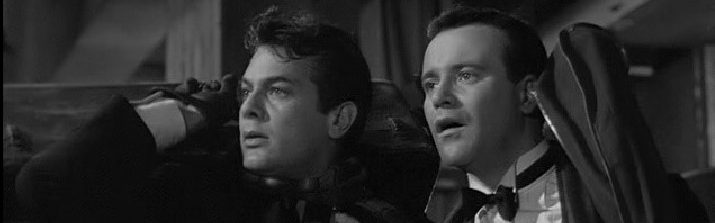
Re-watching Noah Baumbach’s “Marriage Story” (2019) starring Adam Driver & Scarlett Johansson

Marriage Story (the 10th feature film by Noah Baumbach) was given a theatrical release of 30 days. It was the 1st film to be distributed primarily by a streaming service (Netflix) to win an Academy Award in an acting category. Also, it’s the first streaming film to win a BAFTA and a Golden Globe in acting categories. The budget was less than $19M and it was shot over only 47 days. Marriage Story premiered at the Venice Film Festival. This film is part of the Criterion Collection; there is a behind-the-scenes (BTS) documentary included. As many critics/viewers have noted, this is a mix of genres: drama (domestic, legal); comedy (incl. the kitchen scene at grandma’s house); and musical. For inspiration, Baumbach looked to screwball comedies from the 1930s- 40s, such as Twentieth Century (1934) and To Be or Not to Be (1942). The close-ups were inspired by Scenes from a Marriage by Swedish filmmaker Ingmar Bergman. One of the framed items seen at grandma’s house is The New Yorker mag article titled Scenes From A Marriage featuring Charlie (Adam Driver) and Nicole (Scarlett Johansson).

Nicole: I never really came alive for myself; I was only feeding his aliveness.

Writer/director Baumbach brought in 3 of his actors (“collaborators”) before he wrote the script for this film: Driver (a close friend), Johansson, and Laura Dern. He interviewed many individuals, from friends to those involved in the business of divorce. It was Driver’s idea for Charlie Barber to be a theatre director. Charlie lived in Indiana before moving to NYC; Driver grew up in that state. The toys Nicole and Henry (Azhy Robertson) play w/ during the opening montage are from the Star Wars franchise, a reference to Driver’s role as Kylo Ren/Ben Solo in the sequels. Sheets w/ Guardians of the Galaxy characters can be seen in Henry’s bed in the NYC apt. That movie is from the Marvel Cinematic Universe (MCU), as is Johansson’s character Black Widow. Early in her career, Nicole starred in a hit teen sex comedy called All Over the Girl; Baumbach’s ex-wife (Jennifer Jason Leigh) was one of the young stars of Fast Times at Ridgemont High.

Ted: Criminal lawyers see bad people at their best, divorce lawyers see good people at their worst.

Some viewers asked: “Who is the bad guy in this story?” Well, Charlie had a brief affair w/ his co-worker, Mary Anne (Brook Bloom), so he’s NOT blameless. Nicole describes Charlie as being selfish and wanting things his way, at home and in the theater. The true bad guys could be the divorce lawyers (aside from Bert, played by veteran actor Alan Alda). I esp. liked Driver and Alda’s scenes together; Bert also serves as an empathetic father-figure to Charlie (I noticed on this re-watch). Nora Fanshaw (Dern) is based loosely on celeb attorney Laura Wasser; she represented Dern, Johansson and Baumbach during their respective divorces. The mediation scenes were filmed in Wasser’s office building. Ted (Ray Liotta- who passed away recently) is a shark who fights w/ Nora in court.

Due to location availability, the LA scenes were filmed before the main cast moved to NYC. Charlie’s LA apt is an actual apt; the production rented it, along w/ the unit directly upstairs. No dialogue or moments of hesitation are improvised in this scene; everything was scripted. Driver ended up punching the wall 15 times (ouch); Baumbach famously likes to shoot many takes. At one point, Driver punched so hard that he almost punched through the wall behind the breakaway wall. Over 2 days, Driver and Johansson did 50 takes of the fight- wow! The juice box that Nicole sips on, then sets down before the fight remains on the floor until the final shot of the scene. Baumbach explained: “The juice box is [their son’s] presence in their lives… he’s not here… he’s really powerless in this situation.”

The world of the theater plays a big part in this story; Charlie was directing Nicole’s acting for several years. Nicole’s name recognition brought in much of the audience in the early years; during the separation, Charlie is awarded the MacArthur Genius Grant. The diverse group of actors in Charlie’s troupe serve as his chosen family. You may recognize a few of their faces: veteran theater actor Wallace Shawn (The Princess Bride), Jasmine Cephas Jones (Hamilton; guest star on S6 of Girls), and Mary Wiseman (Star Trek: Discovery). In an interview, Driver said that he and Baumbach discussed making a film version of Company (long before this film). Driver’s performance of Stephen Sondheim’s Being Alive from Company was recorded live and done in one take. Both Baumbach and Driver were fans of the 1970 Broadway musical. Nicole, her mom, and older sister sing You Could Drive a Person Crazy (another song from Company).

Charlie: [Reading Nicole’s letter to Henry] I fell in love with him two seconds after I saw him. And I’ll never stop loving him, even though it doesn’t make sense anymore.

I’ve seen Marriage Story 5x over the past 3 yrs; I don’t re-watch shows/movies much (unless it’s an Austen or Shakespeare adaptation or maybe holiday film). For me, the dialogue (writing) in a film is the most important element. Another element I admire is realism, or real-world themes. On a recent re-watch, I noticed that Baumbach also knows how to make the silence powerful. My fave moments are silent: Charlie sleeping side-by-side w/ Henry when the boy is worried; Charlie and Nicole pull the gate of her LA house shut; and Nicole tying Charlie’s shoe (the last scene; perhaps also a homage to The Way We Were).


[1] Overall, you see Johansson and Driver put on some amazing performances….so amazing that I’d be shocked if they aren’t at least Oscar-nominated for this film. Well done in every way…and one of the better movies of 2019.

[2] There is some humour in this movie, at times it is sad and raw.

[3] Marriage Story is a beautiful and heartbreaking film about the end of a marriage. Adam Driver and Scarlett Johansson have magnificent performances and chemistry and the direction of Noah Baumbach is top-notch. This film is not to be described by words but watched.

[4] The movie is brutally honest and feels brutally real. I don’t condone everything being said or done. By neither of the two main characters. But motivations are clear and the story is really well told. The drama unfolds and it does not seem to be made up, rather really slow burning and quite reasonable (well as reasonable as some of the things can be).

-Excerpts from IMDB reviews