The Brothers Karamazov (1958) starring Yul Brynner, Lee J. Cobb, & William Shatner

bros-poster
A poster for the film.

Alexi was the young monk who personified what it means to be a generous and forgiving Christian; Ivan the spiritually conflicted and deeply honest man of science; Dmitri the tortured deeply human soul who takes on suffering…

I just happened upon this film- had never seen it before. William Shatner is VERY young (and cute) here; he plays Alexi, the youngest brother in the family who is a monk. This film is about money (particularly inheritance), sibling rivalries (and alliances), forbidden love, and honor. Yul Brynner is perfectly cast as Dmitri, the oldest brother in the dysfunctional family. He is a Lt. in the Russian Army whose favorite hobby is gambling. Of the two female leads, Claire Bloom (Katya) and Maria Schell (Grushenka), I thought Bloom are more effective.
bros-alexi-father
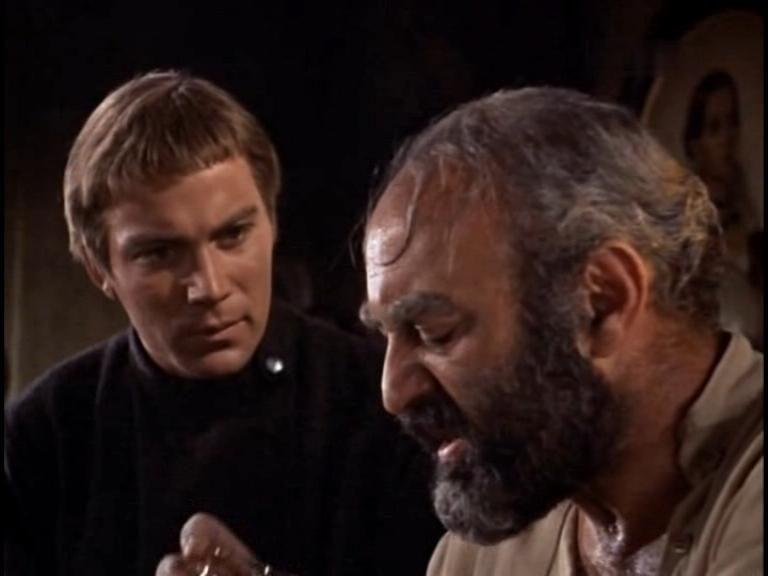
Alexi (William Shatner) and his father Fyodor (Lee J. Cobb) have a serious talk.

Brynner is very charismatic and gives the right emotional intensity and vulnerability, while Cobb gives his patriarchal role so much juice and life, his demeanour sometimes even quite intimidating (the role is a problematic one due to being one that could easily fall into overacted caricature, Cobb admittedly does overact but enjoyably and the character still felt real). Richard Basehart brings many layers and nuances to Ivan… William Shatner does suffer from a greatly reduced (in terms of how he’s written) character, but surprisingly this is Shatner at his most subdued and moving, most of the time in his acting for personal tastes he’s the opposite.

-Excerpts from IMDB review

At the start of the film, Alexi convinces their wealthy father, Fyodor (Lee J. Cobb) to give him some money to pay off debts run up by Dmitri (Brynner). Fyodor is reluctant, knowing of Dmitiri’s irresponsible spending; he is also tyrannical and lecherous. Dmitri should be getting some money (which comes from his deceased mother’s side). 
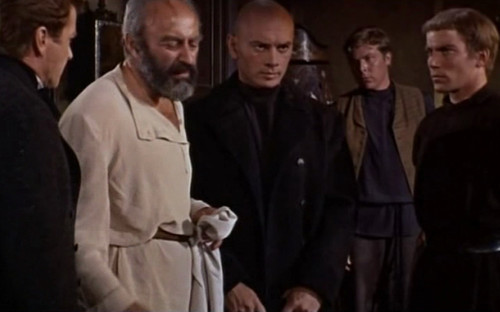
bros-all
The brothers is the Karamazov family with their father.

Alexi is in the role of peacemaker in the family; while Dmitri is the “black sheep.” These two brothers are tight, though they have opposite personalities. The other brothers are Ivan (Richard Basehart), an atheist writer and Fyodor’s unclaimed bastard/servant, Smerdjakov (Albert Salmi). 
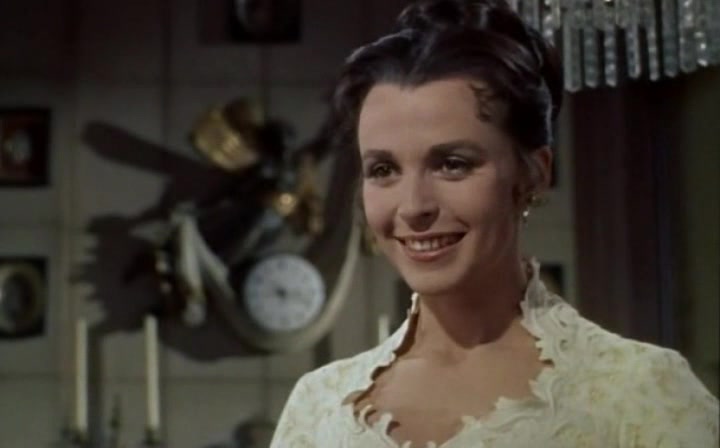
bros-katya.jpg
Katya (Claire Bloom) is engaged to Dmitri- he’s NOT that into her though!

The daughter of Dmitri’s captain, Katya (Bloom), falls deeply in love w/ him after he helps her father out of a difficult situation. Dmitri admits that he wanted Katya, BUT didn’t love her. She explains that she doesn’t mind that. Some time later, when she becomes an heiress (thanks to a grandmother), she proposes that they get engaged. Dmitri agrees to it; after all, she is a beautiful, respectable, and wealthy woman. Katya goes to his town and meets his family, impressing them w/ all her charms. She and Ivan spend a LOT of time together; he falls in love w/ Katya, BUT she only sees him as a friend (and future brother-in-law).  

bros-fyodor-grushenka.jpeg
Fyodor (Lee J. Cobb) has dinner with his mistress, Grushenka (Maria Schell).

So, why is this engagement taking SO long? Dmitri stays away (gambling and drinking), so there is no time to get to know and (maybe) fall in love w/ Katya. Back at home, Ivan and Smerdjakov are getting impatient to inherit; they’re waiting for their father to die. Fyodor shows no signs of slowing down; he has a young/blonde mistress, Grushenka. Though he’s NOT the sentimental type, Fyodor proposes marriage. 

bros-grushenka-dmitri.jpg
Dmitri (Yul Brynner) plays a song for Grushenka (Maria Schell).

For anyone interested in family dynamics and love relationships “Brothers” presents a web of triangulated rivalries and unrequited, seething passions — fiction that rings powerfully true.

I am embarrassed to admit I haven’t read this great novel — although the movie makes me want to — so I wasn’t familiar with the story. 

-Excerpt from IMDB review

Grushenka, who owns a tavern and has made some money of her own, buys Dmitri’s debts (on behalf of Fyodor). When Dmitri learns of this occurrence, he insults her servant (a former soldier), and then sets out to find the mysterious woman. He sees Grushenka at a skating pond (where she is having fun w/ another man, not Fyodor). It’s basically love at first sight (at least on his side); Dmitri is a VERY passionate man after all. Grushenka seems VERY taken w/ him, too, BUT she is also a professional (who knows how to survive in a man’s world). Check out this film to find out what happens next! 

Ace in the Hole (1951) starring Kirk Douglas

Introduction

With a career spanning more than 7 decades, Kirk Douglas has long since earned his place in Hollywood history. December 9, 2016 was the iconic actor’s 100th birthday (WOW)! His is a real-life “up from nothing” story; Douglas is the son of Jewish immigrants (from modern-day Belarus) who settled in the Lower East Side of Manhattan. As a youngster, he was a good student and athlete (even wrestling competitively at St. Lawrence University). Douglas discovered an acting scholarship and was talented enough to get into the American Academy of Dramatic Arts.

After working on the New York stage (alongside good friend Lauren Bacall), he began his film career in the 1946 Barbara Stanwyck vehicle The Strange Loves of Martha Ivers, which was soon followed by memorable roles in Out of the Past, Joseph L. Mankiewicz’s A Letter to Three Wives, among others. Douglas also developed his own projects behind the camera, releasing the historical epic Spartacus through his own production company. 

Movie Review: Ace in the Hole 

ace-in-the-hole-1951-3

[1] This movie fits nicely into the film noir genre, although it takes place largely under the hot, harsh glare of the New Mexico sun, highlighting the sweat and grime visible on the characters’ skin and creating a visual metaphor for the sorry state of their souls. 

[2] Perhaps the cause of failure of this film [at the box office] is that there are no sympathetic characters here… The screenplay, and the lead performances are top class. The extensive location photography, and somewhat documentary look of the film makes the film feel more modern than most 1951 films.

[3] The world described here is so depressing, so disheartening that it takes drama to new limits. Not only Tatum is evil, but so are the miner’s wife and family who take advantage of the situation, regardless of any morals. So is the faceless crowd, who has a wild time, near a dying man. You and me, we could be part of this populace, and maybe we’ve already been! 

Excerpts from IMDB reviews

Ace In The Hole - 2.jpg

This film, featuring Douglas (who plays Chuck Tatum) as an antihero, is on Roger Ebert’s Great Movies list. I rented it on YouTube recently. Aside from the length (it could’ve used more editing), I thought it was pretty good. It was co-written by Billy Wilder, so you know the dialogue (esp. that for Chuck) will be fast, funny, and VERY interesting. Wilder’s wife, Audrey Young, came up with the funny, yet irreverent line spoken by Jan Sterling (Lorraine Minosa): “I don’t go to church. Kneeling bags my nylons.”

No chopped chicken liver! No garlic pickles. No Lindy’s. No Madison Square Garden. No Yogi Berra! -Chuck complains re: missing NYC

ace-lorraine

Chuck has been fired from a few different newspapers (drinking too much, chasing a publisher’s wife, etc.)  He manages to get on the staff of an Albuquerque paper. Finally, Chuck learns re: Leo Minosa (Richard Benedict), a man who got trapped in a mine while digging for Indian (Native American) relics. Herbie Cook (Robert Arthur) is the wide-eyed young reporter who tags along w/ Chuck.

Human interest. You pick up the paper, you read about 84 men or 284, or a million men, like in a Chinese famine. You read it, but it doesn’t say with you. One man’s different, you want to know all about him. That’s human interest. -Chuck explains to Herbie 

douglas_ace_star.jpg

Leo is trapped inside a mine in the Mountain of the Seven Vultures. Chuck manipulates the (politically-ambitious) sheriff, the Army engineer running the rescue operation, and Leo’s wife, Lorraine. Chuck, with his wily words, manages to prolong the rescue efforts; what could’ve taken just twelve hours lasts six days. Leo’s story becomes known nationwide, making Tatum a star reporter (yet again), and creating a circus around the desert town.  

Some Like It Hot (1959) starring Tony Curtis, Jack Lemmon, & Marilyn Monroe

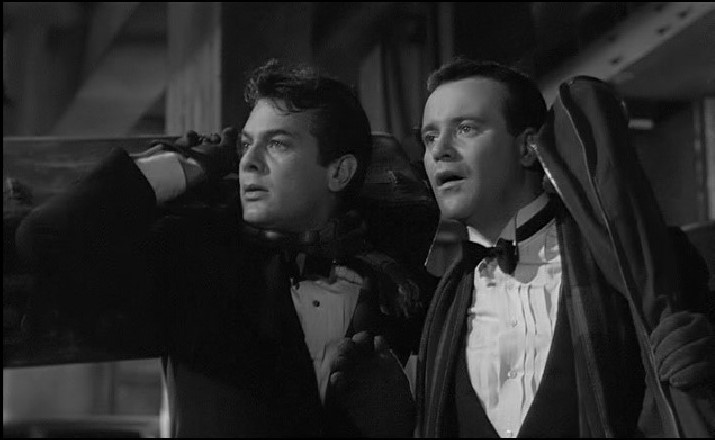
some-like-it-hot-tuxes
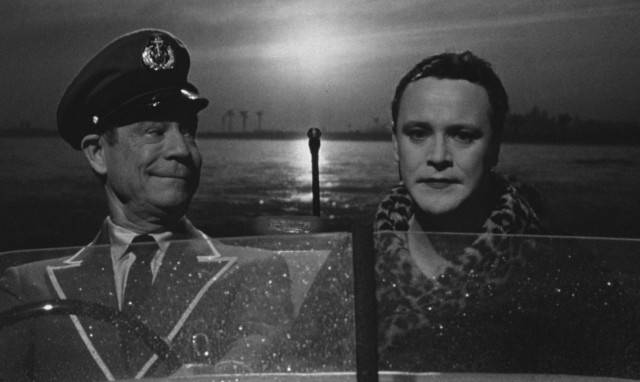
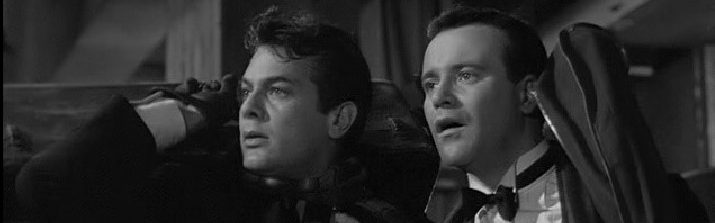
Musicians Joe (Tony Curtis) and Jerry (Jack Lemmon) witness a mob hit in Chicago.

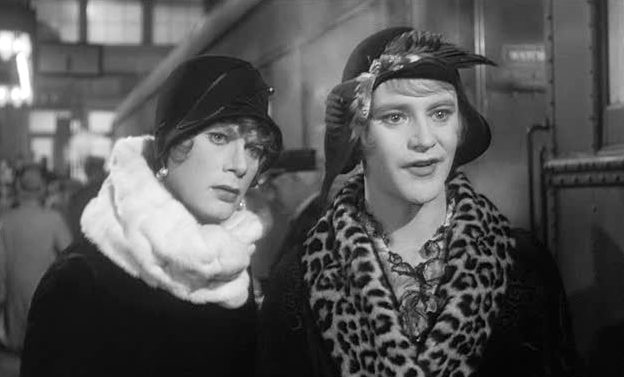
When broke Chicago musicians, Joe (sax player) and Jerry (on bass), witness the St. Valentine’s Day massacre, they need to get away from the gangster responsible (Spats Colombo). They’re desperate to get a gig out of town, but the only job available is with an all-girl band heading to Florida. They show up at the train station as “brand new” girls-Josephine and Daphne. They really enjoy being around the troupe of young, pretty women (esp. Sugar Kane Kowalczyk, who sings/plays ukulele). Joe (a ladies man) sets out to woo Sugar. Jerry/Daphne is wooed by an eccentric/sweet millionaire, Osgood Fielding III. Mayhem ensues as the two pals try to keep their true identities hidden. Then Spats and his mafia men show up for a gathering with other crime bosses.

some-like-it-hot-girls
Joe and Jerry (in drag) admire the walk of a real woman (played by Marilyn Monroe).

This is one of my faves; if you need a laugh (or a dozen), definitely have a watch!  I’ve seen the film several times on TCM; I also have it on DVD. Some Like It Hot was voted the 9th greatest film of all time by Entertainment Weekly magazine, and, is ranked on this list high enough to be the greatest comedy of all time.

The costumes Monroe wears are simply stunning!  One of the evening gowns is SO revealing that even modern viewers wondered (on Twitter) HOW it got past censors. When Curtis and Lemmon saw the costumes that  would be created for Monroe, they wanted to have beautiful dresses, too. Monroe wanted the movie to be shot in color (her contract stipulated that all her films were to be in color), but Billy Wilder (the director/co-writer) convinced her to let it be shot in black and white after costume tests revealed that the makeup that Curtis and Lemmon wore gave their faces a green tinge.

The co-leads, though opposites w/ regards to acting education and personal backgrounds, make a GREAT comedy team! Lemmon’s Jerry has nervous energy and is a fast-talker, while Curtis’ Joe is self-assured and able to charm others easily.  However, its actually Jerry’s idea for them to disguise themselves as women! When the actors first put on the female make-up and costumes, they walked around the Goldwyn Studios lot to see if they could “pass” as women. Then they tried using mirrors in public ladies rooms to fix their makeup, and when none of the women using it complained, they knew they could be convincing as women. There is a scene on the train recreating this moment.

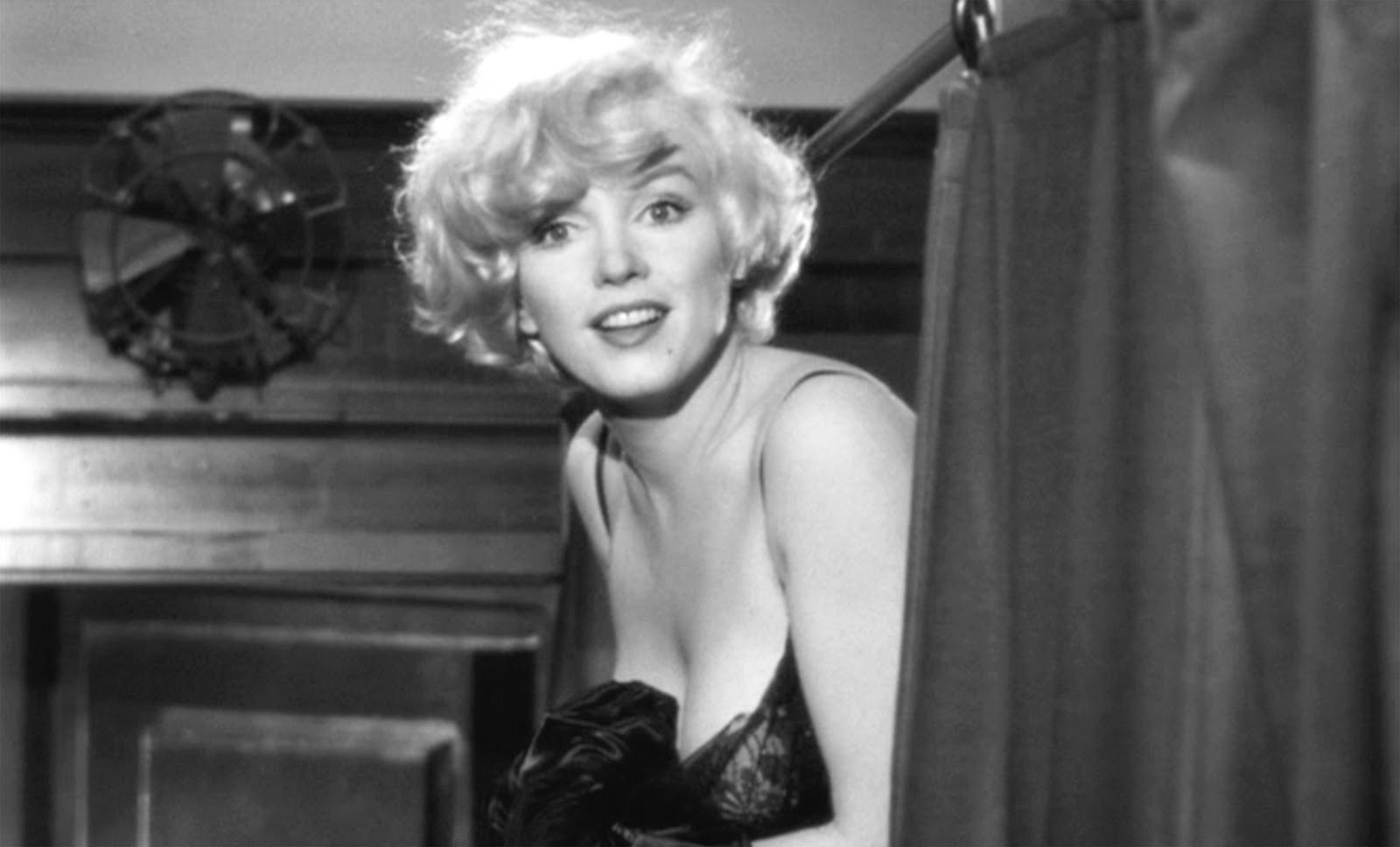
some-like-it-hot-train-sugar
Sugar Kane Kowalczyk (Marilyn Monroe) leans out of her bunk on the train.

I recently learned that Wilder, the actors, and crew had a VERY tough time on this movie b/c of Monroe’s behavior. She was heavily into drugs during this time, so kept forgetting her lines, and MANY takes had to be shot before she got even the simplest lines correct. There is something meta about Monroe’s performance as Sugar, who smuggles in alcohol (though she claims she can stop drinking anytime) and laments her pattern of falling for the wrong kind of men (particularly sax players). 

Lemmon got along with Monroe and forgave her eccentricities. He believed she simply couldn’t go in front of the camera until she was absolutely ready. “She knew she was limited and goddamned well knew what was right for Marilyn,” he said. “She wasn’t about to do anything else.” He also said that although Monroe may not have been the greatest actor or singer or comedienne, she used more of her talent, brought more of her gifts to the screen than anyone he ever knew.

Some Like It Hot (1959)
There is a party going on, but Daphne (Lemmon) wants to be alone with Sugar (Monroe).

One of the MOST hilarious scenes in the film involves Jerry/Daphne and Sugar in Daphne’s bunk. Jerry is SO excited about Sugar sidling up to him, but she sees him as Daphne. The expressions on Lemmon’s face are just priceless! They are soon interrupted by almost all of the other girls, who want to join in the fun. Jerry Lewis was offered the role of Jerry/Daphne but declined because he didn’t want to dress in drag. Lemmon received an Oscar nomination for the role (well-deserved).

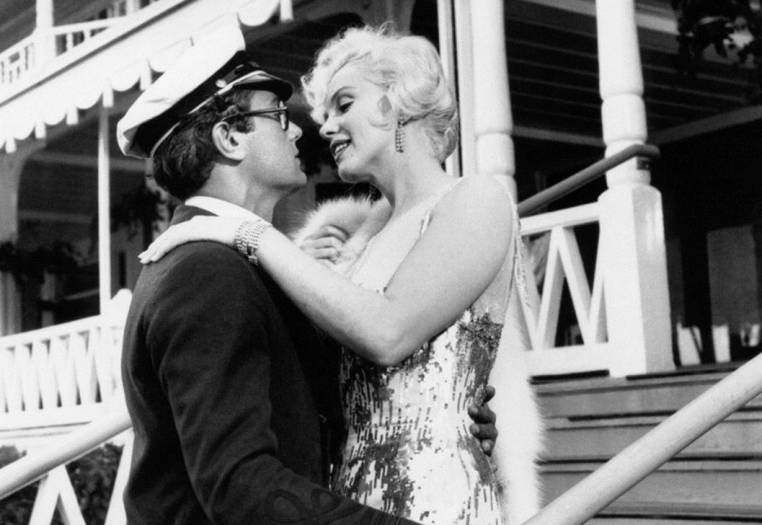
some-like-it-hot-love
Joe/Shell Oil Jr. (Curtis) and Sugar (Monroe) embrace after their date on the yacht.

Another great thing about this film is the goofy accent that Joe (as Shell Oil Jr.) adopts to impress Sugar. Jerry exclaims:”Nobody talks like that!” Curtis said he asked the director if he could imitate Cary Grant; Wilder liked it and shot it that way. When Grant saw the parody of himself, he jokingly said: “I don’t talk like that.” 

While Shell Oil Jr. and Sugar were making out on the yacht, Daphne and Osgood were dancing tango at a Cuban nightclub. They danced VERY well, too! The music used in the film contributes to its atmosphere; portions of the following tunes were used: Sweet Georgia Brown, By the Beautiful Sea, Randolph Street Rag, La Cumparsita and Park Avenue Fantasy (AKA Stairway to the Sky).

some-like-it-hot-end
“Nobody’s perfect!” Osgood declares upon seeing that Daphne is a man. 

Despite her gold-digging instincts, Monroe’s Sugar is cozy, vulnerable and altogether loveable, getting a lot of mileage too out of her solo singing spots, which include the kinetic “Running Wild,” the torchy “I’m Through With Love,” and her classic “boop-boop-a-doop” signature song, “I Wanna Be Loved by You.”

Lemmon really steals the movie here. He invests Daphne with such enthusiasm that we can understand why he’s falling for Osgood. He’s having way too much fun and it’s great to watch him. 

Why a would man would want to marry another man? asks Tony Curtis. Security! Jack Lemmon replies without missing a beat. Clearly, he had put the question to himself before and had arrived to a perfectly sensible conclusion.

The movie’s surprisingly suggestive and risque content is at odds with the time frame of the movie, and even with the period of the movie’s creation. The many smart double-entendres and plays on words are very well-written, and alternate between low-brow and high-brow comedy,

-Excerpts from IMDB reviews

Woman of the Year (1942) starring Spencer Tracy & Katharine Hepburn

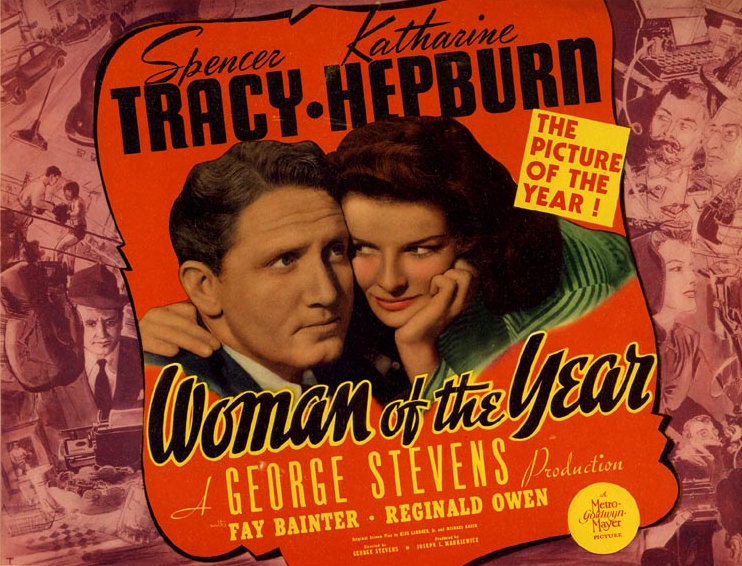
woman_of_the_year_poster
A poster for the film

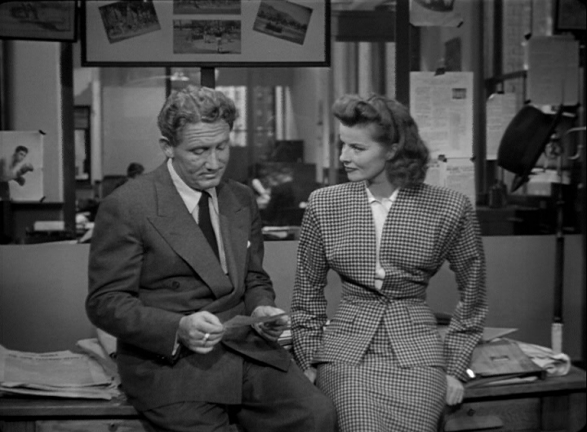
Reportedly, Katharine Hepburn’s first words to her costar were, “Mr. Tracy, I believe I am too tall for you” (FYI: Hepburn was 5’9″ and Tracy was 5’10½”). Director George Stevens said, “Don’t worry, honey. He’ll soon cut you down to size.” Like the actors themselves did in real life, this is a story of opposites attracting. Even their acting styles were different- Hepburn loved to rehearse; Tracy usually got it on the first or second take. In their scenes together here (their first film pairing), you see the magic (love) happen… and it’s REAL! 

Tracy’s Sam Craig matched with Hepburn’s Tess Harding; his subtle, underplaying acting style with her stylized, personality-driven performance. It’s an acting tour de force, to be sure… In fact, their chemistry in this film is palpable. -Excerpt from IMDB review

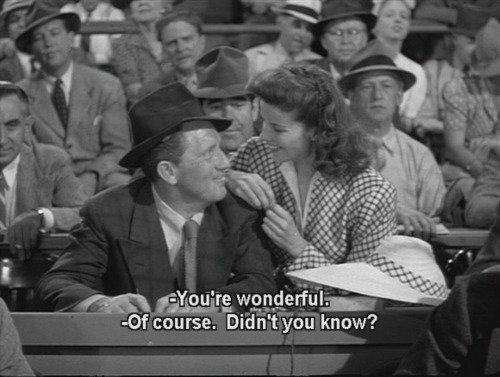
woman-of-the-year-ballgame
Sam takes Tess out to the ballgame (and she likes it)!

Are all these people unemployed? -Tess asks, surprised at the large crowd in the ballpark.

No, they’re all attending their grandmother’s funeral. -Sam replies.

After Tess Harding (Hepburn), a world-traveling journalist/commentator, makes some insensitive comments re: baseball on the radio, sports columnist Sam Craig (Tracy) criticizes her in his writing. A feud results, more papers get sold, and eventually, their editor brings them together to make peace. They see each other for the first time, sparks fly, and they go out to a ballgame. In a very short time, they fall deeply in love! Tess and Sam quickly marry and begin living together (in her apt.), BUT Sam soon discovers that his wife is so busy saving the world that she can’t make time for their relationship. After just a few months, Tess decides to take in Chris, a Greek refugee boy (w/o consulting Sam). This is the last straw for Sam, who decides to take drastic measures. 

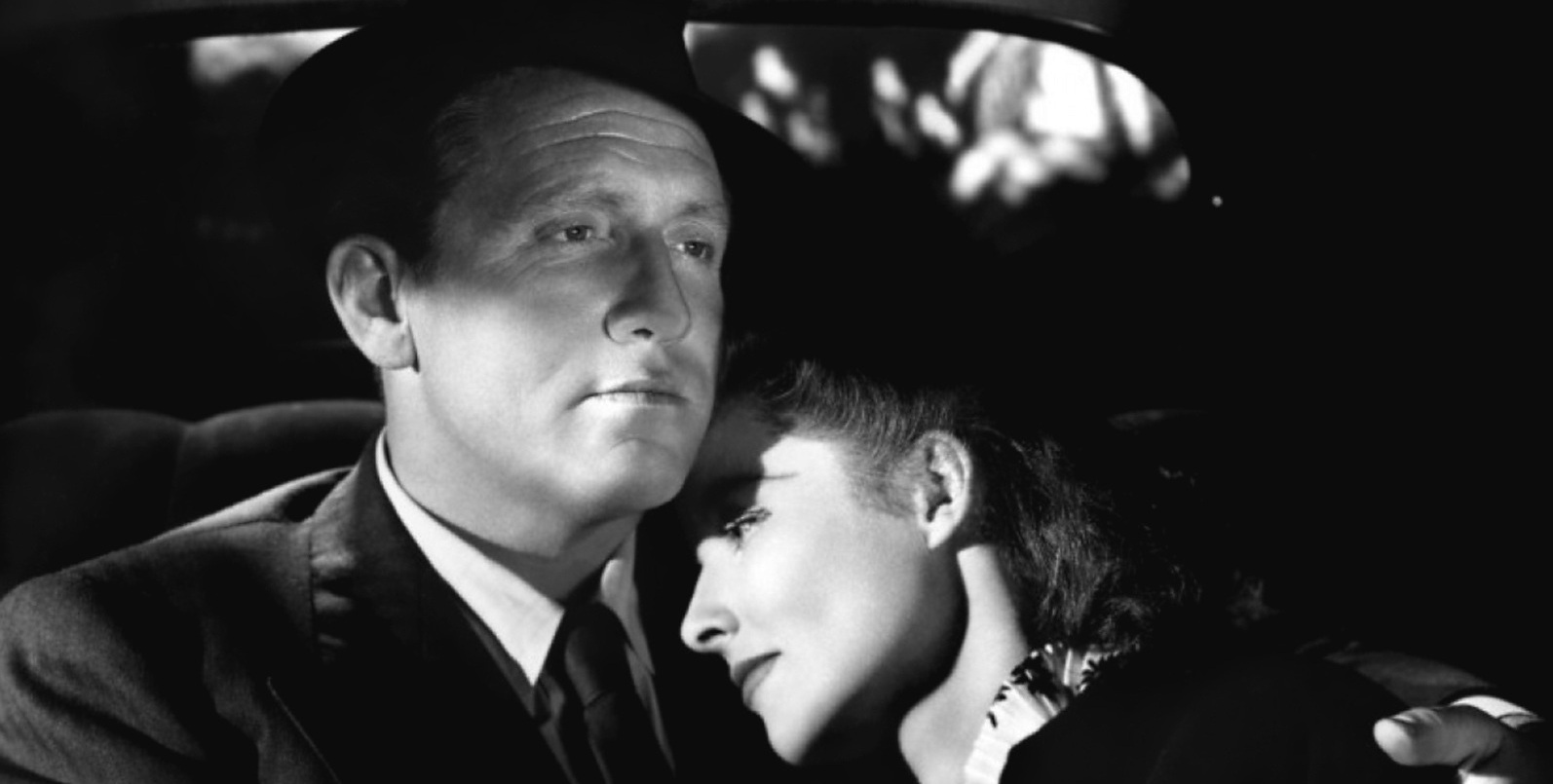
woman_of_the_year_taxi
Sam and Tess embrace in the back of a taxi.

I’ve seen this film a FEW times over the years. What struck me during this viewing was how there was an imbalance in their jobs. Sure, they are BOTH smart, successful writers w/ respective fan followings. However, Tess is on another level (akin to Diane Sawyer in her prime). Her stories are usually on the front page of the paper. She speaks five languages (English, French, Russian, Spanish and Greek). Sam has a desk alongside a few other writers; Tess has a private office and a fastidious secretary, Gerald (a man). The subplot w/ Ellen (Tess’ maiden/feminist aunt) and her widowed father is a nice addition to the story.  

woman-of-the-year-office.jpg
Sam and Tess in his office at the newspaper

Hepburn never appeared softer, more vulnerable, less mannered… I fall in love with her all over again every time I watch it… Tracy, the most honest actor who ever lived. But not just that: there was his ability to delve seemingly without effort into an infinite bag of gestures & expressions & tones & just plain old-fashioned but highly manifest wisdom & come up with the most richly nuanced guy ever depicted onscreen. -Excerpt from IMDB review

The ending (last 15 mins.) of this film will NOT suit modern viewers (esp. women)- it’s rather disappointing! Stevens decided (with Mankiewicz) that Tess Harding had to have her comeuppance for the average American housewife to relate to her character; this is noted in A Remarkable Woman: A Biography of Katharine Hepburn by Anne Edward. When Hepburn saw the changes, she commented that it was “sh*t.” Test audiences didn’t like the original ending, which showed BOTH Tess and Sam making compromises (NOT only Tess).  


Lucy Gallant (1955) starring Jane Wyman & Charlton Heston

lucy_gallant_poster
A poster for the film

[1] The scenes of the hotels being so full and nothing for people to buy in the boom towns is very accurate. The development of the great department store is really telling the story of famed Texas department stores such as Neiman-Marcus…

[2] I love the story of the strong, driven, successful woman. She so reminds me of the woman I always aspired to be. It was such a perfect match between Jane Wyman and Charlton Heston. They really complimented each other.

[3]…and the ups and downs of the relationship could fit today’s challenges for a woman who wants to have it all. But what I’ll admit right now is how I loved the clothes!!!

[4] Thelma Ritter was a little doll in here. I’m so used to her in her usual matronly-maidish clothes — but seeing her in those Edith Head creations at the end was wonderful.

 -Various IMDB comments

If you liked Giant (1956), then give this film a look. The story centers on Lucy Gallant (Jane Wyman), a fashionable upper-class woman who leaves NYC for a Texas boom town in the ’30s. Upon getting off the train, she meets Casey Cole (Charlton Heston), a local cowboy. He carries her over the mud, since her heels are NOT quite suited for this environment.

Casey takes a liking to Lucy, even taking her to the boarding house where he sometimes stays while in town; it’s owned by an older friend, Molly (Thelma Ritter- a character actress who’s great in everything), and her husband, Gus. Molly is pleasantly surprised to see Casey w/ such a classy woman. (It’s cool to see Thelma Ritter in some glam clothes later in the film; she usually plays housekeepers.) After settling her in, Casey heads off to his OWN ranch.

lucy_gallant_casey_cole
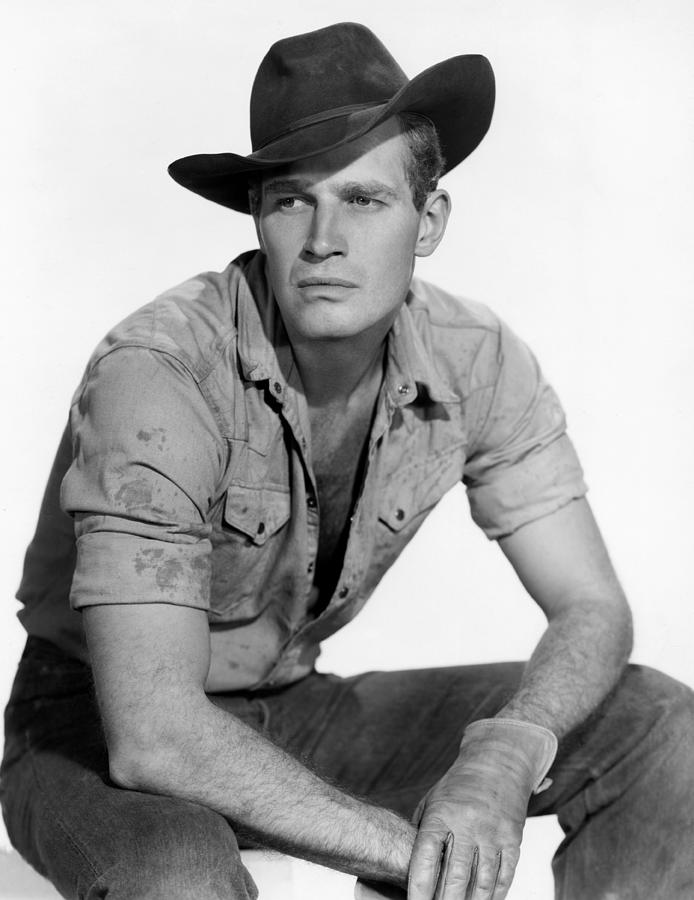
Casey Cole (Charlton Heston)

To get started in business, Lucy sells her wedding trousseau to local women (wives and daughters of men who’ve recently discovered oil). We learn that her father died amid a financial scandal, then her fiancé left her at the altar. Casey is impressed by Lucy’s plans and ambitions, BUT also skeptical (after all, she has NEVER worked before). Lucy is (obviously) attracted to Casey, BUT she keeps him at arm’s length, since her main focus is starting a clothing store.

One day, Lucy and Casey have a picnic on his ranch. He’s thinking re: selling his family’s land to a large oil company, then settling down (w/ a wife and kids, of course). Well, Lucy gets the hint, BUT she says that she MUST return to take care of the store. The store gets started on a good footing, thanks to unique inventory, loyal customers, and her long hours of hard work.   

lucy_gallant_fashionshow
Lucy Gallant (Jane Wyman) at a fashion show

This is one of those classic films that is still VERY relevant today! Can women “have it all” (career, family, social life, etc)? Why are MANY men intimidated by successful women, esp. those who earn more than themselves? There is good chemistry between Wyman and Heston; their characters are BOTH quite confidant, tough, and stubborn-minded. Will they EVER get together!?