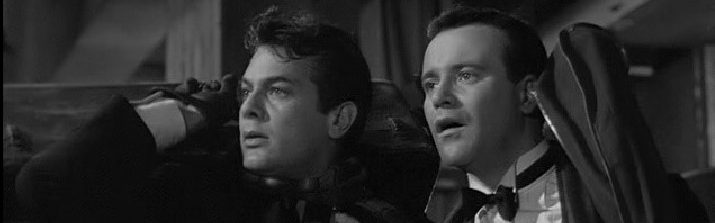
“To Live and Die in LA” (1985) starring William Petersen, Willem Dafoe, & John Pankow

A federal agent is dead. A killer is loose. And the City of Angels is about to explode. -Tagline

A fearless Secret Service agent will stop at nothing to bring down the counterfeiter who killed his partner. -Synopsis

LA-based Secret Service agent, Richard Chance (William Petersen), becomes obsessed w/ finding counterfeiter, Eric Masters (Willem Dafoe), responsible for the killing of his former partner/friend, Jimmy Hart (Michael Greene). Chance loves the thrill of base jumping (similar to bunjee jumping); he is in a (complicated) relationship w/ a beautiful/blonde parolee, Ruth Lanier (Darlanne Fluegel). Chance gets a new partner, John Vukovich (John Pankow- best known for comedy)- who comes from a family of cops. Masters, a painter-turned-criminal, knows that the Secret Service is after him. Chance takes more… and more risks while conducting the investigation. Masters is NOT hesitant to use violence- even kill!

[1] I consider myself just another member of the crew, the highest paid member of the crew.

[2] If you’re going to make a film or an album of music or a painting, you cannot afford to stop and think what other people will think of it. You’ve got to take into consideration what your editor thinks, if, say, you’re a writer. But I don’t have anyone to answer to. I make a film because I want to. Sometimes they’re successful, sometimes they’re not, but the way I think about my films is always very personal. [2018]

-William Friedkin, filmmaker

The screenplay was written by Gerald Petievich (who worked mainly on police TV shows/movies) and William Friedkin (who also directed). Known as a filmmaker who stays on-budget and on-time, yet goes his own way, Friedkin (who passed away in 2024) grew up in a working-poor family in Chicago. His mother was a nurse; his father worked many different jobs (yet never made enough to support the family). After watching Citizen Kane (1941), he fell in love w/ movies. Friedkin went to work for local (WGN) TV after graduating HS; he started making docs (one of which won the Golden Gate Award at the 1962 San Francisco Film Festival). In 1965, he moved to Hollywood and started directing TV, incl. an ep of the The Alfred Hitchcock Hour (1962). Hitchcock (famously) chastised him for NOT wearing a tie- LOL!

Richard Chance [to Ruth]: Guess what? Uncle Sam don’t give a shit about your expenses. You want bread, f***k a baker.

This neo noir is called “very 80s”; it was influenced by TV’s Miami Vice. The clothes, music, and production design reflect that time period well. There are several tense stunts/action scenes; one fan commented watching Ronin (where you’ll see how this movie influenced a car chase). The dark tone of To Live and Die in LA is NOT a big surprise when I recall an interview where Friedkin commented policemen in his neighborhood were never friendly. The baddies are just as interesting as the (NOT so heroic) cops!

Here we see (hot/young) Petersen in his 1st film role; he is locked-in to the role (incl. w/ physicality of running, jumping, fighting, and… more). Some viewers/critics wondered: “Was he an athlete?” Yes, Petersen played football growing up, then became interested in acting in college. As Chance interacts w/ Ruth, you see just how much of a cold bastard he can be! Masters seems to have a much better relationship w/ his love interest/avant garde performer, Bianca Torres (Debra Feuer). Fans of (veteran character actor) Dafoe, will get a kick out of seeing how young he looks here. Though he stands at just 5’7″- he dominates (larger) scene partners w/ his intensity/screen presence. You see John Turturro (young) and Dean Stockwell (who passed away in 2021) in small/memorable roles.

[1] “To Live and Die in L.A” is an excellent non-stop action movie, having an excellent pacing and being a politically incorrect police story.

[2] The film works on many levels. Yes, it is about counterfeiting and superficial (re: counterfeit) relationships. It is about greed, survival, justice and morality. It is also about human beings using and laying to waste other human beings.

[3] The good guys are flawed. This isn’t really new, since the mid 1960s there were plenty of flawed heroes in Westerns or police thrillers. The difference is that not only their characters are flawed, they are vulnerable, destructible, they make mistakes. And they pay for their mistakes. Similarly the villains: yes, they are formidable and glamorous… They make mistakes too. And they pay too.

-Excerpts from IMDb reviews

“Gladiator II” (2024) starring Paul Mescal, Denzel Washington, Pedro Pascal, Connie Nielsen, Joseph Quinn, & Fred Hechinger

After his home is conquered by the tyrannical emperors who now lead Rome, Lucius is forced to enter the Colosseum and must look to his past to find strength to return the glory of Rome to its people. -Synopsis

This sequel directed by Ridley Scott (and one of the most anticipated movies of 2024) is a hot mess! As we saw in promos/trailers, Paul Mescal (who plays the lead- Lucius) and Pedro Pascal (Gen. Acacius) do indeed look hot (esp. w/ those added muscles). However, as time went on, I got worried; Napoleon (2023) was also written by David Scarpa (pls get a new job)! I saw Gladiator II about 2 wks after its theatrical release; I’d planned to go during Thanksgiving break (but screenings were mostly full).

I re-watched Gladiator (2000) in mid-NOV; I was entertained (joke intended), though the SFX didn’t hold up. Crowe owned that role, as a LOT of critics/viewers noted (over 20+ yrs). As Maximus, he had a movie star presence/charisma and confident line delivery. FYI: The script was weak when filming began and there was much improv from the actors. As for the baddie, Commodus (Joaquin Phoenix) was a strong foil to Maximus (the man he felt usurped his role and his father’s love).

Macrinus [to Lucius]: You will be my instrument!

IF you’re a big fan of Denzel Washington (like me), you MAY enjoy some of this movie; the veteran actor plays Macrinus (a wealthy/charming owner of gladiators). He’ll remind you somewhat of Proximo (Oliver Reed) from the 1st movie; the actor (an alcoholic) died before filming ended. Lucilla (Connie Nielsen) and Gracchus (Sir Derek Jacobi at aged 85- wow) are the only returning characters; Crowe appears in flashbacks (archive footage). Pascal and Joseph Quinn (Emperor Geta) will also be seen in MCU’s Fantastic Four as Reed Richards (Mr. Fantastic) and Johnny Storm (The Human Torch). Quinn was cast after Barry Keoghan dropped out to work on an indie film instead (smart move).

The gates of hell are open night and day;

Smooth the descent, and easy is the way:

But to return, and view the cheerful skies,

In this the task and mighty labor lies.

-Lines from John Dryden’s 1697 English translation of Vergil’s epic poem Aeneid

The acting is ALL over the place; it’s as if Scott gave totally different guidance to each of the cast! Washington, Quinn, and Fred Hechinger (Caracalla- 2nd of the twin emperors) are having a fun time w/ their (scenery-chewing) acting. These twins don’t have strong motivations for why they act as they do (unlike Commodus); they act like crazed/drunken frat boys. Pascal is taking it all V seriously; Acacius comes off as weary, morose, and disillusioned w/ military life. I know some ppl liked his portrayal, BUT I wanted to see some charm. Nielsen doesn’t have a LOT to do (yet more than in original); I felt something was missing from Lucilla, though that mostly comes down to the writing. As for Mescal, it takes time for him to grow into his role, so that made me wonder ask: why didn’t Scott allow for more takes? As for the “rage” that Macrinus keeps mentioning, we don’t see much of that from Pascal. Was he miscast here (some have wondered)?

This sequel follows much too close to the original; there is even a graphic depicting key moments from that story in the opening credits. In the 3rd act, Maximus is referred to as Lucius’ father many times- I had to roll my eyes. Some fans wondered: since Maximus was so big on “honor,” why’d he cheat on his beloved wife (w/ whom he had a son nearly the same age as Lucius)!? For such a pricy movie, I expected the SFX to be much better! Many were cringing (or laughing) re: the (unrealistic) baboons, BUT that’s NOT the only case of shoddy effects work. The one-on-one fighting scenes, esp. the one w/ Mescal and the super-sized warrior in the emperors’ tent was V impressive. If anyone disses you for saying that The Last Duel was well-made, just point them to his epic disappointment!

Lucius: Know this: where death is, we are not. Where were are, death is not! By my sword, strength and honor!

There is some BTS controversy to explain, as those of you (like me) who’re always online MAY know. In May of 2023, Variety reported that Egyptian-Palestinian actress May Calamawy had been cast. Deadline Hollywood reported that Calamawy’s character would be V important to the story; Scott did a broad search before she was finally cast. She was featured in the official trailer, BUT for unknown reasons, she ended up w/ a non-speaking background role. Calamawy is NOT credited in the end credits and wasn’t part of the promo tour. Contrary to gossip on social media, she wasn’t replaced by Israeli actress Yuval Gonen, who plays Arishat (wife of Lucius).

[1] There seems to be a trend these days when making follow ups to beloved classics that you need to add more. More characters! More action! But that doesn’t always equal better. It’s almost like filmmakers these days think we’re stupid and want more of everything but all this does is sacrifice quality.

What made the original such a classic was the relatively simple plot, a protagonist you cared about and action that felt earned and impactful.

This one is so overstuffed it feels rushed. The plot feels like a lazy retread of the first but I didn’t care about any of the characters. Paul Mescal was so wooden it sounded like he was reading his lines. If this is how he acts, I really don’t see what all the fuss is about with him. Am I missing something?

[2] I approached this movie truly trying to give it a fair change on its own by not holding and comparing it too much to its original, But this movie just pulls of A Force Awakens and has 80% just recycled nostalgia bait its impossible to not compare them.

It recycles quotes, plot, narratives, even very same camera shots.

And yeah, alas, the first did absolutely everything, every single aspect better to much better and most definitely story/drama character wise. […]

This movie definitely looks glorious and expensive and had a big grandeur (although some CGI looked comically fake), but it fails to have a coherent driven plot.

[3] The “games” in the Colosseum are superbly presented and yes, exotic animals and water battles were really fought there in Roman times. The twin Emperors are superbly crazy… […] I was initially disappointed with Paul Mescal’s performance, but in hindsight I now wonder if it’s character rather than his performance that was disappointing. Hanno is no Maximus – no leader of men, no charismatic warrior – in fact he tells as much a number of times in the film. But maybe that’s Scott’s point this time? Even a simple soldier can achieve great things?

-Excerpts from IMDb reviews

Noir City DC 2024

Introduction

Hey y’all, how is this Winter going (so far)? It’s NOT fun for me; I’m recovering from a bad cough/cold (after Thanksgiving). I’m also way behind on blog posts. As DC area noir-istas know, my local (AFI) theater had a festival in OCT; Eddie Muller (TCM) came to introduce the movies during the opening wknd. This yr, the festival had double features (2 movies) which revolved around the same themes; 5 out of the 6 noirs I saw were new to me.

Thanks for reading!

-EMMA

***

Union Station (1950) starring William Holden, Nancy Olsen, & Barry Fitzgerald

A secretary traveling from Connecticut to NYC, Joyce Willecombe (Nancy Olsen), grows suspicious of 2 men boarding her train. She is referred to Bill Calhoun (William Holden), head of the Union Station police; the no-nonsense Calhoun is initially skeptical, BUT the men (who escape) prove to be involved in a kidnapping case. Calhoun calls in his boss/mentor, Inspector Donnelly (Barry Fitzgerald), BUT the ruthless kidnappers stay one step ahead of them. Most of the action centers around busy/fast-paced Union Station.

Holden and Olson also co-starred in Sunset Boulevard in the same year- 1950. Joyce plays Calhoun’s conscience, concerned that the interests of the victim don’t get overlooked in the hunt for the criminals. This is a (lesser-known/low budget) film noir; Holden was on the cusp of stardom. This was Lyle Bettger’s 3rd film; he played a LOT of baddies in his career. The platinum-blonde/wide-eyed Jan Sterling has a small role as his (TOO loyal) gf. Fitzgerald (who always played Irish cops or priests) brings in the humor. You can find this noir on streaming services (or rent on YT).

Cairo Station (1958)

Qinawi (Youssef Chahine), a physically-challenged peddler who makes his living selling newspapers in the central Cairo train station, is obsessed w/ Hanuma (Hind Rustum), a curvy/pretty young woman who sells drinks. Hanuma treats Qinawi kindly and flirts w/ him re: a possible relationship. However, she’s already engaged to Abu Siri, a burly/macho porter struggling to unionize his fellow workers to combat their boss’ exploitative treatment. The movie has a large cast (portraying Egyptians of disparate classes) and does NOT fall easily into one genre. Some viewers commented that the climactic scenes reminded them of Hitchcock! Chahine (an Egyptian of Christian heritage) also wrote the story and served as director. If you’re familiar w/ the characterization, visual style, and themes often seen in Bollywood, you should check it out.

[1] The work sometimes recalls Jean Renoir’s “La Bete Humaine,” but with more attention to detail. […]

Let’s underline the importance of the wide screen, which makes the director look like an entomologist watching an ant hill with a magnifying glass…

[2] It’s not hard to see why “Cairo Station” was banned for 20 years in Egypt. It gained much recognition in Berlin, being nominated for the Golden Bear…

-Excerpts from IMDb reviews

***

Le Samourai (1967)

In Paris, Jef Costello (Alain Delon) is a solitary hit man who works under contract. He’s hired to kill the owner of a club, and soon becomes the prime suspect of that murder. His gf (Jane), one of her clients (Wiener), and the Black singer of the club (Valerie) are questioned by the police. Jef is chased by henchmen (sent by the same man who hired him) and by cops. He seeks out who has hired him to get revenge. There is NOT much of a plot, characters have little development, and there isn’t much dialogue. I heard of this film yrs. ago, BUT this was my 1st time seeing it. As Gen Z may say, this movie is “all about vibes.” Sorry IF you’re a fan of thing kind of stuff, BUT I didn’t connect w/ it.

This Gun for Hire (1942)

Hit man Philip Raven (Alan Ladd), is kind to kids and feeds stray cats. He kills a blackmailer and is paid off by Willard Gates (Laird Cregar) in “hot” (marked) money. Meanwhile, a young/blonde entertainer, Ellen Graham (Veronica Lake), gf of police Lt. Michael Crane (Robert Preston) is enlisted by a Senator to help investigate Gates. Raven, while seeking Gates, meets Ellen on a train. Their relationship gradually evolves from that of killer and (potential) victim to an uneasy alliance against a common enemy. This is a well-known/low budget noir which I’ve seen before (on the small screen); it’s a quick/well-paced watch.

***

They Made Me a Fugitive (1947)

In this British noir (from Brazilian director Alberto Cavalcanti), a frustrated/cynical former RAF pilot, Clem Morgan (Trevor Howard), joins a criminal gang led by a nasty character nicknamed Narcy (Griffith Jones). On his 1st break-in job, the getaway car crashes and ends up killing a cop. Quickly, Clem is framed as the driver and sent to jail. Seeking revenge, he escapes prison and heads for London. Along the way, he breaks into a suburban home; a housewife named Mrs. Fenshaw (Veda Hope) helps him out, then asks him to murder her husband. Upon reaching London, Clem is sheltered by a blonde/petite dancer named Sally Connor (Sally Gray), who falls for him. He confronts Narcy and the gang in an abandoned warehouse.

[1] There is more attention to sound and camera-work than I’ve noticed in most British movies from the end of the war until about 1956 or so. Warner Brothers gets a huge credit at the start… So, it’s British, but it has American and continental style. […]

It’s scarier than the American gangster movies of the late forties.

[2] The general gloominess (a mainstay of thrillers emanating from the post-war era) is leavened somewhat by its constant flurry of hard-boiled dialogue courtesy of screenwriter Noel Langley. […]

Still, perhaps my favorite scene in the entire film is Howard’s surreal encounter with the zombie-like Vida Hope – in whose household he stumbles while on the run; she turns out to be deranged, and even tries to talk our hero into murdering her alcoholic husband (Maurice Denham)!

-Excerpts from IMDb reviews

Aimless Bullet (1961)

A couple of yrs. after the war in Seoul, a 30-something accountant’s salary is TOO small for him to even get his cavity fixed. He must somehow provide for his PTSD-affected mother, his pregnant wife, a younger brother (who can’t get work after serving in the army), a younger sister (who sneaks out at night to sell herself to American GIs), and 2 young children. This movie was banned in Korea b/c it was so realistically stark in it’s post- war depiction. You could tell that the locations were real; we see urban offices, outdoor cafes (for tea and drinking away sorrows), slums (located on the hilly areas near the city). The character development was V good, though the pacing felt a bit slow at times.

This film is depressing and it drives slowly towards its conclusion. On the other hand, compared to the often over-the-top melodrama present in other films I’ve seen from the era, Obaltan is a stark contrast. Owing more to Italian Neorealism than Hollywood, the film has many moments of mundaneness and potentially existentialist commentary. That Obaltan means “the aimless bullet” should give that away from the start.

-Excerpt from IMDb review

“Frantic” (1988) starring Harrison Ford, Betty Buckley, & Emmanuelle Seignier

In a hotel room in Paris, a doctor comes out of the shower and finds that his wife has disappeared. He soon finds himself caught up in a world of intrigue, espionage, gangsters, drugs and murder. -Synopsis

Are y’all fans of (iconic/American) actor Harrison Ford? I’m sure a LOT of you are, esp. IF growing up in the late ’70s to early ’90s. I learned re: this (lesser-known) film of Ford’s from a past ep of the Screen Drafts podcast. An American/middle-aged surgeon, Dr. Richard Walker (Ford) goes to Paris for a medical conference w/ his wife of many yrs, Sondra (Betty Buckley). They can’t open one of their bags, as Sondra picked up the wrong suitcase at the airport. While her husband is in the shower, Sondra gets a call; then (when he gets out) she has disappeared! Richard begins a search for his wife, though he speaks no French, and has V little to go on for clues. Along the way, Richard has to deal w/ the local police, the U.S. Embassy, and a beautiful/exciting young woman hustling to make money, Michelle (Emmanuelle Seignier- just 21 y.o. at the time of filming). This was Seignier’s 1st movie; she has been married to the director (Roman Polanski) since 1989.

Hotel Detective Le Grand Hotel: Have you and your wife been to Paris before?

Richard Walker: Yes, on our honeymoon.

Hotel Detective Le Grand Hotel: Is it possible she met someone here? Someone she has been thinking about?

Richard Walker: Since June 15th, 1968?

The original ending was shown to a small test audience and subsequently changed to the (happy) one in the final cut. Some audience members reported that Sondra was a spy in the original ending! The studio made Polanski cut the run time, too. Now, this is NOT a great movie (crime drama/mystery/thriller), yet it’s tense and will keep the audience entertained. Aside from a few scenes, I thought the film was well-paced. Some viewers compared it to Hitchcock, BUT transported to Paris in the ’80s. Ford carries the movie V well; this is a role that calls for a protagonist who is relatable, trustworthy, and capable. As an added bonus, Ford is looking esp. fit (and the French don’t shy away from showing that)!

[1] Polanski tells us the story with great suspense involving the city of Paris like a character of the film. All movie spends time on the Parisian places and rooftops. The music of Ennio Morricone also is a great element of the film success that gives us a great mood. The characters as Harrison Ford and Emmanuel Seignier are superb in their roles too. I think a must see movie if you love great oeuvres of Hitchcock and you love Paris.

[2] The cast are good but it is Ford’s film and he leads it really well. He convinces as the man becoming increasingly “frantic” and he manages to involve humour as his character becomes savvier about what is happening and also appears to be seedier and less professional as a result!

[3] The film would truly live up to a degree of tension if his interactions with Parisians were realistic. They all seem willing to help, none of them annoyed by an American archetype anxiously babbling English at them in their native country. I’ve heard many stories from friends and writers who’ve been to Paris. They do not bless Paris with a reputation for being nice and accommodating to English-speaking Americans. One friend told me that he was not allowed to have his passport back unless he asked for it in French. Another told me that when he tried to order a meal at a restaurant in English, the clerk slammed her hand on the table and ordered that he speak French. My own experience in Paris might be vastly different, and it is no doubt a beautiful and culturally rich city, but there would inevitably be at least a blemish of resistance against Ford’s conventionally American character.

-Excerpts from IMDb reviews

“Westward the Women” (1951) starring Robert Taylor, Denise Darcel, Hope Emerson, & John McIntire

In early 1850s California, there is a severe lack of women among the workers on Roy Whitman’s (John McIntire) large/thriving farm in the Valley. He travels back East to Chicago to recruit 150 women willing to become wives for his employees. Buck Wyatt (Robert Taylor) is hired to be the trail boss on this wagon train; he brings along 15 men to assist. One of the (enthusiastic) men is V short, young, and Japanese- Ito Kentaro (Henry Nakamura). Whitman tells the women during registration that wagons are waiting for them in Independence, MO; this city- w/ nearby St. Joseph- was the last eastern settlement before heading into “The Wild West.”

Buck: There’s two things in this world that scare me, and a good woman is both.

One of the women is French/a former dancer, Fifi Danon (Denise Darcel) traveling w/ her friend, Laurie Smith (Julie Bishop). They’re both looking for a change after life in New Orleans. Darcel’s (French language) dialogue includes a few words which reveals that no one in the Hays Office understood French. Some terms would’ve never gotten past the censors IF in English- LOL! There is a tall/big-boned Boston widow, Patience Brawley (Hope Emerson). Another widow is from Italy, Mrs. Vanni (Renata Vanni); she has a 10 y.o. son. Maggie O’Malley (Lenore Lonergan) and Jean Johnson (Marilyn Erskine) are V good w/ guns and handling horses.

Frank Capra (who created the original story) had planned to direct the film himself w/ Gary Cooper in the lead. Later, he sold his story to his neighbor- director William Wellman; the screenplay is by Charles Schnee. The film was shot almost entirely outdoors (Kanab, Utah; the Mojave Desert; Death Valley). The rainstorm was shot on a sound stage, to have complete control over the lighting, waterworks, flooding, etc. Among the diverse travelers, they speak English, French, Italian, and Japanese; they briefly encounter Native Americans speaking their own language. There is no musical score (for themes, background, or segues); we only hear a choral piece for opening and closing credits, and a small wedding band.

Now, as many of my readers know, the Western genre is NOT known for its originality. However, this movie is an exception; some critics have even called it “proto-feminist.” It recently became available to rent (Amazon Prime video). This is an (emotional) journey; you’ll laugh, be shocked, and (maybe) cry after seeing ALL the trials faced by these characters. There are (several) dark scenes, revealing that the filmmakers weren’t afraid to “go there” when it came to realism. I felt that it could’ve been a BIT shorter when it came to run time.

[1] As far as I know, this movie has no rival in its subject matter, and the stars are magnificent. You will laugh and you will cry, but most of all, you will come away with a deep admiration of those hearty pioneers and especially those wonderful women.

[2] This film has a lot of aspects that are quite refreshing and remarkable considering when it was made. The main supporting role is a Japanese cowboy! His character is not a typical stereotype either. Though he is comic relief, he is also given a role as a wise friend to Taylor’s character.

[3] What also makes this a very good film are the nice little characters within the film. So it’s NOT just a Robert Taylor film, but excels because of the fine ensemble cast. One of the standouts is Hope Emerson–a brawny actress who made a name for herself playing gangsters and other scary characters.

-Excerpts from IMDb reviews