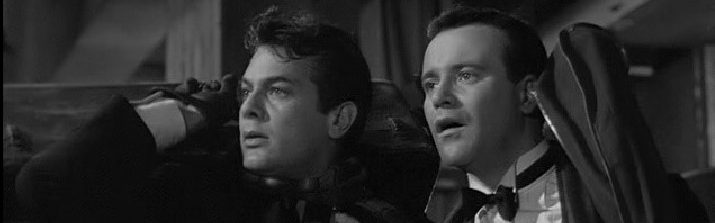
Modern Film Noir: The Dark Side of Life (In Color)

Body Heat (1981)

This film is considered to be an erotic thriller; it is (obviously) inspired by classic noir. So, maybe we can consider this to be neo-noir? Matty (Kathleen Turner) is the femme fatale; she has a secrets in her past. Ned (William Hurt) is the not-so-smart/playboy/lawyer who gets caught in her web.

Read my review.

Blade Runner (1982)

Many critics consider this to be the first sci-fi noir. It is a deep film that makes us wonder re: the nature of humanity. Many have wondered if Deckard (a young-ish Harrison Ford) was a human or a replicant. If you find this interesting, you may also like the sequel- Blade Runner 2049 (starring Ryan Gosling).

Dir. Ridley Scott and D.P. Jordan Cronenweth achieved the “shining eyes” effect by using a technique invented by Fritz Lang (“Schüfftan Process”) where light is bounced into the actors’ eyes off of a piece of half mirrored glass mounted at a 45 degree angle to the camera. Lang is known as a titan of the noir genre.

Miller’s Crossing (1990)

This is a lesser-known Coen bros film w/ young-ish Gabriel Byrne and Marcia Gay Harden (who I saw on the NYC subway years ago) that I really enjoyed. You see fine character actors in a world of their own which is very engaging (as expected from the Coens).

Read my review.

Cape Fear (1991)

This is the remake of the classic film dir. by Scorsese; the stars are Nick Nolte, Robert De Niro (sporting long-ish hair and fake tattoos), Jessica Lange, and a teenaged Juliette Lewis. You will also see cameos from Gregory Peck and Robert Mitchum (I got a kick out of that). It’s NOT as good as the original, but still worth a look.

Heat (1995)

This film is loved by many who like action films, but also want strong character development. Fans of De Niro and Pacino will definitely want to check it out!

Read my review here.

The Usual Suspects (1995)

I haven’t seen this movie in a long time- think will give it a re-watch soon! It’s been on “modern noir” lists I looked up.

Fargo (1996)

Perhaps the Coens’ most well-known/loved film; we find quirky characters, dark humor, crime, moments of lightness, etc. Frances McDormand is the pregnant cop who you just can’t help but admire and root for, as she works to investigate some shady events in her small/snowy/usually safe community.

L.A. Confidential (1997)

Three young cops w/ different approaches to their work: Russell Crowe (looking hot), Guy Pearce (also looking hot), and Kevin Spacey investigate a series murders in 1950s LA. Kim Basinger revives her career w/ a strong (supporting) role. I will re-watch this soon.

Se7en (1997)

I’ve only seen this film once; I didn’t like it that much (aside from Morgan Freeman’s role). You get to see a young/lonely wife (Gwenyth Paltrow) and her hubby/rookie detective (Brad Pitt); they are newlyweds starting their lives in the big city (Chicago). Of course, the baddie (Spacey) steals the show, as many of you know. We know dir. David Fincher made a big splash w/ this controversial/bloody/creepy film.

Training Day (2001)

You all probably know I’m a big fan of Denzel Washington; I also really like Ethan Hawke. They make a great/unlikely duo in this film, which has good supporting actors, action, dark humor, crime, etc. Denzel is really good as a baddie, though he’s NOT a one-note villain!

No Country For Old Men (2007)

Wow, the Coens really hit it out of the park here! I recall many/diverse viewers commenting that they enjoyed this film; they were also scared (or at least, on edge). I became a fan of Javier Bardem (who they ugly-fied for his baddie role). I also enjoyed seeing Tommy Lee Jones; also, I think Kelly Macdonald should’ve gotten even bigger roles (as she’s good in everything).

Gone Girl (2014)

I saw this film w/ a group of (mostly) single gal pals in one of our local theaters; we were NOT expecting what we saw (LOL)! Is this a farce (as some critics have noted)? Is the depiction of dysfunctional marriage meant to be taken (mostly) seriously? You can hate exurban life in the Midwest (BUT not as much as the wife played by Rosamund Pike)! Ben Affleck had his Batman physique then; I found that somewhat distracting (he’s supposed to be a underemployed teacher/writer). I liked the detective (Kim Dickens) and the defense lawyer (Tyler Perry); they were the ONLY characters that seemed somewhat normal/relatable. Maybe I’m just NOT a fan of Fincher’s cold/slick style? Thank goodness for my single life!

Hell or High Water (2016)

This is a Western neo-noir set in the Southwest starring the (always great) Jeff Bridges, Chris Pine (in a rare non-glam/anti-hero role), and Ben Foster (a fine character actor I’ve admired since he was a teen). The two working-class bros at the center of the story can’t seem to get ahead, so they take a (criminal) turn. A must-see for fans of smart films!

Read my review.

Film Noir takes on “Bonnie & Clyde”: “Gun Crazy” (1950) starring John Dall & Peggy Cummins

Thrill Crazy… Kill Crazy… Gun Crazy -A tagline for the film

Since he was a little boy, Bart Tare (John Dall) has loved guns. After 4 yrs. of reform school, then a stint in the Army, he returns home to his small town. His older sister (Ruby)- who raised him after they lost their parents- is now married w/ 2 young kids. His two best friends (a cop named Clyde and a newsman named Dave) take him to a carnival; he meets Annie Laurie Starr, a blonde/petite woman who is a sharp-shooter. Laurie loves guns as much as Bart- even getting him a job! They end up getting married, leaving the carnival (after the boss hits on Laurie), and have a long honeymoon where they live it up. When they get low on money, Laurie tells Bart her idea- robbery!

I told John, “Your c*ck’s never been so hard,” and I told Peggy, “You’re a female dog in heat, and you want him. But don’t let him have it in a hurry. Keep him waiting.” That’s exactly how I talked to them and I turned them loose. I didn’t have to give them more directions. -Joseph H. Lewis, director

This film is based on a story written by McKinley Kantor reworked by Dalton Trumbo (who was blacklisted). Here we see the linking of sex and violence; it also reveals that guns are a big part of American life. Though this was an inexpensive B movie, it has some fine elements that were ahead of its time. Director Joseph H. Lewis uses long takes, angles, deep focus, and jerking camera movements. Lewis also gave the actors permission to improvise. As the hosts commented on Out of the Podcast, “Bart and Laurie are equals” and “are the only ones who understand each other.” Though Bart avoids shooting anyone, Laurie isn’t as careful; she tells him early on that she’s “no good” and wants some “action” (excitement). Dall and Cummins have great chemistry; they are like two magnets instantly drawn to each other. Coming from the theater, Dall is also not afraid to express emotions (incl. fear and doubt).

Dall and Cummins did all their own driving in the film; only one process shot (i.e., rear projection behind the actors pretending to drive) was used in the film. The cinematography by Russell Harlan is a standout. The bank heist sequence was done in one take, with no one outside the principal actors and people inside the bank aware that a movie was being filmed. When Bart says, “I hope we find a parking space,” he really meant it. At the end of the scene, someone screams that there’s been a bank robbery; this was a bystander who saw the filming and assumed the worst.

[1] It’s psychological side of danger, pathological lies, and the pattern of a downward spiral in having to commit violent acts (even un-intentionally), becomes what really pulls in the viewer into the picture, aside from the more loose, on-location ‘real’ style and interesting camera-work.

[2] Peggy Cummins is really good in this. …her baby-doll voice creates an effective contrast to her colder-than-ice attitude. She’s crooning into her lover’s ear one minute and itching to kill someone the next.

I thought John Dall was at first odd casting for the role of Bart. Annie is supposed to think of him as a man’s man, and Dall, with his willowy physique and gentle mannerisms is far from that. But then when we realize that he’s at heart really too gentle for the life he and Annie have chosen for themselves, his casting makes sense.

[3] What is the quintessence of a film-noir? A good answer is: an evil strong woman that manipulates a weak, although basically decent, man, involving him in a crazy love, doomed to a tragic ending. Then we can safely state that “Deadly is the Female” [the original title] is a perfect instance of film-noir.

The movie has outstanding merits. The cinematography, and especially the camera-work are excellent, and comparable to the best achievements in the film-noir genre.

-Excerpts from IMDB reviews

“Meet John Doe” (1941) starring Gary Cooper & Barbara Stanwyck

As a parting shot, fired reporter Ann Mitchell (Barbara Stanwyck) prints a fake letter from unemployed “John Doe,” who threatens suicide on Christmas Eve in protest of declining society. This is during the Great Depression where many are unemployed and starving; Ann has to support her widowed mother and two younger sisters. The letter causes such a stir that the editor, Henry Connell (James Gleason), is forced to rehire Ann. They hire an unemployed/former baseball player, “Long John” Willoughby (Gary Cooper), to impersonate Doe. An old pal of John’s reluctantly comes along, The Colonel (Walter Brennan), who was happy to be a carefree hobo owing nothing to anyone. John wants money to fix his injured elbow (so he can play again). Ann and her bosses milk the story for all it’s worth, until the “John Doe” philosophy starts a nationwide political movement! In a few mos. time, many (incl. Ann) start taking it seriously; publisher D.B. Norton (Edward Arnold) has a plan of his own to use it for his benefit.

Mayor Hawkins: Why, Bert. I feel slighted. I’d like to join, but nobody asked me.

Sourpuss Smithers: I’m sorry, Mayor, but we voted that no politician could join [the Joe Doe Club].

Mrs. Hansen: Just the John Does of the neighborhood because you know how politicians are.

Director Frank Capra didn’t want anyone to play John Doe except Cooper, who agreed to the part (w/o reading a script) for two reasons: he had enjoyed working w/ Capra on Mr. Deeds Goes to Town (1936) and he wanted to work w/ Stanwyck. Well into production, Capra refused to reveal publicly what the film was about b/c of the fear that powerful US fascist organizations would pressure Warner Bros. not to make the film and also the screenplay hadn’t been finished. In the end, Capra (a first gen Italian American) produced this film independently, along w/ his partner Robert Riskin (a first gen Russian-American who wrote the screenplay). Riskin was married to actress Fay Wray w/ whom he had several children, incl. historian/author Victoria Riskin. As she explained in a 2019 interview, her father was given the opportunity to showcase Hollywood films to European countries as the Allies were liberating them from the Nazis; he didn’t include this film, as he thought it’d convey an dark view of the U.S. Four different endings were filmed, but all were considered unsatisfactory during previews. A letter from an audience member suggested a fifth ending, which Capra liked and used in the final version. The original copyright was never renewed, and the film fell into public domain (so you can see it for free).

D. B. Norton: What the American people need is an iron hand!

When films contain an ensemble, romance, a sense of optimism (even as life becomes dark), and a belief in the goodness of America- they may be labeled “Capraesque”). Capra directed some of the most iconic films in his day which still appeal to modern audiences: It Happened One Night (1929)- perhaps the 1st rom com, You Can’t Take It with You (1938) w/ young Jimmy Stewart, It’s a Wonderful Life (1946)- a holiday staple starring Stewart, and State of the Union (1948) w/ Katharine Hepburn and Spencer Tracy. Although most of his films were written by individuals on the political left, Capra was a lifelong conservative Republican! He was awarded the American National Medal of the Arts in 1986 by the National Endowment of the Arts. If you haven’t seen this film before, it’s worth a look. Though I wasn’t a big fan of the ending speech by Stanwyck (which seemed a bit shrill), it had some fine (and funny) moments.

I thought drama was when the actors cried. But drama is when the audience cries. -Frank Capra

[1] This film is even more relevant today than when it was made… Capra is asking his viewers to think critically of EVERYTHING they hear on the radio or see in papers or hear from elites, and amen to that!

[2] Capra weaves his well-loved everyman through a tale of both simplicity and political intrigue, taking in the American depression and Biblical references along the way, and comes up with messages that remain startlingly relevant today…

[3] He [Capra] backs up his strong, daunting ideology with sharp, crisp writing and even sharper character delineation. Capra’s social piece was timely released in 1940, when Nazi sympathizers were gaining a potent voice in America, just prior to our involvement in WWII.

Cooper and Stanwyck are ideal in their top roles. Stanwyck is peerless when it comes to playing smart, gutsy gals.

-Excerpts from IMDB reviews


“Nightmare Alley” (1947) starring Tyrone Power, Joan Blondell, Colleen Gray, & Helen Walker

Pete Krumbein: Throughout the ages, man has sought to look behind the veil that hides him from tomorrow. And through the ages, certain men have looked into the polished crystal… and seen. Is it some quality of the crystal itself, or does the gazer merely use it to turn his gaze inward? Who knows? But visions come. Slowly shifting their forms… visions come. Wait. The shifting shapes begin to clear. I see fields of grass… rolling hills… and a boy. A boy is running barefoot through the hills. A dog is with him. A… DOG… is… with… him.

Stanton Carlisle: Yes… go on… his name was Jib. Go on!

Pete: [Choked laughter] Humph. See how easy it is to *hook* ’em!

Twentieth Century-Fox bought the film rights to William Lindsay Gresham’s novel in 1946 for $50,000 at the request of star Tyrone Power, who wanted to change his image and show his range. The studio built a carnival set on the backlot covering 10 acres; it hired 100+ sideshow attractions and carnival workers. Studio head Darryl F. Zanuck hated this movie so much that he eventually took it out of circulation. Zanuck ordered the happy scene to be added (no shock there). The movie was re-released in 1956-1957 and did good business, esp. in drive-ins. It received wide distribution (on TV) after Power’s premature death in 1958. The DVD release (2005) brought Nightmare Alley back into wide circulation. According to Eddie Muller, con men/grifters in the new age movement would ask “Are you a friend of Stan Carlisle?” to confirm that the person they were talking to was in the same line of business.

Stan: You’ve got a heart as big…

Zeena Krumbein: Sure, as big as an artichoke, a leaf for everyone.

The movie opens at a carnival offering a muscle man, young women in skimpy outfits, a mind-reader, and the “geek” (a freakish man who supposedly bites the heads off live chickens). Among the crowd is a new worker, Stanton Carlisle, who is esp. interested in Zeena (Joan Blondell), the mentalist who was successful w/ her mind-reading act (before her hubby/partner, Pete, became an alcoholic). Stan is observant and ambitious, so he sets out to charm Zeena and learn her secrets. Stan’s true nature is revealed when he bluffs the sheriff (who has come to shut down the carnival); he’s good at manipulating others’ emotions (and enjoys it)!

Stan [to Molly]: Listen to me, I’m no good. I never pretended to be. But, I love you. I’m a hustler. I’ve always been one. But, I love you. I may be the thief of the world, but, with you I’ve always been on the level.

There are scams, swindles, deceptions and betrayals; we see the exploitation of people who are gullible or vulnerable. Stan’s rise from the seedy carnival to classy nightclub is captivating to watch! Stan is that rare homme fatale who uses his looks and sex appeal; near the end, he undergoes a de-glamorization that may shock some viewers. This is an obscure film, but much praised by noir fans. As Muller commented, even by film noir standards, this is a dark tale. I learned that both the director (Edmund Goulding) and writer eventually committed suicide!

The film wisely always plays to Power’s performance as charming and affable. It only hints at sinister intent, and so we’re on the ride with him seeing him as almost a heroic figure despite his cynical and insidious approach towards the world. For Stan, money is almost secondary to his desire to prove that he’s smarter than everyone else, which is why the film casts Lilith in his path to show us someone who’s not only potentially more dangerous, but also someone who’s more ingratiated with society. -Matt Goldberg (Collider)

The black and white photography by Lee Garmes is very well-done; it was perhaps too dark for audiences of that day. There are 3 interesting women characters- a rarity even today in Hollywood! Blondell (buxom and still good-looking in middle-age) is clever, jaded, but also good-hearted. Colleen Gray (in an early role) is “girl next door” pretty and sweet; her character falls hard for Stan. Helen Walker is smart, sophisticated, yet chilling as psychologist Lilith Ritter. She’s smarter and more ruthless than Stan; notice how her eyes shine w/ joy when she makes a fool of him!

[1] It was a raw, exposed nerve of a film. Instead of the Hollywood diction we had come to expect, this film expressed itself in 1940’s carny colloquialisms. And nobody in the cast was soft – they were all hard knocks characters, almost down for the count, but still fighting.

[2] Power, Blondell, Gray, Helen Walker, and the marvelous Ian Keith turn in great performances in a gritty film somewhat ahead of its time for its unrelenting toughness, its hard view of alcoholism, a look inside the world of mentalists and carnival life, and its theme of the supernatural.

[3] Nightmare Alley is a remarkable film- it hardly blinks in showing a cynical, scheming “preacher” doing his thing. Given the norms of Hollywood at the time, or almost at any time, it does give you a lot to consider. Tyrone Power is brilliant…

-Excerpts from IMDB reviews

“Gentleman’s Agreement” (1947) starring Gregory Peck, Dorothy McGuire, & John Garfield

Philip Schuyler Green (Gregory Peck) is a writer/novelist from California recently hired by a national magazine (Smith’s Weekly) in NYC for a series of articles. Phil is a widower w/ a young son- Tommy (Dean Stockwell- best known for Quantum Leap and Battlestar Galactica) – and a mother (Anne Revere) who is facing health challenges. He’s NOT too keen on the topic his editor John Minify (Albert Dekker) chooses- antisemitism. He wishes he could talk w/ his best pal, Dave Goldman (John Garfield), but Dave (who is Jewish) is serving overseas w/ the Army Corps on Engineers. For a week, Phil isn’t sure how to tackle it, then it comes to him- he’ll pretend to be Jewish! Of course, it takes little time for him to start experiencing bigotry. Phil’s anger at the way he’s treated starts affecting all aspects of his life, including his growing romance w/ his editor’s niece, Kathy Lacey (Dorothy McGuire).

Tommy: What’s antisemitism?

Phil: Well, uh, that’s when some people don’t like other people just because they’re Jews.

Tommy: Why not? Are Jews bad?

Phil: Well, some are and some aren’t, just like with everyone else.

Tommy: What are Jews, anyway?

Phil: Well, uh, it’s like this. Remember last week when you asked me about that big church, and I told you there are all different kinds of churches? Well, the people who go to that particular church are called Catholics, and there are people who go to different churches and they’re called Protestants, and there are people who go to different churches and they’re called Jews, only they call their churches temples or synagogues.

Tommy: Why don’t some people like them?

Phil: Well, I can’t really explain it, Tommy.

I re-watched this Oscar-winning movie (directed by Elia Kazan) last week; I saw it a few times over the years. Though there are things to admire, there are scenes which will look quite dated (and insensitive) to modern viewers. After he decides on his angle, Phil looks into the mirror and assesses his own features (“dark hair, dark eyes”) as being consistent w/ the Jews. This reveals that he has been influenced by the stereotype of there being a “Jewish look.” You may find Phil’s talks w/ his (Jewish) secretary, Elaine Wales (June Havoc), to be cringe-worthy (as the young people say). Of course, June herself says some self-hating/prejudiced stuff re: her people.

Phil: I’m going to let everybody know I’m Jewish.

Kathy: Jewish? But you’re not! Are you? Not that it would make any difference to me. But you said, “Let everybody know,” as if you hadn’t before and would now. So I just wondered. Not that it would make any difference to me. Phil, you’re annoyed.

Phil: No, I’m just thinking.

Kathy: Well, don’t look serious about it. Surely you must know where I stand.

Phil: Oh, I do.

Kathy: You just caught me off-guard.

I thought it was refreshing that the main love interest was smart (teacher), posh, and divorced; this is rare for a woman in a ’40s movie! (BTW, both Peck and McGuire were only in their early 30s.) However, Kathy is a part of her time and (high) society, so she doesn’t always know what to say (much less do) when her man is faced w/ prejudice. Admit it, we all know some “nice” WASP lady like this! There’s a lot of emphasis (too much for many viewers) on the romance between Phil and Kathy; it also happens very fast. I thought that the actors had good chemistry, though I preferred Anne Dettrey (Celeste Holm) over Kathy. Anne also works at the mag, enjoys single life, and has a bubbly personality; we can tell she greatly respects and likes Phil.

I enjoyed all the family stuff; Phil has a great relationship w/ his mom (who was only 12 yrs older- wow) and son, who both get some good character development. Stockwell is not just adorable (w/ his dark curls), but also a natural kid actor (rare in that time)! The first act will seem slow to many viewers; Phil suffers from writer’s block (which doesn’t equal great drama). It takes some time for Garfield (who was Jewish) to show up; he took a supporting role b/c he felt this was an important story to tell (but was paid his star’s salary). I loved how he played Dave; it was a subtle performance which holds up well even today! This was also the year when a (smaller) movie also tackled antisemitism- Crossfire.

[1] Green is adamantly and unwaveringly sure of himself and woe betide any who do not share his abhorrence at any manifestation of discrimination, starting with Kathy.

The romance between Green and Kathy is as back-and-forth as any Hollywood potboiler, the difference being that their arguments and falling-outs revolve entirely over Kathy’s inability to grasp the absolute righteousness of her fiance’s crusade. The dispute is artificial and wearying to some degree and I rooted for Celeste Holm’s lovely, witty and totally tolerant Anne, a fashion editor with attitude, as the top gal in the film.

[2] Peck’s crusading writer who masquerades as a Jew is simply too zealous and unswerving for his own good. He has no faults, no inner conflicts and no doubts about himself. […]

She symbolizes the hypocrisy and passiveness of the everyday American on anti-Semitism, and he points it out to her every chance he gets-and that’s all.

[3] As John Garfield’s character in the movie showed: discrimination and racial intolerance can be eliminated if we fight it. Garfield’s willingness to take a supporting role in this movie because of the power of its message should compel the skeptics to watch this movie.

-Excerpts from IMDB reviews