Re-Watch: “Jagged Edge” (1985) starring Jeff Bridges, Glenn Close, Peter Coyote, & Robert Loggia

When a murder case is this shocking, which do you trust… your emotions or the evidence? -Tagline

Jack: You still think I’m guilty? How can you defend me if you think I’m guilty?

Teddy: It happens all the time. It’s the way our legal system works.

San Fran publishing heiress, Page Forrester, is brutally murdered in her luxurious beach house. Her husband, Jack (Jeff Bridges), seems devastated by the crime; he is soon accused of her murder. He hires Teddy Barnes (Glenn Close) to defend him, despite the fact she hasn’t handled a criminal defense case in several years. There’s chemistry between them; the lawyer soon finds herself falling hard for her client.

The movie is about layers and layers and layers of truth. It’s like peeling an onion down to the core. Here we have a very intelligent, very attractive, very warm, very modern mother/career woman who has made a definite commitment to a moral standard, and makes one more moral stand when she says that she will only defend the man who is accused of a terrible crime, if she is convinced of his innocence. The rollercoaster begins. Is he innocent? Is he guilty? Is he lying? Or is he not? It’s a classic high-tension psychological thriller. -Richard Marquand, director (when asked re: the movie during promo)

This movie is the 1st of screenwriter Joe Eszterhas’ San Fran thriller trilogy; the later films are Basic Instinct (1992) and Jade (1995). Eszterhas originally titled the screenplay Hearts of Fire. Columbia disliked the title and decided it had to be changed; they assigned a secretary to go through the script. She came upon “jagged edge” (in description of the murder weapon: “a knife with a jagged edge”). Kevin Costner turned down the role of Jack (thank goodness)! Jane Fonda was originally attached to play Teddy. When she demanded that changes be made to the script, the studio sided w/ Eszterhas and replaced her w/ Close. Fonda and Bridges co-starred in another thriller- The Morning After (1986)- directed by Sydney Lumet.

Who did it? Tom Krasny, the district attorney with political aspirations, is quick to make a case against Forrester. But there is reason to believe that Krasny is as eager to ride this case into a senate seat as he is to convict the right man. Teddy is sharp. She launches her own investigation with the help of a crusty gumshoe named Sam Ransom. She finds what she is looking for: the holes in Krasny’s case and the fact that Forrester is not the only suspect. But she also finds something she wasn’t looking for: emotional and romantic involvement with her client. -Martin Ransohoff, producer

Martin Ransohoff (who went on to produce the movie) took the story idea to Columbia president (Guy McElwaine) in 1983; McElwaine was interested in a courtroom piece (an intense story that’d raise some pressing Qs about the legal system). According to Eszterhas’ book Hollywood Animal, Ransohoff was against the casting of Glenn Close (saying she was “too ugly” for the part). Close heard about this; she said she didn’t want Ransohoff on set during her scenes. The director (Richard Marquand- best known for Star Wars: Episode VI – The Return of the Jedi) supported Close and sent Ransohoff away. The producer was so mad that he went to studio heads trying to get them both fired! The studio later denied this happened (of course). Teddy has 2 young kids (David and Jenny); in their bedroom is a poster of The Return of the Jedi.

This tension between Krasny and Forrester is intense. There is history between them. The courtroom begins to take on the feeling of the O.K. Corral. -Jeff Bridges, actor

This is one of the earliest movies of the erotic thriller genre (and it’s quite effective). Now, there are some problematic elements (esp. when viewed through modern eyes). The acting is quite strong; Robert Loggia received a Best Supporting Oscar nom! Loggia plays Sam Ransom (former investigator in the DA’s office/Teddy’s trusted friend) who curses, drinks (a LOT), and looks rumpled. Teddy and Sam still regret what occurred on one of their past cases. At first, you may wonder if the DA (Teddy’s former boss), Thomas Krasny (Peter Coyote), will be the lead; he’s the focus of the opening 10 mins. To lend to the authenticity, the exteriors of the courtroom were San Fran’s City Hall.

Teddy: Sam! He didn’t do it!

Sam: Yeah? Is that your head talking, or another part of your anatomy? [Teddy gives him a sour look]

Sam: Hey, ok, what the hell, f**k me! [runs for the door]

Today’s viewers may NOT 100% buy into Teddy getting into a relationship w/ Jack; this is crucial for the plot. Teddy is recently divorced; her (nice/bland) ex-hubby doesn’t get much screen time (though the kids want their parents together). She desperately wants to believe that this client is innocent, BUT there are doubts. Here we have the (common) trope of the professional woman who makes a mess of her personal life. She leads w/ her heart, NOT her head. It doesn’t seem like Jack would be ready for romance after the recent tragedy. Jack works his charm on Teddy (w/o her suspecting); he takes her horseback riding, they walk on the beach, and have wine w/ takeout. Jeans, cozy sweaters, business suits- y’all know Bridges looks FAB in all the outfits. Close and Bridges are V well-matched; they create good chemistry together. In the tense/revelatory courtroom scenes, they convey much w/o dialogue.

[1] Bridges and Close show why they’re among the greatest stars of their generation. I can pretty much guarantee that you won’t find this movie boring. 

[2] This courtroom thriller was one of the films that spawned a huge wave of copycats through the mid ’80’s and early ’90’s. […]

…the film works very well on a visceral level, providing twists and shocks along the way (including one startling break-in near the end which is jarring no matter how many times it is seen.) The film’s greatest strength is the acting, notably Close. […] She brings great conviction to her poorly conceived role. Bridges does well also as the perfectly moussed, tan dreamboat who might be a savage murderer. Loggia brings a welcome salty edge to the film with his foul-mouthed portrayal of Close’s investigator friend.

The discordant music by Barry is very unsettling and his use of low piano keys doubtlessly inspired Jerry Goldsmith for “Basic Instinct.” It’s the same type of sound. Folks expecting a watertight story will be disappointed. Those who just want to be entertained and spooked should love it.

[3] The ending was cause for much discussion back in the day, and viewing it now it still feels like a moment of cheek mixed in with some form of clarity, but rest assured it works well, as does, funnily enough, the whole film. No world beater here, but highly accomplished and worth the time of any thriller obsessed movie fan. 

-Excerpts from IMDb reviews
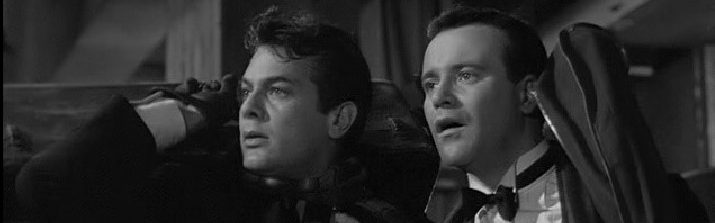
“The Kindness of Strangers” (2019) starring Zoe Kazan, Andrea Riseborough, Tahar Rahim, Caleb Landry Jones, Jay Baruchel, & Bill Nighy

Clara (Zoe Kazan- an American) and her two young sons (Anthony and Jude) drive from their small town to NYC. Alice (Andrea Riseborough- a Brit) runs a forgiveness support group out of a church; Marc (Tahar Rahim- a Frenchman w/ Algerian heritage) and his lawyer/friend, John Peter (Jay Baruchel- a Canadian), are recent members. While searching for food at a Russian restaurant (The Winter Palace), Clara meets Marc, who has been given the chance to revitalize the eatery by the owner, Tim (Bill Nighy- a Brit/also served as a producer). After their car is towed away, Clara’s family meets Alice (an ER nurse), who gets them into a shelter. A young/jobless man, Jeff (Caleb Landy Jones- an American), comes upon this shelter and becomes a volunteer.

The title of this indie film (free on several streaming platforms) comes from the Tennessee Williams’s play A Streetcar Named Desire. Blanche Dubois declares “I have always depended on the kindness of strangers” at the finale. The play was adapted into a movie directed by Elia Kazan, the grandfather of Zoe. The writer/director of The Kindness of Strangers is a Danish woman, Lone Scherfig; she directed a (must-see) drama- An Education (2009)- starring Carey Mulligan and Peter Sarsgaard. One reviewer was reminded of Frank Capra (a 1st gen Italian-American); this filmmaker’s movies carried positive messages and focused on the shared humanity of Americans. This film (which premiered at the Berlin Film Festival) was shot in NYC, Canada (Ontario), and Denmark.

The Kindness of Strangers has an understated quality, though there are some serious issues explored, incl. domestic abuse, unemployment, homelessness, lack of family/community support, and loneliness. Though the speed of life in NYC is fast, the pacing here allows us to notice each character of the fine international/ensemble cast. Kazan (who may be more known for rom coms) does V well w/ drama here; your heart just goes out to her character! Rahim is NOT only handsome/graceful (perhaps b/c he’s French IRL), he has a quiet intensity onscreen (as his character is mostly reserved). I admired the look of the film; the cinematographer is Sebastian Blenkov. Have you noticed that romantic scenes (dir. by women) are usually quite effective/memorable? There is a kiss btwn Kazan and Rahim which is full of emotion and (heartfelt) desire.

[1] Brilliant story, brilliant acting, brilliant directing. […] From the very beginning, it captures you; quite sad at some points, but it just kept getting better.

[2] The success of the movie depends on how Zoe Kazan carries her part and she carries it well. Good movie for anyone who has an interest in human relations.

[3] Homelessness is one thematic layer to a story that investigates kindness as the social glue that matters most and is possibly also the most underrated of dispositions or inclinations, often being seen as weak or oversensitive. Personally, I found it a lovely film, quite moving in places with its acknowledgment that, without kindness and the generosity of strangers, society would fall apart.

-Excerpts from IMDb reviews

“Shockproof” (1949) starring Cornell Wilde & Patricia Knight

A parole officer falls in love with his client, a beautiful blonde who served time for murder, and he’s determined to help her go straight despite her interfering criminal boyfriend. -Synopsis

After having served 5 years in prison for killing a man while defending her gambler bf, Harry (John Baragrey), Jenny Marsh (Patricia Knight) is set for parole. Her parole officer, Griff Marat (Cornel Wilde), is determined to make Jenny go straight. Griff gives Jenny a job in his own home, something against regulations; she is a companion to his blind/Italian/immigrant mother. At first, Jenny still has feelings for Harry, BUT as Griff shows her more compassion and care, she falls in love w/ him. Harry seems to encourage this, b/c he has plans to crush Griff’s dreams of running for political office. Wilde (NOT the most versatile actor, yet fit well here) and Knight (a former model; his wife IRL) divorced in 1951. They do have good onscreen chemistry, as some viewers have noted.

This film (which is available for free on YouTube) features the iconic Bradbury Building as the location of Griff’s office. A YT movie critic noted that Bunker Hill (a real LA neighborhood) is the place of the Marat house. The post WWII era brought back big fashion, incl. Dior’s sumptuous “New Look” of full skirted ladies’ garments (launched in 1947). Costumer Jean Louis used that trend to his advantage in the clothes he designed for this film. The reaction of the two boys to meeting a “bleached blonde” was fairly typical. Peroxide blonde hair was usually relegated to film stars, pin up girls, or the “fast” women. It was a difficult, often risky process to do; the mid-century would bring innovation in hairstyles (and hair coloring become easier/less costly to obtain). A popular ad line from Clairol asked: “Is it true blondes have more fun?”

Douglas Sirk (who is now considered a “director of women’s pictures”) signed on to make this film on the basis of Sam Fuller’s original screenplay, which was called The Lovers, and ended in a violent rebellion against the system keeping Griff and Jenny apart. Co-producer Helen Deutsch rewrote the script and added the (approved by Columbia) ending. Sirk hated the ending; he later said Deutsch’s changes ruined the film by removing the sense of doom in Fuller’s story. As noir-istas may know, Fuller worked as a writer and/or director on many films (incl. Pickup on South Street). Sirk went on to direct the Technicolor melodramas Magnificent Obsession (1954), All that Heaven Allows (1955), and Imitation of Life (1959). I want to see Written on the Wind (1956); I missed the recent screenings at AFI (here in Silver Spring).

[1] They say it’s the journey, not the destination, that usually counts with stories. In the case of Shockproof it’s good to just focus on the journey…

[2] the main woman is a bit wooden. You can feel her trying too hard too often

…there are some things to really enjoy here. You might find the movie ordinary for awhile, with some nice clichés and a steady development. But then, halfway, there’s a huge and really sudden twist. And a believable one, a great scene. Suddenly there is a whole new plot.

[3] Sirk and Lawton consistently have bar shadows featuring prominently; Jenny Marsh never escapes themThe Marat home is a delightful amalgamated design of art deco and the ornate.

-Excerpts from IMDb reviews

Park Chan-wook’s 1st American Movie: “Stoker” (2013) starring Mia Wasikowska, Nicole Kidman, & Matthew Goode

India Stoker (Mia Wasikowska) was not prepared to lose her father and best friend, Richard (Dermot Mulroney), in a tragic auto accident. The solitude of her woodsy family estate, the peace of her tranquil town, and the unspoken somberness of her home life are suddenly upended by not only this mysterious accident, but by the sudden arrival of her Uncle Charlie (Matthew Goode), who she never knew existed. When Charlie moves in with her and her emotionally unstable mother Evie (Nicole Kidman), India thinks the void left by her father’s death is finally being filled by his closest bloodline. Soon after his arrival, India comes to suspect that this mysterious, charming man has ulterior motives. Yet instead of feeling outrage or horror, this friendless young woman becomes increasingly infatuated with him.

-Synopsis (Fox Searchlight Pictures)

India: You look like my father.

Charles: I am so sorry.

India: It’s your loss, too.

This is probably a film that most of you haven’t heard of before; I learned about it from the Fatal Attractions pod (which focuses on the erotic thriller genre). This is the 1st American movie helmed by South Korean director Park Chan-wook. The screenwriter is also a man of color, Wentworth Miller (best-known as the star of Prison Break); he graduated from Princeton w/ a degree in English Lit. Stoker is inspired by Hitchcock’s Shadow of a Doubt (1943); there is a mysterious uncle who re-emerges into the life of a family after many yrs. of absence. It soon becomes obvious that this man could be dangerous.

India: He [her father] used to say, sometimes you need to do something bad to stop you from doing something worse.

This film (w/ a run time of 1 hr. 39 mins.) is a character-driven thriller which is moody, atmospheric, and tense (though NOT in an obvious way). The pacing may seem slow to some viewers, as it takes some time for the plot to get moving. The main location is an elegant/historic estate in Nashville, TN. Though they play Americans, Wasikowska and Kidman are Aussies and Goode is a Brit. Two of India’s classmates (Alden Ehrenreich and Lucas Till) would go on to their own movies and TV shows in a few yrs.

Mia’s posture: her stillness and her straightness speaks to the personality of a character who likes everything ordered around her. -Park Chan-wook, director

We know that life as a teen can be V tough, esp. when you don’t fit in w/ your family and/or peers. Evie laments the fact that she and India don’t have a close relationship; India was more of a “daddy’s girl” (we see them hunting/bonding in flashback). India is an outcast at her HS; she wears a sullen expression, doesn’t speak much, and dislikes being touched. After school, a few of the boys bully her w/ insults (yikes), though there is one boy who is sympathetic. India plays the piano, as does her Uncle Charlie; this brings them together in a (pivotal) scene. So far, I’ve seen Wasikowska in HBO’s In Treatment, Jane Eyre (2011), and Tracks (2013) co-starring Adam Driver. I think that (like Driver) she has intensity onscreen (even w/o speaking) and plays troubled/sensitive characters V well. If you’re looking for something out of the ordinary, you can rent this movie (Amazon).

[1] The look and feel of Stoker is impressive. The atmosphere is well-sustained throughout. If I had a criticism, it would simply be that the story ultimately isn’t all that original and there aren’t really a lot of surprises. What it does do though is to take a fairly standard psychological thriller story and make it interesting by way of cinematic techniques.

[2] The film has a set of amazing talents. […] The violence is a bit tamed for a Chan-wook Park film, but here, he aims more at the fortitude. He fills them with an impressively energetic style which helps executing its eeriness. The gorgeous cinematography captures the melancholia of their world. Everything is just stunning.

...the film rather tests the anxiety of the audience in these strange haunting exteriors. The film is not trying to be innovative, but the reason why it’s interesting is because of its intense use of filmmaking styles.

-Excerpts from IMDb reviews

Reviews of Two Modern Thrillers: “The Voyeurs” (2021) & “Sanctuary” (2022)

The Voyeurs (2021) starring Sydney Sweeney, Justice Smith, Ben Hardy, & Natasha Liu Bordizzo

Pippa {Sydney Sweeney) and Thomas (Justice Smith) move into their dream apt [in Montreal, Quebec]. They notice that their windows look directly into the apt opposite- inviting them to witness the volatile relationship of the attractive couple across the street. But when they attempt to anonymously intercede in their lives, they unwittingly set in motion a chain of events that will lead to disaster.

Have y’all seen any of the Amazon original content? I recently saw one ep of the (V pricy) spy series Citadel; it was mainly mindless action. I have low tolerance for Priyanka Chopra (who was huge in Bollywood some yrs. ago). Richard Madden is wasted; maybe he needs a new agent (as he has been getting stuck in action/superhero roles). As for The Rings of Power, those are hrs. I’ll never get back; even the CGI and action looked unimpressive! However, I had (some) hopes for this erotic thriller after hearing an interview w/ the director (Michael Mohan) on the Fatal Attractions pod.

The setting is urban; the production design is sleek, clean, and modern. All of the actors are young, fit, and attractive; they dress, act, and speak like today. Pippa (an optometrist) and Thomas (a musician who now composes for commercials) have lost the spark in their relationship after a few yrs. together. They joke around a LOT and act more like besties than lovers. You’ll be reminded somewhat of Hitchcock’s Rear Window, as they get TOO interested in their (sexy/dramatic) neighbors- a hunky fashion photographer named Seb (Hardy) and his elegant wife- Julia (Liu Bordizzo). After some time, we see problematic elements in these strangers’ marriage. Spying on them is no longer fun for Thomas (who was the most sympathetic character), though Pippa gets more obsessed (after meeting Julia at her eyeglass store). In the last act, the movie goes off the rails (you can see for yourself)! There are explicit scenes and nudity; this could put off some sensitive viewers. Sadly, the plot drives the story, NOT the characters (who needed to be developed more). The running time (nearly 2 hrs) felt TOO long.

[1] The story gets preposterous at the end, I feel like it had one too many twists, literally just one less at the end and it’ll be fine by me. […]

As a whole, feels like it was stuck in-between two minds, whether to make it an erotica or not.

[2] I liked the overall tone, aesthetics, cast, acting, concept… But the ending was too much. The unreal twists have kind of broken the spell for me. I’d love to see this movie with a simpler more realistic third act.

[3] I really think that the twists and turns that come after were put in as an afterthought when the director realised nobody was going to buy what he had sold up to that point.

He should have just made an erotic thriller. […] The attempts at seriousness or social commentary come to nothing, and in the final act, are totally abandoned.

-Excerpts from IMDb reviews

Sanctuary (2022) starring Christopher Abbott & Margaret Qualley

Follows a dominatrix and Hal, her wealthy client, and the disaster that ensues when Hal tries to end their relationship. -Synopsis

This indie film is available for rent on Amazon Prime; I learned about it from TIFF vids on YT. I had high hopes here, BUT it failed to impress me. It’s hard to care about the two characters. We keep wondering IF Hal (Abbott) and Rebecca (Qualley- daughter of Andie McDowell) are just playing a game or if they could be in love. One reviewer commented that it looks like Film School 101. The movie was filmed over 18 days in one location (an elegant hotel room). The dialogue is (sadly) NOT strong and some of the directorial choices didn’t make sense. Hal’s daddy issues are V obvious. If you’ve seen HBO’s comedy Girls, you know that Abbott (who mainly works in theater and indies) is a pretty good actor (who can convey vulnerability). Both actors throw themselves into the story. There is no nudity here (and it lacked heat/sexual chemistry); there are strong words (insults) tossed about that may be offensive to some viewers. The ending was unexpected and ineffective!

I think the movie is about performance in so many ways. There are so many lines in the movie where characters say, “Say the words that I told you to say, the words don’t matter,” or, “I wrote the scenes, all you did was say the words, this is the question that you’re supposed to ask me next, I want you to stick to my script.” It’s funny because when I was developing the script with Micah Bloomberg, there was never any conversation where we were like, “Oh, this is about filmmaking or acting!” That never came up, but in retrospect, gosh, that is all over the story. -Zachary Wigon, director

[1] It’s an up and down ride of domination and submission, game or no game. Freedom or going with the narratives you’re assigned in life.

It’s also a love story of sorts, maybe not the healthiest, but that’s how it goes sometimes in life.

[2] Margaret Qualley is the indisputable show stealer here… […]

However, the film failed to create a similar impression.

And that’s mainly because the writing, the narration, it all felt too obtrusive, too pretentious.

[3] Two good performances by Margaret Qualley and Christopher Abbott weren’t enough to save me from this bloated talkfest that I felt just became more repetitive and unbelievable as it progressed. […]

It’s hard for me to surmise that all this photographed dialogue would be any more effective had the film have been shaped as a play; instead, I think “Sanctuary” would have had more impact as a twenty-minute short rather than increasingly struggling to stay on its feet for a full 96 minutes.

-Excerpts from IMDb reviews