The Dinner (2016) starring Richard Gere, Laura Linney, Steve Coogan, & Rebecca Hall

[1] Nobody can accuse The Dinner of being unambitious, but I would like to accuse it of being an ambitious mess. 

[2] What happens when your are face to face with a clear moral dilemma? Can you bury your integrity in lies? Surely, such a deception will haunt you if you have a conscience. Self interest makes it harder to do the right thing, and this test will be faced by everyone at some point in their life.

[3] The enablers… are not helpful. They help perpetuate the problem via denial and/or self-interest. Unfortunately, this is how many families deal with mental illness: by winging it and not bothering to look up symptoms of abnormal and/or destructive behavior, and/or to consult with experts when these behaviors emerge.

-Excerpts from IMDB reviews

A former high school history teacher, Paul Lohman (Steve Coogan- an Englishman I’d only seen in Philomena) and his wife/cancer survivor, Claire (Laura Linney- one of my faves), meet at an exclusive restaurant w/ his older brother/congressman, Stan (Richard Gere), and his much younger wife, Kate (Rebecca Hall). Paul (who sees the negative side of life) obviously doesn’t want to be there; he has a very strained relationship w/ Stan and thinks that this food is extravagant. The plan is to discuss over dinner how to handle a crime committed by their teenage sons, Mike and Rick. We see in flashbacks the teens harassing a homeless woman, throwing garbage at her, then setting an ATM building on fire (w/ her inside). This was filmed, uploaded online (by Stan’s adopted black son- Beau), and made the local news. The boys have not been identified yet; the parents are very anxious about how this will affect their future.

Stan’s tireless assistant, Nina (Adepero Oduyo from 12 Years a Slave) is in the sitting room, holding his calls. Stan is a very busy man, running for governor and trying to pass a mental heath bill (partly b/c his own family has been affected by this issue). Kate is the one who truly knows Stan’s kids, as she has time for them (his ex-wife Barbara, played by Chloe Sevigny, has run away to India). We learn that the brothers’ mother was abusive, esp. to Paul. Stan was favored and had to be “the man of the house” (since their father was “checked out” emotionally). Paul lost his job after he lost his cool (in front of his class), cursing and insulting them. He was placed on meds, though stopped taking them (wanting to “feel like my old self”). Claire noticed that he was hiding the pills, yet didn’t say anything. 

This film has an interesting premise and tries to tackle big issues: morality, loyalty, mental illness, family dysfunction, and different fears (losing a spouse to illness, losing a child to jail, etc.) It’s not effectively put together, unfortunately. The sound design is bad (at times), the camera moves around (for no reason), and the editing is choppy. The characters turn out to be unlikable, yet not in an entertaining way. (A few viewers mentioned that the play Carnage tackles some of the same issues, but in a more interesting way.) The ending of the film is very abrupt- it’s as if the producers ran out of money! 

The author of the book “The Dinner” (Herman Koch) walked away from the European premiere of this film in early 2017. The Dutchman did not wish to stay for the after-party to talk to the director (Owen Moverman), cast members, or audience. Koch thought the scriptwriter had transferred his cynical story into a moral tale. He esp. disliked the movie’s reference to themes like American violence and the stigma of mental illness. A Dutch film came out in 2013, then an Italian one in 2014; both were well received and nominated for many awards.

I think it needed to be trimmed down. I loved the performances, esp. Rebecca Hall; I think she’s great in everything. I wasn’t bored. I was exasperated on some occasions. 

-Comments from Mark Kermode’s review (see below)


Christian Bale (& co-stars) discuss new movie: Hostiles

Set in 1892, Hostiles tells the story of a legendary Army Captain (Christian Bale), who after stern resistance, reluctantly agrees to escort a dying Cheyenne war chief (Wes Studi) and his family back to tribal lands. Making the harrowing and perilous journey from Fort Berringer, an isolated Army outpost in New Mexico, to the grasslands of Montana, the former rivals encounter a young widow (Rosamund Pike), whose family was murdered on the plains. Together, they must join forces to overcome the punishing landscape, hostile Comanche and vicious outliers that they encounter along the way. -Synopsis for the film

This “revisionist” Western film is written/directed by Scott Cooper (Crazy Heart). The cast includes Academy-Award winner Bale and nominee- Pike (also a Brit). Veteran character actor  Studi (who is of Navajo heritage); you may know him as the imposing antagonist, Magua, on The Last of the Mohicans. The supporting cast includes Stephen Lang, Rory Cochrane, Ben Foster (Hell or High Water), Adam Beach (who is Canadian from the Ojibwa nation; co-starred on SVU), Q’orianka Kilcher (Bale’s co-star on The New World) and up-and-comer Timothee Chalamet (currently on big screens in Call Me By Your Name and Lady Bird). 

Official trailer for the movie:


Some of the cast and director talk re: the film at TIFF:


Christian Bale on CBS This Morning:


Bale, Rosamund Pike, & Wes Studi on BUILD (a live interview series in NYC):  


A relaxed, in-depth interview (shot in LA) w/ DP30: The Oral History of Hollywood:

Star Wars: The Last Jedi (2017) starring Mark Hamill, Carrie Fisher, Adam Driver, Daisy Ridley, John Boyega, & Oscar Isaac

WARNING: This review contains SPOILERS for the new Star Wars movie.

Growing up, mentorship, and the search for belonging (identity) continue to be themes in this sci-fi movie series. The Last Jedi is also re: growing old and regret (esp. when it comes to Luke and even Leia). Early filming began on Skellig Michael Island (off the coast of County Kerry, Ireland) in September 2015 w/ Mark Hamill and Daisy Ridley. It was speculated by MANY fans that Rey is actually the long lost daughter of Luke. Being the prankster that he is, Mark Hamill made a comment, accidentally referring to Daisy Ridley as “my dau… I mean my colleague.” Luke wants no part of fighting, throwing his lightsaber over his shoulder (much to Rey’s dismay and surprise).

The island has some cute (new) creatures- the Porgs and “caretakers.” There are some touching moments (esp. for long-time fans) when Luke sees the Falcon (Han Solo’s old ship), reunites w/ Chewy, and bumps into R2-D2. Chewy can’t eat the roasted Porg b/c he feels guilty- one of the funniest moments in the movie. There is a good amount of humor in this movie.

There is more of lovable rogue Poe Dameron (Oscar Isaac)- YAY! He’s in the cool battle at the start, along w/ co-pilot BB-8, and also makes fun of Gen. Hux (Domnhall Gleeson). You can’t deny the great chemistry between Finn (John Boyega) and Rose (Kelly Marie Tran), a new character. Tran did not tell anyone she was doing a Star Wars movie, instead saying she was working on an indie film in Canada. She even got some maple syrup to bring back to her parents. Finn and Rose go to an island like Vegas (and Monte Carlo); this was a quite different world for Star Wars. 

“This movie introduces new stuff into The Force” (as reviewers on Collider noted), such as the connection between Rey and Kylo Ren- formerly known as Ben Solo- (Adam Driver). These scenes were quite effective, thanks to the sound design, and the acting skills of both actors. I watched Driver on Girls (HBO); the more I see, the more I appreciate his acting. He is an unconventional leading man, not just b/c of this looks, but b/c he is easily able to convey confusion and vulnerability. Rey thinks that Kylo isn’t totally lost, though he’s trying to pull her over to the Dark Side of the Force. And did you hear re: how Driver didn’t know what “emo” meant (until recently)? Social media was buzzing about this.

Leia (Carrie Fisher- in her final role) finally uses the Force- I didn’t expect that! She had begun training as a Jedi shortly after the events of Star Wars: Episode VI – Return of the Jedi (1983). Motherhood, and troubles in the Galactic Senate, caused her to cut that short. Fischer was also a writer; she helped Rian Johnson with the writing of the script for this film.

The Bishop’s Wife (1947) starring Cary Grant, Loretta Young, & David Niven

The only people who grow old were born old to begin with. -Dudley says to Julia

Episcopal bishop Henry Brougham (David Niven) has been working for months on plans for a cathedral which he hopes will be paid for by his wealthy new parishioners, including cranky widow- Mrs. Hamilton (Gladys Cooper). He is losing sight of his family, wife Julia (Loretta Young) and young daughter, Debbie. Dudley (Cary Grant), an angel who everyone seems to admire (incl. Matilda- the family housekeeper), comes to assist Henry w/ his work. Julia tells Dudley about when the family lived in a different (more humble) neighborhood, where Henry was connected w/ the people; she misses their life in that parish. They go on outings together and become friends (though Dudley begins to wish it were more). Dudley even manages to warm the heart of Mrs. Hamilton by uncovering something from her youth. Henry begins to believe that Dudley is trying to replace him!

We all come from our own little planets. That’s why we’re all different. That’s what makes life interesting. -Dudley explains to Julia and Prof. Wutheridge

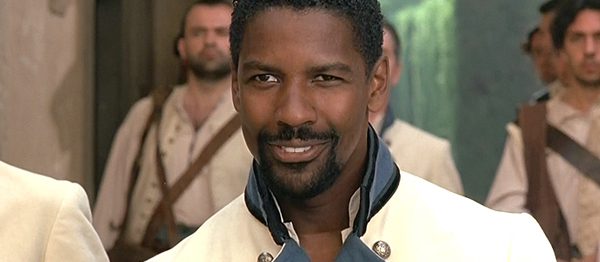
This movie was remade as The Preacher’s Wife (1996) starring Denzel Washington, Whitney Houston, and Courtney B. Vance. I thought that Julia (Houston) was much more interesting; she performed charity, sang in the choir, and (eventually) decided to take in her young son’s friend. Loretta Young’s character doesn’t really get to do much; she is a pretty, elegant woman who is kind to others. 

Originally Grant played the bishop and  Niven the angel. When original director left the film, Henry Koster replaced him, then realized that the actors were in the wrong roles. Grant wanted the title role of the bishop; he eventually accepted the change and his role as the angel was one of the most widely praised of his career. Robert J. Anderson, one of the kids throwing snowballs in the park played young George Bailey in It’s a Wonderful Life (1946). Debbie is played by Karolyn Grimes (Zuzu in It’s a Wonderful Life).

[1] The special effects are wonderful for a time when special effects were pretty much in their infancy.

[2] …Niven gets to showcase his British stiff upper lip while at the same time display some very funny slapstick pratfalls. It’s a charming movie that has lots of holiday atmosphere. 

[3] …its presentation of the characters, especially Dudley and Henry, ring true. You can believe that Henry, underneath his bitterness and myopia, really loves his wife. He’s just… forgotten his direction in life, is all. 

[4] Cary Grant is so underrated, but here he does some fabulous acting even when he’s not speaking. His face is even more expressive in his younger years which works to his advantage and is a sign of good directing as well.

-Excerpts from IMDB reviews

The Rack (1956) starring Paul Newman

Capt. Edward Hall, Jr. (Paul Newman)- the son of an Army colonel (Walter Pidgeon)- returns to the US (San Francisco) after 2 yrs in a Korean War prison camp. For 6 mos, he was isolated from the other prisoners and psychologically tortured. His younger brother (Paul) died in combat during this time. Ed is quickly charged w/ treason, assigned a JAG lawyer- Lt. Col Frank Wasnick (prolific character actor Edmond O’Brien)- and put on trial. Paul’s widow Aggie (Anne Francis) is empathetic and a willing ear for Ed, though his father is embarrassed (even refusing to come to court). He pleads “not guilty,” but had he reached a personal breaking point during his capture? 

This is a must-see if you like intelligent, sensitive, serious, and well-acted l films! The teleplay was written by Rod Serling (creator of the original Twilight Zone TV series). Paul Newman (then 30 y.o.) is able to keep the viewer’s attention in the quiet and intense moments; he slowly reveals the layers of his character. Newman creates terrific chemistry w/ his co-stars, most notably Pidgeon and Francis. The theme of the distant/unemotional father and son yearning for acceptance and love isn’t rare for Hollywood, though it’s handled very well here. When Ed leaves home and goes to stay in a hotel, a concerned Aggie goes to check on him. In a more obvious story, they may have become a romantic pair; here they become good friends.

The prosecution of a (previously decorated) war hero isn’t an easy thing to handle; it falls upon Maj. Sam Moulton (Wendell Corey), who isn’t too happy w/ the assignment. Lt. Col. Wasnick sees that Ed is full of self-pity, so has to boost his spirits and prep him to tell his story on the stand. O’Brien gets some of the best lines (during the courtroom scenes). Even the soldier who testifies against Ed, Capt. John Miller (character actor Lee Marvin), isn’t a one-note  character. It turns out that he also suffered tortured, though his was physical. Aggie confides her worries in a neighbor played by a very young (and pretty) Cloris Leachman; she later became an iconic character actor in comedy.

[1] This is fascinating drama… The ending is ambiguous and may well lead to a heated debate…
 
[2] …the theme is relevant today as it was when it was made.
 

[3] Paul Newman’s second film… [his acting] demonstrates that, even then, he was the truly finest screen performer around. But the very nature of his style has always placed him behind –or to the side of– more “bravura” actors of the time. Unlike Brando and Clift and Dean- he is much less self-centered; in other words he is a sharing actor. This puts the SCENE in focus more than the performance…

[4] I thought the acting was sincere and I was draw to this character that seemed to feel he lost his way by being human.
 
-Excerpts from IMBD reviews