Tag: Friendship
12 Years a Slave (NOW PLAYING)
I will not fall into despair! I will keep myself hardy until freedom is opportune! -Solomon Northrup
This film is being called a Pan-African film, since the director (Steve McQueen) is a black Briton, the star (Chiwetel Ejiofor) is Nigerian-British, and the female lead (Lupita Nyong’o) is Kenyan. As we have seen, outsiders are often the best storytellers of the American experience, of which slavery is a (large) part.

I went to see this film during its second week of release; the theater was packed. Yes, it was difficult (at times) to handle. One of my friends, a lawyer with a background in civil rights, commented that “it should be taught in schools.” Based on a true story (memoir), 12 Years a Slave basically blows every other film I’ve seen about slavery out of the water; nothing even comes close!
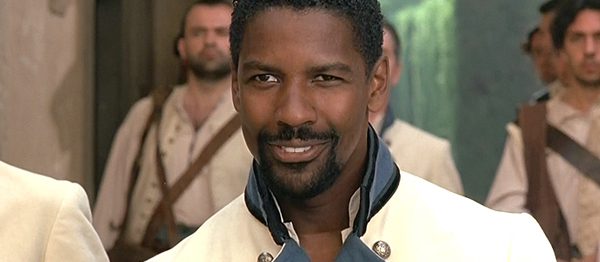
Alex Haley’s Roots (starring a young LeVar Burton) is a fine TV miniseries, but will look outdated to younger viewers. Even one of my favorite films, Glory, is told mainly through the eyes of its white hero, Col. Robert Gould Shaw (Matthew Broderick), not the enlisted men of the 54th Massachusetts Colored Regiment (including Andre Braugher, Morgan Freeman, and Oscar-winning Supporting Actor Denzel Washington). Queen (starring a young Halle Berry) is another of Haley’s stories turned mini-series; many will find the (inherently unequal) romance between a white boy and one of his family’s slave girls problematic. Amistad is a powerful film, but it’s focus is mainly on a group of white abolitionist men; Ejiofor has a small role as an interpreter in that film.
SPOILERS: Don’t read further if you have not yet seen, or don’t want to know, details from this film.

This film is told in flashbacks through the eyes of a free man and talented violinist, Solomon Northrup (Ejiofor, finally in a star-making role). He lives a comfortable life with his loving wife (a well-respected cook) and two adoring children in upstate NY at the start of the tale. He has a fondness for nice clothes. One day, two white men from Washington, DC, approach Solomon about making some (fast) money with their traveling circus show. Solomon goes to DC with them and works for 2 weeks, before they drug him (during a lavish dinner) and sell him into slavery. Solomon wakes up in a dark cell, chained up like an animal, but there’s nothing he can do (being in Virginia). He keeps crying out that he’s a “free man,” but no one will listen.
Solomon gets to know the others being held with him, including a well-spoken woman, Eliza (Adepero Oduye), who was once the favored slave of her owner, and has a daughter by him. She also has a adolescent son, who Solomon comforted when he was separated from his family. After this master died, his daughter had them all sold. Solomon, Eliza, and a dozen others are taken further South (via large riverboat).
One young man, Clemens (Chris Chalk from The Newsroom), explains that he shouldn’t be sold further South, since he was taken from his master. He talks tough about escaping by attacking the sailors, though they are greatly outnumbered. Another man (Michael K. Williams from The Wire) is stabbed to death before he can make a move. (I read that fans of The Wire were especially shocked to see such a strong man killed so easily/quickly.) A beautiful young woman grabs onto Solomon’s hand, not in passion, but with loneliness. We wonder how long ago was she loved by anyone?

Paul Giamatti plays a callous/brutal slave trader, ironically named Mr. Freeman, and does an excellent job. Clemens is “rescued” by his rightful master, to whom he clings like a thankful little boy. Why? Because it’s the master he knows, and has treated him decently. Freeman separates Eliza from her son without flinching, since he can get a great price for a healthy, adolescent boy.

When a kindly slaveowner, Mr. Ford (Benedict Cumberbatch), tries to buy Eliza and her daughter together, Freeman ups the price of the little girl. He can get a fine price for her in Louisiana, since she’s half-white and “will grow to beauty.” (This is what Eliza feared all along- shudder!)

He [Mr. Ford] has a debt problem and can’t manage his business- he sells human beings in order to make himself solvent. -Benedict Cumberbatch
Mr. Ford, who runs a small mill, buys Solomon and Eliza. When they get to his home, Ford comments to his wife that the separation “couldn’t be helped.” Mrs. Ford lightly tells Eliza: “Your children will soon be forgotten.” (This made the audience gasp with shock.) Solomon tries to calm Eliza, but she stays despondent. Mrs. Ford grows “weary” of Eliza’s crying and has her sold away.
It doesn’t take long for Solomon’s intelligence to show, impressing Master Ford, but garnering the wrath of his insecure overseer, Tibeats (Paul Dano), who has a keen dislike of the African race. (That song he sings is horrid!) When Solomon’s plan works, Mr. Ford presents him with a violin.

Who can forget the long, yet highly effective, hanging scene? Wow! McQueen keeps the camera focused (for a long time) on Solomon, struggling to stay alive, while the other slaves go about their daily routine. Thus, the audience can’t look away! Master Ford takes Solomon into the house one night to protect him. After barely escaping death, Solomon lies in the foyer, shaking and speechless. Ford fetches his rifle, knowing that Tibeats and his brothers seek to kill Solomon. He tells Solomon that he’ll “transfer the debt” to Mr. Epps. I was a bit surprised to see Cumberbatch (the quintessential posh Brit) in this film, but he did a fine job, as usual.

How brutal is Mr. Epps? Well, during a recent Daily Show interview, Irish actor Michael Fassbender explained that the saying “don’t be such an Epps” still exists in a part of Louisiana. Master Epps owns a cotton plantation, twists The Bible to his liking, and is liberal with the whip. From the start, Epps takes a dislike to Solomon (who is smarter than his owner, but not so good at picking cotton). A petite, soft-spoken slave woman, Patsey (Nyong’o), is the best picker in the field. “God give her to me,” Epps comments, after he praises her work. (Fassbender is quite creepy in this scene!)

It turns out that alcohol is not Epps’ only weakness- he wants Patsey to yield to his “love” (though he doesn’t know the meaning of the word). When Epps comes to Patsey late at night, she stays as still as she can and won’t look him in the eyes. Mistress Epps (Sarah Paulson from Studio 60 on the Sunset Strip) focuses all her rage at Patsey (throwing a heavy vase; scratching her cheek) in front of the other slaves. (I’ve never seen Paulson in such a meaty film; she’s very scary!)

We get to see Patsey singing and making straw dolls in the fields. And we see the desperation in Epps’ eyes when he’s near Patsey. Why is his wife so one-note? What’s her deal? An African-American journalist shares her analysis:
A white woman’s rage: privileged with no position, positioned with no power, powerful with no promise of independence, fidelity or safety. The white woman could not properly direct her rage at her husband, she could not rail against white male supremacy. She too was in hell, and Black enslaved women were the only ones in the chambers below her. -Michaela Angela Davis

[Slave narratives are…] vital for us to have our feet on balanced ground in the future. I think it’s a chunk of our history that we are in denial about and that we don’t accept. And it is the root, I would say, of our contemporary domestic problems. -Alfre Woodard
On her off day, Patsey spends time with Mistress Shaw (Alfre Woodard, one of my favorite actresses), the wife of a neighboring farmer, who used to be a slave herself. Master Shaw fell in love with her, she encouraged his affections, and now lives in ease and comfort. “In time, the good Lord will handle ’em all,” she tells Solomon, when she sees his downtrodden face. Patsey and Solomon have some tea with her, a brief respite from their lives.

One of the saddest scenes in the film is when Patsey wakes Solomon up late at night, and begs him to drown her in the nearby river. She doesn’t have the courage to kill herself, and knows it’s not the Christian way. Solomon is horrified by her request- he can’t do that!

A white indentured man, Armsby (Garrett Dillahunt from Raising Hope), comes to work on the farm. When he brings in a small load of cotton, Epps gives him a few encouraging words, but whips a few of the slaves (who were also bad pickers that day). After Solomon is whipped, Armsby tends to his wounds and tells his life story. Solomon asks him to mail a letter, but he’s not to be trusted! When Epps confronts Solomon, he has to think fast and convince his master that Armsby (the newcomer) is the liar. Notice how Epps often leans on his slaves, as if they’re furniture? But in this scene (pictured above), I thought the director was also trying to show the terrible embrace of slavery in which these two men were bound.

After a long internal struggle, Solomon reconciles himself to his position as a slave (like all the others in the fields). He joins fellow slaves in song in one pivotal scene.

When a traveling builder from Canada, Mr. Bass (Brad Pitt, also a producer), comes to work on a project, Solomon finds a sensible/sympathetic ear. This self-made man is not scared to tell Epps that he feels slavery is inherently wrong. Finally, Solomon reveals his story and gives him a letter. Notice how Bass is sitting on a beam above Solomon? (Some critics found Pitt’s presence distracting, but I saw no problem.)

There is no Hollywood ending here; an elderly white store owner travels down South to vouch for Solomon. Epps rages at him, but Solomon quietly follows his old acquaintance to a carriage. Patsey watches as Solomon rides away; we know she’ll probably never escape her horrible life. When Solomon returned to his family, I felt the tears coming. There was a big “whoa” from the audience. His daughter is married with a baby son. Solomon’s son is taller than him now. Solomon is overcome with emotion, realizing how much he missed (it was stolen from him). He bows his head, cries, and says “forgive me for my lateness.” His wife quietly replies, “There is nothing to forgive.” He survived- that was his heroic act.

Ejiofor (if you don’t know his work already) will steal your heart in this movie. His large, expressive eyes say it all, even when Solomon has to swallow his pride (being a free man) and stay silent. When he tries to run away, but runs smack into a lynching in progress, it’s just so heartbreaking! There is nothing showy or overdone- he simply inhabits the character. At one (silent) point, he looks directly into the camera, as if to say “Yes, this really happened.” Fassbender, who has worked with McQueen on several other films, creates a crazed, obsessed, alcoholic- a very compelling villain.
The cinematography is also very effective- we see the brutality of slave life in the (often) gorgeous environment. The director takes some risks, but they pay off. Nudity is used, not to titillate, but to point out the powerlessness of enslaved black bodies. Long takes show us the seriousness of the topic- no romanticizing here. The bloody whipping scene involving Epps, Patsey, and Solomon will stay in your mind for a long time.
The Hobbit: The Desolation of Smaug (TRAILER #2)
The Bad and the Beautiful (1952)
NOTE: This review contains MAJOR spoilers!
This film takes some time to get going, but when it gains momentum- yowza! Near the start of the film, ambitious movie producer Jonathan Shields (Kirk Douglas) notices potential in young actress Georgia Lorrison (Lana Turner). Boldly, he goes over to her ratty apartment very late at night. Georgia stumbles home drunkenly and finds him just sitting in her armchair. Georgia is a bit shocked, but then hits on Jonathan. (That’s how she gets parts, after all.) He’s disgusted, letting her know that she needs to quit drinking and sleeping around, if she ever hopes for a real career.
It turns out that both of them had successful fathers. Georgia keeps a little shrine to her father, a Hollywood legend, in one corner of her place. At first, it’s all (show) business: Jonathan boosts up Georgia’s confidence by standing up to her detractors, believing in her potential, and promoting her for a juicy part.
Georgia falls deeply in love with Jonathan, but he can’t return her feelings. They have a tremendous fight instead of celebrating their mutual success. Georgia never works with Jonathan again, but she becomes one of Hollywood’s most sought after leading ladies.
A Southern academic, James Lee Bartlow (Dick Powell) writes a novel which becomes very popular. Jonathan wants the author to write the screenplay for a feature film, so he invites the unassuming professor and his devoted/lovely wife, Rosemary (Gloria Grahame) to Hollywood. To ensure that Bartlow has time to write, Jonathan plans a weekend getaway for Rosemary and a suave actor. It goes tragically wrong, but compels Bartlow to write a book about Rosemary. Bartlow feels that only Georgia Lorrison is capable of bringing his wife to life onscreen.
In the last scene, we see a director (one of Jonathan’s business partners), actress (Georgia), and writer (Bartlow) come close to the phone to listen in on Jonathan and a studio head. They all want to be in his light (literally) once more. Jonathan used them to get ahead in his career, but their own careers were improved because of him.
Kirk Douglas is impressive as a complicated anti-hero. Jonathan feels alive when he’s working, but after that, he goes through a troubling time. Douglas is more than up for the challenge of this role- you can’t see the acting! Lana Turner is much more than a (very) pretty face. Her character goes through a transformation- from troubled B-movie actress to headliner. Gloria Grahame’s role is small, yet pivotal. She’s a Southern belle who loves her husband, believes in his talent, yet is awed by the glamor of Hollywood.
Green Dolphin Street (1947)
MGM wanted June Allison to play Marguerite opposite Lana Turner. She turned the role down because she didn’t think anybody would believe that William could prefer her to Lana. MGM then essentially drafted Donna Reed into the role, whose misgivings were also strong (but she had no clout at the studio).
On the island of St. Pierre in 1847, young adult sisters Marianne (Turner) and Marguerite (Reed) lead happy, comfortable lives as the daughters of shipping magnate Octavius Patourel (Edmund Gwenn, who played Kris Kringle in Miracle on 34th Street) and his wife Sophie (Gladys Cooper). Marianne has a sharp mind and knows a lot about her father’s work, which he thinks is not quite ladylike. Marguerite is more reserved and dreamy. From afar, Marianne is loved by a young local man, Tim Haslam (Van Heflin), much to the dismay of his girlfriend.
When new neighbors move in next door, the sisters rush over to welcome the family: Dr. Edmund Ozanne (Frank Morgan, who played the wizard in The Wizard of Oz) and his handsome son William (Roger Hart). At first, William is not that impressed with the girls, but thinks they’re very pretty. But in no time, the three become good friends.

One day, Marianne insists on taking William out to see a large shipping vessel, The Green Dolphin. It’s under the command of a gruff, yet kind-hearted Irishman, Captain O’Hara (Reginald Owen, who played Scrooge in A Christmas Carol). He proudly shows the young people around his ship, and tells them a bit about his adventures. He’s been as far away as New Zealand! Both Marianne and William are fascinated by the thought of such a life.
Since William wants to be a sailor, Marianne convinces her father to provide the funds. (Being a man, he can do the things she’s always dreamed of doing.) William goes off to London for 2 years. Their families don’t realize that William and Marguerite have fallen in love; they decide to keep it a secret. They do, however, write letters to each other.
Lana captured Marianne’s pragmatic, incisive, ambitious nature which veils a deep-seeded vulnerability and need to be loved. And Donna Reed was certainly lovely even next to Lana, and did well with Marguerite, who is sweet-tempered, feminine and agreeable, but not as intellectually captivating as her sister. Marguerite is more like William. They are both indolent, romantic and playful. But Marianne has the drive, savvy and fortitude… –Comment on IMDB
I’m not going to reveal too much, because I want you all to check it out! I recommend this movie to anyone who enjoys large-scale, old-fashioned epics (such as Gone with the Wind). However, because of its few main leads and focused theme (first love vs. love that grows over time), it seems like a small picture. There is fine acting, sharp dialogue, and lots of character development. I especially liked Heflin’s anti-hero character.