Hostiles (2017) starring Christian Bale, Rosamund Pike, & Wes Studi

The quietest moments of his [writer/director Scott Cooper’s] movie are often the best. Wow, Majors, what a find! He had the ability to command the screen w/o showboating. -Grace Randolph (Beyond the Trailer)

It has everything I want in my modern revisionist westerns. It’s slow-paced and quiet, beautifully filmed, uses realistic graphic violence and is extremely sad from the opening scene to the end credits. -Kellen Quigly (YouTube)

This is a movie is about PTSD in the Old West. It’s about the harshness of war. Captain Joe Blocker is introduced as a man who represses any feeling that isn’t hatred, guilt, grief or wrath. War has tortured his soul and landed him in a pit, and for a long time, instead climbing out, he just continued to dig the hole deeper and deeper… -Mark Mirabella (YouTube)

Synopsis: In 1892, after almost 20 yrs of fighting the Cheyenne, Apache, and Comanche natives, US Cavalry Captain, Joseph Blocker (Christian Bale), is ordered by his superior, Col. Biggs (Stephen Lang), to escort an elderly/ailing Cheyenne chief, Yellow Hawk (Wes Studi)- the man he MOST despises- and his family from New Mexico to the chief’s ancestral home in Montana (Valley of the Bears). Joseph’s unwelcome assignment is complicated when a grieving widow, Rosalee Quaid (Rosamund Pike), joins his band of soldiers and travelers. Then, an aggressive pack of Comanches attack and other dangerous events occur. On a path filled w/ hostiles, can this soldier complete his final duty w/ his life (and mind) intact? 

Director Scott Cooper, who was at the helm of 2009’s Crazy Heart starring Jeff Bridges and Maggie Gyllenhaalseems VERY comfortable w/ the Western genre. This film (which I missed seeing in theaters late last Fall) contains MANY beautiful wide shots of landscapes. Cooper’s characters are much more complicated than what you’d find in a typical (think John Ford/John Wayne) Western. Though it’s well-made, it can seem slow and (according to some critics)- a BIT self-indulgent. I feel that about 10-15 mins could’ve been edited out. The themes here are quite dark, so if you’re looking for an escape, this is NOT the film for you! From the first scene of Hostiles, viewers know that things are going to get real. 

The performances of the ensemble of actors is the main reason to see this film, along w/ its dialogue (some of which is quite deep and unexpected). Rosalee, though she suffered so much and is racked w/ grief, still held to her faith in God (as she explains to Blocker in a quietly effective scene). I thought Pike (as usual) did VERY well w/ her role; Rosalee  grew and changed over the month-long journey. Traveling w/ the Indians, she came to see them as real people, NOT merely savages to be feared. I was pleasantly surprised by how well a bearded Rory Cochrane (Blocker’s oldest friend- Master Sgt. Thomas Mertz) portrayed a depressed soldier. He often drinks heavily, suffers from PTSD (as does Blocker), and feels that life is NOT worth living anymore. A grad from West Point, played by up-and-comer Jesse Plemons (Lt. Rudy Kidder), is articulate, capable, BUT maybe too kind-hearted for his own good. There are a few light moments involving Timothee Chalamet (Philippe DeJardin, a French immigrant turned Army private); his role is VERY minor. The standout soldier (and actor) is newcomer Jonathan Majors (Corp. Henry Woodson- a strong/loyal/religious African-American who has served yrs under Blocker). Majors has that X factor; the viewer’s eye is drawn to him even when he’s NOT saying anything. He gets to have one of the best scenes in the 3rd (final) act opposite Bale.

On this journey, we also meet Ben Foster (disgraced soldier/murderer Philip Wills); he and Blocker served together yrs ago. Wills (wearing chains and stripped of his rank) ran away from his post and brutally killed several innocent people. At a small town, Lt. Col. McCowan (Peter Mullan) asks Blocker to escort Wills to a fort for his punishment (hanging), and Blocker quickly agrees. It’s obvious that Blocker feels contempt for Wills, BUT the prisoner is quick to point out that they’re BOTH killers, and the roles could be easily reversed. Foster (a quite gifted actor) should’ve gotten some more to do. There is a volatility and sense of unease which he creates w/ Wills.

The native actors, incl. Canadian Adam Beach (who has appeared on many films/TV shows) and Q’orianka Kilcher (The New World- also co-starring Bale), don’t have a LOT of dialogue, BUT are portrayed in a realistic/sympathetic manner. Studi (who is a film/TV vet) has a kind of solemnity, strength, and can also be vulnerable. He has come a long way from the villainous/warrior Magua viewers loved to hate (The Last of the Mohicans). This tale is (mainly) about the personal journey of one white man- Blocker- who comes to see the natives as fellow humans.

The film rests on Bale’s (always capable) broad shoulders, and he doesn’t disappoint. He even learned some of the Cheyenne language, which he speaks w/Studi (who I wished had been a BIT more developed). MANY of us have watched Bale grow-up onscreen; he has evolved from a slim/fresh-faced/wide-eyed teen to a muscular/middle-aged/powerhouse actor. For his portrayal of Blocker, Bale has tapped into his dark side; there is anger, resentment, hate, worry, and (in time) empathy and kindness on his face. Rosalee (w/ whom he forms a connection) is a catalyst for change in his life, as is the suicide of Mertz. I thought that Blocker’s change of heart was TOO abrupt, BUT this film is worth a watch. 

Spoiler-Free Review: “BlacKkKlansman” (2018)

It’s relevant. It’s not a relic of the past. This is happening today. -Spike Lee re: the racism shown in his latest film

No film has channeled the hateful pulse of our moment… -Variety magazine (@Variety)

I thought it was one of Spike Lee’s most cogent films. I also thought it was the film with the most white gaze ever, and that’s not a complaint. -Monique Jones (@moniqueblognet)

There’s a moment… where Ron Stallworth, the protagonist, says we could never have a President like David Duke. It hits you like a ton of bricks because we now have something even worse: a President who thinks like Duke, only he camouflages it more effectively. -Adam Best (@adamcbest)

I’m a pretty big fan of Spike Lee; he has made some of my favorite (and also arguably, most socially relevant) films of the past three decades. As fans/critics have noted, his films ignore or minimize the “white gaze,” meaning characters behave as themselves, not responding only to “mainstream” American society. Since this is a based-on-real-events movie, his style is more subdued (though there are interesting touches that we’ve come to expect). The music (composed by Terence Blanchard) is very well-suited to the events and tone of the film. It deals w/ quite serious topics, yet has pops of (dark) humor that my audience really enjoyed. 

“We have to support Denzel’s son,” I emailed to my gal pal (a few days before we went to see this movie on opening weekend). John David (who plays Ron Stallworth, the first black policeman in Colorado Springs) speaks and moves like Denzel, yet has the face of  his mother, Pauletta. J.D. (as he is known) is 33 y.o. and a former NFL player who appeared on HBO’s Ballers. There is something fresh, wide-eyed (naive), yet also confident in his performance. He gets some really cool outfits as his “street clothes;” it’s the late ’70s after all. 

Adam Driver (now 35 y.o.) -wow, can I say about this talent!? After this role- I’m becoming a fan! The former Marine gives a very strong, yet subtle performance as Flip (Ron’s more experienced/skeptical undercover partner). In time, Flip comes to terms w/ his identity. I need to watch more of Driver’s indie films on Netflix. No offense to Star Wars fans, BUT franchises don’t give actors much room to stretch.

Topher Grace, who plays a young David Duke, had a tough time getting into the mindset of such a hateful man. The important thing to remember re: Duke is that he sought to change the image of the KKK- make it more mainstream. He was polite, well-spoken, usually wore suits and- eventually- reached a high level of politics. The other members of “The Organization” were a mixed bag, ranging from a low IQ hillbilly to gun nut, and a relaxed/friendly guy (who wants to grow local membership). One man’s wife yearns to play a bigger role to support the cause, so white women aren’t solely victims in this movie.

Corey Hawkins, an up and coming actor from this (DC) area, has a great speech near the start of the film. I’m excited also to see what he does next! Ron’s love interest, President of the Black Student Union at a local university, Patrice (Laura Harrier), also did a fine job. Some critics of Lee have (rightly) commented on his not-so-fully developed women characters in the past. He has addressed the (touchy, yet serious) topic, explaining how having matured (nearly 30 yrs in film-making)  and becoming a husband and father have helped w/ this issue. 

Fans of TV cop dramas will be in for an extra treat. Robert John Burke (Law & Order: SVU) plays the head of the Intelligence Division. Frederick Weller (In Plain Sight) plays a patrolman. Nicholas Turturro (NYPD Blue) has a brief, yet crucial role; his older brother (John) is a mainstay in many Spike Lee films. There are more surprises in this film- don’t want to give too much away.

Darkest Hour (2017) starring Gary Oldman, Lily James, Stephen Dillane, Ben Mendelsohn, & Kristin Scott-Thomas

WARNING: This review contains SPOILERS for the film.

Within days of becoming Prime Minister of Great Britain, Winston Churchill (Gary Oldman) must face one of his most turbulent and defining trials: exploring a negotiated peace treaty with Nazi Germany, or standing firm to fight for the ideals, liberty and freedom of a nation. As the unstoppable Nazi forces roll across Western Europe and the threat of invasion is imminent, and with an unprepared public, a skeptical King, and his own party plotting against him, Churchill must withstand his darkest hour, rally a nation, and attempt to change the course of world history.Synopsis from Focus Features

… we shall fight in France, we shall fight on the seas and oceans, we shall fight with growing confidence and growing strength in the air, we shall defend our island, whatever the cost may be, we shall fight on the beaches, we shall fight on the landing grounds, we shall fight in the fields and in the streets, we shall fight in the hills; we shall never surrender.

Let us therefore brace ourselves to our duties, and so bear ourselves, that if the British Empire and its Commonwealth last for a thousand years, men will still say, ‘This was their finest hour.’
–Excerpt from two of Churchill’s speech (before the Battle of Britain)

I saw this historical drama on SAT; it is part of Regal’s Oscar movie showcase (FEB 23-MAR 4). Darkest Hour (directed by Joe Wright) is very well-made w/ (I assume) great attention to period details. I esp. enjoyed the music (composed by Dario Marinelli). Gary Oldman is completely transformed; his Churchill is both intimidating, yet (somewhat) relatable in the quiet moments. It’s not just about the cigars, whiskey (champagne for lunch- FYI), and a quick temper. Churchill has doubts, many ideas (some that are unpalatable to his own party), a sense of humor, and- most of all- thinks that victory over the Nazis is possible. We know Oldman is capable of delving deep into each role; however, this takes him to another level!

Kristin Scott-Thomas (who has been working in France for many years) plays Clemmie, Churchill’s supportive (yet NOT a pushover) wife. It was nice to see her on the big screen after a long time. Another woman in this tale is a young typist, Elizabeth Layton (Lily James from Downton Abbey), who works closely w/ Churchill, though quite upset by their first meeting. Was this character based on a real woman? Or did the screenwriter create an (accessible) character to draw the viewer into the world of WWII-era British politics? I suspect it was a bit of both. Miss Layton is able to adjust to the (eccentric, sometimes insensitive) ways of her employer, who becomes Prime Minister (May 1940) at the start of the film. James does a fine job, able to keep a stiff-upper lip (as was expected in that world), yet also expressing strong (yet controlled) emotion in few key scenes.

Churchill keeps his “enemies” in his cabinet, including former PM Neville Chamberlain (considered a coward by many) and Viscount Halifax (Stephen Dillane from Game of Thrones). Halifax, who turned down the PM job before Churchill was chosen, wants to negotiate some sort of peace w/ the Germans (if possible). Of course, Churchill can’t stomach that idea; he has trouble even saying the name “Hitler” when required. The PM’s speeches and radio broadcasts helped inspire British resistance, especially during the difficult days of 1940–1941.

I was very impressed by Ben Mendelsohn (who plays King George V); he hails from Australia and has been receiving critical acclaim after breaking into Hollywood in middle-age. Check him out in S1 of Bloodline (Netflix) or in Rogue One (a prequel to Star Wars), if you haven’t already. Not only does Mendelsohn get the unlikely king’s (subtle) stutter right, his mannerisms and expressions seem pitch-perfect for a man deeply concerned about his nation (yet unable to express his feelings). At first, he is “a bit scared” of Churchill (FYI: He supported Edward’s marriage to Wallis Simpson), though the men become allies in time. Any man whose name frightens Hitler is worth his support, King George explains to Churchill.

The Post (2017) starring Tom Hanks & Meryl Streep

WARNING: This review contains MILD SPOILERS for the film.

When American military analyst, Daniel Ellsberg, realizes to his disgust the depths of the US government’s deceptions about the futility of the Vietnam War, he takes action by copying top-secret documents that would become the Pentagon Papers. Later, Washington Post owner, Kay Graham, is still adjusting to taking over her late husband’s business when editor Ben Bradlee discovers the New York Times has scooped them with an explosive expose on those papers. Determined to compete, Post reporters find Ellsberg himself and a complete copy of those papers. However, the Post’s plans to publish their findings are put in jeopardy with a Federal restraining order that could get them all indicted for Contempt. Now, Kay Graham must decide whether to back down for the safety of her paper or publish and fight for the Freedom of the Press. In doing so, Graham and her staff join a fight that would have America’s democratic ideals in the balance. -IMDB summary

This tightly edited/well-acted historical drama (directed by Spielberg) is a MUST-SEE for our (politically troubled) times! Spielberg wanted to have his film released as quickly as possible given the parallels between its theme and the burgeoning political “fake news” climate in the U.S. According to Streep, the physical shoot started in May 2017 and finished at the end of July and Spielberg had it cut two weeks later. The film went from script to final cut in a modest 9 mos.

Tom Hanks (WaPo editor Ben Bradlee) and Meryl Streep (newspaper owner Katharine Graham) are the main draws here, BUT there are also chances for (younger/less famous) actors to shine. You will some fine moments featuring Matthew Rhys (Daniel Ellsberg), Alison Brie (star of GLOW), Jessie Plemons (most recently on Black Mirror), and Sarah Paulson (who plays the supportive wife of Bradlee). As I heard on NPR, this movie doesn’t get into the fact that Bradlee actually had 3 marriages which were far from ideal.  

At times, Graham is unsure of what steps to take w/ regards to the future of her paper (which was losing money). She is a woman in a man’s world, who didn’t have to work until she suddenly became a widow in middle-age. Her trusted ally is her long-time attorney, Fritz Beebe (actor/writer Tracy Letts); he is a male ally (though they wouldn’t have used this term in the late ’60s). Beebe helps Graham stands up to Arthur Parsons (Bradley Whitford), who thinks she’s NOT the right person to head the paper.

Can journos be friends w/ politicians? Hmmm, it’s NOT such a good idea, as BOTH Bradlee and Graham come to realize. Bradlee knows that he was TOO close to the Kennedys (personally), so got the kinds of access that other newsmen wouldn’t have. Graham’s long-time friendship w/ former Secretary of State Robert McNamara (Bruce Greenwood) is tested, BUT she doesn’t let him intimidate her into being silent. Ben Bagdikian (Bod Odenkirk) provides some of the humor in the movie; he is a dogged senior reporter who tracks down Ellsberg.


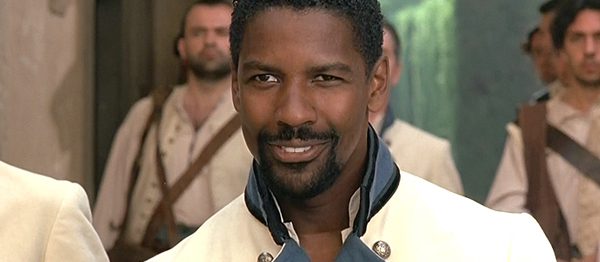
The Magnificent Seven (2016) starring Denzel Washington, Chris Pratt, & Ethan Hawke

Director Antoine Fuqua brings his modern vision to a classic story in MGM and Columbia Pictures’ re-imagining of The Magnificent Seven (based on Seven Samurai). With the town of Rose Creek under the control of evil robber baron Bartholomew Bogue (Peter Sarsgaard), the desperate townspeople (“simple farmers”), led by young widow Emma Cullen (Haley Bennett), employ protection from seven outlaws, bounty hunters, gamblers and hired guns: warrant officer Sam Chisolm (Denzel Washington), card playing Joshua Farraday (Chris Pratt), former Confederate sharpshooter Goodnight Robicheaux (Ethan Hawke), Bible-quoting bounty hunter Jack Horne (Vincent D’Onofrio), East Asian knife fighter Billy Rocks (Byung-Hun Lee- a star in his native South Korea), wanted outlaw Vasquez (Manuel Garcia-Rulfo- a Mexican actor), and young Comanche Red Harvest (Martin Sensmeier). As this motley crew prepare the town for the violent showdown w/ Bogue and his (many) hired men, these mercenaries find themselves fighting for more than money.

Right off the bat, we realize that Bogue is a cartoonish villain, unlike Eli Wallach’s bandit leader in the original. Bogue shoots a farmer, Matthew Cullen (Matt Bomer), who stands up to him outside the town church. That’s NOT even a smart bad guy move, as the reviewers on What the Flick!? said. Don’t look for much characterization in this movie, though it’s nice to see Denzel and Hawke’s chemistry onscreen many years after Training Day. I wanted to know more re: how they were connected, aside from one scene. I thought Haley Bennett did well; her character ends up fighting (w/ the Seven; in the original, it was a young Mexican man from the town.

The cast is diverse, which has a contemporary edge, as Mark Kermode noted. Vasquez repeatedly calls Faraday “huero;” Faraday asks what it means, but receives no reply. It’s a Mexican racial slur meaning “whitey.” Considering the ethnic make up of the Seven in 1879, the fact that this is the only racial slur directed at any one of the Seven during the entire film is somewhat of an anachronism. The two former Confederates (Faraday and Robicheaux) and African American Chisholm would likely have at least some animosity. Horne who has taken “300 Comanche scalps” would certainly make Red Harvest feel wary. D’Onfrio (who also worked earlier w/ Hawke) is playing an eccentric, over-the-top character, yet pulls it off so well that you want to know more. The way he speaks is so unusual, too. As for the Asian, every race looked down on them at this time in US history! However, the men’s mutual respect for each other as fighters may go some way to explain lack of racial tension.

I’m NOT a fan of Chris Pratt; the jokes he is given (mostly) fall flat and NOT that funny. In moments, his way of talking and attitude comes off as TOO modern (as Jeremy Jahns observed). As for Pratt’s screen presence and charisma factor, sorry, BUT I fail to see it. Fuqua cast him in the Steve McQueen role, BUT he just doesn’t measure up. I don’t see how this actor keeps getting big roles! I applaud him for losing weight/getting healthier after age 30. I heard that he and Denzel became quite friendly on the set; maybe Pratt picked up some tips from the veteran actor. We can hope, right?

This film embraces cliches and the typical things you expect from the Western genre. The action here is bigger, louder, and longer (in part to the incorporation of the Gatling gun in the third act). OK, I was NOT expecting that, which made the stakes higher and created even more danger for the heroes and the townspeople. Aside from the action, one of the reasons to see this movie is its music. Fuqua explained that James Horner’s team visited him on set in Baton Rouge, one month after the composer’s accidental death, to deliver the completed score. Horner liked the script so much that he composed the entire score during pre-production (WOW)! Almost each time there is a shot of Vasquez, we hear a reused cue from Horner’s score for The Mask of Zorro (1998). I knew this sounded familiar, then saw this bit of info on IMDB. From the moment when Faraday gets his horse and rides away, there are some beats from the original movie’s theme song, but with different instruments. In the closing credits the entire original theme song is heard.

There are some great wide shots in this film (which you can see on Amazon Prime). It aims for entertainment, NOT critical acclaim. It’s got some nice moments, BUT I expected more. There are a few lines (of Denzel’s) that I thought were quite fitting for the genre and his character. He does a fine job (as usual); he has an all-black costume, yet plays it cool (restrained), as Yul Brynner did. We eventually learn that Chisholm wants revenge against Bogue b/c of what happened years ago to his family. Finally, Emma gets to kill the man who took her husband from her. Only three of the Seven survive the fighting: Chisholm, Vasquez, and Red Harvest- this may be subversive (as Kristy Lemire said).