“The Unbearable Lightness of Being” (1988) starring Daniel Day-Lewis, Juliette Binoche, & Lena Olin

Tereza: I know I’m supposed to help you, but I can’t. Instead of being your support I’m your weight. Life is very heavy to me, but it is so light to you. I can’t bear this lightness, this freedom… I’m not strong enough.

Tomas (Daniel Day-Lewis) is a young/apolitical/doctor in 1960s Czechoslovakia; he lives the life of a Casanova, working his charm on many women. He is involved w/ a sophisticated artist (“friends w/ benefits” would be the term today), Sabina (Lena Olin). On a trip to operate on a patient in a rural town, he meets/falls hard for a shy waitress, Tereza (Juliette Binoche). In time, Tomas asks Sabina to help find a job for Tereza. The two women (opposites in many ways) meet, share an interest in photography, and become close friends. These three characters are are caught up in the events of the Prague Spring of 1968, until Soviet tanks crush the (non-violent) rebels, and change their lives forever.

Tomas: Some people never change. Some people are always scoundrels.

This is the type of film to recommend to anyone who thinks they can’t be “wowed” by movies anymore! DDL was just 30 y.o. when this film was shot- wow! This is his 1st big movie; he played a quirky/supporting role in A Room with a View (1985). DDL at first turned down the role, feeling the script made Tomas too nice. The script was revised and things from the book (by Milan Kundera) were added, making the character less “perfect.” Speaking of perfection… Roger Ebert wrote that Binoche was “almost ethereal in her beauty and innocence” after watching 23 y.o. French woman’s performance. As the French say: Vive La Binoche! Swedish-born Olin (32 y.o.) has her American film debut; some of today’s single/childfree/independent-minded women may relate to her character. Speaking of Swedes… Stellan Skarsgard (mid-30s) has a small, BUT pivotal role in the 3rd act.

To me, thoughts are fun and art is fun. The strength of our society should not be idle entertainments, but the joy of pursuing ideas. -Philip Kaufman, director

If you want fame, and a beautiful statue made of yourself, don’t be a screenwriter. The writer disappears. He works in the shade. -Jean-Claude Carriere, screenwriter

I was surprised to learn that the director, Philip Kaufman, is an American (NOT European, as I’d assumed). The cinematographer (a respected veteran in his field) is Swedish; Sven Nykvist was know for giving the films he worked on the simplest and most natural look imaginable. Milos Forman personally offered Kaufman the opportunity to direct the movie. Forman had to pass the chance to direct b/c he still had family in Czechoslovakia; he feared for them in case of a negative reaction from the Soviet government (occupying the country at the time). The sequence depicting the 1968 Soviet invasion of Czechoslovakia incorporates real documentary footage of the era shot by students of Prague Film School.

[1] Romanticism originally doesn’t mean romance. The 19th century romantic hero was always a doomed one. The romantic characters long for something larger than life. The frailness, lightness of things is unbearable to those sensitive beings. This is why romantic stories typically end with the death of their heroes. Romanticism is the opposite of Hollywood, as there is no happy end. The epitome of a romantic story is for example “Romeo and Juliet”, where death is preferred to an impossible love story.

Because such intense feelings are a threat, some people try to escape them by taking nothing seriously.

[2] There has been many threesomes in cinematic history. The acting power in these three is one of best. Daniel is able to make the charismatic cad likable. Lena is sexual dynamite. Juliette is pure magic in this one. It is a great threesome against the backdrop of compelling political turmoil.

[3] Highlighting this impeccable picture are three sensational performances, a masterfully adapted screenplay full of beautiful and intriguing dialogue and quite possible the finest cinematography of the ’80s. Day-Lewis perfectly encompasses the charm of Tomas with a subtle charisma that keeps my eyes glued to him every time he appears on screen. The young Juliette Binoche is adorable, shy and emotionally powerful, but also plays it off very subtly. Lena Olin is overwhelmingly seductive and crafts a sense of freedom unlike any I’ve ever seen. These characters are all very human which means they have their fair share of flaws and the performances capture every essence of them so perfectly.

[4] …the film itself has stayed in my mind like few others. Yes, it’s very long, but the characters are so memorable that the length didn’t bother me at all – I loved the time spent in their company. In particular, Juliette Binoche and Lena Olin are each astonishing in their own way. Olin is ferociously sensual and mesmerizing, while Binoche is superlatively sympathetic and sensitive. Two of the best female performances I can remember. By the end of the film I was totally wrapped up in these people’s lives. This film is deeply erotic but in an intelligent and adult way…

-Excerpts from IMDB reviews

“Lost in La Mancha” (2002)

They’ve got a story… but have lost the plot. -Tagline for the film

You may’ve heard that some movies languish in “production hell” for years. This is a documentary film from directors Keith Fulton and Louis Pepe; they’d intended to shoot the development and pre-production of Terry Gilliam’s (long-awaited) movie- The Man Who Killed Don Quixote. After the movie had to shutdown, Fulton and Pepe were wary of finishing their film, but Gilliam commented: “someone has to get a film out of this. I guess it’s going to be you.” The narrator of the doc is Jeff Bridges, one of Gilliam’s favorite actors.

I think he’s a little bit the Quixote. He’s the dreamer, the idealist. The one who sees things that the rest of us humans can’t see. -Benjamin Fernandez, Production Designer

Before filming begins, Gilliam had to move from Hollywood studio to European financing. The budget was cut from $40M to $32M (V high by European standards). Gilliam is a dreamer (like Quixote), so his vision is uncompromising. His department heads will have to do a LOT w/ what little they’ve been given. During pre-production and filming in Spain, what the director can’t foresee ALL the problems that will arise!

Terry, as we all well know, has the tendency of overloading everything. I mean, there is nothing ever simple and plain. -Nicola Pecorini, Director of Photography (D.P.)

I learned that Orson Welles tried to make his own version of this tale, BUT he failed several times! We’re taken through the pre-production, as we learn about what Gilliam and his co-writer (Tony Grisoni) changed around with the classic Cervantes story. A commercial director named Toby (Johnny Depp) gets sent back in time to where Don Quixote (French actor Jean Rochefort) mistakes him for Sancho Panza, his peasant sidekick; they go on adventures through the book’s stories. There is a brief animated sequence where we learn that Gilliam’s films (aside from The Adventures of Baron Munchausen) have been risks taken by Hollywood studios, but they made money and received critical acclaim.

[As a storm comes in, disrupting filming] Which is it, King Lear or Wizard of Oz? -Gilliam

There are humorous scenes w/ the (V large/jolly) men auditioning to play giants. We see a young/optimistic Johnny Depp giving input to Gilliam and rehearsing a few scenes; he looks gorgeous! Depp’s former wife, French singer/actress Vanessa Paradis, is mentioned a few times, though NOT seen much in the doc. She was cast as the female lead and did some costume tests. The extras didn’t have time to rehearse. It turns out that the main location (a nature preserve) is where planes make a LOT of noise up above. There is a powerful thunderstorm that pauses filming; the equipment has to be protected and the people race for cover! We hear that 70 y.o. old Rochefort (who’d been learning English for 6+ mos.) has a prostate infection (so it’s TOO painful for him to ride a horse).

Making a film with Terry is like riding a bareback pony. Just grab onto the mane, dig in the heels and the knees, and hang on, ’cause you’re in for the ride of your life. -Phil Patterson, First Assistant Director

The production company (French) is V worried, an insurance company (American) becomes involved, and Gilliam is losing control (and he knows it). Someone has to be let go, so Phil Patterson (who as First A.D. is to handle the other matters while the director works w/ actors) decides to quit instead of being fired. The crew had a good sense of humor and were V committed, BUT the movie had to shutdown. D.P. Nicola Pecorini (Italian) ended up working on the final film- which came out in 2017. He did an impressive job (b/c the cinematography is V beautiful)!

“Lost in La Mancha” is an enjoyable celebration of those who tilt at windmills. -Excerpt from IMDB review

“The Report” (2019) starring Adam Driver, Annette Bening, & Jon Hamm

The Report is a thriller based on actual events. Idealistic staffer Daniel J. Jones (Adam Driver) is tasked by his boss Sen. Dianne Feinstein (Annette Bening) to lead an investigation of the CIA’s Detention and Interrogation Program created in the aftermath of 9/11. Jones’ relentless pursuit of the truth leads to findings that uncover the lengths to which the nation’s top intelligence agency went to destroy evidence, subvert the law, and hide a shocking secret from the American public. The Report is written and directed by Scott Z. Burns, and the film also stars Jon Hamm, Sarah Goldberg, Michael C. Hall, Douglas Hodge, Fajer Kaisi, Ted Levine, Jennifer Morrison, Tim Blake Nelson, Linda Powell, Matthew Rhys, T. Ryder Smith, Corey Stoll, and Maura Tierney. -Synopsis (Amazon)

This movie (acquired by Amazon Studios) is available for free on Amazon Prime; I saw it 2x (to get a better understanding on the issues). If you follow the news/current events, have an interest in politics, and/or enjoyed The West Wing– check this movie out. This has more of a documentary-style approach, so I wouldn’t call it a typical “thriller” (as classified on IMDb). Just before filming, the original plan of 50 days shooting was cut to a 26 days; the $18 million budget was slashed to ONLY $8 million! Burns revealed that ALL the actors (incl. Driver) were paid next to nothing on this project. Burns originally planned to approach the material in a satirical Dr. Strangelove or: How I Learned to Stop Worrying and Love the Bomb (1964) manner; the more he delved into the facts, he realized it had told in the most realistic fashion. The film premiered at Sundance and received a standing ovation for the real Dan Jones (who was present).

Sen. Feinstein: If it [waterboarding] works, why do you need to do it 183 times?

After completing the screenplay, Burns shared it w/ frequent collaborator, Steven Soderbergh, w/ a view as to who he’d suggest for the lead. Driver’s name came up almost immediately; Soderbergh directed Driver in Logan Lucky (2017). In 2007, Dan comes to Capitol Hill as an idealistic young man (wanting to help his country); we learn that he was a Math teacher in Baltimore w/ Teach for America (3 yrs). After 9/11, he switched his classes to national security while at grad school (Harvard). Dan gets a job working for Sen. Feinstein (D-CA), head of the Senate Intelligence Committee. He ended up working on the torture report for 5+ yrs- wow! Jones was available to provide feedback on set; Driver found this very helpful.

Gretchen (CIA Agent): You may not realize, but we were trying to protect this country from people who wanna destroy everything we believe in.

Dan: You may not realize it, but we are trying to do the exact same thing.

The term “enhanced interrogation” has no meaning under law; the tactics aren’t used by professional interrogators. It was created by the CIA to describe tactics that would otherwise be considered torture or unlawful detainee abuse. The science finds that rapport-based approaches to interrogation are the most effective, as FBI Agent, Ali Soufan (Fajer Kaisi), tells Dan when they meet in NYC. Soufan’s flashback was eye-opening and troubling. I’m now curious to see The Looming Tower, a HBO miniseries (w/ Jeff Daniels and French-Algerian actor, Tahar Rahim, as Soufan) which focuses on the FBI’s response to 9/11. The physician assistant, Raymond Nathan (Tim Blake Nelson), who came to oppose EIT, meets w/ Dan late at night in a parking garage (reminiscent of Deep Throat in All the President’s Men). The psychologists, James Mitchell (Douglas Hodge) and Bruce Jessen (T. Ryder Smith) were put in charge of not only creating and implementing the EIT program, but also evaluating its effectiveness. This is (obviously) a conflict of interest, as Dan explains to Feinstein in the 2nd hr. of the movie.

Evan (NYT Reporter): If the Times had your report, we would print it, tomorrow.

Dan: No. If it’s gonna come out, it’s gonna come out the right way.

I live just outside DC, so got a kick out of seeing Driver running past the national monuments. Then there are the (relatable) boring office buildings, basement rooms, and working on computers- LOL. Driver has a scene w/ his wife, Joanne Tucker (who he met while they were students at Julliard)! Tucker plays Gretchen (blonde CIA Agent working under the mysterious Bernadette, played by Maura Tierney); she confronts Dan and his colleague in the restaurant scene. Matthew Rhys plays Evan (the NYT national security reporter); he’s a friend of Driver who acted w/ him off-Broadway and appeared on HBO’s Girls. Corey Stoll (who also appeared on Girls) plays a lawyer, Cyrus Clifford, who Dan consults w/ after the CIA goes after him. Driver and Stoll played brothers in the comedy movie This is Where I Leave You (2014).

[1] The late Sen. John McCain gets the last word here, appropriately, with archive footage of his impassioned speech on the Senate floor regarding the necessity of forbidding the U.S. from engaging in torture, regardless of what the country’s enemies do.

[2] The cuts in time work well to put meat on the bones and helps to mix the political, ethical, and real life aspects of it. […]

It is more important than engaging though, and could have been a stronger film for embracing the complexity more than it did.

-Excerpts from IMDb reviews

Official trailer for The Report.
The director and actors talk re: The Report at Sundance Film Festival with Variety magazine.

“Silence” (2016) starring Andrew Garfield, Adam Driver, & Liam Neeson

In 1633, a Portuguese Jesuit priest, Father Ferreira (Liam Neeson), witnesses the torture/death of 5 fellow missionaries. He’s helpless (in the presence of Japanese inquisitors) to assist them in any way. In 1640, at St. Paul’s College in Macau (China), an Italian Jesuit priest, Father Valignano (Ciaran Hinds), receives news that Ferreira renounced his faith (became an apostate) after being tortured. In disbelief, Ferreira’s young Portuguese pupils, Father Sebastião Rodrigues (Andrew Garfield) and Francisco Garupe (Adam Driver), set off to find him. Valignano explains that they “will be the last priests sent to Japan.” Rodrigues and Garupe find a guide, Kichijiro (Yosuke Kobuzuka), an alcoholic fisherman who lost his family (after they failed to renounce Christianity). When they arrive in Japan, they witness first-hand the incredibly difficult lives of those who live as Christians (of course- in secret).

Rodrigues: I feel so tempted. I feel so tempted to despair. I’m afraid. The weight of your silence is terrible. I pray, but I’m lost. Or am I just praying to nothing? Nothing. Because you are not there.

The story is based on historical fact; while keeping the name of the hero’s mentor, author Shusaku Endo changed the nationality of the hero (an Italian named Giuseppe Cara) to Portuguese. Endo gave him the fictional name of Sebastian Rodrigo (translated as Sebastiao Rodrigues). Martin Scorsese and screenwriter Jay Cocks had written an early draft of the film in the 1990s w/ the intention of Scorsese directing it after Gangs of New York (2002). But when Scorsese couldn’t get financing, he decided instead to do The Aviator (2004). When the project was announced, Daniel Day-Lewis was set to play Ferreira, Gael García Bernal was set to play Rodrigues, and Benicio Del Toro was set to play Garupe. They dropped out of the project after MANY development delays.

Interpreter: But everyone knows a tree which flourishes in one kind of earth may decay and die in another. It is the same with the tree of Christianity. The leaves decay here. The buds die.

Garfield took a year off, grew out his head/facial hair, and studied w/ Father James Martin (who is now editor of The National Catholic Review). Garfield (who was raised w/ no religion) and Driver (who was raised in Baptist churches) spent a week at St. Beuno’s, a Jesuit retreat in Wales. They didn’t speak for a week, as that was the rule, so they could get a feel for the spirituality needed for the roles. The most noticeable change is the weight: Garfield lost 40 lbs. (down to 130 lbs), Driver lost 50 lbs (30 lbs. before filming and 20 lbs. during), and Neeson lost 20 lbs. Scorsese noted that there was a nutritionist on location w/ them, but I’m sure it was tough to subsist on such little food. I also learned that Ang Lee advised Scorsese on which locations to use while filming in Taiwan.

This film is quite impressive (esp. the cinematography by Rodrigo Prieto); he worked on some great-looking movies, incl. Frida; Alexander; Brokeback Mountain; Lust, Caution; and State of Play. Silence was tough for me to relate to (until Neeson’s character appeared late in the 2nd act). I think I’ve been agnostic (or skeptical of all religions) since age 7. My family also comes from a faith tradition which does NOT include proselytizing (the act or process of converting or attempting to convert someone to a religion or other belief system).

I’ve watched Driver’s work in the past month; this was on the list (BUT I wasn’t excited to see it). I thought Driver did a great job (as usual); Garupe appears in the 1st hour, then we learn about his fate in the 2nd hour. Scorsese commented that he chose Driver b/c “he looks like he stepped out of a Flemish painting.” Driver said (in several interviews) that one of his “dreams” was to work w/ Scorsese; I’m sure this is true of many actors. At the Telluride Film Festival, the director called the actor “one of the best, if not THE best, of his generation.”

But for all the torments they inflict, the Japanese inquisitors are no generic movie villains. They truly believe that Christianity is incompatible with the Japanese spirit, an alien pathogen imported by arrogant and incurious Europeans. […]

…one of the chief weaknesses of Silence is that so many of the characters in orbit around Rodrigues convey more narrative gravity than he does himself: Asano’s translator, Ogata’s inquisitor, Kubozuka’s fickle Kichijiro, Driver’s Father Garupe, a village elder played by Yoshi Oida. Andrew Garfield is a fine actor, but his calling card has always been a kind of boyish ingenuousness, and here it is tested beyond its limits.

-Christopher Orr (The Atlantic)

In the lead roles, Garfield and Driver (respectively graduates of the Spider-Man and Star Wars franchises) bring mainstream appeal, although wobbly Portuguese accents threaten to undercut the solemnity of their English-language dialogue. With his angular features Driver catches the eye, but it is to Garfield’s leonine locks that Scorsese is drawn, the handsome face of Rodrigues evoking beatific images of Christ in whose likeness the padre presumes to style himself. No wonder he sees a vision of Jesus when gazing at his own reflection in a stream. As for Neeson, he played a Jesuit priest in The Mission, but his late-in-the-day reappearance here is more evocative of his turn as Jedi master Qui-Gon Jinn in The Phantom Menace…

-Mark Kermode (The Guardian)

…one of the things that impressed me most about it was the care it devotes to understanding the position of the Japanese authorities. Without condoning their brutality, it lets a major character—Inoue Masashige (Issei Ogata), one of the officials in charge of eradicating Christianity from Japan, and the supervisor of the hero’s suffering—explain the official point-of-view on Western religion. He doesn’t just consider it a corrupting influence on Japanese culture, he doubts that Christianity can truly take root in the “swamp” (his word) of his home country.

-Matt Zoller Seitz (rogertebert.com)

…judged in broadly cinematic terms, “Silence” is not a great movie, despite having been directed by one of the medium’s greatest masters at a point of great maturity… […]

Still, viewed through the narrow prism of films about faith, “Silence” is a remarkable achievement, tackling as it does a number of Big Questions in a medium that, owing to its commercial nature, so often shies away from Christianity altogether. […]

For non-believers in particular, when Neeson resurfaces, his arguments, intended as the cruelest temptation, will instead sound perfectly logical.

– Peter Debruge (Variety.com)

[1] All the acting is exceptional, helped by strong writing and sharply drawn characters. Andrew Garfield is subdued but still splendid, while Adam Driver is powerfully moody. Liam Neeson is on fearless form…

[2] I will talk about the major flaw I had with the picture and it’s during the first 90 mins. I honestly thought 20 of these minutes could have been edited out, because I thought it took the film way too long to move forward and get to the real meat of the story, which is the Priest [Rodrigues] and Father Ferreira having a battle of wills.

…I really loved the fact that it didn’t treat the subject lightly or take on that mentality that you can’t question your faith.

-Excerpts from IMDB reviews
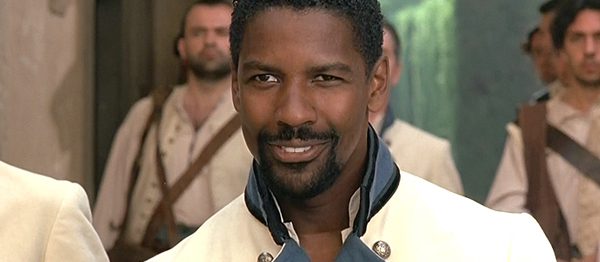
“The Last of the Mohicans” – Director’s Definitive Cut (1992) starring Daniel Day-Lewis

British Officer: You call yourself a patriot, and loyal subject to the Crown?

Hawkeye: I do not call myself subject to much at all.

In what is now upstate NY in 1757, the last members of a Native American tribe, the Mohicans- Uncas (Eric Schweig), his father Chingachgook (Russel Means- an activist in his first movie) and his adopted white brother Hawkeye AKA Nathaniel Poe (Daniel Day-Lewis)- live in peace alongside British colonists. They hunt a deer and bring it to the (log-cabin) home of their friends- the Cameron family. The two daughters of a British colonel named Munro (Maurice Roeves)- Cora (Madeleine Stowe) and Alice (Jodhi May- at just 16 y.o.)- travel from London to visit their father. In Boston, they’re met by their friend, Major Duncan Heyward (Steve Waddinton), who wants to marry Cora. They didn’t realize that it this was a dangerous time to come to this region, b/c their father’s letters were intercepted. When Cora and Alice are kidnapped by Col. Munro’s traitorous scout, Magua (Wes Studi- a scene-stealer), Hawkeye and Uncas go to rescue them in the crossfire of the French and Indian War.

Maj. Duncan Heyward: I thought all our colonial scouts were in the militia. The militia is fighting the French in the north.

Hawkeye: I ain’t your scout. And we sure ain’t no damn militia.

The screenplay was written by Michael Mann (who also directed) and Christopher Crowe; it was adapted in part from The Last of the Mohicans: A Narrative of 1757 (1826), a novel by James Fenimore Cooper, as well as the 1936 film adaptation The Last of the Mohicans. DDL (who is a Method actor) lived in the forests (North Carolina- where this film was shot) where his character might have lived, hunting and fishing for several months. The shoot employed more than 900 Native Americans from all over the US, mostly from the Cherokee tribes. Schweig (just 25 y.o.) is of Inuit and German heritage from Canada. Means (then age 55) was chosen my Mann for his role, though not a professional actor! He was of Ogala/Lakota Sioux heritage and raised on the Pine Ridge Indian Reservation in South Dakota.

Duncan: You there, Scout! We must rest soon, the women are tired.

Magua: No, two leagues, better water. We stop there.

Duncan: No, we’ll stop in the glade just ahead. When the ladies are rested, we will proceed. Do you understand?

Magua: [speaking Huron] Magua understands that the white man is a dog to his women. When they are tired, he puts down his tomahawk to feed their laziness.

Duncan: Excuse me, what did you say?

Magua: Magua say… he understand the English very well.

Magua (who is a compelling villian w/ an interesting backstory) explains to Gen. Montcalm (Patrice Chéreau) that his village was burned and children killed by English soldiers. He was taken a slave by a Mohawk warrior who fought for Col. Munro (Grey Hair). Magua’s wife believed he was dead, so she became the the wife of another man. To gain his freedom, Magua became “blood brothers” w/ the Mohawk, though he “stayed Huron in his heart.” He believes his “heart will be whole again when the Grey Hair and his seed are dead.”

Cora: l don’t know what to say, Duncan. l truly wish they did, but my feelings don’t – don’t go beyond friendship. Don’t you see?

Duncan: Respect and friendship. lsn’t that a reasonable basis for a man and a woman to be married? And all else may grow in time?

Cora: Some say that’s the way of it.

On my recent re-watch (I hadn’t seen this since H.S. ELA class), I noticed the (quiet) feminism of Cora. She (gently) refuses to marry Duncan b/c she doesn’t love him; she is protective of the (more fragile) Alice (even talking a pistol from a dead soldier for protection); she helps in the infirmary at the fort; and stands up for Hawkeye (before he is imprisoned for “sedition”). Also, you have to admit that Stow and DDL look great together and have sizzling chemistry! One of the best things about this movie is its music, incl. the love theme (which was inspired by a then-modern Irish song that Mann’s wife liked).

Cora Munro: Why were those people living in this defenseless place?

Hawkeye: After seven years indentured service in Virginia, they headed out here ’cause the frontier’s the only land available to poor people. Out here, they’re beholden to none. Not living by another’s leave.

Though there is the romance between Cora and Hawkeye, this movie is also bring to mind the ideals of Romanticism, where man’s most spiritual attribute was his imagination, nature was imbued w/ the divine, and the best life was stepping to one’s personal drummer. While Duncan stands for British imperialism (the old world), Hawkeye represents American individualism (the new world). Cora admits to Hawkeye that this frontier is very “stirring” to her, perhaps revealing that she’s ready for something new in her life (love).

[1] The love story I liked better was the one played in the background, an story that is absent, yet strongly felt throughout the movie. I am referring to the love story between Eric Schweig’s character, Uncas and Alice Munro, played by Jodhi May. It is the subtleness and the overtone-nature of the love that builds in us a sense of involvement.

Wes Studi is probably the fiercest villain I have seen on screen. His mere presence builds an acute level of intimidation. The character portrayal is flawless, and the casting done is excellent.

[2] “The Last of the Mohicans” was one of the most popular and acclaimed films of 1992. Its vision of early America, as it was during the French and Indian War, is captured in its utter brutality and beauty, complete with the many driving ambitions and clashing cultures of everyone involved.

This movie has a bit of everything, including action, romance, war, and passionate drama.

[3] Yes, there are many battle scenes, great reenactment of the scenery of the novel, and villains in all camps that provide the stormy progress of the novel. But it is in the quiet moments where Chingachgook speaks about the Great Spirit, the sanctity of nature, and his waiting to join the Great Council in the sky as the last of the Mohicans that the film’s power is best communicated. The acting is very fine and the cinematography is splendid.

-Excerpts from IMDB reviews