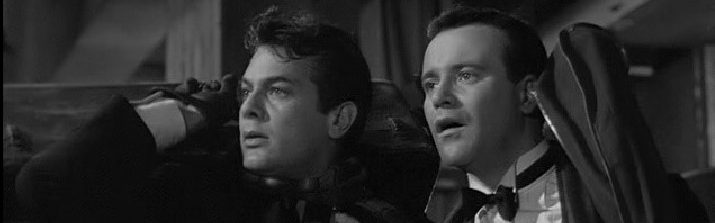
Re-watching Spike Lee’s “BlacKkKlansman” (2018) starring John David Washington & Adam Driver

When producer Jordan Peele first pitched “Black man infiltrates Ku Klux Klan” to Spike Lee, Lee thought it might be a Dave Chappelle skit, until Peele assured him the story was authentic. For Lee, the story was too outrageous to ignore. He had a few conditions for directing: incl. comedic elements, and drawing parallels w/ contemporary racial issues. When Lee was a young student at NYU Film School, he was so outraged that professors taught the 1915 movie Birth of a Nation (w/ no mention of its racist message or its role in the Klan’s 20th century rebirth). He made The Answer (1980) as a response; many professors took great offense and Lee was nearly expelled. Lee was saved by a faculty vote; after his success as a filmmaker, he became a professor there and also Artistic Director of the Graduate Film Department. The film is dedicated to Heather Heyer, a young/idealistic white woman who was killed in hit-and-run at the “Unite the Right” rally on August 12, 2017 in Charlottesville, VA. The film opened in the US on August 10, 2018 to mark the 1st anniversary of the rally/her death. Lee received a six-minute standing ovation at the Cannes Film Festival- wow! He also became the 2nd Black American to be nominated at the Academy Awards for producing, writing and directing in the same year.

Patrice: Are you down for the liberation of black people?

Ron: Power to the people.

Patrice: All power to all the people.

Ron: That’s right, Sista.

In the early 1970s, Ron Stallworth (John David Washington- oldest son of Denzel/former football player) is hired as the 1st Black officer in the Colorado Springs, CO police department. Ron (a real person) is a college grad from a military family who wants to make a difference in his community. He’s assigned to the records room, where he is faced w/ micro-aggressions and even openly racist remarks from others. Master Patrolman Andy Landers (Frederick Weller) is one of the uniformed cops who doesn’t hide his dislike of Blacks. Ron (who wears an Afro and knows “jive”) soon requests to go undercover. His immediate supervisor, Sgt. Trapp (Ken Garito), is supportive of Ron. Chief Bridges (John David Burke) is surprised by the bold move, but agrees. Ron is assigned to infiltrate a rally where civil rights leader, Kwame Ture AKA Stokely Carmichael (Corey Hawkins- recently played Macduff opposite Denzel in The Tragedy of Macbeth), is to give a speech. Ture was considered “radical” as he was a Black Panther; he had organized “The Freedom Rides” a few years earlier to register Black voters in the South. Two experienced undercover cops, Flip Zimmerman (Adam Driver) and Jimmy Creek (Michael Buscemi- younger brother of Steve), listen in from a surveillance van nearby. In line for the rally, Ron meets a young woman named Patrice Dumas (Laura Harrier), the president of the Black Student Union at Colorado College. This is a fictional character created for the movie; she is smart, articulate, and a challenging love interest for Ron. He hears Ture’s speech (very strong/impassioned); Hawkins provides gravitas to this small role.

Sgt. Trapp (to Ron): You know the way to sell hate? Affirmative action, immigration, crime, tax reform… He [David Duke] says, no one wants to be called a bigot anymore because Archie Bunker made that too uncool. So, the idea is under all these issues… everyday Americans can accept it. Support it. Until eventually, one day he gets somebody in the White House that embodies it.

The police don’t seem concerned w/ the Klan at this time; they think there is no activity locally. One day, Ron sees an ad in the paper, and calls up the number complaining re: Black people. He soon gets a return call from KKK’s Grand Wizard- and future politician- David Duke (Topher Grace)! Playing such a loathsome role posed a challenge for Grace, leading the actor to feel depressed. The men of “The Organization” (the term they use) are archetypes we’ve seen before; they’d be the type to vote for Trump (if around in recent years). Walter Breachway (Ryan Eggold) is the genial/clean-cut guy who quickly builds a rapport w/ Flip (posing as Ron in-person). Felix Kendrickson (Jasper Paakkonen- who is actually Finnish) is the wild-eyed/hot-tempered one whose plus-size wife, Connie (Ashlie Atkinson- recently seen on And Just Like That and The Gilded Age) wants to get involved in his cause. Ivanhoe (Paul Walter Hauser) is the fat, dim-witted younger man (looking to the others for guidance/approval). Felix has a collection of firearms; he suspects that Flip is Jewish (raising the tension/potential for danger).

Flip: For you it’s a crusade. For me it’s a job.

Ron: You’re Jewish. They hate you. Doesn’t that piss you off? Why are you acting like you don’t got skin in the game?

One of the key themes of this movie is duality; Ron and Patrice even have a conversation re: “double consciousness” on one of their dates. Double consciousness is the internal conflict experienced by subordinated or colonized groups in an oppressive society. The term and the idea were first published in W. E. B. Du Bois’ The Souls of Black Folk (1903). Originally, double consciousness was specifically the psychological challenge African Americans experienced of “always looking at one’s self through the eyes” of a racist white society and “measuring oneself by the means of a nation that looked back in contempt.” The term also referred to Du Bois’s experiences of reconciling his African heritage w/ an upbringing in a European-dominated society. Ron is a Black man living in a racist society; he is also a police officer (so part of “the system”). Flip is Jewish (has a Star of David necklace), but he didn’t grow up w/ the rituals and traditions (and always considered himself “white”). However, getting embedded w/ the KKK, Flip finally has to grapple w/ his religious heritage and the prejudice faced by Jewish people. Lee co-wrote the script w/ his (frequent) collaborator, Kevin Wilmott and two Jewish co-writers who served as producers (Charlie Wachtel and David Rabinowitz).

Flip (to Ron): I’m Jewish, but I wasn’t raised to be. It wasn’t part of my life, I never thought much about being Jewish, nobody around me was Jewish. I wasn’t going to a bunch of Bar Mitzvahs, I didn’t have a Bar Mitzvah. I was just another white kid. And now I’m in some basement denying it out loud. (He chuckles low.) I never thought much about it, now I’m thinking about it all the time. About rituals and heritage. Is that passing? Well then I have been passing.

He’s a beast! Game respects game. -Lee re: working w/ Driver

For Driver fans, there is much to admire: the quiet intensity, close-ups of his profile (quite striking), and his restrained swagger. His hair is longer than most cops and he wears casual clothes (plaid shirts, sheepskin jacket, and jeans). Flip is a really good shot (can handle himself in tough situations) and projects a laid-back personality. As Flip interacts more w/ the Klan, it takes a toll (focus on the eyes). There are a few light moments in the film between the cops; these are needed to cut the tension created by the serious subject material. Driver was nominated for an Oscar for Best Performance by an Actor in a Supporting Role. There is much more to see/discuss; check it out yourself! I saw it at a free screening when it came out in theaters, then saw it again (Amazon Prime) a few weeks ago.

[1] BlacKkKlansman, is great movie, that manages to be thought provoking and funny at the same time. The cinematography is excellent. The only issue I had with this movie was the pacing, but nothing major. Oh, forgot to mention, great ending as well!

[2] There are aspects that feels too artificial which detracts from the tension. The subject matter requires the movie to be more real. At times, Spike Lee pushes into satire territories but nevertheless, it is still one of his better recent movies.

[3] Lee’s film takes liberties with the actual true events. It starts off as a satirical drama. Lee however in unable to resist being heavy-handed with his message…

The film benefits greatly from the performances by John David Washington and Adam Driver.

-Excerpts from IMDB reviews

Q&A w/ the cast, director, & Ron Stallworth:

“Midnight Special” (2016) starring Michael Shannon, Joel Edgerton, Kristen Dunst, & Adam Driver

From a local Texas news story, we learn that 8 y.o. Alton Meyer (Jaeden Martell) was been kidnapped by Roy Tomlin (Michael Shannon). Alton (who doesn’t look hurt/scared) wears goggles over his eyes, headphones over his ears, and reads comic books. Roy has a friend, Lucas (Aussie actor Joel Edgerton), who is along on the road trip to Florida. Alton’s adopted father, Pastor Calvin Meyer (actor/playwright Sam Shepard; he passed away in 2017), is the leader of a religious cult (The Ranch). He sends two of his loyal followers, Doak (Bill Camp) and Levi (Scott Haze), to find and bring back the boy. Agent Miller (Paul Sparks) is on the case; The Ranch has raised the suspicion of the FBI in recent mos. (after members purchased many firearms). A young NSA agent, Paul Sevier, (Adam Driver), is flown in to lead the investigation. We will also meet Sarah (Kristen Dunst- understated w/ no make-up), a woman who left the cult.

This film (written/directed) by Jeff Nichols was shot in 40 days on a budget of just $18M. It still has the look (aside from the special effects) and feel of an indie, BUT was produced by Warner Bros. This is the 4th film where Nichols collaborated w/ Shannon (who came up from the Chicago theater world). I was quite impressed w/ Shannon when I saw him in Ramin Bahrani’s indie, 99 Homes (2014), co-starring Andrew Garfield. Before quarantine, I’d sometimes attend free/press screenings of films in/around DC. I’ve also seen him as the villain (Gen. Zod) in Man of Steel (2013) and as a sheriff in Nocturnal Animals (2016). He is tall w/ big/wide-set eyes and projects a lot of intensity.

I heard about this movie on a few podcasts (when it first came out); many critics praised it and referred to Nichols as an auteur (a filmmaker whose individual style and complete control over all elements of production give a film its personal and unique stamp). This film is moody, atmospheric, mysterious, and the characters usually express themselves (w/o saying much). Spielberg is (obviously) a big influence on Nichols, who wrote the screenplay after becoming a father for the first time. I learned that Nichols turned doing directing Aquaman– wow- b/c he prefers to work on his own (small) projects!

If you’re a fan of Driver, you’ll enjoy this movie. He looks youthful, cute in a relatable way (wears glasses and the clothes are a bit nerdy), and projects intelligence and open-mindedness. Yes, this is before he made it big as Kylo Ren. Nichols said that Sevier was influenced by Hopper (Richard Dreyfuss) in Jaws (1975) and Lacombe (Francois Truffaut) in Close Encounters of the Third Kind (1977)- a movie I haven’t seen. Nichols had never seen HBO’s Girls; Driver was recommended to him by his casting director.

We took a character that could’ve been the most clichéd in the whole movie, and maybe still is, but I think it was Adam who started to ask the right questions about that character. […] I remember in one of the first scenes we did, he sat down at this desk and banged his leg on the table and dropped his bookbag. And I remember thinking, “Oh, that’s terrible, should I call cut?” And I realized, “Oh no, he’s being Paul Sevier. That’s how Paul Sevier enters a room.” And it just made it better and I’m quite impressed with Adam Driver. …I think he’s probably gonna be one of the most important actors of our generation.

-Jeff Nichols (from March 22, 2016 interview in Indiewire)

This has a great sense of sci-fi realism… Shannon simply has intensity.

A beautiful, touching story. Nice performances. Fascinating subject.

– Excerpts from IMDB reviews

“Silence” (2016) starring Andrew Garfield, Adam Driver, & Liam Neeson

In 1633, a Portuguese Jesuit priest, Father Ferreira (Liam Neeson), witnesses the torture/death of 5 fellow missionaries. He’s helpless (in the presence of Japanese inquisitors) to assist them in any way. In 1640, at St. Paul’s College in Macau (China), an Italian Jesuit priest, Father Valignano (Ciaran Hinds), receives news that Ferreira renounced his faith (became an apostate) after being tortured. In disbelief, Ferreira’s young Portuguese pupils, Father Sebastião Rodrigues (Andrew Garfield) and Francisco Garupe (Adam Driver), set off to find him. Valignano explains that they “will be the last priests sent to Japan.” Rodrigues and Garupe find a guide, Kichijiro (Yosuke Kobuzuka), an alcoholic fisherman who lost his family (after they failed to renounce Christianity). When they arrive in Japan, they witness first-hand the incredibly difficult lives of those who live as Christians (of course- in secret).

Rodrigues: I feel so tempted. I feel so tempted to despair. I’m afraid. The weight of your silence is terrible. I pray, but I’m lost. Or am I just praying to nothing? Nothing. Because you are not there.

The story is based on historical fact; while keeping the name of the hero’s mentor, author Shusaku Endo changed the nationality of the hero (an Italian named Giuseppe Cara) to Portuguese. Endo gave him the fictional name of Sebastian Rodrigo (translated as Sebastiao Rodrigues). Martin Scorsese and screenwriter Jay Cocks had written an early draft of the film in the 1990s w/ the intention of Scorsese directing it after Gangs of New York (2002). But when Scorsese couldn’t get financing, he decided instead to do The Aviator (2004). When the project was announced, Daniel Day-Lewis was set to play Ferreira, Gael García Bernal was set to play Rodrigues, and Benicio Del Toro was set to play Garupe. They dropped out of the project after MANY development delays.

Interpreter: But everyone knows a tree which flourishes in one kind of earth may decay and die in another. It is the same with the tree of Christianity. The leaves decay here. The buds die.

Garfield took a year off, grew out his head/facial hair, and studied w/ Father James Martin (who is now editor of The National Catholic Review). Garfield (who was raised w/ no religion) and Driver (who was raised in Baptist churches) spent a week at St. Beuno’s, a Jesuit retreat in Wales. They didn’t speak for a week, as that was the rule, so they could get a feel for the spirituality needed for the roles. The most noticeable change is the weight: Garfield lost 40 lbs. (down to 130 lbs), Driver lost 50 lbs (30 lbs. before filming and 20 lbs. during), and Neeson lost 20 lbs. Scorsese noted that there was a nutritionist on location w/ them, but I’m sure it was tough to subsist on such little food. I also learned that Ang Lee advised Scorsese on which locations to use while filming in Taiwan.

This film is quite impressive (esp. the cinematography by Rodrigo Prieto); he worked on some great-looking movies, incl. Frida; Alexander; Brokeback Mountain; Lust, Caution; and State of Play. Silence was tough for me to relate to (until Neeson’s character appeared late in the 2nd act). I think I’ve been agnostic (or skeptical of all religions) since age 7. My family also comes from a faith tradition which does NOT include proselytizing (the act or process of converting or attempting to convert someone to a religion or other belief system).

I’ve watched Driver’s work in the past month; this was on the list (BUT I wasn’t excited to see it). I thought Driver did a great job (as usual); Garupe appears in the 1st hour, then we learn about his fate in the 2nd hour. Scorsese commented that he chose Driver b/c “he looks like he stepped out of a Flemish painting.” Driver said (in several interviews) that one of his “dreams” was to work w/ Scorsese; I’m sure this is true of many actors. At the Telluride Film Festival, the director called the actor “one of the best, if not THE best, of his generation.”

But for all the torments they inflict, the Japanese inquisitors are no generic movie villains. They truly believe that Christianity is incompatible with the Japanese spirit, an alien pathogen imported by arrogant and incurious Europeans. […]

…one of the chief weaknesses of Silence is that so many of the characters in orbit around Rodrigues convey more narrative gravity than he does himself: Asano’s translator, Ogata’s inquisitor, Kubozuka’s fickle Kichijiro, Driver’s Father Garupe, a village elder played by Yoshi Oida. Andrew Garfield is a fine actor, but his calling card has always been a kind of boyish ingenuousness, and here it is tested beyond its limits.

-Christopher Orr (The Atlantic)

In the lead roles, Garfield and Driver (respectively graduates of the Spider-Man and Star Wars franchises) bring mainstream appeal, although wobbly Portuguese accents threaten to undercut the solemnity of their English-language dialogue. With his angular features Driver catches the eye, but it is to Garfield’s leonine locks that Scorsese is drawn, the handsome face of Rodrigues evoking beatific images of Christ in whose likeness the padre presumes to style himself. No wonder he sees a vision of Jesus when gazing at his own reflection in a stream. As for Neeson, he played a Jesuit priest in The Mission, but his late-in-the-day reappearance here is more evocative of his turn as Jedi master Qui-Gon Jinn in The Phantom Menace…

-Mark Kermode (The Guardian)

…one of the things that impressed me most about it was the care it devotes to understanding the position of the Japanese authorities. Without condoning their brutality, it lets a major character—Inoue Masashige (Issei Ogata), one of the officials in charge of eradicating Christianity from Japan, and the supervisor of the hero’s suffering—explain the official point-of-view on Western religion. He doesn’t just consider it a corrupting influence on Japanese culture, he doubts that Christianity can truly take root in the “swamp” (his word) of his home country.

-Matt Zoller Seitz (rogertebert.com)

…judged in broadly cinematic terms, “Silence” is not a great movie, despite having been directed by one of the medium’s greatest masters at a point of great maturity… […]

Still, viewed through the narrow prism of films about faith, “Silence” is a remarkable achievement, tackling as it does a number of Big Questions in a medium that, owing to its commercial nature, so often shies away from Christianity altogether. […]

For non-believers in particular, when Neeson resurfaces, his arguments, intended as the cruelest temptation, will instead sound perfectly logical.

– Peter Debruge (Variety.com)

[1] All the acting is exceptional, helped by strong writing and sharply drawn characters. Andrew Garfield is subdued but still splendid, while Adam Driver is powerfully moody. Liam Neeson is on fearless form…

[2] I will talk about the major flaw I had with the picture and it’s during the first 90 mins. I honestly thought 20 of these minutes could have been edited out, because I thought it took the film way too long to move forward and get to the real meat of the story, which is the Priest [Rodrigues] and Father Ferreira having a battle of wills.

…I really loved the fact that it didn’t treat the subject lightly or take on that mentality that you can’t question your faith.

-Excerpts from IMDB reviews

“The Power of the Dog” (2021) starring Benedict Cumberbatch, Kirsten Dunst, Jesse Plemons, & Kodi Smit-McPhee

SPOILERS: Don’t read this post if you haven’t seen, or don’t want to know, details from the movie (now streaming on Netflix).

Peter: When my father passed, I wanted nothing more than my mother’s happiness. For what kind of man would I be if I did not help my mother? If I did not save her?

In 1925 in Montana, wealthy rancher, Phil Burbank (Benedict Cumberbatch), inspires fear and awe in those around him. His younger brother, George (Jesse Plemons), marries a hard-working widow- Rose Gordon (Kirsten Dunst)- who has a sensitive young adult son, Peter (Kodi Smit-McPhee). Resenting the changes in his home, Phil acts cruel to both Rose and Peter (when he comes home from college in the Summer). Phil tells Rose he thinks she’s a gold-digger. He bullies Peter (effeminate and introverted), and the cowhands follow his lead. After some time, Phil takes Peter under his wing, showing him the ways of the ranch.

George (to Rose): I just want to say… how nice it is not to be alone.

Jane Campion won an original screenplay Oscar for The Piano (1993); she was only the second woman to receive a nomination as Best Director. I haven’t seen that film in many years, but I did like it. I had also previously watched In the Cut (2003) and blogged re: S1 of Campion’s TV show (Top of the Lake). The ranch house and cattle barn (aged to reflect the 1920s) were constructed on location. Filming began in January 2020; due to the COVID pandemic, it was halted until late June. Many critics have pointed out that this film is Campion’s 1st w/ a lead male character. The original book was written in 1967 by an American author (Thomas Savage) who was known for Westerns; he was a closeted gay man who married and had children.

Phil Burbank: Bronco Henry told me that a man was made by patience in the odds against him.

This is a departure for Cumberbatch; I thought he did quite well portraying a macho cowboy (who is hiding his true self). Though Plemons and Dunst are engaged and have two young sons, they have a awkward (yet promising) chemistry in their early scenes. George and Rose are two lonely people who just decided NOT to be alone anymore; I wanted to see more of them (esp. Rose after she becomes alcoholic). Smit-McPhee (an Aussie actor, 25 y.o.) is getting a LOT of notice; he could be nominated for the Best Supporting Actor Oscar. He has an other-worldly look and creates an unique character; he and Cumberbatch share a few tense scenes. I thought much more would happen between them (such as violence), BUT this film subverts expectations. What exactly happened btwn the younger Phil and his older/beloved mentor Bronco Henry? Phil idolizes Bronco Henry (20 yrs. after his death); he’s held up as the ideal cowboy/man.

As one critic said, the tone of this movie is like than in The Beguiled. The pacing is V slow, which many viewers (esp. on Twitter) joked about. The score for this film is rather unnerving; I thought it was overmuch in some scenes. Phil whistles a song which Rose can’t play well; she’d gotten a grand piano from George (who wants them to mix more w/ society). Phil then plays the same song on his banjo, taunting Rose further. Though some have called the ending “ambiguous,” I knew Peter weaponized the anthrax (which had infected the dead cow he found on the road), then planned the death of Phil. If you have some time and a LOT of patience, then check this film out.

[1] It’s a slow burn especially in the first half. While I find these characters compelling, I do wish to have more reasons for these characters. I need their history.

[2] Campion lets her camera linger on the outward expressions of inner struggle and the vast landscape, which promises to bury one’s secrets, but doesn’t.

[3] “The Power of the Dog” reinforces what I already knew – male macho posturing and bullying is usually a desperate attempt to disguise feelings of inadequacy and self doubt. Though set in 1923, the film is so clearly about now…

-Excerpts from IMDB reviews

“Frances Ha” (2012) starring Greta Gerwig, Mickey Sumner, Adam Driver, & Michael Zegen

Frances lives in New York, but she doesn’t really have an apartment. Frances is an apprentice for a dance company, but she’s not really a dancer. Frances has a best friend named Sophie, but they aren’t really speaking anymore. Frances throws herself headlong into her dreams, even as their possible reality dwindles. Frances wants so much more than she has but lives her life with unaccountable joy and lightness. —IFC Films Summary

Frances Halliday (Greta Gerwig) is a 27 y.o. “apprentice” dancer in NYC; she doesn’t yet feel like “a real grown-up.” She lives w/ her BFF since college, Sophie (Mickey Sumner), who works as an editor for Random House. They’re both trying to figure out adult life/responsibilities, BUT Sophie seems to be a bit more confident and put-together than Frances. The friends often sleep in the same bed and act like sisters. Frances breaks up w/ her bf, Dan (Michael Esper- primarily a theater actor). Dan had wanted them to live together and get cats (a rather pricy/ugly breed). Then, Sophie wants to move to her “dream apt. in Tribeca” w/ another friend; Frances is saddened that they won’t live together anymore. She makes two new friends, Lev (Adam Driver- before fame) and Benji (Michael Zegen- who co-stars on The Marvelous Mrs. Maisel), who have space in their Chinatown apt. available. Unlike most of her circle, Frances doesn’t come from money; her parents are middle-class. At a dinner party, Frances heard that Sophie and her bf, Patch (Patrick Heusinger), are moving to Japan for his job! What will happen to their friendship?

Lev: Just because you bought dinner doesn’t mean I’m gonna sleep with you.

Frances: I’m not trying to sleep with you.

Lev: No, I was pretending to be a liberated woman.

***

The way Adam says it is like a song: “Ah-ma-zinnggg.” I always think of that word that way now.

-Noah Baumbach, director

I came across this charming film when I was looking up works w/ Driver; he doesn’t appear much here (but his character is memorable). Driver and Baumbach became very good friends; he is the 2nd male lead in While We’re Young (2014) and the lead in the much-acclaimed Marriage Story (2019). The movie was shot in black and white to “boil it down to its barest bones,” and create an immediate “history” and “a kind of instant nostalgia” (according to Baumbach- who also directed). Frances goes on one date w/ Lev (who is a sculptor), but may have a connection w/ writer Benji (a stand-in for Baumbach w/ his dark hair/eyes, and slim/short build). I was pleasantly surprised to see that romance isn’t at the heart of this story- it’s about female friendship.

Sophie (on her visit to Lev and Benji’s apt): The only people who can afford to be artists in New York are rich.

Charlotte d’Amboise, who plays the head of the dance company (and a former dancer) is a well-known Broadway dancer, w/ such shows as Cats, Chicago, A Chorus Line, and Pippin. Frances’ parents are played by Gerwig’s real-life parents, Gordon and Christine. Gerwig was raised as a Unitarian Universalist; there’s a scene in the Unitarian Universalist Society of Sacramento (which she grew up attending). Rachel (Grace Gummer) stars as one of the modern dancers; her mother (Meryl Streep) starred as Aunt March in Little Women (2019) directed by Gerwig. The college seen in the movie is Vassar, a liberal arts university in Poughkeepsie, NY (which Baumbach attended).

Frances: I’m poor.

Benji: That’s actually offensive to poor people.

I could relate to this movie in many ways, as I also lived in NYC when I was in my late 20s. I went to grad school at Fordham. Like Frances, I was (usually) broke, since I worked as a substitute teacher (as well as a few smaller jobs in the summers). I lived in two NOT so fabulous apts (though the rents were high- as you’d expect). Unlike Frances, I didn’t have one particular bestie, BUT I did meet many smart/interesting people (some of whom became friends and I stay in touch w/ 10+ yrs later). I didn’t know where my life was going, BUT I think I put myself out of my comfort zone and kept a positive attitude (which Frances does as well).

[1] I felt there was something truly raw and authentic about everything in here, especially the characters’ interactions and dialogs. Apart from that, there is some great music… Lead actress Greta Gerwig scored a Golden Globe nomination for her portrayal here and it was very deserved I must say, especially as she also came up with the excellent script.

[2]The feeling of Frances not really knowing where she is going, bouncing from one flat-share to the next (albeit awesome flats) is very well done and Gerwig delivers it very well, somehow managing to get through all the traps of the genre.

[3] I’m not saying you should live your life like her or take advice from the movie. But it is very refreshing to see something, that is not very obvious. I couldn’t tell where the movie was going, but it was interesting to find out. And while some might find this boring, others will rejoice.

-Excerpts from IMDB reviews