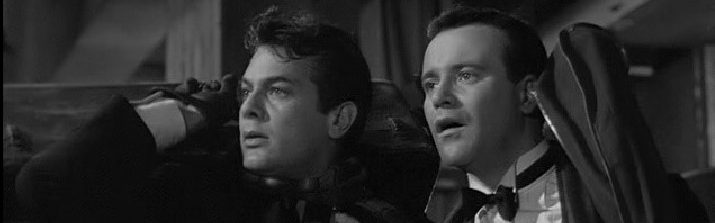
“Passages” (2023) starring Franz Rogowski, Ben Whishaw, & Adele Exarchopoulos

…a form of cultural censorship that is quite dangerous, particularly in a culture which is already battling, in such extreme ways, the possibility of LGBT imagery to exist. -Ira Sachs (co-writer/director) on the NC-17 rating given to the film by the MPAA

At the wrap party for his latest movie, 30-something director, Tomas (Franz Rogowski- a German actor), celebrates w/ his hubby, Martin (Ben Whishaw- a British character actor), the film crew, and their guests. Among these guests is a 20-ish teacher, Agathe (Adèle Exarchopoulos- a Frenchwoman), who invites Tomas to dance. Soon, the two begin an affair, which puts strain on the relationship btwn Tomas, Martin, and their wider social circle.

I really liked how in this story the 3rd person is a woman. Because it shows how awkward it is to maybe try to have that balance of freedom and being open to people exploring, but also wanting traditional needs met. […]

He [Tomas] is not interested in making anyone else comfortable but himself.

-Excerpts from YouTube video by Jelly Fish Reviews (8/1/23)

This indie film was rejected by both Cannes and the Venice film fests; it had its world premiere at Sundance. Ira Sachs (who is American) and the film’s distributor, MUBI, rejected the NC-17 rating; it was released in theaters (unrated) in AUG 2023. I heard some positive things from media critics I follow, so had high hopes for this movie. I think many ppl are hungry for mature dramas w/ serious themes. This story has a V unusual/interesting premise, BUT there is little in the way of character development. Polyamory is NOT a topic we see discussed much in media.

The unlikeable protagonist (NOT a hero) doesn’t grow/learn/change by the end. FYI: Ragowski speaks w/ a lisp, which is his natural speaking manner (hard to understand at times IF you’re not using subtitles). Tomas is a narcissist who causes havoc w/ his words/actions wherever he goes. Some viewers commented that he isn’t “conventionally handsome”; Tomas has a patchy beard, gaunt features, dresses in mismatched clothing, and moves in a “snake-like manner.” We may wonder why Martin (a successful artist/business owner) and Agathe (an independent-minded/strong woman) found him SO appealing! After all, it’s easier for the audience to relate when a baddie IF he also happens to be a hottie (i.e. Brando in Streetcar; Newman in Hud).

The visual style of the film is NOT impressive; there are even scenes where the framing seems off and a character is hidden from view (while speaking). There are no camera “tricks,” which could’ve made this film a BIT more effective. The pacing is slow and I didn’t sense tension building as the story went on; there are common issue in (modern) movies. As for the “controversial” scenes, the sex looks “animalistic” (NOT romantic), as a few viewers commented. I saw little passion/connection btwn the characters.

[1] Not all films need to be message driven, but I think any director or writer makes a film because they have something to say. In that sense, I’m not sure what ‘Passages’ wanted to say.

[2] …a rather dull introspective of characters that didn’t really leap off the screen at me. […] The production and pacing all contribute to the general ennui of the whole thing and to be honest, I was just a bit disappointed with this whole thing.

[3] Without style, the absence of substance dominates this lackluster experience.

[4] The movie transcends type and finds the truth in its relationships, it dotes on and suffers with its protagonists in a manner that does feel intimate, both emotionally and physically.

-Excerpts from IMDb reviews

#Noirvember: “Abandoned” (1949) starring Dennis O’Keefe, Gale Storm, Jeff Chandler, & Raymond Burr

NO NAME FOR HER BABY…only a PRICE! -A tagline for the movie

This B-movie delves into an unusual/sensitive topic for its day: black market baby adoptions. A young woman, Paula Considine (Gale Storm), from a small-town comes to a police station in L.A. She is looking for info on her missing younger sister; a local newspaper reporter, Mark Sitko (Dennis O’Keefe), offers to help. There is a burly/tall man, Kerric (Raymond Burr), lurking in the shadows and following Paula. Her sister’s dead body is in the morgue; there is evidence that she recently gave birth! Though it looks like suicide to the coroner, Paula insists there must’ve been foul play. Also, what happened to the baby?

Mark [to Kerric]: You couldn’t sleep, so you decided to take your gun out for a walk.

I saw this film (free on YouTube) last week; it moves along quickly, w/ snappy dialogue, and a variety of characters. Several of these actors went on to long/successful careers in TV. Burr (best known as Perry Mason) is working for the main baddie, a matronly “society lady” w/ a cane, Mrs. Donner (Marjorie Rambeau). In one tense scene, Burr fights one of her henchmen, played by Mike Mazurki (another “heavy” often in noirs). As for the good guys, Major Ross of The Salvation Army (Jeanette Nolan- looking FAB after 40), is an ally to pregnant women w/ no place to turn. Mark’s handsome/cop friend is Chief McCrae (Jeff Chandler); I hadn’t seen this actor before, BUT learned that he became a TV star.

[1] This excellent thriller deals with the sale of stolen babies by baby broker racketeers. It is thus more relevant to today, when this problem is much more widespread, than it was in 1949. The plot is sound, the script first rate, and the acting is extremely good. […]

A sinister sub-plot about the father of the two sisters making his daughter get rid of her illegitimate baby seems to have been cut because it was too shocking, but enough of it survives to show that it was clearly once there.

[2] I loved the camerawork… particularly in the early portions of the film. The angles and shadows are great… and very moody. I also loved the incredibly violent and gritty ending, where evil clearly is punished big time! Overall, a well written and acted film that never is dull and is well worth your time.

[3] Despite an obviously low budget, “Abandoned” benefits from location filming, which adds a documentary touch, enhanced by narration that implies some truth to the story. A fine cast of “B” players, memorable photography, and steady direction by Joe Newman, a veteran of modestly budgeted second features, together produced an entertaining, engaging film noir that is well worth catching.

-Excerpts from IMDb reviews

“Larceny” (1948) starring John Payne, Joan Caulfield, Dan Duryea, & Shelley Winters

A con man sets out to swindle a widow out of the money she’s received to build a memorial to her war-hero husband, but winds up falling in love with her instead. -Synopsis

Rick Maxon (John Payne) works w/ a small group of con men, lead by run by Silky Randall (Dan Duryea- a character actor often in noir genre). Silky’s gf, Tory (Shelley Winters- in a early role), is high maintenance and (maybe) emotionally imbalanced. Silky suspects that Tory may prefer Rick to him; Rick denies that he’s interested. After pulling a $250,000 score in Miami, the gang’s next con involves a young/rich widow in SoCal, Deborah Owens Clark (Joan Caulfield). Rick pretends that he was close pals w/ Deborah’s hubby while he was in his last days of WWII. With his smooth-talking lies, he quickly charms her and the local community. The con is to sell Deborah on creating a memorial dedicated to her hubby, then pocketing the funds. However, as the days go by, Rick finds that he’s falling in love w/ her!

Tory [to Rick]: Stop twisting my arm! People will think we’re married!

Payne was one of the actors who transitioned from ’30s musicals (where he also sang/danced) to the gritty world of crime pictures in the late ’40s. As he was tall (6’2″), dark-haired, and rugged, the noir genre suited him. In his noirs, Payne was able to straddle both sides of the law; I recommend that you check out Kansas City Confidential (1952). The directing and editing are all over the place, BUT this could appeal to those of who like to dive deep into B-movies; it is free on YouTube. There are (timeless) Qs which come to mind. Is there “honor among thieves” (or con men- in this case)? Can a “bad man” (criminal) be “redeemed” by the love of a “good woman?” What I found interesting was the dynamic btwn Rick and Tory; they’re NOT hesitant to get nasty (incl. physically violent) w/ each other. IF any young’uns happen to watch this movie, this is how NOT to behave in a romantic relationship! I think Nobody Lives Forever (1946) dealt better w/ the themes found here; I recommend that movie to noir-istas.

Two Movies from Noir City DC (OCT 13th-26th, 2023)

Introduction

Hey y’all, how is your Fall season going? Thanks for reading! As local noir-istas may know, Noir City DC film fest is going on (OCT 13th–26th) at AFI Theatre here in my area (downtown Silver Spring, MD). Eddie Muller (TCM host; founder of the Film Noir Foundation) helped to curate the movies for this event. Muller introduced screenings on the opening weekend (OCT 13th–15th); I saw 2 movies (for the 1st time).

The Big Clock (1948) starring Ray Milland, Maureen O’Sullivan, Charles Laughton, George Macready, Pauline York, & Elsa Lanchester

The Strangest and most Savage Manhunt in History! -A tagline for the film

When a publishing tycoon, Earl Janoth (Charles Laughton), commits murder in a heat of passion, he begins to cover his tracks. Janoth frames an innocent man he doesn’t know, BUT who knew the victim, Rita Johnson (Pauline York). That man, George Stroud (Ray Milland), works for one of Janoth’s magazines and is enlisted to trap the “killer.” George must “help” his boss, elude the police, and find proof of his innocence and Janoth’s guilt!

Rita Johnson: You know, Earl has a passion for obscurity. He won’t even have his biography in ‘Who’s Who.”
George Stroud: Sure. He doesn’t want to let his left hand know whose pocket the right one is picking.

Kenneth Fearing’s 1946 novel and this film adaptation bear many similarities to Samuel Fuller’s novel Dark Page (1944) and its screen adaptation Scandal Sheet (1952). Janoth’s right-hand man/lawyer, Steve Hagen (George MacCready), does his dirty work; they’re close (though- b/c of censorship- we don’t see how much). Neo-noir fans will find similarities btwn this movie and (the 2nd adaptation of The Big Clock) No Way Out (1987) dir. by Roger Donaldson. In that movie, Sen. Brice (Hackman) has a V clever/loyal aide, Scott (Will Patton), who cleans up his messes (and is obviously in love w/ the politician).

Don Klausmeyer: Our organization, the Janoth Publications, is trying to find someone, possibly a collector of your pictures.
Louise Patterson: So have I- for fifteen years.

Milland got the roles that Cary Grant turned down, Muller noted; he’s best known for The Lost Weekend (1945) and Hitchcock’s Dial M for Murder (1954). Like Michael Douglas, he has the air of a man who could be a “regular” guy, yet w/ a “shady” side. According to Muller, Louise Patterson (Elsa Lanchester) is based on (IRL American artist) Alice Neel. Laughton and Lanchester were married at this time, though we later learned that he was gay. Director John Farrow and Maureen O’Sullivan (who plays Georgette Stroud) were also married. Unlike what you’d expect from a “typical” noir, there are some of funny moments; Lanchester made my audience LOL during a few scenes.

Act of Violence (1948) starring Van Heflin, Robert Ryan, Janet Leigh, Mary Astor, & Phyllis Thaxter

The Manhunt No Woman Could Stop! -A tagline for the film

Robert Ryan is like one of my top 2 or 3 actors in noir. -Eddie Muller, in intro to the film

WWII veteran Frank Enley (Van Heflin- age 40) is a family man/builder in SoCal. He has a modest house, a beautiful/young wife, Edith (Janet Leigh- just 21 y.o.) and toddler son; he’s respected as a “war hero” in his small town community. One day, he learns that Joe Parkson (Robert Ryan- age 39) is searching for him; he is out for revenge, b/c of something which occurred while they were POWs. Joe drags his right leg as he walks; he carries a handgun. Ann (Phyllis Thaxter- age 29) is the woman following Joe, in the hopes of stopping him from doing something drastic. When Frank has to leave for a builders convention in LA, Joe is close behind! When Frank happens upon a bar, he meets Pat (Mary Astor- in a daring/unglamorous role at age 40).

Joe [to Edith]: Sure, I was in the hospital, but I didn’t go crazy. I kept myself sane. You know how? I kept saying to myself: Joe, you’re the only one alive that knows what he did. You’re the one that’s got to find him, Joe. I kept remembering. I kept thinking back to that prison camp. One of them lasted to the morning. By then, you couldn’t tell his voice belonged to a man. He sounded like a dog that got hit by a truck and left in the street.

No one wore makeup on this movie. Zinnemann wanted somewhat of a documentary look. -Cheyney Ryan (son of Robert Ryan) on the podcast Robert Bellissimo At The Movies (10/12/22)

Some viewers were surprised to see issues tackled so soon after the end of WWII. At the forefront is the question: How does an individual adjust to “normal” life after surviving war? I was excited to watch this movie; it’s currently NOT on any streaming platform. This is a tense noir that’s unpredictable both in its character development and plotting. It’s V well-paced (at only 82 mins), has great dialogue, and important themes. Director Fred Zinnemann (an Austrian Jew who fled Europe before WWII) went on to work on some big movies: High Noon (1952) and From Here to Eternity (1953). As Muller said, Zinnemann learned that both parents were killed in a Nazi concentration camp. The writers of the screenplay are Robert L. Richards and Collier Young (husband of actress/director Ida Lupino).

Edith: Suppose there is a grain of truth to it. Suppose you did have some kind of trouble with him. I can understand how something like that could happen in a prison camp.
Frank: No. You don’t know what happened.
Edith: What was it Frank? Whatever you did you must have had reasons.
Frank: You can always find reasons. Even the Nazis had reasons.

Ryan (who Scorsese called “one of the greatest actors in American film”) and Lupino later starred together in 2 unique noirs- On Dangerous Ground (1951) and Beware, My Lovely (1952). Ryan and Leigh were co-stars in the Western The Naked Spur (1953). Ryan (nearly 6’4″) towers over almost all the others; his simmering rage adds to the intimidating effect. When he talks w/ Edith, his voice is NOT loud/frightening, BUT holds pain/regret. I wanted to see more of Joe’s relationship w/ Ann; they discussed re: what happened in wartime (unlike Frank and Edith). The two leads are opposites in looks: Ryan is brown-haired w/ small/dark eyes, while Heflin is blonde/wide-eyed. Heflin (almost 6″ tall) gets to stretch himself, showing more depth (and emotion) than is usually required of his “Everyman” roles. Leigh does a fine job w/ her role (opposite these experienced men) at such a young age (early in her career). I really liked the cinematography; light, dark, and shadow are used quite effectively.

[1] One of the most daring elements of the film is its suggestion that Heflin is deserving of forgiveness, because the codes of conduct that govern men in the theater of war are different from those that govern us in our day-to-day lives. That maybe doesn’t seem like a daring thing to say now, but at the time it would have been.

Heflin and Ryan are both terrific; Ryan is one of my favorite film noir actors. But the women in the film make quite an impression If the mens’ world- both at war and at home- is one of violence and revenge, it’s the women who act as the voice of reason and sanity, trying to impose a sense of stability amid the chaos.

[2] This grim look at a couple of de-mobbed soldiers continuing their private war at home rarely get mentioned in lists of essential noirs; maybe, upon release in 1949, it was just a little too close for comfort- hinting a truths the victorious American public were unwilling to acknowledge. If so, the film has yet to be rediscovered- or reappraised. […]

Though the script opts for a strange and bitter “redemptive” ending, the acrid taste of Act of Violence lingers long.

-Excerpts from IMDb reviews

Re-watching “The Searchers” (1956) starring John Wayne, Jeffrey Hunter, Vera Miles, Ward Bond, & Natalie Wood

Introduction

The Searchers was voted both the 13th “Greatest Film” of all time and the “Greatest Western” of all time by Entertainment Weekly. It was among the 1st 25 movies to be selected by the LOC for preservation in The National Film Registry in 1989. In 2007, AFI ranked this as the #12 Greatest Movie of All Time. Steven Spielberg, Martin Scorsese, George Lucas, Jean-Luc Godard, John Milius, and Paul Schrader regard this as one of the films that have most influenced them. David Lean (British filmmaker) noted that the way that the landscape was shot (by director John Ford) influenced scenes in Laurence of Arabia (1962).

While on the desert locale, Ford was stung by a scorpion. Worried about his investment, financial backer C.V. Whitney asked Wayne, “What if we lose him? What are we going to do?” Wayne offered to check in on the “stricken” director. A few minutes later he came out of Ford’s trailer and said to Whitney, “It’s OK. John’s fine, it’s the scorpion that died.” LOL!

Synopsis

In 1868, a hardened/middle-aged Confederate veteran of the Civil War, Ethan Edwards (John Wayne), turns up on the small Texan ranch of his brother (Aaron). Instead of settling down to a life of peace, Ethan chooses to embark on a journey of revenge, after Comanches- lead by Chief Scar (Henry Brandon)- who murdered his family, burned their home, and abducted his 2 nieces: Lucy (a teen) and Debbie (9 y.o.) Ethan is joined by a young man (1/8 Cherokee)- Martin Pawley (Jeffrey Hunter)- an orphan/unofficial member of the Edwards family. The 15 y.o. Debbie is played by Natalie Wood (who was still in HS); she has about 10 mins. of screen time in the final act. Young Debbie is played by Lana, Wood’s sister.

The screenplay was adapted by Frank S. Nugent from Alan Le May’s 1954 novel. It was based on the real Comanche kidnapping of Cynthia Ann Parker, a young white girl in Texas in 1836. Parker, who was given the name “Narua” (“one who was found”) would become mother of a Comanche chief, Quanah Parker. She was recaptured after 25 yrs. and never adjusted to life among whites, starving herself to death after the illness/death of her remaining child. Yikes!

Blood Family vs. Found Family

It is V clear that Ethan does NOT consider Marty (who is part Navajo) to be part of his family; he keeps telling the younger man to stop calling him “uncle.” This MAY seem cold/mean to some viewers; after all, Ethan is the one who found Marty out in the desert (after his parents died). He has been raised for many yrs. in the same household as Aaron’s kids. Marty considers the Edwards kids to be his siblings; he refers to Debbie as “my sister.”

Some astute viewers wondered: Is Ethan Debbie’s birth father? Several times, Ford hinted that Ethan had had an affair w/ Aaron’s wife, and was possibly the father of Debbie. Ethan’s thirst for vengeance then could stem NOT from the murder of his brother, BUT of Martha (the woman he’d loved). On a recent re-watch, I saw the subtle clues! In the 1st act, Ethan and Martha share a few meaningful looks. In an early family dinner, Aaron, Lucy and Ben (both blonde-haired) are on one side of the table; on the opposite side are Martha, and Debbie (who all have dark brown hair). Martha strokes Ethan coat when she brings it to him. When the local preacher/sheriff, Rev. Capt. Clayton (Ward Bond), asks why he hung around Texas so long, there is a moment where it looks like Martha wants to speak (before Ethan answers).

Hate, Racism, & Revenge

The actors playing Comanche Indians are ALL Navajo, w/ the exception of Brandon (a German-born Jew). The language, clothing, and dances seen are Navajo, NOT Comanche. Much of the film’s plot is revealed on a prop that most viewers rarely notice. Just before the deadly raid on the homestead, the tombstone (of Ethan’s mother) that Debbie hides next to reveals the source of his hatred for Comanches. The marker reads: “Here lies Mary Jane Edwards killed by Comanches May 12, 1852. A good wife and mother in her 41st year.” We learn that Marty’s parents were also killed by Comanches, BUT he doesn’t have hate for Native Americans. Marty is NOT nice to the Native woman (“Look”) who follows them, thinking that he has bought her (instead of a blanket). Ethan jokes about Marty’s “wife,” who meets a tragic end (at the hand of a different tribe).

Comedy & Romance

There are some light-hearted scenes, a few which hold up, while others are cringe-y. Marty and Laurie (Vera Miles- before Psycho fame) grew up in this same community and are in love, BUT (like some IRL couples) can’t seem to communicate. When the local men first leave to search for the girls, Marty shakes Laurie’s hand good-bye- LOL! Two yrs, later, when Ethan and Marty (w/ facial hair) come to the Jorgensen home, Laurie throws herself into Marty’s arms and kisses him first. Laurie is more sensible/mature than Marty; he acts petulant/boyish when angry. Since Hunter (captain in the Star Trek failed pilot; Jesus in King of Kings) was in his late 20s while filming, it doesn’t seem fitting. In their 5 yrs, of separation, Marty writes Laurie one letter; he hasn’t had a LOT of education (we assume). Laurie fears becoming an “old maid;” there were NOT many options for husbands in the Old West.

Laurie’s father, Mr. Jorgensen (John Qualen- veteran character actor) talks w/ a thick Norwegian-like accent. Laurie’s replacement beau, Charlie McCorry (Ken Curtis), speaks in drawling/slow manner which is annoying! Curtis objected to the accent, BUT Ford argued it’d get him noticed in a thankless role. In the dance scene before the (failed) wedding, the males are some of the most famous stunt men of the era: Chuck Hayward, Terry Wilson, John Hudkins, Fred Kennedy, Frank McGrath, and Chuck Roberson. After this scene, the crew nicknamed them “Ford’s chorus girls” – LOL! The role of the eager/young cavalry officer, Lt. Greenhill, is played by Patrick (Wayne’s son).

Ethan Edwards: Hero or Anti-Hero?

There is TOO much anger, bitterness, and hate in Ethan for him to be close to others. Even after yrs. on the road together, he and Marty don’t become (emotionally) close. He makes Marty his heir when he thinks that he’ll die, BUT Marty refuses. Until his sudden turn in the 3rd act, Ethan considers Debbie to be ruined/savage; she won’t be able to live w/ whites. We are relieved when he decides NOT to kill Debbie! Godard commented that no matter how much he despised the actor’s right-wing political beliefs, every time he saw Wayne taking up Debbie in his arms at the end, he forgave him for everything. What did you think of the ending shot? Is the door closing on Ethan b/c his time (and way of thinking) is coming to an end?

This was one of Wayne’s 3 personal faves, along w/ She Wore a Yellow Ribbon (1949) and The Quiet Man (1952). These films were all directed by Ford. Unlike his usual manner, Wayne decided to stayed in character between takes. When a Navajo child became ill w/ pneumonia, Wayne had his pilot take the little girl to a hospital in his private plane. For this good deed, the Navajos named him “The Man With The Big Eagle.”

[1] An integral part of the combined elements that makes THE SEARCHERS great is Max Steiner’s outstanding score. It is the picture’s driving force – its backbone. Steiner’s music propels the film forward, unifies the narrative and gives greater density to its key scenes. In fact without his music much of the picture’s impact would be considerably diminished.

[2] Ethan Edwards is probably the most racist man Wayne ever portrayed on the screen, yet we feel sympathy for him at the same time. It’s been a hard and bitter life on the frontier for him. Just as it’s been for the Indians as well. Chief Scar, played by Henry Brandon, is Wayne’s opposite number and he makes clear what he thinks of whites. Two of his sons were killed and he’s going to take many white scalps in reprisal.

[3] With all of Ford’s unique ‘touches’ clearly in evidence (the doorways ‘framing’ the film’s opening and conclusion, with a cave opening serving the same function at the film’s climax; the extensive use of Monument Valley; and the nearly lurid palette of color highlighting key moments) and his reliance on his ‘stock’ company of players (Wayne, Ward Bond, John Qualen, Olive Carey, Harry Carey, Jr, Hank Worden, and Ken Curtis), the film marks the emergence of the ‘mature’ Ford, no longer deifying the innocence of the era, but dealing with it in human terms, where ‘white men’ were as capable of savagery as Indians, frequently with less justification.

-Excerpts from IMDb reviews