Most recent interview (HLN – US TV):
GO POP (Sydney) interview:
Movie reviews
Most recent interview (HLN – US TV):
GO POP (Sydney) interview:

Sometimes like 30 takes of one song. It was an intense process but I love the music, and I’d been playing them 100 times a day, so playing them 30 was fine. I get obsessed with that kind of stuff. -On the musical aspect of Inside Llewyn Davis
Who says America lacks young male talent? Or that actors here want to be stars, and can’t play subtlety (like the Brits)? Oscar Issac (b. 1980) shatters those stereotypes, and has fabulous curls, too! He’s the star of the Coen brothers’ new film, Inside Llewyn Davis.

Isaac is aware that he looks “ethnically ambiguous.” However, Isaac is an all-American guy who was “raised here all my life” (I was surprised to learn). His father’s roots are in Israel, but he grew up in Cuba and DC; his mother hails from Guatemala. Isaac can speak Spanish, sing, and play guitar. (FYI: Carey Mulligan is also in Inside Llewyn Davis– yay!)
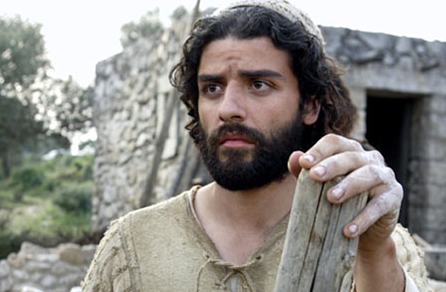
In 2006, Isaac (who graduated from Julliard) played Joseph opposite Keisha Castle-Hughes’ Mary in The Nativity Story. I really enjoyed his humble, sweet, and low-key characterization.

In 2008, Isaac acted opposite Leonardo DiCaprio in Body of Lies. (Yes, this role was as a Middle Eastern, too.) Bassam is a young family man with a love of American music; he helps Leo’s CIA agent get some intelligence in Jordan. Isaac prefers dramatic roles, and imagines himself doing more of that, not necessarily action (The Bourne Legacy) or comedy.

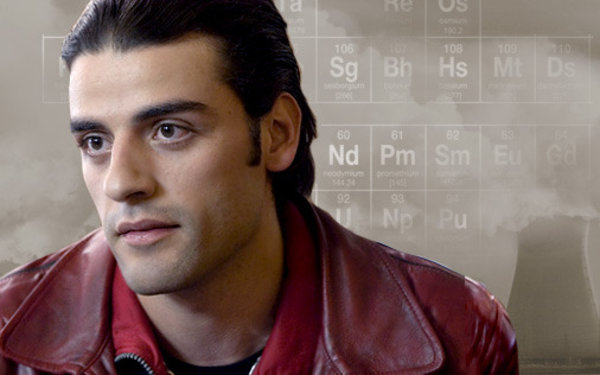
Check out that stunning profile! I haven’t yet seen Robin Hood, which stars Russell Crowe and Cate Blanchett. Below are links to two interviews I recently found about the actor.
Ella No Quiere Dormir Sola (She Doesn’t Want to Sleep Alone)

This is a film about the connection between two true-to-life women. Director Natalia Beristain based this film partly on the final years of her grandmother, who was a well-known actress in her native Mexico, just like the older protagonists- Dolores (Adriana Roel). The younger protagonist, Amanda (Mariana Gaja), is an out-of-work 33 year-old with a love for photography. Since her father (played by Arturo Beristain, the director’s father) is out of town shooting his latest film, Amanda has to look out for her grandmother, who suffers from both alcoholism and dementia. Dolores is stubborn, prideful, but still has some spark in her, while her mind goes from her glory days onscreen (she was a vivacious beauty) to the banality of modern life (living in an old folks’ home). Dolores loves swimming, so spends hours in the pool. Amanda joins her and then takes some photos. Spending time with her grandmother helps Amanda , who tends to be defensive and distant (even with her caring boyfriend), view herself in a new light.
De Tu Ventana a La Mia (From Your Window to Mine)

First time director, Paula Ortiz, also wrote this fine film (which is epic, yet intimate, in scope). Three women of different ages and personalities, living in different times, go through personal turmoil (which any woman can relate to). “The stories of these types of women were not told- they were silent. They didn’t choose their lives,” the director commented.
In 1923, the teenaged Violeta (Leticia Dolero), a petite, delicate beauty is sheltered by her gentle grandmother and teacher (a respected medical doctor). Her mother had some sort of mental illness, so the doctor gives her a potion to drink each day. Violeta falls deeply in love with a college boy who stays at her house over a few weeks. In 1941, Ines (Maribel Verdu from Pan’s Labyrinth and Y Tu Mama Tambien), has long been in love with Paco, an anti-Franco activist. They get married before he’s captured and jailed (in a partly underground prison). Ines, a strong country woman, becomes pregnant and continues to earn a living (in a harsh, desert-like climate). Ines was based partly on Ortiz’s grandmother. In 1975, Luisa (Luisa Gavaza, a character actress in her native Spain), is diagnosed with breast cancer. She doesn’t realize that a man she sees every day is in love with her, and dreams of heroes from classic movies. Her partner in life is her older sister, also unmarried, who cooks and cares for her without much complaint. Luisa was based on the director’s aunt, who lived though the last days of dictatorship.
 Knightleyemma