“Trial by Jury” (1994) & “The Juror” (1996)

Trial by Jury (1994) starring Joanne Whalley-Kilmer, Armand Assante, Gabriel Byrne, & William Hurt

For one juror, the question of guilt or innocence is a matter of life or death… her own. -Tag line

For those who’ve seen The Juror (see below), this film (which was released first) will seem very familiar! However, this story focuses more on the trial, rather than what happens outside the courtroom. Both individuals are (oddly) happy to appear for jury duty, as many viewers have chuckled at. The son here is younger and there is a supportive grandfather character (who lives upstate on a small farm). The fathers (ex-husbands to the protagonists) are barely mentioned; they’re absent from the daily lives of the sons. Both moms must survive under tremendous pressures and eventually take actions into their own hands (rather than relying on the authorities).

In NYC, Valerie Alston (Whalley-Kilmer) is a single mom/owner of a vintage clothing store called to participate in the jury of the trial of mobster Rusty Pirone (Assante). Just before the trail begins, the key witness for the prosecution is executed, along w/ the four police officers who were protecting him. The lead prosecutor, Daniel Graham (Byrne), is on a mission to get Pirone, and also the media’s attention. An alcoholic ex-cop, Tommy Vesey (Hurt), threatens to hurt Valerie’s son unless she says “not guilty.”

I enjoyed the parts w/ Byrne and his team of eager/ambitious prosecutors. Assante made a smooth/compelling villain (w/ a love of classic films and everything old-fashioned). Playing against type, freelance baddies Hurt (w/ waves in his blonde hair) and Kathleen Quinlan share a dysfunctional dynamic. The third act of the story is (obviously) inspired by the noir genre. I wasn’t a fan of the editing; this movie could’ve been shorter and more tightly put together.

You will feel Gabriel Byrne’s frustration as he tries to catch the mob boss and and work within the law only to have the legal system perverted by the influence of that mob. You will see how his character… could easily have gone in that direction.

-Excerpt from IMDB review

The Juror (1996) starring Demi Moore, Alec Baldwin, Joseph Gordon-Leavitt, James Gandolfini, & Anne Heche

In upstate NY, Annie Laird (Moore) is a sculptor (clerk by day) raising a smart/observant 13 y.o. son, Oliver (Gordon-Leavitt) on her own. Annie is cautious, responsible, and busy (though doesn’t mind going to jury duty). She even comments to Oliver: “I need some excitement in my life!” Her closest friend is a carefree/single doctor, Juliet (Heche), who also shares a great rapport w/ Oliver. I liked the female friendship element in this story, thought the women seemed like opposites. Annie is one of the jurors chosen for the trial of Louie Boffano, who is accused of the murders of a rival mob family (incl. a 10 y.o. boy). A mysterious man dressed in black (Baldwin) bugs Annie’s (eclectic-looking) farmhouse; his friend/colleague Eddie (Gandolfini) keeps a lookout.

The next day at a gallery in NYC, Annie receives a check for $12,000, as she has finally sold some of her work. Outside this gallery, a man introduces himself to Annie as “Mark”- the art dealer who purchased the sculptures. He humbly asks her to go have coffee; they have a chat re: art vs. business (which I liked). When Mark explains that “art is used as a kind of currency” in Japan, Annie becomes indignant, saying: “I don’t want my work treated as currency!” Some critics/viewers said this was naive of Annie; after all, she is trying to transition to becoming an artist full-time. Annie decides to go out on a date with Mark, encouraged by Juliet, who thinks her friend is too reserved. Well, Mark (who had some serious issues- we will learn) reveals his true intent for getting close to Annie- she must declare that Boffano is “not guilty.”

To keep the viewer guessing, Baldwin’s face is kept mostly in shadow during the early scenes. There is a good amount of tension in this film, which keeps the viewer’s attention. There are some implausible moments and the editing could’ve been tighter. I thought Gandolfini did an esp. fine job; he was probably the most “normal” character (though still a baddie) in the movie. There are twists and turns, so you won’t be bored. I liked the (pivotal/intense) action scene between Baldwin and several mobsters. Like many viewers, I didn’t see the point in taking the story to Guatemala. We also never learn much re: Dr. Boone (Matt Craven)- is he Annie’s ex/Oliver’s father or just an old (platonic) pal? The final face-off is exciting, but also rather cliched (as seen in other action movies).

The role she [Demi Moore] plays here is, in a sense, the feminine counterpart of many Harrison Ford roles, the ordinary person elevated to heroic action by compelling circumstances.

Alec Baldwin… He fills the screen with his presence like something you can’t get rid of. He is so compelling you want to push him away or just give up. And he is charming-evil, but charming.

-Excerpt from IMDB review

“Malice” (1992) starring Alec Baldwin, Nicole Kidman, & Bill Pullman

Deception. Betrayal. Murder. Some things you never see coming. -Tag line

This is one of several thrillers made during the early 1990s set around husband and wife characters. The films incl. Deceived (1991), Shattered (1991), Mortal Thoughts (1991), Consenting Adults (1992), Unlawful Entry (1992), Presumed Innocent (1990), Guilty as Sin (1993), Sleeping with the Enemy (1991), and A Kiss Before Dying (1991). So far, I’ve only seen Consenting Adults (starring Kevin Kline, Kevin Spacey, Mary Elizabeth Mastrantonio, and Rebecca Miller- wife of Daniel Day Lewis) and Sleeping with the Enemy (one of Julia Roberts’ first movies; it spawned 14 remakes internationally). I saw Malice (first time) last week; I never knew it was co-written by Aaron Sorkin (who also wrote A Few Good Men and created one of my fave TV shows- The West Wing)! It was originally intended to be filmed at Mount Holyoke College in South Hadley, MA (not Smith College). After reviewing the script, the college president declined, due to the serial rapist subplot. The movie was moved to Smith in Northampton; they only agreed as long as the college name was changed. In the opening, the little house that the young student lives in is the former residence of Pres. Coolidge.

This is the type of film that you have to see twice to get all that’s going on. On the first watch, it’s a compelling psychological thriller w/ twists and turns; the plot contains rape, murder, life-and-death trauma, and a deadly fight (all w/ in the first 45 mins). On the re-watch, you find the things you might’ve missed; it’s a chance to enjoy the terrific performances from the three leads- Alec Baldwin, Nicole Kidman, and Bill Pullman. There are brief appearances by Gwyneth Paltrow (a slacker student/one of her early roles) and Joshua Malina (a medical resident/old friend of Sorkin). Veteran actors George C. Scott and Anne Bancroft have small, yet pivotal, roles. Peter Gallagher plays the lawyer who holds some clues to Tracy’s (mysterious) past.

I’m the new guy around here and I want to make friends, so I’ll say this to you and we’ll start fresh. If you don’t like my jokes, don’t laugh. If you have a medical opinion, then please speak up and speak up loud. But if you ever again tell me or my surgical staff that we’re going to lose a patient, I’m gonna take out your lungs with a fuckin’ ice cream scoop. Do you understand me? -Jed explains to Dr. Robertson (after they operate on the college student/rape survivor)

Andy Safian (Pullman- looking youthful at 40) is an associate dean at a small college outside Boston that’s being terrorized by a serial rapist. Tracy (Kidman- looking gorgeous as usual) is his younger wife who volunteers as an art teacher in the Pediatrics ward of the local hospital, St. Agnes. They’re newlyweds renovating a Victorian house and need $14K to overhaul its plumbing. Dr. Jed Hill (Baldwin- looking gorgeous also) is the hotshot new surgeon at St. Agnes and a former HS classmate of Andy’s. Jed needs a place to stay; Andy and Tracy need the extra money. Soon, Jed is living on the 3rd floor; his noisy date w/ his surgical nurse, Tanya (Debrah Farentino), is grating on Tracy’s nerves. The rapes continue; Andy is even considered a suspect! Andy’s detective friend, Dana (Bebe Neuwirth), convinces him to come to the police station to eliminate himself as a suspect. Meanwhile, Tracy comes home and collapses from pains to her abdomen (a possible ovarian cyst)!

I have an M.D. from Harvard, I am board certified in cardio-thoracic medicine and trauma surgery. I have been awarded citations from seven different medical boards in New England, and I am never, ever sick at sea. So I ask you: when someone goes into that chapel and they fall on their knees and they pray to God that their wife doesn’t miscarry or that their daughter doesn’t bleed to death or that their mother doesn’t suffer acute neural trama from postoperative shock, who do you think they’re praying to? Now, go ahead and read your Bible, Dennis, and you go to your church, and, with any luck, you might win the annual raffle, but if you’re looking for God, he was in operating room number two on November 17th, and he doesn’t like to be second guessed. You ask me if I have a God complex. Let me tell you something: I am God. -Jed declares during the deposition

On my second watch, I saw that there were hints that Jed and Tracy knew each other from before. Jed and Tracy meet in the bathroom when Tracy drops her meds; she angrily asks: “What the hell are you doing here?” (in a tone that one doesn’t use w/ new acquaintances). Also, notice the looks of anger and jealousy when Tracy sees Tanya coming out of Jed’s room late at night. Fans of the noir genre will notice the noir-inspired choices made by the director (Harold Becker), esp. in the second half. This film is classified as a “neo-noir thriller,” according to Wikipedia. The sometimes haunting music (composed by Jerry Goldsmith) really sets the mood. This film harkens back- at times- to the Golden Age of Hollywood.

[1] …Baldwin’s mesmerizing performance is what stands out. Jed is charismatic, seductive, and as charming as a cobra as he weaves his spell over the Safians. Baldwin’s ability to jump from utterly charming to incredibly chilling in the blink of an eye is on full display here; it is truly the performance of a lifetime.

[2] It’s the uncertainties in the movie that make it one to remember. See it, you will not be disappointed! The background musical score is one of the most memorable that I have heard in any movie. Malice is a tale of arrogance, power, mystery, and deception, that must be seen and will be long remembered after the final credits roll.

[3] Alec Baldwin… is splendid as the doctor/villain [and what a smoothie he is]. His God “complex” speech is one of the highlights. Then there’s the delicious Nicole Kidman… What makes her performance stand out to me is that, as wild and evil as she can be, there’s also a vulnerability in her portrayal. You actually care what happens to her, even though you know she deserves to get caught. […] And Bill Pullman, being given a sort of wimpish character to play, brings it way up to the same level as the stronger characters with his performance. He does an outstanding job in this flick. 

[4] She’s [Anne Bancroft] like the spider with the fly with she’s talking with Kidman’s hubby who just doesn’t get the situation. Bancroft brings enormous power to this character.

-Excerpts from IMDB reviews

Movies Under the Sea: “The Hunt for Red October” (1990) & “Crimson Tide” (1995)

The Hunt for Red October (1990)

In November 1984, at the height of the Cold War, the Soviet Union creates a new nuclear submarine that runs silent due to a revolutionary propulsion system. The Russian submarine Captain, Marko Ramius (Sir Sean Connery), defects. His goal is taking it to the U.S. to prevent the Russians from using it to start nuclear war against the U.S. -Summary

Listen, I’m a politician which means I’m a cheat and a liar, and when I’m not kissing babies I’m stealing their lollipops. But it also means I keep my options open. -Jeffrey Pelt

Filming started in 1989, w/ the Cold War still going on, but was released in 1990 when the Soviet government announced that the Communist Party was no longer in charge. Producers went on with the release, but using a disclaimer that the story takes place in 1984 (when Tom Clancy’s novel was published). This is the movie debut of Jack Ryan, a CIA analyst who uses his brains (he writes books re: miliary history/speaks Russian) more than his brawn (though he holds the rank of Lt. Cmdr. in the Navy/graduated as a Marine). He is no pushover; Ryan speaks up for himself when it’s needed and doesn’t let others intimidate him. Alec Baldwin accepted the role of Jack Ryan (recently played by John Krasinski in the Amazon Prime series) b/c Harrison Ford turned it down. Kevin Costner turned down the role of Jack Ryan in order to make Dances with Wolves (1990). Director John McTiernan previously worked on Die Hard (1988); the same oversized teddy bear is in this movie. This movie starts out in Russian, then switches to English, as the political officer reads a passage from a book.

I miss the peace of fishing like when I was a boy. Forty years I’ve been at sea. A war at sea. A war with no battles, no monuments… only casualties. I widowed her the day I married her. My wife died while I was at sea, you know. -Capt. Ramius

Before filming, Sir Sean Connery spent time underway aboard the U.S.S. Puffer preparing for his role (Capt. Marko Ramius). He was given Commander status, and allowed to give commands while underway (w/ the Captain beside him). During filming, several actors portraying U.S.S. Dallas crewmen took a cruise off the coast of San Diego on the U.S.S. Salt Lake City a Los Angeles-class submarine. Cmdr. Thomas Fargo ordered his crew to treat actor Scott Glenn (Cmdr. Bart Mancuso) as equal rank, first giving reports to him, then give the same report to Glenn. The actor said he based his performance on Fargo: “whatever good happened in the performance, basically I owe to now Admiral Fargo, thank you sir.” Connery was in the Royal Navy before becoming an actor; Glenn spent 3 yrs. in the Marines.

[to himself, just before being lowered off a helicopter] Next time, Jack, write a goddamn memo. -Jack Ryan

[To himself, imitating Ramius] “Ryan, some things in here don’t react well to bullets.” Yeah, like me. I don’t react well to bullets. -Jack Ryan

Star Trek: TNG fans will will notice that Ryan’s wife Cathy is played (in one scene only) by Gates McFadden (best known as Dr. Beverly Crusher). After she rejoined TNG, Anne Archer took over the role; Cathy lost the English accent (which McFadden had used). James Earl Jones (Adm. James Greer) was the only actor to reprise his role in Patriot Games (1992) and Clear and Present Danger (1994) where Ford takes over as Ryan. Jones also served in the Army as a young man. Fred Thompson (Adm. Painter) and Courtney B. Vance (Seaman Jones- another brainy guy) would go on to be part of the Law & Order franchise. The international cast includes Aussie Sam Neill (Capt. Borodin), Brit Peter Firth (Cmdr. Putin), Brit Tim Curry (Dr. Petrov), and Swede Stellan Skarsgard (Capt. Tupolev).

[1] It took a concept that is inconceivable to most people (living in a boat underwater with people trying to blow you up) and brought it up close and personal. The resulting suspense and excitement for this type of film is always extremely entertaining and this film delivers nicely.

[2] High tension and realistic (emphasis on that last word) depictions of modern warfare make for an excellent story.

[3] Baldwin, in what is and will probably be his career best role ever, shines as the intelligent and patriotic Jack Ryan, a thinking man’s hero. Connery lends incredible presence, as usual, to his interpretation of Ramius.

[4] The movie’s chief strengths are its moody lighting, its unrelenting pace, and especially its deep bench of acting talent. Connery suggests a note of uncertainty to Ramius that keeps the audience on its toes. For the longest time, we don’t know what he’s up to. Baldwin plays Ryan in a very realistic way that establishes his basically gentle, bookish nature but underscores the depths of his heroism as he pursues an increasingly dangerous path no one else believes in. Scott Glenn is terrific as a crusty U.S. sub commander…

-Excerpts from IMDB reviews

Crimson Tide (1995)

In the face of the ultimate nuclear showdown, one man has absolute power and one man will do anything to stop him.

-Tag line

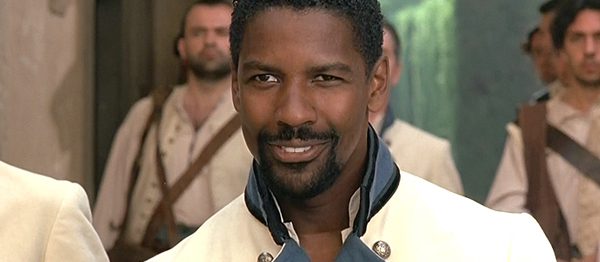
When some Russian rebels take control of some ICBM’s, the Americans prep for battle. Among the vessels sent is the nuclear sub, USS Alabama. They have a new X.O. (second in command) in Cmdr. Hunter (Denzel Washington), who hasn’t seen much action. Capt. Ramsey (Gene Hackman) gives an order for a drill after a dangerous incident (fire in the galley) and Hunter disagrees w/ how Ramsey handled it. It’s obvious that Ramsey doesn’t think much of Hunter b/c Hunter is college-educated; Ramsey worked his way up. They’re given orders to attack, but when in the process of receiving another order, the ship’s communications are damaged (cutting off the full message). Ramsey decides to continue with their previous order, while Hunter wants to reestablish contact first. That’s when the two men’s philosophies of war collide… and the tension rises!

This is probably my fave action movie, though this isn’t a familiar genre for me. There is much to admire- the directing (by Tony Scott), acting, intensity, music, and a few moments of humor (provided by Quentin Tarantino- who punched up the script). Washington solidifies his star status by having equal billing w/ Hackman, as we see in the posters. Tension between them grows b/c of their differing ages, races, personalities and philosophies on war. The cast includes Viggo Mortensen (Weps- Hunter’s close pal), James Gandolfini (Dougherty), George Dzundza (Cob), Danny Nucci (Rivetti), Steve Zahn (Barnes), former child star Ricky Shroeder (Hellerman), and a very young Ryan Phillippe.

The early scenes do much to set up the main conflict of the film. For example when members of the crew discuss Carl Von Clausewitz, and his 1832 work Vom Kriege (“On War”), the intellectual showdown occurs between Ramsey and Hunter. This scene not only heightens the tension, but also reveals the different philosophies of these two men, what they believe in, why they are there. This short scene goes a long way to setting up why each of these characters are so unbending when the crisis presents itself.

Crimson Tide possesses one of the most intense moments in film: two great actors eye-to-eye, portraying characters absolutely certain of their actions, absolutely convinced that the other’s course will lead to disaster. Washington believes, with good reason, that Hackman is unfit to command because he is disregarding naval procedures. Hackman believes, with good reason, that Washington is disobeying an order and instigating a mutiny. A possible nuclear exchange and the deaths of billions hang in the balance.

The cast – all of them – are spectacular, and the directing is masterful. […] More than just a cautionary tale, this is a very human drama about who people become under extreme conditions, and how they work out problems to reach solutions, or fail to do so. If that final sentence sounds cryptic, then let it entice you to see the film so you can figure out what I mean for yourself.

-Excerpts from IMDB reviews

“Odds Against Tomorrow” (1959) starring Harry Belafonte, Robert Ryan, Shelley Winters, & Ed Begley

Dave Burke (veteran character actor Ed Begley) is looking to hire two men to assist him in a bank raid: Earle Slater (Robert Ryan), a white/middle-aged ex-con, and Johnny Ingram (Harry Belafonte- also co-producer), a young/Black singer w/ a gambling problem. Ingram (who likes the finer things in life) is recently divorced from his schoolteacher wife, Ruth (Kim Hamilton), w/ whom he shares a young daughter. Burke arranges for Ingram’s creditors to put pressure on him. Slater (who has a quick temper) feels humiliated by his failure to provide for his devoted wife, Lorry (Shelley Winters), who works two jobs. The two men, though reluctant at first, eventually accept to do the crime. Slater loathes and despises Blacks; tensions in the gang quickly mount.

[after Slater insults Ingram]

Burke: Don’t beat out that Civil War jazz here, Slater! We’re all in this together, each man equal. And we’re taking care of each other. It’s one big play, our one and only chance to grab stakes forever. And I don’t want to hear what your grandpappy thought on the old farm down in Oklahoma! You got it?

Belafonte chose Abraham Polonsky (writer/director of Force of Evil) to write the script. As a blacklisted writer, Polonsky used the name of John O. Killens (a Black novelist/friend of Belafonte). In 1997, the WGA restored Polonsky’s credit. The director is Robert Wise (West Side Story; The Sound of Music); he used infra-red film in some scenes (to create a distorted feel).

This is the first film noir with a Black protagonist! The bartender at the jazz club is a young Cicely Tyson (her second film appearance); she passed away in early 2021. Noir icon Gloria Grahame makes a brief (yet important) appearance. The movie was praised highly by James Ellroy and influenced the work of Jean-Pierre Melville (a French director). The volatile chemistry between the three men is at the center of the movie. I liked the character development, on locations shots of NYC (incl. Central Park), and the slightly uneasy atmosphere. Jazz and Calypso music are played at the smoky club where Ingram performs.

[1] Good low budget heist film. Ryan’s character is one of the ugliest portrayals of a white racist in film. Belafonte’s character is one of the most multi-faceted and complex potrayals of an African American up until that time, and the performance doesn’t date at all. Wise keeps the pacing taut and the suspense high.

[2] Personally I found Belafonte’s contribution the most searing. He captures the role of the divorced father to a tee. The scene where he is awakened by his ex-wife after sleeping (ever so slightly) with is daughter is masterful. You can sense the longing in his heart for the nuclear family that once was.

[3] Wise wants to communicate a whole context, he wants to detail his characters to a fault. How many directors would dare that today? Robert Ryan’s part is very complex. First he seems friendly, but further acquaintance shows a lack of self-confidence (he’s getting old, he’s a washout, he wants to go for broke). And he is a racist. Rarely, this obnoxious feeling has been depicted with such wit.

-Excerpts from reviews on IMBD

Socially Conscious Noir: “Crossfire” (1947) starring Robert Young, Robert Mitchum, & Robert Ryan

Homicide Capt. Finlay (Robert Young) finds evidence that one or more of a group of soldiers is involved in the death of a middle-aged/kindly Jewish man, Joseph Samuels (Sam Levene). In flashbacks, we see the night’s events from different viewpoints, as Army Sgt. Keeley (a youngish Robert Mitchum) investigates on his own, trying to clear the sensitive/young Mitchell, to whom circumstantial evidence points. Then the real (and ugly) motive for the killing begins to dawn on both Finlay and Keeley. This was the breakout role for Robert Ryan, who played Montgomery, one of the experienced/jaded soldiers. Ryan didn’t like the negative aspects of his character- that resulted in him being typecast in villain roles. In real life, Ryan was a liberal progressive actively involved in the Civil Rights movement. A very young Gloria Grahame (who was loaned from MGM) plays a dancehall girl who meets Mitchell.

Finlay: Hating is always the same, always senseless. One day it kills Irish Catholics, the next day Jews, the next day Protestants, the next day Quakers. It’s hard to stop. It can end up killing men who wear striped neckties. Or people from Tennessee.

The film is based on Richard Brooks’ first novel, The Brick Foxhole (1945), written while he was a sergeant in the Marine Corps. One of the subplots dealt w/ homophobia, but that was changed to anti-Semitism. The decision was made by producer Adrian Scott (who purchased the rights) knowing that any depiction of homosexuality would not pass the Hayes Code. Brooks would write the screenplays for other notable noirs, incl. The Killers (1946) (uncredited), Brute Force (1947), Key Largo (1948), and Mystery Street (1950). Due to of the film’s tight (24 day) shooting schedule, it was able to beat the similarly-themed Gentleman’s Agreement to theaters by 3-1/2 months and stole some of its thunder. However, Oscar acclaim went to Gentleman’s Agreement, which won 3 out of its 8 noms, incl. Best Picture. Crossfire was overlooked; it had 5 noms. It has been suggested that one reason it didn’t win any Oscars was director Edward Dmytryk and Scott’s testimony before HUAC in late 1947. They refused to state whether they were, or had been, Communists and were subsequently blacklisted.

[1] Ryan, creates a fully shaded and frighteningly convincing portrait of an ignorant, unstable bigot; we see his phony geniality, his bullying, his resentment of anyone with advantages, his “Am I right or am I right?” smugness; how easily he slaps labels on people and what satisfaction he gets from despising them.

CROSSFIRE’s message seems cautious and dated now, though not nearly so much as GENTLEMAN’S AGREEMENT. […] The script seems afraid to mention any real contemporary problems. […] Still, it did take some guts to depict, immediately after World War II, an American who might have been happier in the Nazi army, and the movie’s basic premise is still valid.

[2] Crossfire is a “message” movie but it is also a cracking good drama, and that’s what I enjoyed about it. Plus the cast is dynamite – Roberts Preston, Mitchum and Ryan, and the beautiful Gloria Grahame. Mitchum doesn’t have a big a role as you might expect (the movie was released the same year as Out Of The Past in which he gives a much more substantial performance), but he’s always great to watch, and Robert Ryan steals the movie as a very nasty piece of work.

[3] As late as 1947, it was a big deal for a movie to announce that anti-Semitism existed, and that it was bad. (It was unthinkable, of course, for Hollywood to address the real subject of the book on which the movie was based- its victim was a homosexual.) Nevertheless, thanks to good writing and excellent acting, CROSSFIRE remains a persuasive examination of what we would now call a hate crime.

-Excerpts from IMBD reviews