Heaven Knows, Mr. Allison (1957) starring Robert Mitchum & Deborah Kerr

I watched his film (w/ my mom) this past week at AFI in Silver Spring, MD (theater across the street from my current apt). I’d seen it before (on TCM), BUT let’s face it- Mitchum is a big man meant for the big screen. This film was shot on location in the Caribbean (Trinidad and Tobago) in Cinemascope. This film is rightly compared to The African Queen w/ a female being a religious missionary and a hell-raising male thrown together in wartime. The African Queen was set during WWI; this film is set on a small Pacific island in WWII.

John Wayne, Kirk Douglas, Clark Gable and Marlon Brando all wanted to play, or were sought for, the part of Mr. Allison before Robert Mitchum was cast. Mitchum worried that Kerr would be like the prim characters she often played; after she swore at director John Huston during one take, Mitchum (who was in the water) almost drowned laughing. The two actors were friends until Mitchum’s death in 1997.

Deborah Kerr is a nun who hasn’t yet taken her final vows.  Being alone on the island with Mitchum is a temptation, no doubt- LOL! At that time, the Catholic church imposed strict censorship laws on films dealing with religious situations/characters. In the original book by Charles Shaw (inspiration for this film), the marine and the nun fell in love. Huston created a resolution in which the marine and nun gain strength, hope and determination from each other. There’s a great parallel between Cpl. Allison and the Sister. Each dedicated themselves to their respective vocations- he is dedicated to the Marines; she is dedicated to the Catholic Church. Mitchum shows what depth and sensitivity he could bring to a part. Kerr earned an Oscar nom! 

The script called for several Japanese-speaking officers and a company of troops to be on the island. There were no Japanese men on the islands of Trinidad and Tobago; a few who spoke the language were eventually found in an emigrant community in Brazil. For the non-speaking Japanese troops, 50 Chinese men (who worked in the restaurants and laundries of T&T) were hired. Some locals were upset b/c work didn’t get done while these men had their 15 mins of fame.

[1] If you are looking for a movie with heart and real content, this could be perfect. The acting is top-notch, as is the cinematography. The plot flows beautifully and holds your attention to the very end. 

[2] It’s the subtlety that makes this film work they way it does. 

[3] Mitchum- an actor who only really has one persona, and yet is a good actor all the same. It didn’t matter whether he was playing… he was still the same sturdy, laconic Robert Mitchum. But within that one persona, he has a full range of expressiveness and credibility. This is among his best performances.

[4] Kerr- she conveys every thought and emotion through tiny gestures, facial twitches and changes in posture. Above all, she brings a very warm and believable character out beyond the stereotype.

-Viewer comments from IMDB

The Heiress (1949) starring Olivia de Havilland & Montgomery Clift

In the late 1800’s, the wealthy Sloper family- surgeon Dr. Austin Sloper (Ralph Richardson), his daughter Catherine (Olivia de Havilland), and the doc’s recently widowed sister- Lavinia Penniman (Miriam Hopkins)- live in a spacious house at Washington Square in Manhattan. Despite lessons in various social graces, Catherine is awkward and shy; in contrast, her deceased mother had a LOT of charm and beauty, as her father and their social circle often comment. Lavinia attempts to get her niece to be more social and hopefully meet the a suitable man to marry. Enter handsome, smooth-talking Morris Townsend (Montgomery Clift), recently returned from Europe.

Morris dances w/ Catherine at a party, NOT minding her clumsy feet, and manages to put her at ease briefly. He comes to call for several days in a row; she is surprised and nervous, even skipping out one morning hoping to avoid him. In no time, Morris declares his love to Catherine and asks to for her hand in marriage. She is thrilled, b/c she NEVER expected anything like this to happen to her. The air-headed/hopeful Lavinia (who serves as chaperone) greatly approves of the man, though cold/aloof Dr. Sloper is suspicious of Morris’ motives. The young man has potential, BUT doesn’t have a job. Above all, the father can’t fathom that a man would want the daughter that he continually puts down. Dr. Sloper, after learning more re: Morris’ character, refuses to give his permission for the marriage. Catherine, angry yet determined, forms a plan to elope ASAP. 

As one viewer wrote:

There are no easy answers in this movie. You can think Dr. Sloper is right about Morris and only wants to protect his daughter, or you can see his actions as those of a vindictive man who blames her for the death of his beloved wife (in childbirth). Morris could be a fortune hunter, or he could be a man who does care for Catherine, in his own way, and would make her happy. Or all of the above. 

After seeing The Heiress on Broadway, de Havilland approached William Wyler about directing her in a screen adaptation (which won 4 Oscars). He agreed and encouraged Paramount execs to purchase the rights from the playwrights (Ruth and Augustus Goetz) and have them also write the screenplay. They were asked to make Morris less of a villain than in the play and the original novel (Washington Square by Henry James); the studio wanted to capitalize on Clift’s reputation as a romantic lead. Wyler’s idea was to pair de Havilland with frequent co-star Errol Flynn, but studio execs favored Clift (w/ a more subtle acting style). Though Flynn and de Havilland had great chemistry, execs felt that the actor’s real-life womanizer rep would’ve worked against him.


Top 5 Shakespeare Films (or Best of The Bard Onscreen)

1) Much Ado About Nothing (1993)

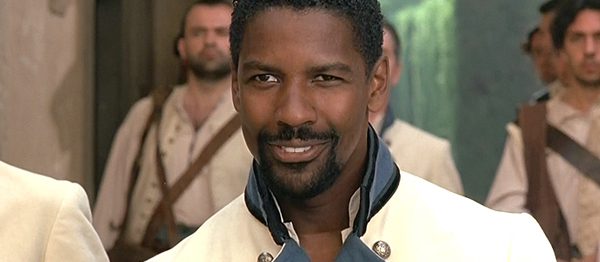
If there was just one word to describe this film, it would be “luminous.” Filmed during a Summer in Italy, the FAB cast includes Kenneth Branagh (who directed), Emma Thompson, Denzel Washington, Michael Keaton, and Keanu Reeves (whose presence is odd, yet doesn’t spoil the movie). You have the innocent/fresh-faced lovers: Hero (Kate Beckinsale- SO adorable and young) and Claudio (Robert Sean Leonard- who ages quite slowly), In contrast to this hopeful pair, there is the sharp-tongued/witty older couple: Beatrice (Thompson) and Benedick (Branagh). Her father fears that her sharp tongue will render her single for life. Benedick declares that he’ll die a bachelor, BUT his jovial friend/lord Don Perdo (Denzel- looking esp. FAB in leather pants) has other plans. Who doesn’t LOVE Denzel doing light-hearted roles!? Almost everyone (aside from Keanu- DUH!) does well w/ the (complicated) words, incl. the newbie Beckinsale. The veterans (all Brits) in the cast add authenticity and Keaton brings in eccentric humor. Aside from the gorgeous scenery, the music (composed by Patrick Doyle) is amazing (I had the CD back in the day).

2) A Midsummer Night’s Dream (1999)

This is another visually gorgeous film (w/ a talented cast from BOTH sides of the pond), though NOT as seamless as Much Ado (also a popular comedy). There are several pairs of lovers, incl. fairies: Oberon (Rupert Everett) and Titania (Michelle Pfeiffer) and humans: Lysander (Dominic West- famed for The Wire) and Hermia (Anna Friel- Brit stage actress); Demetrius (the FAB Christian Bale) and Helena (American TV darling Calista Flockhart); Theseus (character actor David Strathairn) and Hippolyta (Frenchwoman Sophie Marceau). The naughty fairy, Puck, is played by the always great Stanley Tucci (FYI: he even published an Italian-American cookbook a few yrs back- WOW!) I really liked Kevin Kline’s portrayal of Bottom (the weaver who wants to play every part in the play- LOL). Kline is a theater pro, just like Denzel (and it shows). Pfeiffer admitted that she never understood Shakespeare, BUT hey, she does a good job (w/ the best costumes/hair).   

3) Titus (1999)

This movie is NOT for the faint of heart- it’s one of The Bard’s bloodiest tales come alive (thanks to Broadway’s Julie Taymor). Come for the spectacle, BUT stay for the (terrific) acting from a cast that includes Americans, Canadians, Brits, and Scots. Anthony Hopkins is in the title role of the war-weary Roman general, Titus Andronicus, who has captured the queen of the Goths, Tamora (Jessica Lange), her three sons, and her secret/Moorish lover, Aaron (Harry Lennix). Though Tamora begs for his life, her eldest son is slaughtered; Titus, who lost MANY sons of his own during years of battle, shows no mercy.

Tamora vows revenge against Titus and his kin, along w/ her other sons: Demetrius (Matthew Rhys) and Chiron (Jonathan Rhys Meyers). Titus’ household includes his kind-hearted brother, Marcus (Colm Feore), his remaining sons: the grown-up/practical Lucius (Angus MacFadyen) and a pre-teen boy, and his only daughter-sweet/innocent- Lavinia (Laura Fraser). She is in love w/ Bassanius (James Frain), an honorable young man running to become ruler of this city against the vain Saturninus (Alan Cumming). Titus’ family become outcasts when Tamora (who is BOTH smart & gorgeous) convinces the new/gullible emperor, Saturninus (Alan Cumming), to marry and ally w/ her family. Who knew that Lange could be SO wonderfully evil!? I loved her chemistry w/ everyone, incl. Lennix (who worked as a teacher before getting into film). Fraser impressed me a LOT also; you hear NO hint of her (real-life) thick Scottish accent.

4) Romeo & Juliet (1996)

The actor who really sells this Baz Luhrmann adaptation is Claire Danes (great at ANY age)! Sure, Leo was the draw for the younger gen, BUT she is the one who raises the game w/ her interpretation of an innocent teen girl in love for the first time. Even is you’re NOT a fan of modernized Shakespeare, give this one a chance (IF you already haven’t). I know MANY high schools are using it to appeal to teens. 

5) Twelfth Night, or What You Will (1996)

Some of you may NOT have seen this film from Brit director Trevor Nunn (which is shot in Ireland and England), BUT it features two strong female performances. A young foreign noblewoman disguised as servant boy, Viola (Imogen Stubbs), unwittingly sparks the interest of a noblewoman from Illyria, Olivia (Helena Bonham Carter). Gender confusion is a common theme in Shakespeare; in The Merchant of Venice, a woman even disguises herself as a male lawyer and wins a court case for the man she wishes to marry. Viola finds herself falling for her boss, Duke Orsino (Tody Stephens- still looking cute w/ quirky facial hair) who pursues Olivia, though she spurns all men (b/c mourning her brother). Look out for Sir Ben Kingsley in the supporting role of Feste, the fool in Orsino’s court. 

Spoiler-free Reviews: Black Panther & A Quiet Place

Black Panther

I was a BIT late to see this film (went about two weeks ago), BUT (luckily) was NOT spoiled on everything. Whew, what a relief- some twists and relationships weren’t discussed in my movie podcasts!  Fans of This is Us and Get Out will get pleasant surprises. I really enjoyed this comic book movie (rare for me); the chemistry between the actors was great. I’d never seen much of the actor who played Tchalla (Chadwick Boseman) who’s almost 40 (WOW)! Michael B. Jordan is his baddie foil (yet NOT an unsympathetic character). My friend esp. liked Letitia Wright (who is a Brit) who played Shuri, Tchalla’s spunky scientist sister.  How rare is it to see a young black woman as a scientist in a mainstream Hollywood film! There are other great female supporting characters: Tchalla’s former gf, Nakia (Lupita N’yongo), his mother Ramonda (the timeless/regal Angela Bassett), and captain of the royal guard- Okoye (Danai Gurira, also a celebrated playwright). Everyone is in incredible shape; even Martin Freeman looks better (trimmer and w/ a stylish haircut). Check this movie for yourself ASAP!

A Quiet Place

Whoa, who knew John Krasinski (most known for The Office) would be such a good director! He takes on the lead also in this sci-fi/thriller style movie (which my friend though was genre-defying). Krasinski’s real-life wife, Emily Blunt (a Brit who I always enjoy watching), plays his wife here. They have a family (a teen daughter and two younger sons) and live in a rural, perhaps post-apocalyptic, world. The key to their survival- being as quiet as they can be while going on about their daily lives. Why is this so crucial? You must see the film to find out! It’s NOT going to be everyone’s cup of tea, BUT I found it quite compelling. It has received many positive reviews and the box office results are (unexpectedly) good. One media critic described this movie by saying: “It’s what I would’ve expected if M. Night Shamylan hadn’t gone downhill.” 


Phantom Thread (2017) starring Daniel Day-Lewis, Vicky Kreips, & Lesley Manville

WARNING: This review contains SPOILERS for the film.

Set in the glamour of 1950s post-war London, renowned dressmaker Reynolds Woodcock (Daniel Day-Lewis) and his sister Cyril (Lesley Manville) are at the center of British fashion, dressing royalty, movie stars, heiresses, socialites, debutants, and dames with the distinct style of The House of Woodcock. Women come and go through Woodcock’s life, providing the confirmed bachelor with inspiration and companionship, until he comes across a young, strong-willed woman, Alma (Vicky Krieps), who soon becomes a fixture in his life as his muse and lover. Once controlled and planned, he finds his carefully tailored life disrupted by love. -Synopsis from Focus Features

Arguably the strongest part of the film, the score possesses Paul Thomas Anderson’s signature strange aura that is found in several of his other films. While most movies nowadays would use music to heighten drama, he rejects the common norm; valuing music to form an atmosphere.

The acting is very strong, as the film’s performances can feel slightly subdued and low-key before creeping up on the viewer to create a sharp but simple impact. The movie’s script is a delight, managing to pull of a genuine hat-trick by feeling both simple and complex at the same time. 

Ms. Krieps goes toe-to-toe with Daniel Day-Lewis in their scenes. Her blushy cheeks and determined eye of observation bely an inner strength that isn’t necessarily obvious at first glance. 

-Excerpts from IMDB reviews

Director Paul Thomas (P.T.) Anderson got the initial idea for this film while he was sick in bed one day. His wife, actress Maya Rudolph, was tending to him and gave him a look that made him realize that she had NOT looked at him with such tenderness and love in a long time. P.T. Anderson wrote the script in collaboration with Daniel Day-Lewis (DDL). The actor suggested the name of his character be Reynolds Woodcock as a joke, BUT Anderson found that hilarious and kept it. To prep for his role, DDL (renown as a method actor) watched footage of ’40s and ’50s fashion shows, studied famous designers, consulted with the curator of fashion and textiles (Victoria and Albert Museum), and apprenticed under Marc Happel (head of the costume department at the NYC Ballet). DDL also learned how to sew. He said that this would be his final film. 

When I was a boy, I started to hide things in the lining of the garments. Things only I knew were there. Secrets. -Reynolds explains to Alma on their first date

Fastidious fashion designer, Reynolds Woodcock (DDL) meets waitress Alma (Vicky Kreips- an actress who comes from Luxembourg) when he stops for breakfast at a little restaurant on the way to his country house. He orders a huge breakfast; it’s obvious that they’re interested in each other. After dinner at a fancy restaurant, Reynolds takes Alma to his house where he puts her on a pedestal (literally) and begins to measure her for a dress. She is surprised, yet intrigued. 

I cannot start my day with a confrontation. I simply have no time for confrontations. -Reynolds explains to Alma over breakfast 

The tea is going out. The interruption is staying right here with me. -Reynolds complains to Alma when she comes to his workroom to serve him tea.

In no time, Alma is living in Reynolds’ London house; she has her own room (next door to his). It turns out that Reynolds and his business partner/sister, Cyril (Lesley Manville- a British character actress), are a package deal. It’s NOT an ideal situation for Alma, though she gets used to this unique life. The domestic space is also a business, so there are people around most of the time (servants, seamstresses, etc.) Alma is fitted for fine dresses, serves as a model, and meets famous clients of the House of Woodcock. However, she grows dissatisfied w/ her (undefined) role in Reynolds’ life. He puts his work first and doesn’t apologize for it; she wants him to be nicer (instead of critical and demanding). Alma wants to get married; Reynolds thinks of himself as “a confirmed bachelor.” Eventually, he realizes Alma is different than his past girlfriends; he loves her and needs her around. 

Some have embraced this film warmly; after all, it deals w/ compromise in romantic relationships, the everyday trials of domestic life, and challenges of being involved w/ an artist. This film has problematic elements (esp. for modern/feminist viewers), though it’s well-made and finely acted. As some critics pointed out, Alma (who is in her 30s) doesn’t really have much power in the relationship; Reynolds (older/wealthier/influential) could throw her out on the street at any time. We don’t learn where Alma comes from (she has a vague/European accent), if she has any family, or what her life was like (before she met Reynolds). 

Does Alma take back some of the power in their relationship? Well, she decides to use the poison mushrooms to slow Reynolds down. He becomes sick temporarily, yet also emotionally vulnerable. She admits that she likes this side of him. The second time, Reynolds consents to being poisoned, eating the omelet she serves w/ great relish. Hmmm… NOT exactly the kind of ending you’d expect from the typical period drama/romance!