“Pride & Prejudice” (2005)

Running Time: 127 minutes

Starring: Keira Knightley, Matthew Macfadyen, Brenda Blethyn, Donald Sutherland, Rosamund Pike, Carey Mulligan, Jena  Malone, Simon Woods, Tom Hollander, Rupert Friend,  and Judy Dench

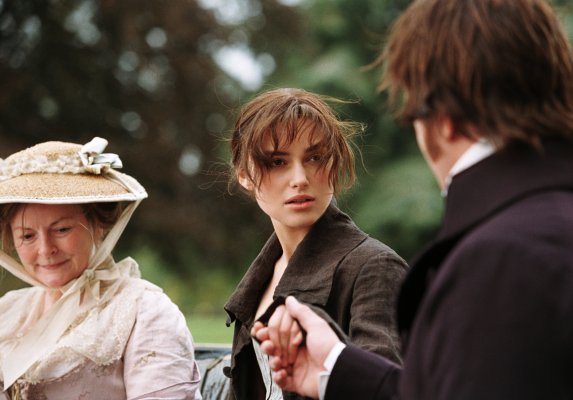
We all know that the camera loves Keira Knightley, just like Michelle Pfeiffer.  But Keira’s not just a pretty face.  “She worked like a dog,” then first-time director, Joe Wright, says on the fun/informative commentary track of the DVD.  Wright’s version of the P&P story (that many know and love) is a must-see!  (When I saw it in the theater, I wasn’t very impressed.  I think it takes a second look to appreciate all that’s going on under the surface.)

The Bennet parents are humanized by Blethyn and Sutherland.  Pike is the perfect Jane.  Malone (who’s American like Sutherland) does a terrific British accent and plays the flighty Lydia w/ gusto.  The adorable Carey Mulligan makes her film debut as Kitty.

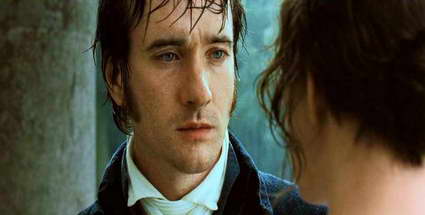
I think looking at it now, Darcy would seem much more snobbish in our understanding of the word than he would then. To somebody like Darcy, it would have been a big deal for him to get over this difference in their status, and to be able to say to Lizzie that he loved her.  –Matthew Macfadyen

Macfadyen (a theatrically-trained actor) is a terrific Mr. Darcy- tall, slim, subtle, and not too much of a pretty boy.  He looks posh and elegant in all the costumes, but never overly imposing.  Darcy’s feelings are reigned in tightly, but his eyes are expressive.  And don’t forget that voice– one of the most gorgeous in all of show business!


“They just fancy each other,” Wright comments, noting the deep physical attraction between Lizzie and Darcy.  When she follows Jane to Netherfield Hall on foot, Lizzie’s hair gets mussed and her hem gets muddy.  Darcy is shocked, like best pal Bingley and his sis Caroline, but also intrigued.  He has never met a woman like her before!

When Jane gets over her bad cold, and she and Lizzie have to leave, Darcy helps Lizzie onto the carriage.  This is the first time they touch, and he’s very affected by it.

For the Netherfield ball, Lizzie makes a special effort to look cute, hoping to meet the dashing Wickham.  To her surprise, Darcy asks her to dance!  This dance sequence is one of the best moments of the film.  (Dances were very important in Austen’s time; it was one of the few times young, single people could meet, chat, and hold hands.)

This film was almost entirely shot on location- in Derbyshire, Kent, Lincolnshire, etc.  Pemberly in this version is actually the house of the Duchess of Devonshire.  (Interestingly, Keira played the role of Georgiana in The Duchess in 2008.)

We can’t overlook the rainy scene!  Toward the end, Darcy leans in close and almost kisses Lizzie.  Wow…

Check it out here: http://www.youtube.com/watch?v=1R-Zg5es7mg

“The Mill on the Floss” (1997)

Running Time: 90 minutes 

Starring: Emily Watson, James Frain, Bernard Hill, and Ifan Meredith

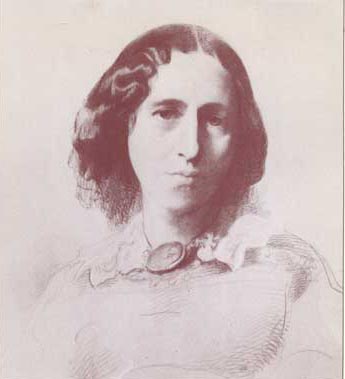
Marian Evans (pen name: George Eliot) grew up in the country, then went to the city to further her career.  The focus of her writing was often on small town outsiders, such as herself.   In her early 30s, Eliot began a long-term relationship w/ an older married man, George Henry Lewes.  He was a noted philosopher/critic who had an open marriage.  Eliot’s decision to defy the conventions of Victorian England created a bitter rift between her and her older brother, Isaac,  for most of their lives.  This conflict is at the core of her most personal novel, The Mill on the Floss, published in 1860.

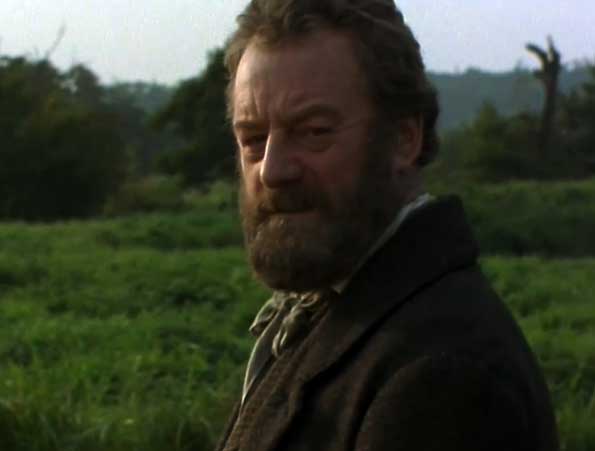
The Tulliver family, headed by the strong-willed Edward (Bernard Hill) has owned/managed their mill along the River Floss for generations.   Mrs. Tulliver comes from a wealthier background, so her sisters look down on her marriage to Edward.  The family has two kids, very close in age, though different in temperment.

Eliot’s father, like Mr. Tulliver, was a businessman who had married a woman from a higher social class. His wife’s sisters were rich, ultra-respectable, and self-satisfied. These maternal aunts provided the character models for the aunts in the novel.

Mr. Tulliver decides that Tom, as the only son, should have a better future than he did.  He’s sent off to study with a local parson as an adolescent, much to the dismay of sister Maggie.  As one reader of the novel commented: “her fierce intelligence and strong streak of independence bring her into constant conflict with her family.”  Maggie seeks the love and approval of Tom, even when he treats her harshly.

At the parsonage, Tom studies alongside Phillip Wakem, the only son of the cold-hearted lawyer who’s trying to take over the land/water around the Tulliver mill.  Phillip, who is hunchbacked, is a kind boy who draws, sings, and plays the violin.  When Maggie visits, she and Phillip become fast friends.  Though their fathers despise each other, Maggie tells to Tom that “bad men can have good sons.”

Seven years later, the young adult Tom (Ifan Meredith) leaves school and gets a job at a successful trading business in the village, Guest & Co.  He sets his mind to saving all he can in order to help the family mill, which is more in danger than ever.  Edward’s health is very poor; Mrs. Tulliver has borrowed all she can from her relations.

When Phillip (James Frain) returns from Europe, it gives Maggie (Emily Watson) a reason to smile.   They resume their friendship, meeting in secret to discuss books and ideas.   Like Maggie, Eliot was extremely intelligent, energetic, imaginative and unconventional.  In the book, Maggie is described as a “strikingly attractive young woman, tall with full lips, and a crown of jet black hair.”  We can see that Phillip is deeply in love w/ her.  Tom eventually forces Maggie to choose between the family and Phillip.

Then Maggie meets Stephen Guest, the handsome/easygoing fiance of her cousin, Lucy Deane.  Maggie’s lack of social pretension makes her very charming to Stephen, and he declares his love.   Maggie admits that she loves him, too. Can she fulfill herself while still being morally responsible?

Three Must-See Classics

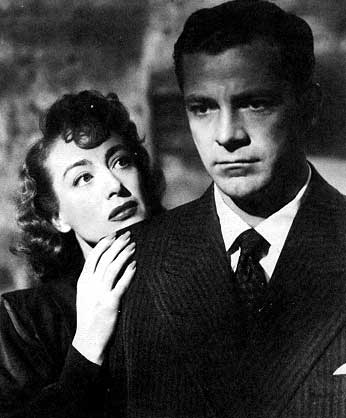
Daisy Kenyon (1947)

I saw this (lesser-known) film classic on Hulu a few days ago.  It’s a very smart, mature, and full-bodied movie (w/ many important themes).  Unlike some old B&W films, this one will definitely engage modern-day viewers (such as fans of Mad Men). 


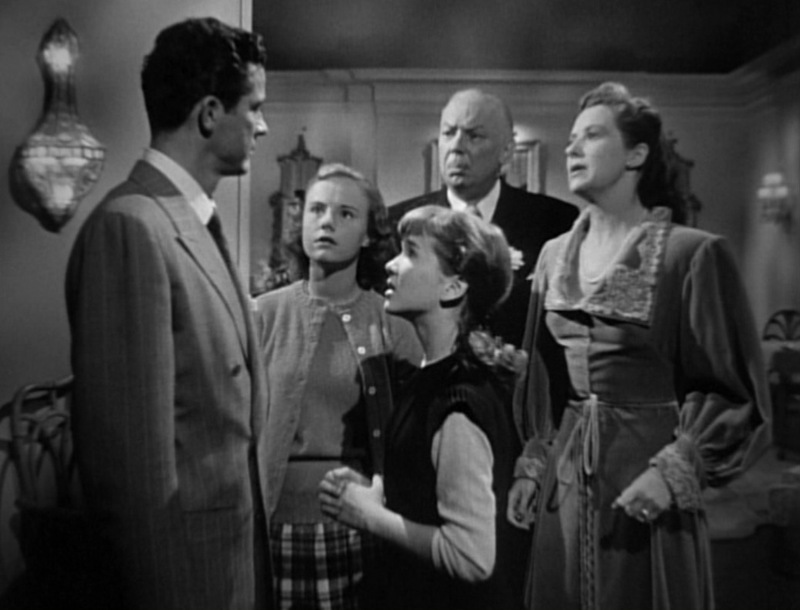
Daisy Kenyon (Joan Crawford) is a strong,  independent-minded commercial artist living in NYC.  She has been involved for a few years w/ lawyer Dan O’Mara (Dana Andrews), who lives on Park Ave. w/ his wife and two daughters.  He’s often in the papers and travels to DC regularly to consult w/ politicians.  Dan is used to getting his own way, though he works in his father-in-law’s firm.

Daisy and Dan have broken up in the past, but they love each other.   But  Daisy refuses to live in the fancy apt. Dan has picked out for her; she wants to preserve her independence.

One night, Daisy decides to go out on a date w/ a single soldier, Peter Lapham (Henry Fonda).  He’s wondering if he should continue w/ the army or go back to designing ships.  We get the sense that Peter needs someone.  When he declares his love for Daisy, she is surprised yet intrigued.

In the meantime, Dan is off in California working on a pro-bono case. His client is a Japanese-American former GI whose farm was stolen from him while he was serving in Europe.  Daisy is very proud that Dan’s working on this case, though his father-in-law doesn’t see any merit in it.

Dan is very worried about his girls- aged 11 and 13.  His wife and his younger daughter have a very combative relationship.  Dan is appalled when he learns that his wife has hit the girl (as is Daisy).

Daisy, Dan, and Peter handle their love triangle in a very mature fashion.  There are no fistfights here!  Even after Daisy marries Peter and Dan gets a divorce, their story is not smoothed out.


Sunset Boulevard (1950)

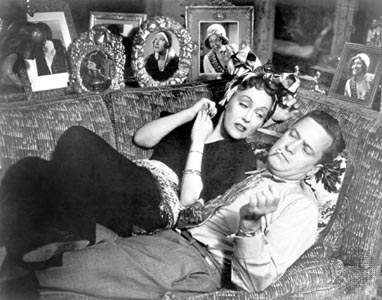
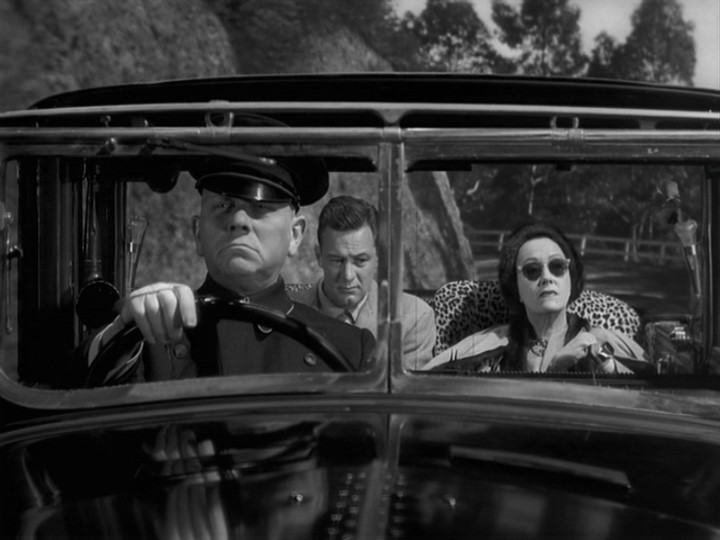
I saw this film after several years and thought it had some very fine scenes ans clever/funny dialogue.  Joe Gillis (William Holden) is a Hollywood screenwriter who’s desperate for work and behind on rent.  Running from the law, he drives into the garage of a crumbling mansion owned by silent movie star Norma Desmond (Gloria Swanson).

She’s quite a character (somewhat reminiscent of Miss Favesham in Dickens’ Great Expectations),  and wants Joe to help her w/ her own screenplay.  But that’s not all she wants!  Soon, Norma is picking out new clothes for Joe, moving his meager belongings into a huge bedroom adjacent to hers, and introducing him to her old pals.

Though Norma is consumed w/ dreams of making a comeback, she’s also a very lonely woman.  Joe feels no attraction for her, but likes the cushy life she can provide.

In the meantime, Joe meets  22 y.o.  script reader- Betty (Nancy Olsen), who’s the girlfriend of an assistant director.  She’s  a pretty, smart, and optimistic woman.  Betty loved Joe’s short stories from years back and wants to adapt one into a screenplay.  She asks for Joe’s help, so he starts sneaking out of the mansion at night to write.         


Marty (1955)

This is a true gem of a film that viewers will be thinking/talking about for days after they see it!  Marty Piletti (Ernest Borgnine) is a stocky, unassuming, 34 y.o. Bronx butcher who’s contantly being asked (by customers and extended Italian family) why he’s not yet married.  His brothers and sisters have all married and left the family home, now shared by him and his mother.

When his mother presses him to go out on a Saturday night, Marty exclaims that he’s tired of trying to find a girl.  “Whatever girls are looking for, I don’t got it!” he concludes in frustration.  But he still goes out (to the Starlight Ballroom).     

At the ballroom, a 29 y.o. teacher from Westchester named Clara (Betsy Blair, wife of Fred Astaire) is on a date w/ a guy who’s clearly not interested.  In the course of the evening, Marty and Clara dance and chat.  Marty, who’s used “to other people telling me their problems” can’t stop talking (probably b/c he feels comfortable w/ Clara).  She keeps smiling and admits she’s having a good time, too.

Marty and Clara, though from different backgrounds, are both kind, good-hearted people.  In one particularly great scene, Marty talks about his father, who “was an ugly guy, but a great father.”  He comments that there has to be more than good looks for two people to have a long, happy marriage.  (My mom says this too!)                               

Three Reviews: “Paris Blues” (1961), “He Knew He Was Right” (2004), & “Two Lovers” (2008)

Paris Blues (1961)

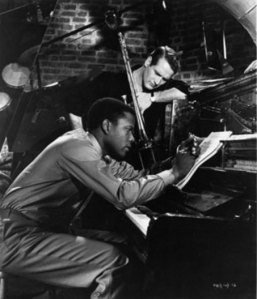
This is a TERRIFIC, though lesser-known, Paul Newman-Joanne Woodward film.  (It was made after their marriage and birth of their first child.)  Trombone player Ram Bowen (Newman) and saxophonist Eddie Cook (Sidney Poitier) are expatriate American jazz musicians living in Paris.  They have a regular gig at a small/artsy/popular club, though Ram has a dream of being a serious composer.  Also, Ram is in a (friends w/ benefits) relationship w/ the singer/owner of the club, Marie.
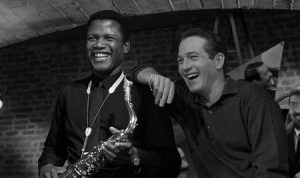
The guys meet two beautiful American tourists- straight-talking jazz lover Lilian (Woodward) and socially-conscious teacher Connie (Diahann Carroll).  After Ram meets his old friend “Wild Man” Moore (Louis Armstrong) on a train, he confidantly approaches Connie.  This must’ve raised some eyebrows in ’61- a white man hitting on a black woman.  Of course, it was no big deal in France.  Ram invites her to hear him play at the club.  Connie brushes off his come-on and comments that she has a white friend with her.  Soon Lilian arrives to meet Connie; we see her keen interest in Ram.

Though Connie is suspicious of guys like Ram (“I know these jazz musicians…”), Lilian convinces her to go to the club that night.  When she hears Ram play, Lilian is visibly moved by the music.

Aside from romance, this film deals head-on with serious issues- ambition, racism, and drug abuse (one of the musicians at the club is addicted to cocaine).  The costumes, scenery, lighting, music, and dialogue are pitch perfect.  Newman and Poitier seem like two old friends; the chemistry between the two couples is almost palpable.  (As you may know, Poitier and Carroll were romantically involved at this time.)

Newman, who plays an anti-hero here, has some very good lines.  “Look, you don’t want me for what you want,” he tells Lilian directly when she shows interest in going out after a gig.  Lilian calmly comments that she’ll decide what she wants.  This is a grown-up look at love, not a fairy-tale story.  Check it out ASAP!


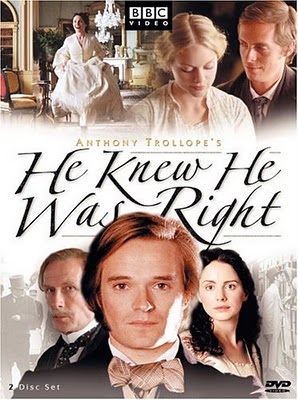
He Knew He Was Right (2004)


I watched this BBC miniseries for the second time recently.  Novelist Anthony Trollope was inspired to write the book by Shakespeare’s tragedy, Othello.  The main character, irrationally jealous husband Louis Trevelyan is also based on the author’s (often temperamental) father.

Louis (young Brit Oliver Dimsdale), a posh London gentleman, goes to the Canary Islands and falls quickly in love with Emily (Scotswoman Laura Fraser), the lovely daughter of the governor.  Though she is young and has never been in British society, he proposes marriage.  “He looks like a man who likes to have his way,” her father comments, though he feels it will be a very good match.  “Emily likes to have her way, too,” her concerned mother adds.

Emily and Louis settle in London and have a son.  Emily’s gorgeous young sis, Nora (Christina Cole) lives w/ them; she’s much admired by the bachelors in their circle.  But she falls for Louis’ best pal- young journalist Hugh Stanbury (Stephen Campbell Moore).  They can’t marry right away, as Hugh doesn’t come from money, is just getting started in his career, and has a mom and sisters to support out in the country.
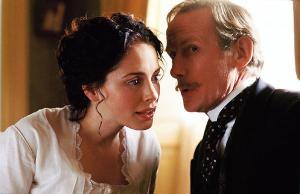
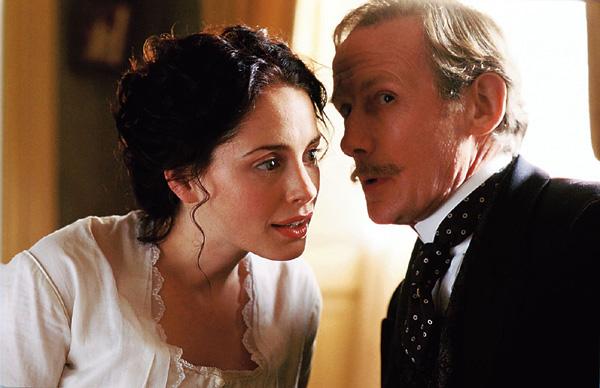
To their friends, the Trevelyans seem to be the perfect marrieds.  But things start to go sour when Emily’s father’s old friend, and reputed playa, Colonel Osborne (Bill Nighy) enters the picture.  At a party, an older lady comments on his bad boy ways, alerting Louis.  Osborne visits Emily at the house; Louis doesn’t like this, as it could expose his wife to rumor and innuendo.  Emily, who is innocent/unspoiled like Desdemona, wonders why she shouldn’t see an old family friend.  “But I won’t see him if you forbid me to,” she eventually promises.
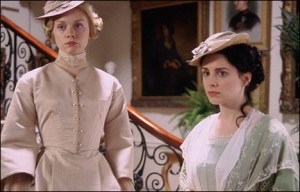
Osborne is refused entry to the house, but he approaches the couple while they’re out on a stroll in the park.  When the older man calls Emily by her first name, Louis gets visibly angry.  (In Victorian society, if a man called a woman by her first name, it could be inferred that he had intimate knowledge of her.)  Emily pulls Louis away, rushing towards home.  Finally, Louis decides to send Emily, his boy, and Nora to live in the country w/ the Stanbury ladies.  He rationalizes this decision by saying they’ll be “safe” there from Osborne.  Emily is stunned, but goes along w/ the plan.  (What other choice does she have?)  Her friends and family believe that Louis will soon come to his senses.

Aside from the main (dark/serious) storyline, there are several lighter ones to keep you entertained.  Nora and Hugh share a very tender love.  The eligible, soon to be titled Mr. Glascock (Raymond Coulthard), is intrigued by a forthwright American woman he meets while traveling in Italy.  Hugh’s sister, plain/serious Priscilla Stanbury (Amy Marston) doesn’t expect any beaus to come her way, but wants her kindly younger sis Dorothy (Caroline Martin) to marry.  When their rich/elderly aunt (Anna Massey) asks Dottie to become her companion, the world opens up for the good-hearted girl.
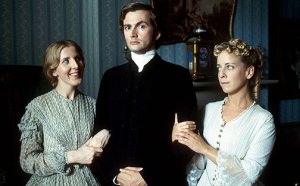
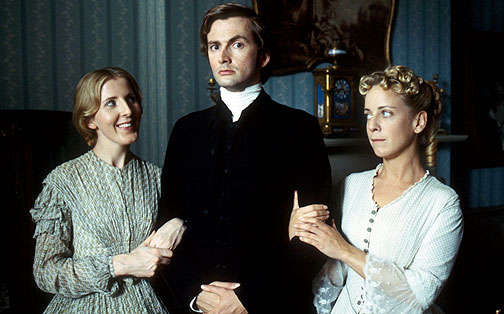
The flirtatious Reverend Gibson (Scotsman David Tennant) can’t seem to choose between three women in his town- Dottie and two vain, eager-to-marry sisters (character actresses Claudie Blakely and Fennella Woolgar).  Hilarity ensues when he decides on the wrong woman.


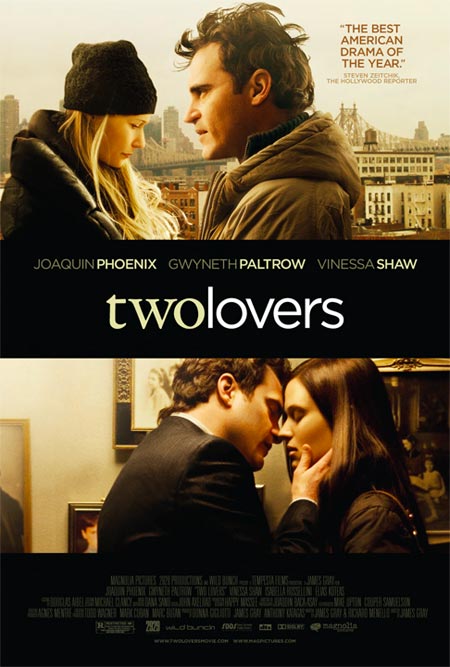
Two Lovers (2008)

Leonard Kraditor (Joaquin Phoenix), having survived heartbreak and suicide attempts, lives with his watchful (yet kindly) parents in the predominantly Russian Jewish ‘hood of Brighton Beach, Brooklyn.  He also helps out at the family laundromat, though he’s not very interested in his work; photography is his passion.  Though Leonard takes medication, we don’t know his exact illness.

One night, Michael Cohen, the man who’s going to buy the Kraditor’s business, comes over for dinner with his family.  When they are left alone, the elegant/single daughter, Sandra (Vinessa Shaw), confesses that she wanted to meet Leonard.  When she explains that she works for Pfizer, Leonard jokes that he “knows all about that.”  Sandra admires his photos; we can also tell that she’s very interested in him.  She comes across as a capable woman who could take care of the sensitive Leonard.
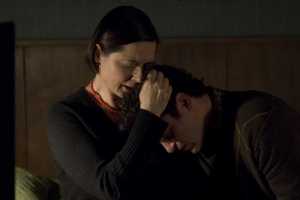
Leonard also happens upon his  new neighbor Michelle (Gwenyth Paltrow), who ducks into his place to escape the rebuke of her angry father.  What was he mad about?  It turns out that Michelle has an older, married lover (played by Elias Koteas).  Though we (and his observant mom, played by Isabella Rosselini) can see that Leonard has an instant crush on her, Michelle quickly comes to rely upon him.  It turns out that Michelle need a good friend- she’s battling tremendous insecurity and a drug habit.  When she calls or texts, Leonard goes running.

Leonard, Sandra, and even the troubled/rootless Michelle, will seem quite real to viewers.  They are not stereotypical Hollywood versions of people.  Often, the demons within us are worse that those found in the outside world.  We have to choose to be happy, as my mom says.
“Hamlet” (2009)

A hit, a hit, a palpable hit!  The Bard’s most popular, and arguably best-written, play springs to life w/ a fresh, modern adaptation by the RSC.  (It is now available on DVD in the US.)  This one is a must-see for all Shakespeare fans!  Tall, wiry Scotsman David Tennant (Dr. Who) tackles the title role and theater veteran Patrick Stewart (Star Trek: The Next Generation) portrays the ghost of Hamlet’s departed father and Claudius (Hamlet’s “uncle-father”).  They played these roles on stage, so are well prepared for the screen version.

Hamlet (sometimes in a single scene) must be able to convey much- anger, intelligence, melancholy, and wit.  Tennant creates a Hamlet for our time;  he shows us Hamlet’s isolation, emotional torment, confusion, and self-awareness.  I feel Tennant does a GREAT job in showing us Hamlet’s muti-faceted personality.
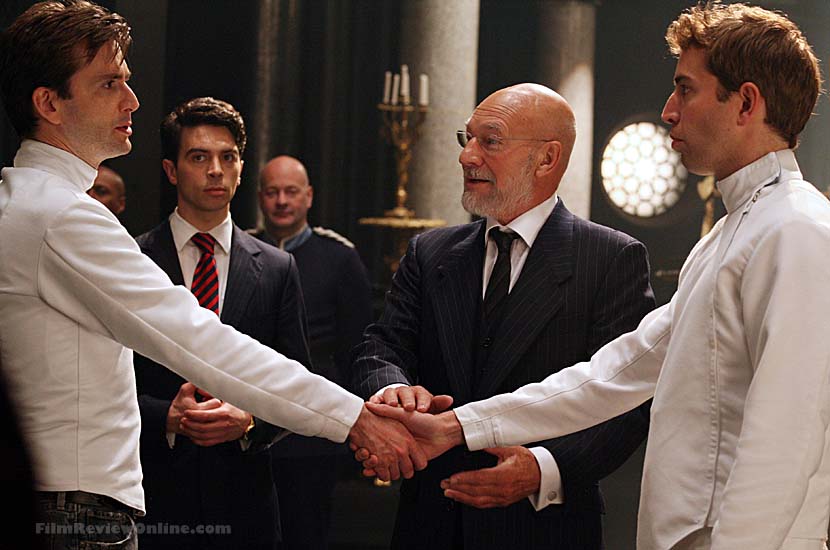
Unlike in the theater, here we get close-ups of the actors.  Hamlet can connect more deeply with the audience (a glance into the camera, a side joke).  The use of a pistol in a pivotal scene rendered the scene less dramatic in my opinion.  The dark main set didn’t appeal to me, but the use of the large broken mirror was a good directorial choice.  The use of surveillance cameras was interesting; Hamlet is always under watch.

On to the supporting cast…  Claudius is played with grace and subtlety by Stewart; often villains pretend to be just like ordinary people.   I thought he was VERY effective as the ghost as well.  Polonius and Gertrude did a fine job, as did Horatio (who had a sense of gravitas and a marvelous speaking voice).

http://www.youtube.com/watch?v=xYZHb2xo0OI