“They Drive By Night” (1940) starring George Raft, Humphrey Bogart, Ann Sheridan, & Ida Lupino

[1] The dialogue is salty and well-delivered… while the background stuff- the diners, rented rooms and garages- is beautifully detailed and always believable.

[2] …it features a top-flight cast of actors who are usually fun to watch.

[3] It’s mile-a-minute banter delivered by pros (this film played a big part in landing bigger roles for Bogie).

-Excerpts from IMDB reviews

[Paul is checking out Cassie, a waitress, at a roadside diner.]

Cassie Hartley: All right, that’s enough of the X-ray treatment.

This is the story of the Fabrini brothers, ladies’ man Joe (George Raft) and married man Paul (Humphrey Bogart), independent-minded truckers somewhere in California. They’d like to buy their own rig, but can’t afford one. There is tough competition and long-haul trucking is dangerous. Cassie Hartley (Ann Sheridan) is the wise-cracking waitress the brothers pick up on the road. Joe obviously has eyes for her. Later that night, they witness a terrible accident after a fellow trucker falls asleep at the wheel! Later on, circumstances drive them to work for Ed Carlsen (Alan Hale), a former trucker who runs his own business. His much younger wife, Lana (Ida Lupino), is very interested in Joe.

Joe Fabrini: Do you believe in love at first sight?

Cassie Hartley: It saves a lot of time.

This film is considered an underrated/lesser-known noir. Raft and Bogart are close in age and have great chemistry, so you believe them as brothers. It’s refreshing to see Bogie (before he became a leading man) as a regular guy; I don’t think I’ve seen him smile so much! I reviewed Thieves’ Highway (1949) earlier on this blog; it also deals w/ the trucking business. The screenplay of They Drive by Night was based on a novel by A. I. “Buzz” Bezzerides, who wrote Thieves’ Highway (based on his experiences as a first gen American/former trucker).

Producer Mark Hellinger’s wife, Gladys Glad (a former showgirl on Broadway for Ziegfeld), was responsible for getting this film made. Hellinger brought home a stack of scripts to read, skimmed this script, but felt that “nobody would pay money to see a bunch of truck drivers.” Glad read this script, liked it, and pressured her husband to read it. The film became the sleeper hit for Warner Bros. It was directed by Raoul Walsh and shot in just 33 days (in sequence).


“The Wedding Guest” (2018) starring Dev Patel & Radhika Apte

Jay (Dev Patel) is a quiet/mysterious Muslim man who travels from London to the Punjab region of Pakistan, supposedly to attend the wedding of a friend. He brings along duct tape, guns, several cell phones, and a plan to kidnap the bride-to-be, Samira (Radhika Apte). Despite his cold efficiency, the plan quickly gets out of control, sending Jay and his hostage on the run across the border and through different parts of India. Jay has various names and identities, so carries several passports and credit cards. He was hired by a wealthy man who is now nervous to meet up and pay. The kidnapping and fallout make international news (Samira is a British citizen). The story evolves into a road trip, but w/ settings we usually don’t see in movies.

The film (which I saw last week free On Demand) has British and Indian producers. It has some twists and turns, but isn’t a typical thriller. It seems to me like a neo noir (in some aspects). The British writer/director, Michael Winterbottom, is known for out of the box films; I’ve seen Jude and The Claim. The cinematographer, Giles Nuttgens, has shot several films in India (incl. Earth, Fire, Water, and Midnight’s Children w/ director Deepa Mehta). The music, composed by Harry Escott, is unique and helps to create tension. The attraction between Patel and Apte develops as they open up to each other (slowly); they have good chemistry together.

[1] The movie benefits enormously from Dev Patel’s excellent work. He is in virtually every frame of the movie. Indian actress Radhika Apte… turns out to be a worthy sparring partner for Patel.

[2] You’ll like this movie if you like human characters, feelings, & relationships, along with a “slice of life” style, where you witness the characters move through a time & set of shared experiences together & may end well, badly, or anywhere in between.

Patel is now a mature leading man — in this movie, a bit of a Jean Reno type. He’s deadpan, but I like it.

-Excerpts from IMDB reviews

Art, Gender, & Desire: “Venus in Fur” (2013) starring Mathieu Amalric & Emmanuelle Seigner

Based on the Tony-winning Broadway play by American writer, David Ives, Venus in Fur is a 2013 French film by famed/controversial director Roman Polanski. Alone in a Paris theater after a long day of auditioning actresses for his new play, writer-director Thomas (Mathieu Amalric), complains to his fiancee (on the phone) that no actress has what it takes to play the lead female character. Thomas is about to leave the theater when actress Vanda (Emmanuelle Seigner) bursts in, a whirlwind of energy. At first, she is pushy, desperate, and not prepared- or so it seems. Under her coat, Vanda wears a risque black leather and lace outfit (w/ a dog collar). Thomas reluctantly agrees to let her try out; he is stunned by her transformation. Vanda is perfect (even sharing the character’s name); she obviously researched the role, learned the lines by heart, and brought along some props! As the audition continues, Thomas’ feelings go from from attraction to obsession, and Vanda takes on a more dominant role in the story. Vanda comes to tower over Thomas as she becomes stronger.

This was Polanski’s first non-English feature film in over 51 yrs; I saw it several years ago (and didn’t realize he was the director). I re-watched it on YouTube (it’s available for rent). The lighting is superb and the music (composed by Frenchman Alexandre Desplat) is used very well. He moves the story from NYC to Paris, b/c Polanski wanted to work w/ his wife in her native language- French. Originally, Vanda was a 24 y.o. actress (thus her short resume) and Thomas was a young playwright (w/ a few plays under his belt). On Broadway, then recent NYU grad- Nina Arianda- made a name for herself (2010-2012) as Vanda opposite Wes Bentley and Hugh Dancy. In London, Natalie Dormer (The Tudors; Game of Thrones) played the role opposite David Oakes. Louis Garrel (who is young and conventionally handsome) was originally cast as Thomas for this movie. Amalric is middle-aged, w/ a small build, and dark/intense eyes. As some viewers noted, he resembles a younger Polanski. Amalric’s mother comes from a Polish/Jewish family; she was born in the Polish village where Polanski lived w/ his family before WWII. Directors don’t make decisions w/o a reason!

Forget that badly-written and adapted Fifty Shades trilogy! There are several layers to this clever story of power imbalance: woman vs. man (in the play set in 1870), actor who wants the role vs. director who decides who gets the role (in the theater), and man vs. goddess (Venus AKA Aphrodite). It’s also about life imitating art, hidden desires, misogyny, and role playing. Thomas has to read w/ Vanda b/c none of the actors are there; it turns out that he’s really into it. Thomas starts out directing Vanda, but later she doesn’t hesitate in directing him. She even knows how to adjust the lights in the theater- hmmm. They put on and take off clothing to create these characters, as is common backstage in the theater. They quickly and easily switch from being themselves to the characters in the play!

[1] Thanks to the brilliant connections between literature, stage and reality, and thanks to the many things that remain unclear about the character’s real identities and motivations, this movie sounds much more like a question than like a an answer…

[2] The characters conflict with each other perfectly, I don’t mean that they completely disagree on everything, I mean that they disagree on a certain number of things and they agree on a certain number of things for their characters to have great chemistry.

[3] What was most surprising for me is how much we laughed during the film. It was really hilarious…

[4] The mystery of who exactly Vanda is keeps getting bigger until it reaches deific proportions…

-Excerpts from IMDB reviews

“Shakespeare’s Globe: A Midsummer Night’s Dream” (2014)

This is a very appealing production of one of Shakespeare’s most famous plays that should get wide attention. The cast is good, John Light ably doubles as Theseus and Oberon, and Michelle Terry impressed me as Hippolyta and Titania. -Excerpt from IMDB review

Trailer for the production

The play (which I saw last week on YouTube) opens w/ a dance/battle, showing us that Hippolyta (Michelle Terry), the leader of the Amazons (a tribe of women), was captured by Theseus (John Light) during war. Terry reveals intelligence, sensitivity, and power. She makes a connection w/ Hermia when she is threatened w/ death or life as a nun (if she doesn’t marry Demetrius- her father’s choice). As the play goes on, Hippolyta’s proud manner turns to teasing of Theseus; they share chemistry and could have a happy marriage.

The fairy land ruled by Oberon and Titania is decorated w/ animal heads and full of mischief. The quarrel between the long-married king and queen (over an orphaned Indian boy) has upset nature. Light’s Oberon is charismatic and full of energy in his gymnastic moves; he can act tough, but also has a soft side. He sympathizes w/ Helena when she’s chasing Demetrius, the man she loves. Terry’s Titania falls for (the ass-headed Bottom) after being tricked by Oberon.

The young lovers (Helena, Demetrius, Hermia, and Lysander) are cute, funny, and energetic.They become muddy and disheveled as they tumble through the woods together. Hermia (Olivia Ross- also seen in Killing Eve) and Helena (Sarah MacRae) show real pain and confusion as their friendship is tested. The young men, Lysander (Luke Thompson) and Demetrius (Joshua Silver) try to one-up each other. The mischievous fairy, Puck (Matthew Tennyson), is there to make sure they don’t hurt each other.

The Mechanicals are also clog dancers; the sounds of their arrival breaks into the goings-on of the lovers. This group of Athenian workmen are planning to present an entertainment for the Duke’s wedding. Led by the comic/anxious, Peter Quince (Fergal McElherron), they attempt at presenting the tragedy of Pyramus and Thisbe w/ seriousness (despite their lack of talent). Flute (Christopher Logan) plays Thisbe w/ sensitivity, though he is rather clumsy. Snug (Edward Peel) has to use his joiner’s skills to repair their little stage, even during the performance- LOL! Bottom (Pearce Quigley) starts out wanting to play all the parts; he also flirts w/ the (live) audience. The Renaissance music helps to bring it all together.

“Royal Shakespeare Company: Love’s Labour Won” (2015)

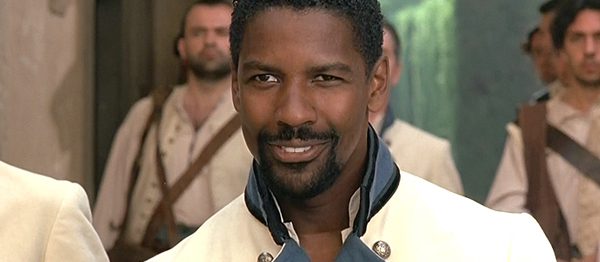
Autumn 1918. A group of soldiers return from the trenches. The world-weary Benedick and his friend Claudio find themselves reacquainted with Beatrice and Hero. As memories of conflict give way to a life of parties and masked balls, Claudio and Hero fall madly, deeply in love, while Benedick and Beatrice reignite their own altogether more combative courtship. Set amidst the brittle high spirits of a post-war house party, where youthful passions run riot, lovers are deceived and happiness is threatened – before peace ultimately wins out. -Synopsis

I saw this play on Marquee TV (which is an arts and culture streaming service); I signed up for the free 14-day trial. The play is more commonly known as Much Ado About Nothing; it’s my favorite Shakespeare comedy. This adaptation is set in the time period made famous by the recent PBS drama series and movie Downton Abbey. Hero (Flora Spencer Longhurst) and Claudio (Tunji Kasim) are the younger/fresh-faced couple. Beatrice (Michelle Terry) and Benedick (Edward Bennett) are the slightly older/jaded pair content to be singletons. By means of “noting” (which sounds similar to “nothing,” meaning gossip, rumor, and overhearing), Benedick and Beatrice are tricked into confessing their love for each other; Claudio is tricked (by Don John and his accomplices) into rejecting Hero at the altar thinking she has been unfaithful.

We are in an English village w/ an estate fit for royals. In the living room, there is a tall/elegantly-decorated Christmas tree. In one hilarious scene, Benedick hides inside the tree (while Leonato, Prince Don Pedro, and Claudio discuss him and Beatrice). There are songs and dances which come from (or are orchestrated to fit) the early 1900s vibe. We hear “Sigh No More” sung by Balthasar; it tells women to accept men’s infidelity and keep on living w/ joy. In the 1993 film directed by and starring Kenneth Branagh, the song is featured prominently in both the opening and finale.

Sigh no more, ladies, sigh no more,
Men were deceivers ever,-
One foot in sea and one on shore,
To one thing constant never.

Benedick and Beatrice (“too wise to woo peaceably”) are the main interest of the play; they have some of the best (and most memorable) lines. Terry (who became director of Shakespeare’s Globe Theatre in 2017) commented in an interview that “Beatrice felt very deeply,” so humor was a “defense mechanism” she used. I loved how this actress played the (pivotal) scene in the church.

I had rather hear my dog bark at a crow, than a man swear he loves me.

Not till God make men of some other metal than earth [would she consider having a husband]

Benedick is a bit disappointed when his best pal (Claudio) has the “intention to turn husband.” Benedick is also adept at using humor. The life of a bachelor suits him best, and only a rare woman would convince him otherwise.

…But it is certain I am loved of all ladies, only you excepted: and I would I could find in my heart that I had not a hard heart; for, truly, I love none.

I wish my horse had the speed of your tongue.

I liked how this production created a balance between the light and serious moments. The humor is played (mostly) w/ subtlety, as would suit Brits from that era. Beatrice, Benedick, and some of the minor characters have scenes w/ physical humor. I was impressed by how light the actors were on their feet (when the scene called for it). You can watch some scenes below!

Beatrice and Benedick meet.
Leonato, Prince Don Pedro, and Claudio set a trap for Benedick.
Beatrice and Benedick say they love each other, but she wants him to kill Claudio!