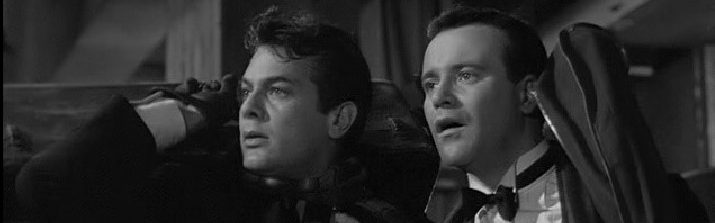
“Spartacus” (1960) starring Kirk Douglas, Laurence Olivier, Charles Laughton, Peter Ustinov, Jean Simmons, & Tony Curtis

There is so much cool BTS info (trivia) re: this film! Kirk Douglas (who died at age 103 this month) wanted to play the title hero in Ben-Hur (1959), but director William Wyler wanted Charlton Heston in the role. Douglas was offered the antagonist role of Messala, which was eventually given to Stephen Boyd; he didn’t want to play second banana. Later, Douglas admitted that he made Spartacus to show Wyler and his company that he could make a Roman epic also: “That was what spurred me to do it in a childish way, the ‘I’ll show them’ sort of thing.”

In order to get the large number of big stars in supporting roles, actor/co-producer Douglas showed each a different script (written by the blacklisted Dalton Trumbo) in which their character was emphasized. Stanley Kubrick (known for his perfectionism, vision, and difficult personality) was brought in as director after Douglas (a real-life tough guy) had a falling out w/ the original director, Anthony Mann. According to actor Sir Peter Ustinov, the salt mines sequence was the only footage shot by Mann. In his autobiography, Douglas wrote that he replaced Mann b/c he felt he was “too docile,” esp. for the powerful actors dominating the cast. “He seemed scared of the scope of the picture.”

Kubrick (then only 31 y.o.) felt the script was full of moralizing; he wanted more focus on the Romans. He also complained to Trumbo and that the character Spartacus had no faults nor quirks, so was interchangeable w/ any other gladiator. Kubrick thought the “I am Spartacus” scene was “a stupid idea”(and said so in front of cast/crew)! Douglas promptly chewed Kubrick out. The disagreements between Kubrick and Douglas got so bad that the men reportedly went into therapy together.

Kubrick was a professional photographer who had shot some of his previous movies by himself. He did the majority of the cinematography work on Spartacus. When you see the way that Kubrick shot the battle sequences, you’ll be impressed! All the battle scenes were filmed near Madrid w/ 8,000 trained troops from the Spanish army (serving as Roman infantry). Kubrick directed the armies from the top of specially constructed towers. He later cut all but one of the gory battle scenes (b/c of negative reactions at previews).

A good body with a dull brain is as cheap as life itself. -Batiatus explains while examining the slaves in the salt mines

Kubrick spent $40,000 on the 10+ acre gladiator camp set. On the side of the set that bordered the freeway, a 125-foot asbestos curtain was erected in order to film the burning of the camp, which was organized w/ collaboration from the LAPD and Fire Department. 5,000 uniforms and seven tons of armor were borrowed from Italian museums, and every one of Hollywood’s 187 stuntmen was trained in the gladiatorial rituals of combat to the death. Modern sources note that this production used 10,500 people- wow! Richard Farnsworth (who moved into acting after 30+ yrs as a stuntman) and five other stuntmen worked for the entire filming; they doubled as salt mine slaves, gladiators, and generals in the slave army.

Gladiators don’t make friends. If we’re ever matched in the arena together, I have to kill you. -Draba tells Spartacus when he first arrives at the gladiator school run by Batiatus

This movie parallels ’50s American history, particularly the House Un-American Activities Committee (HUAC) hearings, where witnesses were ordered to “name names” of supposed Communist sympathizers. This closely resembles the climactic (“I am Spartacus”) scene; Howard Fast was jailed for his refusal to testify and wrote the novel (Spartacus) while in prison. This film also has something to say re: race/segregation/civil rights, as I noticed on this viewing. The best fighter owned by Batiatus (Peter Ustinov)- Draba (Woody Strode, who is black)- sacrifices himself by choosing to attack Crassus (Laurence Olivier), rather than kill Spartacus. Not only is Draba the tallest and most handsome warrior, he projects a lot of dignity in his few scenes. There is no differentiation between the slaves of different races who train w/in the gladiator school and- later- serve in the army of Spartacus.

Who wants to fight? An animal can learn to fight. But to say beautiful things, and to make people believe them… -Spartacus tells Varinia (after listening to a story told by Antoninus)

Ingrid Bergman was one of several actresses who rejected the role of Varinia. Sabine Bethmann was then cast, but when Kubrick arrived, he fired her and offered the part to Jean Simmons. In the 1988 interview on NPR’s Fresh Air, Douglas explained to host Terry Gross that he was reluctant (at first) to have Simmons (who is English) portray Spartacus’ love interest. He had cast the English actors as aristocratic Romans, b/c he felt they “had a more elegant pattern of speech.” He explained: “All the slaves, like myself, were Americans… it’s just that Americans have a rougher speech pattern.” During the long shoot, Curtis allegedly asked Simmons, “Who do I have to f*ck to get off this film?” Simmons may have shouted back, “When you find out, let me know.”

I thought Simmons and Douglas had strong chemistry, so you can believe them as a couple. As w/ great actors of any time/place, the acting comes from the eyes; you don’t need dialogue to express yourself. As slaves who fall in love, Varinia and Sparticus don’t have the luxury of speech or much time alone. Others in the household notice that they care for each other, so try to put a stop to it. When they are suddenly reunited, they laugh (w/ a lot of joy) and embrace as free individuals. Of course, their relationship made me think of how life might’ve been like in the time of slavery in US.

My taste includes both snails and oysters. -Crassus tells Antoninus

Sir Laurence Olivier gave Tony Curtis tips on acting to improve his performance; Curtis gave Olivier tips on bodybuilding to improve his physique. The original version included a scene where Crassus attempts to seduce his body slave, the young Sicilian- Antoninus (Curtis). The Production Code Administration and the Legion of Decency both objected to the “oysters or snails” scene seen in the 1991 restoration. Since the soundtrack had been lost, the dialogue had to be dubbed. Curtis was able to redo his lines, but Olivier had died. Dame Joan Plowright, Olivier’s widow, remembered that Sir Anthony Hopkins could do a dead-on impression of her husband. Hopkins agreed to voice Olivier’s lines in that scene (and it’s seamless); he is thanked in the credits for the restored version.

You and I have a tendency towards corpulence. Corpulence makes a man reasonable, pleasant and phlegmatic. Have you noticed the nastiest of tyrants are invariably thin? – Gracchus comments to Batiatus

I liked seeing the evil side of Olivier; Crassus was very convincing as a powerful/tough/smart villain w/ a hint of insecurity. You buy him as a senator and as a soldier, unlike his wimpy brother-in-law Glabrus (John Dall). He is best-known as the villain in Hitchcock’s Rope; here Dall portrays an inept leader of the Roman forces. A lot of the light/humorous moments were given to Batiatus (Ustinov), the wimpy slave peddler who is a follower of the powerful senator, Gracchus (Charles Laughton). When Crassus and his family come for a visit, Batiatus rushes to cover up the bust of Gracchus. As w/ Olivier, Laughton gives gravitas to his character, but also humor. When Batiatus comments on the many beautiful women in Gracchus’ household, the older man laughs and comments: “Since when are women a vice?” Gracchus is considered eccentric (for that time/society), b/c he is a lifelong bachelor; he explains that away by saying he “holds the institution of marriage in too high a regard.” I almost forgot that the (also very handsome) John Gavin portrays Julius Caesar; he doesn’t get as much of a role as Curtis. Both Gavin and Curtis have shirtless scenes- why not!? Gavin co-starred in Hitchcock’s Psycho (also released in 1960).

SPOILER-FREE Reviews: “Jojo Rabbit,” “Joker,” & “Once Upon a Time in Hollywood”

Jojo Rabbit

This is an unique movie- that’s for sure- and it worked! It is a mix of comedy (satire), history, and drama from the mind of New Zealander, Taika Waititi, who also plays Jojo’s imaginary friend (Hitler). Waititi (who used to focus on acting before directing) is far from Aryan; he gets his unique (for mainstream Hollywood) looks from his Jewish mother and Maori father. This movie is a must-see for the touching/nuanced/realistic acting of its child/teen actors: Roman Griffin Davis (Jojo), Thomsin McKenzie (Elsa), and Archie Yates (Yorki). Scarlett Johansson (who got a Supporting Actress Oscar nom) does a fine job as the mom (Rosie). Jojo is fascinated by Hitler and joins a sort of Youth Movement (a Nazi-inspired Summer camp). The sunny/bright look of the film is in direct contrast to its themes. The supporting actors incl. Sam Rockwell (not a fan but he gets a good scene), Alfie Allen (from GoT fame), Rebel Wilson (who I found distracting), and Stephen Merchant (a tall/British comedian who is hilarious).

Joker

As a whole, this movie (loosely connected to the world of Batman) wasn’t as effective (or realistic) as I was expecting. It’s partly an exploration of mental illness, so not the (typical) development of the comic book villain- Arthur Fleck (AKA The Joker). I felt the audience was uneasy (incl. one particularly violent/bloody scene); Arthur gets beaten in several scenes. However, it’s a must-see for Joaquin Phoenix’s performance (incl. his physical transformation). The dark/dreary look of the film is very fitting of its themes. As some critics commented, if you’ve seen Taxi Driver, Falling Down, and/or Fight Club– I haven’t, then maybe this movie won’t be original to you. I was surprised to learn that director Todd Philips worked on The Hangover franchise. The supporting actors come from the theater world (Frances Conroy plays the invalid mother) or are character actors. Critics have commented on the way race (particularly black women) are treated here. There are (at least) two big twists to this movie, but were they expected? You’ll need to see/judge for yourself!

Once Upon a Time in Hollywood

I’ve only seen three of Tarantino’s movies (so far): Natural Born Killers (1994)- which I barely recall, Inglourious Basterds (2009)- which I thought was very well-done, and Django Unchained (2012)- which was interesting, yet also self-indulgent. This is Tarantino’s 9th film; its a mix of buddy comedy, nostalgia for ’50s Hollywood/Westerns, and strong violence. In the first third, we see the development of the friendship between a middle-aged/fading TV actor, Rick Dalton (Leonardo DiCaprio), and his former stuntman-turned-driver, Cliff Booth (Brad Pitt). These two actors have great chemistry together! Rick is somewhat insecure re: his talent, and drinks way too much to compensate. Cliff maintains a more chill vibe, though we learn about his (potentially) dark past about at hour into the story.

The supporting actors are a mix of well-known TV actors who may or may not be distracting (incl. Damian Lewis, Timothy Olyphant, Lena Dunham, and 90210’s Luke Perry- his final role); the daughters of famous actors (Margaret Qualley, Rumer Willis, Maya Hawke, among others); and also some actors who never quite “made it big” in Hollywood. The super-serious child actor really did great in her scenes! There has been criticism of how B-movie actress, Sharon Tate (Margot Robbie), and martial arts expert, Bruce Lee (Mike Moh), were portrayed in the film. Tate comes off as a beautiful object; she gets one really good scene. The (flashback) scene between Cliff and Lee just seems unreal; I think it’s open to interpretation. It has some fine moments, but (as a whole) is self-indulgent, slow, and muddled.

“Padmaavat” (2018) starring Deepika Padukone, Ranveer Singh, & Shahid Kapoor

SPOILERS: Don’t read this post if you haven’t seen, or don’t want to know, details from this movie.

Set in medieval Rajasthan, Queen Padmavati is married to a noble king and they live in a prosperous fortress with their subjects until an ambitious Sultan hears of Padmavati’s beauty and forms an obsessive love for the Queen of Mewar. -Synopsis

I didn’t know I would have to suffer THIS much just to see Shahid Kapoor’s spectacular abs! Seriously, this is one Bollywood movie (directed/co-written by Sanjay Leela Bhansali) which deserved the controversy it got- it’s misogynistic, Islamaphobic, and homophobic. One army is shouting and riding through a desert carrying green flags w/ a white crescents (just like the flag of Pakistan). There is a scene of many men all wearing white thobes and turbans doing namaz (prayer), then yelling and picking up weapons to fight in the next moment. The stereotypes are so blatant, this movie could be considered dangerous (esp. given the tensions between Muslims and Hindus in Modi’s India)! For those of you who watched Game of Thrones, there is a murder scene very similar to the killing of a lesser Lannister cousin by Jaime in Season 2.

I’m sure some of you’ve heard re: the characterization of the medieval sultan, Alauddin Khilji (Ranveer Singh); he is violent (even w/o cause), lustful (incl. for power/lands), obsessive, and animal-like (eating raw meat w/ his bare hands). In stark contrast, Maharawal Ratan Singh (Shahid Kapoor), is peaceful, loving (having eyes only for his wife), calm, and honorable leader. I learned that one of my fave veteran actors (who has worked all over the world), Naseeruddin Shah, is a maternal uncle of Kapoor! Yes, the actor has both Hindu and Muslim heritage; this is not unusual when it comes to some of Bollywood’s film families.

In the early 1300s, an arrogant/confident prince named Alauddin marries his cousin, Mehrunissa (Aditi Rao Hydari), and plots to take the throne of her father/his uncle- Jalaluddin (Raza Murad). None of the Muslims in this movie are portrayed as good, aside from the luminous/sad-eyed Mehrunissa. In one memorable scene, a warrior named Malik Kafur (Jim Sarbh), kills two hardened soldiers with balletic/swift strokes of his knife. Unfortunately, he spends most of the movie pining after Alauddin like a love-sick teenager.

When Mehrunissa is close, Kafur is jealous. In one scene, he is washing Alauddin while they sit in a big bathtub (talk about homoerotic undertones)! In the original story (written by a Muslim poet), Malik Kafur was both a fighter (respected general who fought in many successful battled) and a lover. In Ridley Scott’s Alexander, he has a handsome male companion who hails from somewhere in the Middle East; this was based on records uncovered by historians. In this case, Malik Kafur’s homosexuality serves as a running joke and makes Alauddin seem like even more of a freak of nature.

The princess (of what is now Sri Lanka), Padmavati (Deepika Padukone- sporting an unibrow), is first seen frolicking in the woods w/ a bow and arrow. This might bring to mind Diana (the huntress in Greek mythology) or Katniss from The Hunger Games trilogy. She attempts to shoot a deer, but ends up wounding the King of Chittor- Ratan Singh! He admits that it was his fault- he was staring at her (struck by her beauty, not just her arrow). Padmavati takes care of the king (in the cave where she lives- no reason why) while he recovers. This section of the movie reminded some viewers of Wonder Woman.

Of course, Padmavati and Ratan Singh fall in love; the actors portray this well. She gives Ratan Singh handfuls of pearls (which he had been searching for at the request of his queen). The marry and go off to his kingdom, where his first wife, Nagamati (Anupriya Genka) is put on the back bench. When the court priest- Chetan- is caught spying on the king and queen; he is promptly banished. Chetan ends up working for Alauddin, convincing him that in order to succeed, he must have Padmavati by his side! This is one character I wanted to see a bit more of, along w/ his motivations.

The middle section of this story drags on… and on; the viewer is bombarded w/ scenes of dust, desert, marching armies, as well as the opulence (of the Rajputs). Honestly, I couldn’t judge who had the better costumes- Kapoor or Padukone! Eventually, Ratan Singh invites Alauddin to share a meal and talk alone (w/o any men or weapons). When Alauddin asks to see Padmavati, Ratan Singh is deeply offended and says no. Alauddin says that he expected to meet both the rulers. Padmavati convinces her husband that, in order to appease Alauddin (and maybe save the kingdom from war), she will let him see her. Before Alauddin can get a good look, a curtain is pulled down, hiding the queen. This makes the sultan very angry; he vows to get Padmavati to come to him! Alauddin invites Ratan Singh to his tent for meal, then kidnaps him. Though Nagamati pleads w/ her not to, Padmavati insists on going to rescue her husband (w/ his two best soldiers by her side and 800 attendants).

The movie opens with some disclaimers, one being that it is not endorsing jauhar (Wikipedia: “the act of mass self-immolation by women in parts of the Indian subcontinent, to avoid capture, enslavement and rape by Islamic invaders, when facing certain defeat during a war.”) As some of you may have guessed, jauhar is closely connected to sutee (“bride burning”)- the custom of a Hindu widow being burned to death on the funeral pyre of her husband. Kaushik Roy said that the jauhar was observed only during Hindu-Muslim wars; John Stratton Hawley states it was present before them and was likely started by the actions of the Greek conquerors.

Well, in the last act of the film, jauhar is most obviously valorized! After the fight between Alauddin and Ratan Singh (where the good king is shot in the back), the girls and women (incl. ones who are pregnant) inside the fort are seen dressed in their finest (bridal) red outfits. They are led by Padmavati, who defiantly declares that Alauddin’s army will not defeat them. They walk in a slow procession for some time- too long- and bravely walk closer… and closer to a huge wall of fire. No one looks nervous, scared, or even hesitates for a second- that can’t be realistic!

Re-watching Problematic Movies: Gone with the Wind (1939)

In the late ’90s, one of my history classes (in university) examined this iconic film. Our 30ish professor (like many of us) grew up watching GWTW; she considered it very problematic, yet also admired Scarlett O’Hara as an empowered woman. I recall her getting a bit emotional about the story; I’m sure there are millions of others who admired parts of this movie (and novel). Upon closer examination, we find mixed messages, not only w/ regard to history and slavery, but re: war, social codes, love, and marriage.

I’ll think about that tomorrow. -Scarlett’s motto

No doubt this movie (made for less than $4M) was a technical feat! Students of film have been studying it for decades; on recent viewing, I was esp. struck by how well light and shadow were used (production design). There are 50+ speaking roles and 2,400 extras. Out of the 1,400 actresses interviewed for the part of Scarlett, 400 were asked to do readings. Here are some of the actresses considered for the role (who screen tested): Tallulah Bankhead, Susan Hayward, Paulette Goddard, Lana Turner, Jean Arthur, and Joan Bennett. GWTW also used special effects, most notably the burning of Atlanta. Scarlett is described as having green eyes; Leigh’s eye color was corrected (post-production) from blue to green. As she could not dance, Leigh has a body double in the charity auction ball scene. One thing which amazed my mom, but it’s true- Leigh tightened her corset to 18″ (as Scarlett comments)!

Did you know GWTW went through several directors? David O. Selznick (producer) fired George Cukor as director b/c (as a gay man), Selznick though he would be unable to properly direct love scenes between Rhett and Scarlett. Cukor (who had a reputation of getting strong performances from women) continued to privately coach both Leigh and de Havilland on weekends. The scene where Mammy reprimands Scarlett for not eating is one of the few remaining in the final film shot by Cukor. Leigh wasn’t happy w/ macho director Victor Fleming’s style; when she asked for constructive advice, he said to “take the script and stick it up her royal British ass.” Of course, classic movie fans know that Leigh was involved w/ Laurence Olivier during this time; she must’ve gotten a lot of advice from him!

The Emancipation Proclamation (1863) and the 13th Amendment to the Constitution (1865), which both set slaves free, have minimal effects on the plot of GWTW. The house servants at Tara (Mammy, Pork, Prissy and Uncle Peter) continue to serve the same masters and their families. We are to assume that they don’t want to leave or have nowhere to go. Scarlett thinks to herself (in the novel): “There were qualities of loyalty and tirelessness and love in them that no strain could break, no money could buy.” If this isn’t romanticizing “the Old South” (antebellum) days, then I don’t know what is!

What gentlemen says and what they thinks is two different things, and I ain’t noticed Mr. Ashley asking for to marry you. -Mammy (telling it like it is) to Scarlett

When I watched it as a kid, I was surprised to see that Mammy was more concerned w/ propriety than Scarlett; I also saw that she was crucial to this story and has some memorable lines. After Scarlett and Rhett marry, he admits to his new wife that he wants Mammy’s good opinion. As an adult, I realized that- of course- Mammy had to know all the rules which governed the behavior of young ladies! Her life was inextricably tied w/ that of her owners, the O’Haras, and primarily Scarlett. Miss Ellen, Scarlett’s mother, seems to have been the ideal woman in Mammy’s eyes; Scarlett doesn’t quite measure up.

The fact that Hattie McDaniel would be unable to attend the premiere in (segregated) Atlanta outraged her friend Clark Gable; he threatened to boycott the premiere unless she could attend. McDaniel (in her mid-40s) became the first African-American to be nominated for, and win, an Academy Award. She was criticized by some African-Americans; she commented that she’d “rather make seven hundred dollars a week playing a maid than seven dollars being one.” Before she hit the big screen, McDaniel had a career as a singer, traveling across the South (as many black performers did in the early 1900s). Butterfly McQueen (who played Prissy) said that her stereotypical role totally put her off acting. Who could blame her!? Prissy is characterized as lazy and deceitful. In one scene, Scarlett slaps her hard on the face- ouch! McQueen went on to pursue graduate education in Political Science.

On my recent re-watch, I noticed that the field foreman from Tara, Big Sam (Everett Brown), was given two memorable scenes. Big Sam is walking through Atlanta (w/ his fellow male slaves) on the way to digging ditches for the Confederate Army. He is spotted by (a very excited) Scarlett; they catch up on news from Tara. Later on (after the Civil War), Big Sam is the one who rescues Scarlett after she is attacked by a white man while driving her buggy through the “shanty town.” He recognizes her voice, runs to the road, and beats up the would-be robber- what a heroic moment!

I’m saying very plainly that the Yankees are better equipped than we. They’ve got factories, shipyards, coalmines… and a fleet to bottle up our harbors and starve us to death. All we’ve got is cotton, and slaves and… arrogance. -Rhett comments to gentleman gathered together for the ball at Twelve Oaks

One of the main reasons to watch GWTW is Gable (then in his late 30s); he is full of charm, danger, mischief, and (after Bonnie is born)- a bit of vulnerability. As my dad commented years ago: “Why is Scarlett obsessed w/ Ashley when Rhett is around!?” Though he’s not gung-ho about the war (neither is Ashley), Rhett does eventually succeed as a “blockade runner.” Rhett is not about “the cause” (slavery), he’s in it for profit and excitement. After the burning of Atlanta, he joins “the lost cause.” Once their marriage grows sour, the troubled (and potentially violent) side of Rhett emerges. Modern audiences may cringe at the infamous (and quite disturbing) scene where he carries Scarlett up a long stairway, saying he “won’t be shut out” (of her bedroom) one night.

Author Margaret Mitchell’s first choice to play Rhett Butler was Basil Rathbone. The only four actors David O. Selznick seriously considered for the role were Gable, Gary Cooper, Errol Flynn and Ronald Colman. The chief impediment to Gable’s casting was his MGM contract; this was the era of contract players. He was not drawn to the material, didn’t see himself in a period film, and doubted that he could live up to the public’s anticipation. He was persuaded by a $50,000 bonus, which would enable him to divorce his second wife and marry actress Carole Lombard. Gable disliked his most famous film, which he called “a woman’s picture.” Leigh said she hated kissing Gable b/c of his bad breath. He was rumored to have false teeth (a result of too much smoking). Gable would sometimes eat garlic before his kissing scenes w/ Leigh- ugh!

Open your eyes and look at me. No, I don’t think I will kiss you. Although you need kissing badly. That’s what’s wrong with you. You should be kissed and often and by someone who knows how. -Rhett says to Scarlett (after he returns from Paris)

Selznick always wanted Leslie Howard to play Ashley Wilkes, but Howard felt that he was too old (the character was supposed to be about 21 at the start of the film). My dad agrees w/ that! Howard wore extra makeup and a hairpiece to make him appear younger. Selznick was only able to persuade him to take the part by offering him a producer credit on Intermezzo (1939). Vincent Price, Dennis Morgan, Douglass Montgomery, and Melvyn Douglas were among the actors who tested for the part of Ashley. Many viewers on Twitter (during my re-watch) were annoyed w/ the fact that Howard kept his English accent. Also, some women noted that he was a jerk for “giving Scarlett hope” and “leading her on” in several scenes. I realized that scene where Ashley and Scarlett talk re: maybe running away from Tara (and their responsibilities) was done very well- acting and the look of it.

While Scarlett is colorful/rebellious/independent, Ashley’s cousin/wife, Melanie Hamilton (Olivia de Havilland), is the epitome of a demure/calm/traditional lady. Her hairdo is simple (no curls), she dresses plainly (not seeking attention from men), and is 100% devoted to just one man- Ashley. Others (incl. elders of her society) look to her to determine what is “proper.” Melanie is selfless and giving (tending to wounded soldiers w/o complaint); Scarlett is selfish (wanting to run away from nursing, marrying her sister’s beau- Frank Kennedy- for his money, etc.)

In one memorable scene, when a Union soldier comes to rob Tara, Melanie (weak after giving birth) grabs a sword and clambers down the stairs in an effort to help Scarlett. There is a moral strength to Melanie; Scarlett (who is physically much tougher) eventually realizes that. These two women (who perhaps would be “frenemies” today) are like two sides of a coin; they have to rely on each other. In McDaniel’s pivotal scene (after the sudden death of Bonnie), Mammy cries and gently pleads: “If you can’t help us, who can? Mr. Rhett always set great store by your opinion. Please, Miss Melly.” Gable was reluctant to cry (in his following scene), but de Havilland convinced him that it would be the right thing to do for his character.

Hitchcock Meets Steinbeck: “Lifeboat” (1944) starring Tallulah Bankhead, John Hodiak, Mary Anderson, & Hume Cronyn

Six men and three women – against the sea and each other. -One of the taglines from the movie

…this is what is best about Hitchcock – when he wasn’t busy being a technical show-off, he always kept his mind on thrilling and enthralling the audience. A director who plays TO an audience, pandering to a specific set of sensibilities, will make films that will only ever appeal to the tastes of one era. Hitch on the other hand plays WITH the audience, and this has made his pictures stand the test of time.

Given the time when this was made… it’s hardly surprising that it’s filled with propaganda. Usually, this annoys me; but here it’s done really well, and the propaganda is actually worked into the story instead of just being there to rally the allied population at the time. Hitchcock turns this into a twist, and the way that he parodies the war on the whole on just a small lifeboat in the middle of the big ocean is great. 

-Excerpts from IMDB review

In the Atlantic Ocean during WWII, a passenger ship and a German U-boat are involved in a battle where both are sunk. The survivors gather in one of the lifeboats. They come from a variety of backgrounds and places: an international journalist- Connie Porter (Tallulah Bankhead), a rich businessman- Charles Rittenhouse (William Hull), a young/Midwestern nurse- Alice MacKenzie (Mary Anderson), a steward- Joe Spencer (Canada Lee), a humble British sailor- Stanley Garrett (Hume Cronyn), and a hard-edged engineer from Chicago- John Kovac (John Hodiak), along w/ his affable buddy- Gus Smith (William Bendix). Stanley and Joe help bring a young Englishwoman carrying a baby in her arms onto the boat- Mrs. Higley (Heather Angel). Trouble starts when they pull another man out of the water- Willi (Walter Slezak)- who turns out to be from the U-boat (German). Some of the survivors want to thrown him back, but others intercede. Connie speaks fluent German, so she can communicate with this man.

It all started when Hitchcock wanted a challenge for himself. He commissioned American author John Steinbeck to write a story based on an idea he had for a drama about people in a lifeboat. Steinbeck’s work was adapted by Jo Swerling; Ben Hecht was also a collaborator in the screenplay. This movie (which cost a little over $1.5M) was shot entirely on a restricted set; the boat was secured in a large studio tank. Hitchcock, striving for realism, insisted that the boat always be moving. The harsh conditions of the shoot took its toll: actors were soaked with water and oil, which led to illness and injury. Cronyn once almost drowned and cracked some ribs! Production was halted twice to allow for recovery of the cast. The famed director insisted on shooting in sequence (which is rarely done), which meant most of the cast had to be paid for the entire shoot. When studio head- Darryl F. Zanuck- objected, Hitch insisted this was necessary to shape the unconventional narrative.

Wow, this movie is impressive- I wonder why I never heard of it before! Like all great films, it takes you on a journey. Hitch made a lot of great films. Lifeboat is lesser-known; I just discovered it last week (thanks to a brief review on YouTube). Hitch succeeds in scene setting and drawing the audience into the story. The way he uses his camera aboard the lifeboat keeps the audience plugged into the plight of the characters. The plot is simple, yet a great premise for a thriller. Its a study of how difference of opinion can create tensions, and how people can deal with those tensions.

The characters are all distinct and each actor does well w/ their role. During filming, several crew members noted that Bankhead was not wearing underwear. When advised of this situation, Hitch commented, “I don’t know if this is a matter for the costume department, make-up, or hairdressing.” LOL! Bankhead (then in her early 40s and a big star) had a style which was later adopted by an younger actress- Bette Davis. Bankhead joked that “All About Eve” should’ve been titled “All About Me” after that hit film came out. In the first scene, we see Connie w/o a hair out of place, wearing a mink coat, made-up, and smoking a cigarette. She looks more annoyed at the run in her stocking than the destruction surrounding her! Connie conveys toughness also, but little by little, her true self comes out as she faces the harsh reality.

It is rare to see such a meaty role for a black American at this time period; Lee even wrote some of his own lines for Joe. Once the film was completed, Steinbeck (who was very progressive) objected to the tone Hitch used w/ Joe in certain scenes. Lee had also acted on Broadway in a lead role in Anna Lucasta. Before he became an actor, he worked as a jockey, boxer and musician. Lee was also a civil rights activist, following in the footsteps of actor Paul Robeson (considered to be a Renaissance Man in his time). My favorite scene in Lifeboat is when Kovac asks Joe for his opinion on what to do w/ the German enemy. Joe replies simply he didn’t realize he had any vote or say in the matter! This was 20+ yrs before the Voting Rights Act.