Classic Movie Review: “Laura”

Her youth and beauty, her poise and charm of manner captivated them all. She had warmth, vitality. She had authentic magnetism. Wherever we went, she stood out. Men admired her; women envied her.
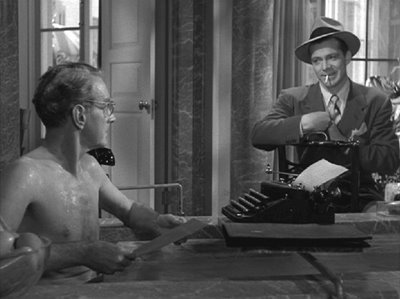
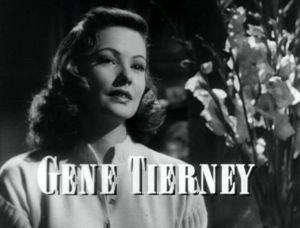
Waldo Lydecker (Clifton Webb) describes businesswoman Laura Hunt (Gene Tiermey) in glowing terms to Detective Mark McPherson (Dana Andrews) after her (presumed) death.  Lydecker is an influential, wealthy, sharp-tongued, witty columnist in NYC.  He narrates part of this 1944 film noir, and for the first half of the film, he creates for the audience a picture of Laura.  She was gorgeous, mysterious, confidant- the type of woman that men dream about. 


How singularly innocent I look this morning.

Lydecker served as her mentor, and they spent the past 5 years together.  What was the nature of their relationship?  He is imperious, but effeminate in manner- looks non-threatening to the audience.     

Because of Laura’s status and the terrible manner of her death, the media flocks to the doorstep of her 5th Ave apartment.  Though Waldo (a man in his 50s) was close to Laura, she was engaged to the charming, handsome, easy-going Shelby Carpenter (Vincent Price).  Shelby is very friendly with Laura’s wealthy, widowed, middle-aged aunt, Ann Treadwell (Judith Anderson).
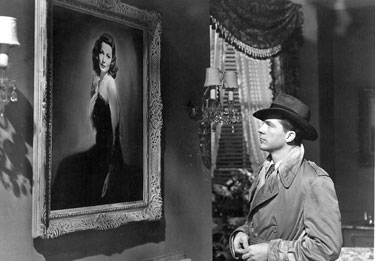
 

Waldo, who often tags along with Mark during his investigation, warns the detective.

You’d better watch out, McPherson, or you’ll finish up in a psychiatric ward. I doubt they’ve ever had a patient who fell in love with a corpse.


McPherson is a tough, no-nonsense cop who’s not fazed by dealing with society people; he keeps calm by playing with a little handheld game.  He goes over her apt, her letters, and diary.  Laura’s portrait fascinates and unsettles him.  This is not just a typical murder case to him!
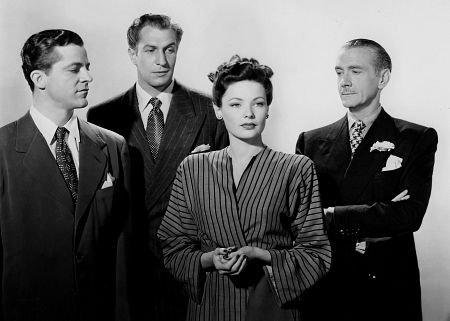
Since Laura is a murder mystery, I don’t want to give too much away.  However, I can tell you that it’s a film worth watching.  You won’t see some surprises coming!  The dialogue is sophisticated and entertaining.  The characters are distinct, interesting individuals.  I especially liked Vincent Price’s performance; he seemed very modern and realistic as a down-on-his-luck Kentucky playboy.  Judith Anderson has a great scene where she describes why they are suited for each other.  Clifton Webb has a lot of terrific lines in the film; he reminded me of Oscar Wilde’s writing. 


Movie Review: “The Wedding Banquet”


Director Ang Lee’s films are very impressive- both in his native Mandarin Chinese and English- including Eat Drink Man Woman, Crouching Tiger Hidden Dragon, Sense and Sensibility, and Brokeback Mountain.  He has an eye for detail and subtlety.  The conflict between desire and duty is something he exlpores often.  Yet he struggled for 15 years to get his vision out to the public, because he wouldn’t compromise to meet someone else’s standards.  (He was a stay-at-home dad for many years while his wife earned a living.)  If the soft-spoken director had compromised, we wouldn’t have a gem like The Wedding Banquet, Lee’s second film (released in 1993).


Love, lies, food, family- FUN!!!

The Wedding Banquet, which Lee co-wrote, is a film infused with culture, humor, sensitivity… I could go on and on!  You will laugh, cry, and be (pleasantly) surprised as you watch this comedy.  This film (in Mandarin and English) challenges viewers’ expectations and shatters stereotypes we may have of the Chinese community, gay men, and “traditional” parents.  The main character, Wai Tung, is a well-off, buttoned-down Chinese immigrant businessman who lives in a comfy brownstone with his sweet/funny white American partner Simon, a physical therapist in NYC.   His traditional Chinese parents, who live in Taiwan, are busily looking for a nice, educated girl for him to marry.  Wai Tung wants to help out one of his tenants who has been living for 2 years in a (not so functional) loft in Williamsburg, Brooklyn (before that area became hipster and pricy).  Wei Wei is a painter, independent-spirited- truly a starving artist.  Simon suggests that Wai Tung marry Wei Wei to help her get a green card and make his parents happy.  What could go wrong? 


For one thing, the petite beauty, Wei Wei, has a big crush on Wai Tung.  And Wai Tung’s enthusiastic parents, who unexpectedly come to visit, want to follow wedding customs of their homeland.  They are very disappointed by the impersonal city hall ceremony.  (Their reactions are similar to that of Ang Lee’s parents, he explains in an interview.)  Out of the blue, an old army friend of Wai Tung’s father (and owner of a big restaurant) insists on throwing a wedding banquet.  But it’s all pretend, right?


Father, whose health is declining, wants a grandson to carry on the family name.  Mother is overjoyed to finally have a “daughter” who can take care of her son when they are gone.  Wai Tung is torn between his established life and one envisioned by the parents he respects and loves deeply.  Wei Wei, seeing the kindness and generosity of her new in-laws, begins to feel guilty.  Even the bubbly, accommodating Simon grows tired of pretending after a while.  How will this mess be settled?  Go find out ASAP! 


Movie Review: “The Ghost and Mrs. Muir”

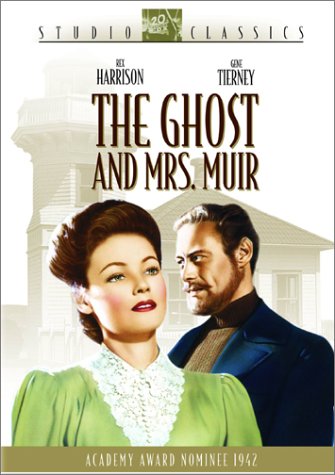
I couldn’t believe my luck in finding this film on sale at F.Y.E. in Astoria recently!  I had wanted to see The Ghost and Mrs. Muir for a long time.  This is an exceptionally well-made Hollywood classic (out in 1947) film starring theatrically-trained/powerhouse actor Rex Harrison (the ghost, Captain Daniel Gregg), one of Hollywood’s most beautiful movie stars Gene Tierney (Mrs. Lucy Muir), charming/rakish comedian George Sanders (Miles Fairley), respected character actor Edna Best (Martha), and a very adorable 8 year old Natalie Wood (Anna Muir).  The unusually beautiful music will stay with you long after the film; the composer also worked on Citizen Kane and collaborated many times with Hitchcock.  It was a big success when it first came out, and also received great reviews from critics- you’ll see why!  It combines the genres of thriller, romance, and comedy.  But romance is key!


The story opens at the start of the century (1900 that is) in London.  Young widow Mrs. Lucy Muir, whose husband passed away a year ago, is living with her mother-in-law, sister-in-law, daughter, and housekeeper.  The ladies are all dressed in mourning clothes.  She expresses a strong desire to live on her own (with the income from her husband’s gold shares), much to the shock and disapproval of the in-laws (two hysterical, overbearing ladies).  Mrs. Muir has decided that the seaside will suit her well; she sets off with the eager Anna and loyal Martha. 


Upon arrival at Whitecliff-by-the-Sea, Mrs. Muir seeks out a “house agent” to find a suitable place.  Mr. Coombe, the agent, thinks he knows better than the young lady, but Mrs. Muir decides to rent Gull Cottage, a house said to be haunted by the ghost of Capt. Gregg (a seaman who died mysteriously 4 years ago).  She is not frightened away by disembodied laughter like previous tenants.  She says the house is “perfectly fascinating.”  So begins the adventure…


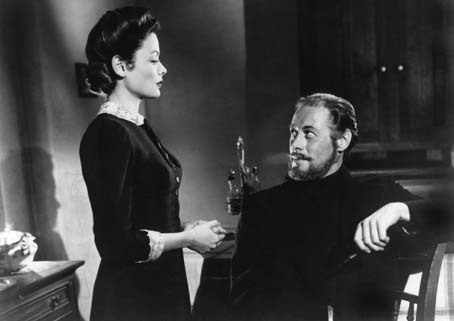
The cranky ghost of Capt. Gregg, dressed all in black except his silver buckled belt, reveals himself to Mrs. Muir soon after the family moves in; he’s not happy to have people in his house.  But she stands up to him; she’s not scared by his actions (noises, swearing, extinguishing candles).  She earns respect for that.  In that (first meeting) scene, their faces are only lit.   Light and shadow are used very cleverly and purposefully in this film.


Capt. Gregg is unlike the ethereal, other-worldly ghosts we’re used to in modern/special-effects laden movies.  He seems “real” to the audience, because Rex Harrison creates a very masculine, humorous, and witty character.  Harrison uses his strong physical presence (a must for any leading man), commanding voice (after all, he was chosen for My Fair Lady even though he couldn’t sing), and (especially) his eyes to “bring life” to the ghost.  But we also wonder if he is a figment of Mrs. Muir’s imagination?  Harrison is great at reacting to his fellow actors- a big part of acting.  In my honest opinion, the only way to get through the over-hyped Cleopatra is to focus on his portrayal of Julius Caesar.    


The ghost and the widow become friends; they “occupy the same domestic space like a married couple” (Jeanine Bassinger, chair of the Women’s Studies department at Wesleyan points out on one of the commentary tracks).  However, he has no body, so Mrs. Muir is safe; this satisfied the censors of the day.  When her investments fail, her in-laws come to visit; they urge her to go back with them to London.  But Capt. Gregg forms a plan- he “ghostwrites” a book to boost her finances.  Over some months, Daniel dictates to Lucy (or “Lucia” as he prefers to call her) the story of his lusty, adventurous life.  They work together and fall deeply in love.  It’s a sad fact that she is alive and he is dead! 


When Mrs. Muir goes up to London to see a publisher, she catches the eye of Miles Fairley, a well-dressed, smooth-talking, wealthy man in the office.  He’s not exactly her type of man, but he’s real.  Will Mrs. Muir let this (corporeal) man into her heart?    There is a similar choice to be made in Anthony Minghella’s first film, Truly Madly Deeply (if you want to know more). 


I highly recommend this film to everyone, not only fans of classic black and white films.  It seems modern to me, in many ways.  The music, lighting, costumes, etc. all work to create a memorable picture.  The exchanges (even the ones without words) that Harrison and Tierney have are terrific; you can see that their characters care about and respect each other.   The film is also “very literate” (Bassinger comments).  This is an intelligent viewer’s movie, though it also evokes emotions.  It is about loss, yearning, and “the dream of love.”  In reality, men are not perfect.  And not everyone has love in their life.  But we all dream!   


Movie Review: “Appaloosa”

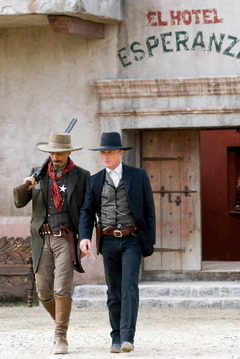
Ed Harris and Viggo Mortensen in France: WOW- talk about aging gracefully!!!

Last Sunday afternoon, I was feeling a little down, so I went to check out a new movie I was curious about.  (I wrote a previous post about Appaloosa.)  I would catagorize it as a subtle, low-key Western drama.  The small audience (mostly folks 50 and up) seemed to like the sly humor, in-depth characterization, and development of the female character (she’s not a one-dimensional woman like in traditonal Westerns).


The stars are: Ed Harris (lawman for hire Virgil Cole; he also co-wrote the screeplay and directed), Viggo Mortensen (Cole’s quiet, observant, long-time partner in “gun work” Everett Hitch), Renee Zellweger (young widow Allie French), and Jeremy Irons (rich bad guy/rancher Randall Bragg).

Cole and Hitch have been partners for many years.  They have traveled through little Southwestern towns enforcing the law whenever called upon.  Appaloosa is under siege by Bragg and his men; they drink too much, fight, don’t pay bills, and aren’t hesitant to use their guns.  The town leaders (scared stiff by the mention of Bragg) think he may have killed the former lawman of the town.  They quickly agree to the terms set by Cole (he carries his own list of laws), and he becomes marshall.  Hitch, who always carries a 12-gauge (a big gun), is his deputy.

Into the town comes Mrs. Allison French, a pretty, young, well-mannered widow.  She is cheerful and plays the piano, but hasn’t much money.  Cole takes an instant interest in her; he says she can stay in the town’s hotel as long as she likes.  Before you can say “Gunsmoke,” Allie is overseeing building a house and Virgil is helping choose curtains!  Everett is a bit surprised by his friend’s behavior.

Feelings get you killed.  (One of the taglines for the film)

Bragg, his men, and two newcomers to the town eventually use the budding romantic relationship to their advantage.


I liked the way that the film built things up, often in unexpected ways.  Issues that come across as simple in old Westerns are not so here.  (Remember that old Hollywood had to deal with stricter censorship codes.)  In those films, you had the bargirls/whores, married woman, and little girls- that’s all.  There weren’t many respectable single women hanging about.

Allie, who has an air of mystery, changes the dynamics (a little) between the two old friends.  She’s trying to survive in a man’s world, so she must rely on men (and all that comes with it).  Another woman in the town, a prostitute that Hitch sees, wonders if Allie “even knows how she feels.”  She can be sweet, bubbly, but is tough on the inside.  You’ll wonder about her past…

Viggo’s character, we learn in the opening narration, is a West Point graduate who served in the Civil War.  But his heart was not in “soldiering,” so he traveled West.  He helped Virgil out of a tough situation, and the men became partners.  Their friendship is very strong- almost like that of brothers.  In one great scene, Everett has to (physically) stop the older man from doing something rash.

There are humorous little moments, too.  Virgil has trouble with long, complicated words- Everett fills them in for him.  Jeremy Irons is pretty good as a evil guy, though I kept expecting him to revert back to his English accent!  (I guess we’re not used to seeing him as an American much.)  The scenery, music, and small characters all work well together, too.  Appaloosa is a very well-made, intelligent film with different layers.  It makes you think!

Movie Review: “The Producers”

This 2005 colorful movie musical stars Broadway/film actors Nathan Lane and Matthew Broderick.  The lyrics to the songs (by the hilarious Mel Brooks) are terrific; I got the CD pf the play several years ago.  They are joined by traffic-stopping beauty Uma Thurman, who wears some of the most beautiful dresses I’ve seen recently onscreen.  Oh, and she sings as well! 

Sleazy Broadway producer, Max Bialystock (Lane with a purposefully bad hairdo), is very depressed after his recent play (Funny Boy, a comedy version of Hamlet) closes on Broadway. 

After a bad review, Max explains himself in a song; below are some lines (that I REALLY liked):

I am Max Bialystock!
The first producer ever to do summer stock in the winter!
CHORUS:
Once he was the king…
MAX:
You’ve heard of Theatre in the Round?
You’re looking at the man who invented Theatre in the Square!
Nobody had a good seat!

Max gets his books examined by shy accountant Leo Bloom (Broderick- looking boyish as always).  Thinking out loud, Leo comments that one could make more money with a flop than with a hit.  Max is overjoyed!  He even asks the neurotic Leo to join him- become a producer.  Leo confesses that being a Broadway producer has been his “secret dream.”

Max and Leo find a play that is sure to offend people of all backgrounds- Springtime for Hitler by Franz Liebkind (Ferrell), an exciteable German ex-soldier who raises pigeons on his rooftop.  Oh, he also adores the Fuhrer! 

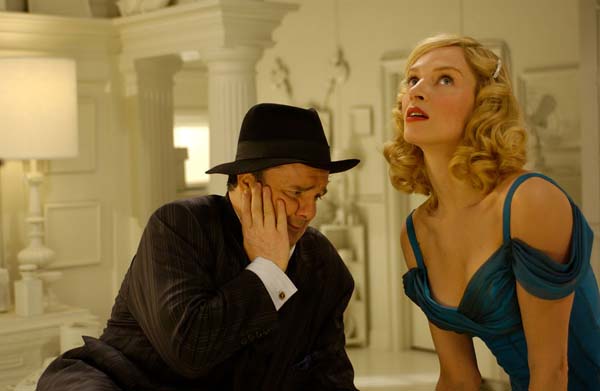
Ulla, a bubbly Swede, comes in to audition for a role.  Max and Leo’s eyes nearly pop out of their heads as they watch her sing and dance.  “If you got it, flaunt it!” Ulla belts out (see above pic); this was coined first by Mel Brooks.  That Ethan Hawke is one clueless shlub for letting Uma go!

Next, Max and Leo seek out Broadway’s worst director, Roger De Bris (Beach, a great Broadway actor/singer).  Yes, he is wearing an evening gown resembling the Empire State Building!  His very gay team (personal assistant Carmen, choreographer, costume designer, etc.) all live with him in a VERY feminine mansion (actually a private school on the Upper East Side). 

How can you NOT love lyrics like this!?:

ROGER & CARMEN:
A happy ending will pep up your play…
ROGER:
Oedipus won’t bomb…
CARMEN:
If he winds up with Mom!
Keep it gay!
ROGER:
Keep it gay…


By “gay” Mel Brooks meant “happy/light/breezy” BUT it takes on a different connotation when sung by a big guy in a dress.  LOL!!!

Violinists love to play an E-string
But audiences really love a G-string

Ven I was yust a little girl in Sveden
My thoughtful mother gave me this advice
If nature blesses you from top to bottom
Show that top to bottom, don’t think twice

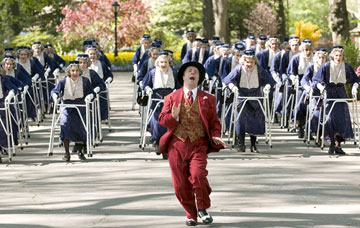
Who are those little old ladies?  They’re lonely, rich, and Max’s “backers” (who he puts “on their backs”).  You get the picture!  These ladies are all Broadway actresses who are great comics, dancers, singers, etc. 

Max explains the relationship in a song:

They’re my angels
I’m their devil
And I keep those embers aglow
When I woos ’em
I can’t lose ’em
‘Cause I cast my spell ‘n’
They start yellin’
Fire down below!

How can you NOT laugh?

Check out this movie because you’ll see:

1) Great interplay/physical comedy/timing from BOTH Lane and Broderick

2) An AWESOME dance (waltz) number with Broderick and Thurman

3) Lots of cool NYC locations

4) Terrific sets, costumes, song, and (especially) dance

5) Beautiful girls wearing nothing but pearls (actually intricate bodysuits with pearls created especially for the dancers) in a BIG dance sequence reminiscent of old Hollywood