The Aftermath (in theaters this FRI, March 15th) – Starring Keira Knightley, Alexander Skarsgard, & Jason Clarke
Set in postwar Germany in 1946, Rachael Morgan (Keira Knightley) arrives in the ruins of Hamburg in the bitter winter, to be reunited with her husband Lewis (Jason Clarke), a British colonel charged with rebuilding the shattered city. But as they set off for their new home, Rachael is stunned to discover that Lewis has made an unexpected decision: They will be sharing the grand house with its previous owners, a German widower (Alexander Skarsgård) and his troubled daughter. In this charged atmosphere, enmity and grief give way to passion and betrayal. -Synopsis by Fox Searchlight Pictures
Long Shot (in theaters May 3rd) – Starring Charlize Theron, Seth Rogen, Alexander Skarsgard, Andy Serkis, Bob Odenkirk, Randall Park, & June Diane Raphael
Fred Flarsky (Seth Rogen) is a gifted and free-spirited journalist with an affinity for trouble. Charlotte Field (Charlize Theron) is one of the most influential women in the world. Smart, sophisticated, and accomplished, she’s a powerhouse diplomat with a talent for…well, mostly everything. The two have nothing in common, except that she was his babysitter and childhood crush. When Fred unexpectedly reconnects with Charlotte, he charms her with his self-deprecating humor and his memories of her youthful idealism. As she prepares to make a run for the Presidency, Charlotte impulsively hires Fred as her speechwriter, much to the dismay of her trusted advisors. A fish out of water on Charlotte’s elite team, Fred is unprepared for her glamourous lifestyle in the limelight. However, sparks fly as their unmistakable chemistry leads to a round-the-world romance and a series of unexpected and dangerous incidents.
The Sun is Also a Star (in theaters May 17th) – Starring Yara Shahidi & Charles Melton
College-bound romantic Daniel Bae and Jamaica-born pragmatist Natasha Kingsley meet—and fall for each other—over one magical day amidst the fervor and flurry of New York City. Sparks immediately fly between these two strangers, who might never have met had fate not given them a little push. But will fate be enough to take these teens from star-crossed to lucky in love? With just hours left on the clock in what looks to be her last day in the U.S., Natasha is fighting against her family’s deportation as fiercely as she’s fighting her budding feelings for Daniel, who is working just as hard to convince her they are destined to be together.
Aladdin(in theaters May 24th) – Starring Will Smith, Mena Massoud, Naomi Scott, Marwan Kenzari, & Nasim Pedrad. Directed by Guy Ritchie.
Actor Will Smith released the final full movie trailer (after mos. of speculation & waiting) today on his YouTube channel!
Yardie (in limited release March 15th) – Directorial debut of Idris Elba
Set in ’70s Kingston and ’80s Hackney, Yardie centres on the life of a young Jamaican man named D (Aml Ameen), who has never fully recovered from the murder, committed during his childhood, of his older brother Jerry Dread (Everaldo Creary). D grows up under the wing of a Kingston Don and music producer named King Fox (Sheldon Shepherd). Fox dispatches him to London, where he reconnects with his childhood sweetheart, Yvonne (Shantol Jackson), and his daughter who he’s not seen since she was a baby. He also hooks up with a soundclash crew, called High Noon. But before he can be convinced to abandon his life of crime and follow “the righteous path”, he encounters the man who shot his brother 10 years earlier, and embarks on a bloody, explosive quest for retribution – a quest which brings him into conflict with vicious London gangster Rico (Stephen Graham). -Studiocanal
There is something missing in this movie, BUT I don’t know what! It could’ve been 15-20 mins shorter. It’s (mostly) predictable, BUT has some nice dialogue and scenes; I esp. liked the first 3rd of it. Lady Gaga did a good job in her movie debut; she has acted before on TV (FYI). Bradley Cooper’s tan makes him look a BIT older and worn out, BUT he’s still got that engaging smile and blue eyes. I was impressed by how well he played the guitar and sang (much better than debacles made by Gerard Butler in Phantom and Russell Crow in Les Mis). I learned that he had help from Willie Nelson’s son (a back-up guitarist in the film). The meet cute scene is quite well done; Jack is impressed w/ Ally’s voice. The parking lot scene was also good; they open up to each other as friends first. And yes, Gaga and Cooper have an easy chemistry (as many others have pointed out)! It’s easy to feel empathy for Ally as she goes from struggling unknown singer/songwriter to Grammy-winning pop star. I loved all the scenes w/ Sam Elliott; I wanted to see a BIT more of him (though the Oscar nom was well-deserved). Unlike the older versions (I’ve seen them all, aside from the Streisand/Kristofferson film), the man gets a FEW more scenes and is more sympathetic. Cooper does a good job for a newbie director.
Cold War (2018)
I don’t understand the love for this Polish film (which got an Oscar nom); it was playing recently at AFI (across the street). The B&W photography is very nice to look at, BUT Roma does it better. The main song which is woven through the story is lovely, and a BIT haunting. There is NOT enough characterization of the leads (an older male composer and a younger female singer). Sorry, that’s a deal-breaker for me (as my regular readers can guess)! Why are these people even in love!? The 88 mins. seems much longer- a bad sign also.
Everybody Knows (2018)
This is a Spanish language film (released earlier this month in the US) which stars Penelope Cruz and Javier Bardem, BUT was written/directed by Iranian Asghar Farhadi (who won an Oscar previously). Some of you may have seen A Separation or The Salesman, two of his critically-acclaimed films; this movie was actually shot before The Salesman. The scenery is gorgeous, the tone shifts (from joyous to tense), and each supporting character gets their own moment to shine. Cruz and Bardem are married; they have great chemistry together! Even w/ no makeup and mussed up clothes, they look great, and project charisma and star power (BUT in a toned down way). The acting is in the eyes mainly. Even w/ the mystery at the center, you’ll find things common from Farhadi’s other works: extended families, long-held secrets, money pressures, and class issues. My two gal pals and I really liked it!
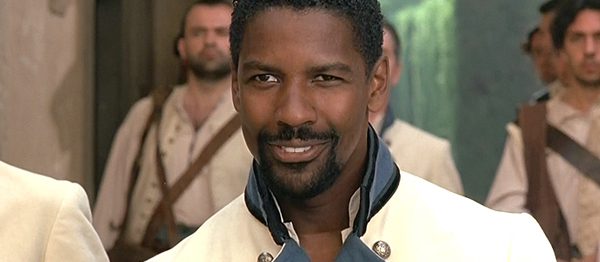
I re-watched this Civil War drama on TCM recently; it’s one of my fave (and most-watched) films! The music is used very well; each scene is enhanced by it, incl. the battles. It was originally released in the Summer of 1989; Fathom Events will be having its 30th anniversary screening later this year in select cities/theaters. Kevin Jarre (a white man) was inspired to write the screenplay when he saw monument to Shaw on Boston Common (shown in the closing credits). Jarre’s inspiration came from two books: (1) One Gallant Rush: Robert Gould Shaw and His Brave Black Regiment (1989) by Peter Burchard, a novel that itself was based on letters written by Shaw and (2) Lay This Laurel (1973), a photographic tribute to the Civil War sculpture of Augustus Saint-Gaudens with text by American writer/arts patron Lincoln Kirstein. Jarre has a brief (yet notable) cameo as the white Union soldier who shouts “Give ’em hell, 54!”
Edward Zwick was initially apprehensive about how his African-American cast would feel about this telling of a crucial part of their history by a young Jewish director. To his delight and relief, he found his cast to be very affable and good-humored towards him, some of them even grateful that he was brave enough to tackle such an important subject. Zwick and Denzel Washington (here in his breakout role) would continue to work together on other (successful) movies. The director later commented (during a promo tour for Courage Under Fire) that “Denzel is always doing something interesting. I don’t want to take the camera off him.”
Several of the extracts from Shaw’s supposed letters to his mother (in voice-over narration) were taken from Army Life in a Black Regiment, an 1870 book by Thomas Wentworth Higginson (who commanded the 1st South Carolina Regiment). The historical figures in this movie are: 1) Francis George Shaw, Sarah Blake Sturgis Shaw, and Ellen Shaw (direct relatives of Robert Gould Shaw), 2) John Albion Andrew, the governor of Massachusetts, 3) Charles Garrison Harker and George Crockett Strong, Union generals, 4) Charlotte Forten Grimké, an antislavery activist, 5) James Montgomery, Union colonel, and (6) Frederick Douglas, former slave turned abolitionist, speaker/activist.
“Any negro taken in arms against the Confederacy will immediately be returned to a state of slavery. Any negro taken in Federal uniform will be summarily put to death. Any white officer taken in command of negro troops shall be deemed as inciting servile insurrection and shall likewise be put to death.” Full discharges will be granted in the morning to all those who apply. Dismissed. -Shaw reads a proclamation sent from the Confederate Congress
Zwick explained that, for the flogging scene of Trip (Washington in his Best Supporting Actor Oscar winning role), the actor was lashed at full contact, with a special whip, that would not cut his back, but still stung. For the final take, Zwick hesitated calling “Cut!” to signal the flogging to stop, and the result was Washington’s spontaneous tear down his cheek. The deep scars on Trip’s back were Washington’s idea; they showed how Trip was already a survivor of many lashings (being a runaway slave w/ a willful nature).
That Col. Shaw- he a hard man! -Jupiter Sharts comments, tired after a tough day of drills
He’s a boy. A scared white boy. -Trip quickly retorts with disgust
At first, the regiment is only given manual labor; this was a fact w/ the “colored” soldiers. They were also given less pay; in real life, Shaw was the one who protested this matter. As my A.P. American Government teacher commented, Shaw used his class privilege (incl. his sense of entitlement and rank) to get what is needed for his men (shoes, uniforms, and rifles); we see this in the scene in the Quartermaster’s office. Shaw is surprised at how quickly his men learn (even under their tough, racist Irish drill sergeant). Broderick’s small, youthful face and micro-expressions (when Shaw was uncertain, nervous, or looked in over his head) were played so well. Andre Braugher (currently on the comedy series Brooklyn Nine-Nine) has perhaps the most interesting role; Thomas is an educated, free man who has never before had to fight for his survival. Trip takes an instant disliking to Thomas; they come from such different backgrounds, though both are young black men yearning to prove their worth. Thomas was partly based on a successful freedman who owned a shop in Boston.
I ain’t fightin’ this war for you, sir. -Trip quietly explains to Shaw (after being praised for his skill in battle)
Unfortunately, most of Elwes’ scenes were cut from the film. He and Broderick did not get along, according to Zwick; I think they also had differing acting styles and personalities. Many scenes/subplots were cut from both the theatrical version and DVD; these include Shaw and Forbes attending school together and fencing one another. Nearly all of the scenes of veteran actress Jane Alexander (Shaw’s mother) were cut. Freeman (who brings gravitas to this film, being older and more experienced than his co-stars) did his own stunts, as Zwick asked of all his actors. He used his own experience (Air Force) to inform how relationships would be formed in the unit.
At the end of the film, Shaw is thrown into the mass grave with the black soldiers. Normally, officers were given formal burials, but the Confederacy had such contempt for the black regiment, that the officers were thrown in with the regular soldiers (w/ no honors). After the war, Shaw’s parents visited the site where their son had died. When asked if they wished to have his body exhumed, so they could take it home to Boston for burial, they declined. “We would not have his body removed from where it lies, surrounded by his brave and devoted soldiers,” explained his father, Francis George Shaw. “We can imagine no holier place than that in which he lies, among his brave and devoted followers, nor wish for him better company. What a bodyguard he has!”
NOTE: This review contains MAJOR spoilers for the film (streaming on Netflix).
[1] …this was a very personal movie for Cuarón, a lot, if not most of the details came from his childhood. (It was based on his real life nanny named Libo…) He tried to show the struggle of domestic workers in Mexico as well as the differences between social classes that only Mexicans can understand. … for Mexicans see this film as a journey to the past and for younger Mexicans an opportunity to see the Mexico they never knew.
[2] We see so much through Cleo’s eyes, that to expand the focus would have weakened it structurally and thematically. The events were not fleshed out, because Cleo had no way to analyse or see the wider picture. For the vast majority of the population, the political events shown would also have been merely glimpsed or read about.
[3] The turmoil in the streets are a mirror of Cleo and Sofias’ inner lives. This is an honest reflection of the lives of many, many women.
-Excerpts from IMDB reviews
Cleo (Yalitza Aparicio- a first time actress/former preschool teacher) is a 20-something maid in the household of an upper middle-class family in the Colonia Roma neighborhood of Mexico City in the 1970s. In this household are Sofia (Marina Tavira), her husband Antonio (Fernando Grediaga), their four young children (Tono, Paco, Pepe, and Sofi) and Sofia’s mother Teresa, along w/ another maid, Adela. The thoughtful blonde-haired youngest boy (Pepe) is a stand-in for Alfonso Cuaron (winner of the Golden Globe for Best Director). Unlike his two older brothers, he doesn’t make fun of or fight much with his sister (Sofi). Cleo shares an especially strong bond w/ Pepe and Sofi; they play, joke, and laugh together often.
Cleo’s daily life with the family incl. cleaning, cooking, taking the kids to and from school, serving them meals, putting the kids to bed and waking them up. Cleo and Adela share a room and are good friends; they sometimes speak in their own (native) language, aside from Spanish. Antonio (who is a medical doctor) leaves for a conference in Quebec; Sofia becomes quite emotional as they say goodbye. On their days off, Cleo and Adela go out to eat and to the movies with their boyfriends (Fermín and Ramón). Several months pass and the children start asking about their father; Sofia agonizes over what to tell them. Antonio is living in town w/ his mistress, having callously cast away his family. Cleo, Tono, and a cousin nearly run into him outside a movie theater one night! After some time, Cleo learns that she is pregnant; she gets no support from Fermin (who denies that he’s the father). He rejects Cleo with a rather nasty attitude (in front of his friends)! Adela urges Cleo to visit her mother; Cleo doesn’t go because she feels like it’d be too upsetting.
This is a slice of life film that has some very emotionally powerful scenes, though it starts out slow. You can see it as a women doing it for themselves film. The men are mysterious; we don’t learn much about them. Notice how Antonio (who represents Cuaron’s absentee father) is revealed bit by bit in his first scene; first we see the large sedan, then the radio, then his hand, and (finally) he emerges from the car. At times, Sofia (who has a strong personality) speaks harshly to Cleo; she doesn’t have her husband to blame. Over time, Cleo and Sofia (who come from quite different backgrounds), have to rely more and more on each other to keep the household (and family) going.
The look of this film is unique, as it is in black and white and the picture is super sharp (clear) in every shot. As one movie critic noted: “Every scene looks like a painting!” There isn’t always a lot of dialogue, but something is always going on within the frame. You hear bits and pieces of conversations, just as Cleo would going about her work. Even when revolutionaries are running the streets, this family has to deal w/ their ordinary concerns, such as furniture shopping. In one memorable scene, the family silently eats ice cream together, their heads lowered in sadness; a noisy and happy wedding party is seen in the background. The most intense scenes in the film show Cleo acting in a selfless (and heroic) manner to rescue Paco and Sofi from drowning in choppy waters of the ocean. She doesn’t know how to swim, which adds more danger to the mix! As the family (all safe) gathers on the beach and embraces, you can’t help but become emotional. I saw this film on Netflix; most critics are suggesting you see it on the big screen (if possible).