Two Reviews: Blue & Intimacy

Blue (1993)

This is the 1st film in dir. Kieslowski’s Three Colors trilogy.  The blue represents depression, sadness, and freedom here.   Julie (Juliette Binoche) is a young French wife who loses her husband (a famous composer) and 5 y.o. daughter in a terrible car crash at the opening of the film.  She decides to leave her large country estate, taking nothing except a gorgeous blue mobile ornament, and move to Paris to live a solitary life.  She’s determined that she won’t work, seek out company, or reconnect w/ the family friend who may have deep feelings for her.  But life has a way of just happening, even as Julie is in deep mourning.

In her apt, Julie is deeply perturbed by a mouse and her babies in one of the closets.  Even a mouse can have babies, while she has lost everything!  Then a young single woman from downstairs barges in on Julie.  She looks like she can use some comfort, and Julie is around (w/ a non-judgmental attitude).  Eventually, Julie starts to finish the song that her hubby left behind.

This is a non-narrative, artisitic film, so it won’t appeal to some viewers.  It’s slow and contemplative.  The music is simply beautiful.  There are many close-ups of Binoche’s (I think perfect) face as she goes through a myriad of emotions.  Binoche is simply great (and I wouldn’t expect anything less).  You can’t see her acting; everything just rises from within.  Vive La Binoche!

Intimacy (2001)

NOTE: There are 2 versions of this film, one of which is R-rated, and was shown in indie theaters upon release.  The version on Netflix is the original Unrated film(equivalent to MPAA’s NC-17 rating). 
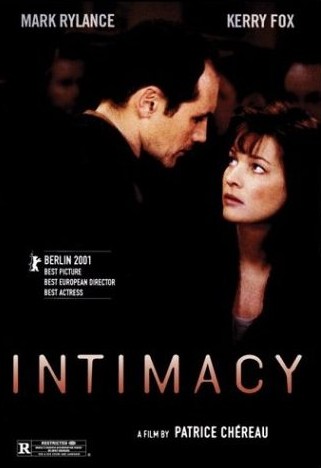
This is another film that’s not for everyone, BUT it certainly is unusual and out-of-the-box.  (NOTE: There is an R-rated version and an Unrated version.)  Raw emotions are depicted, as two strangers connect to and disconnect from each other in London.  It was directed by Frenchman Chereau and stars British character actors from the theater.  The film is based on a short story by famed British-Pakistani writer, Hanif Kureishi.  This is the kind of stuff Hollywood is afraid to show!

Jay (Mark Rylance) is a failed musician who manages a trendy bar and lives in a dump of a rowhouse in a working-class area.  In his past life, he was married and father to two adorable young sons.  For a personal life, he has a (junkie) best friend and Claire (Kerry Fox).  But Claire is NOT his gf or a “friend w/ benefits”- she’s a stranger who comes by once a week for hooking up.

Jay and Claire barely speak, but one day, Jay follows Claire out into the streets, curious about her “real” life.  That’s when the story gets GOOD, and even a BIT suspenseful!

*

*

*

S

P

O

I

L

E

R

S

P

A

C

E

S

T

A

R

T

S

*

*

*

Jay is shocked to discover that Claire has a full life; she’s an amateur actress, drama teacher, wife, and mother to a preteen son.  He even talks w/ her husband, Andy (Timothy Spall), a talkative/humble cabbie who doesn’t know much about the theater, but supports his wife (in the background).

You can see the shock/pain/jealousy on Rylance’s face as his character wonders why Claire gets to have a life while he’s in a fog of depression, missing his ex and (especially) sons.  When Jay confronts her about it, Claire feels VERY violated.  She lashes out at him- he wasn’t supposed to enter her life like THAT!
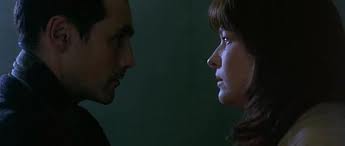
But Jay CHOSE to leave his family, and now he can’t handle it.  The new bartender working below Jay, a cute young Frenchman, wonders if Jay can even feel love.  Ouch!

*

*

*

S

P

O

I

L

E

R

S

P

A

C

E

E

N

D

S

*

*

*

The streets are gritty and unwelcoming.  There are people everywhere, but the main characters are drifting, lost in their own world of disappointments, compromises, etc.  Jay and Claire are BOTH artistic souls, BUT they have failed (or not made much of a mark) in that regard.  Andy seems like a decent guy; Claire is a mystery- I found her to be TOO abrasive.  I’m pretty sure that was intentional.  Jay is the more sympathetic individual (though very flawed); more is seen from his view.  In one quiet scene, he watches for Claire from his window; Rylance’s face becomes that of a hopeful little boy.  His performance is fearless; I don’t think I’ve seen a lead man portrayed in this manner EVER in Hollywood!

Our Mutual Friend (BBC, 1998)

I saw this miniseries (based on Dickens’ final novel) a while ago, and was VERY impressed by it!  There is glam, grit, unconventional romances, and many quirky characters.  There are several plots intertwined.

The stand-in for the viewer (or perhaps the author) is level-headed gentleman, Mortimer Lightwood (Dominic Mafham, pictured right).  Though the entire cast is strong, the standout actor is Paul McGann (pictured left w/ mustache).  This is b/c his interpretation of aimless gent Eugene Wrayburn, who falls deeply (and unexpectedly), in love is SO natural.  The voice, snobbery, and swagger show that he has BECOME the character.  Eugene and Mortimer are both barristers and best pals, though Eugene is not interested in furthering his career.  He’s dissatisfied w/ life- searching for some purpose.

Lizzie Hexam (gorgeous Keeley Hawes) is a shy beauty who works w/ her father on the Thames River.  They search the water for dead bodies- YIKES!  She saves up to send her younger brother Charley to a decent school, realizing that the slum is no place for a bright boy like him.  Hawes can convey LOT w/o speaking, as this role demands.

While Eugene starts out carefree, quiet and serious John Harmon (Stephen Mackintosh) has a definite plan when he comes to London from the West Indies.  His dead father left him a fortune; he also had plans for his personal life- an (arranged) marriage.  John says his last name is Rokesmith, takes a job as a humble secretary to Mr. Boffin, who made his fortune from dust heaps.  (Yup, that’s historically true!)  John finds a room to rent from the humble Wilfer family.

Though Bella Wilfer (petite/fiesty Anna Friel) was born poor, she yearns for more.  She doesn’t like the idea of the arranged marriage to a stranger, BUT likes the idea of being rich.  Like Eugene, Bella (a “Daddy’s girl” w/ a sense of entitlement) changes her character over the course of the story.  Friel fits her role VERY well, showing different shades of a young woman in (and out of) high society.

Fans of tall/handsome David Morrissey (recently seen on South Riding) may be surprised to see him cast as a VERY jealous/repressed baddie here.  He plays Bradley Headstone, a teacher at a boys’ boarding school who develops a dangerous obsession.

“The Last of the Mohicans” (1992)

I recall first watching this film in 1995 during a high school English class.  It was on this past Sunday, so I checked it out again.  It’s full of action, stunning natural beauty (it was filmed in North Carolina), gorgeous music, and is very well-acted.

The hero is Nathaniel Poe (Daniel Day-Lewis, one of the finest actors of his generation), also known as Hawkeye, a white orphan adopted by a Mohican chief named Chingachgook (Russell Means) and raised alongside his own son Uncas (Eris Schweig).  Nathaniel is an expert marksman, tracker, and quite friendly w/ some of the white colonists (such as the Cameron family) of this wild frontier.  But he’s his own man, proudly saying that he’s “beholden to no one.”

Things change when the French and Indian War begins in 1757; the colonists are bound by law to join the militia and aid the British troops.  The men fear for their families.  What will happen if their wives and children are attacked while they’re away fighting at Fort William Henry?  Jack Winthrop, one of the young settlers and Nathaniel’s friend, goes to Albany to voice this concern.  General Webb grants the men permission to leave the militia if their homes are in danger.

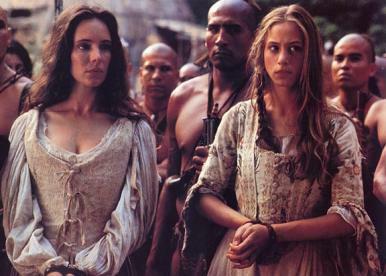
Meanwhile, Cora (Madeleine Stowe) and her teen sister Alice (Jodhi May) are traveling to see their father, General Munro, at the fort.  They are accompanied by family friend, and Cora’s suitor, Major Duncan Hayward (Steven Waddington), more than a dozen soldiers, and a stoic Mohawk guide named Magua (Wes Studi).

All hell breaks loose when Magua (who is actually a Huron allied w/ the French) attacks the soldiers.  He’s then joined by more Huron men.  Chingachgook, Uncas, and Nathaniel rush in for the rescue.  When Magua takes aim at Cora, Nathaniel wonders why.

This film looks very authentic.  Day-Lewis is in top form for the very physically demanding role, as are the supporting actors.  Though this film was catagorized as a romance, I wished there had more a little more instead of the fighting.  Both Nathaniel and Cora (outspoken/determined) have a sense of nobility about them.

Nathaniel is larger than life-selflessly fighting for love of his father, brother, and Cora.  He’s also a romanticist-at one w/ nature, independent-minded, and noble in thought and action.  On the opposite end is Magua- a fallen warrior who’s “heart is twisted,” and fighting for revenge.  Both are formidable and memorable.

Some recent views

Witness for the Prosecution

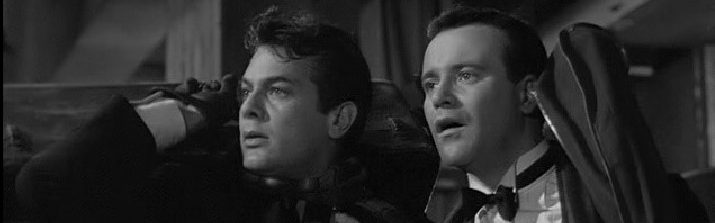
This 1957 courtroom-drama, based on an Agatha Christie story, starts out slow, but really packs a punch!  The stars are Tyrone Power (playing against type), Marlene Dietrich (very compelling), and Charles Laughton (providing most of the humor).  There is a lot of dialogue, but it’s very well-crafted.  Famed London lawyer Sir Wilfrid (Laughton) takes on the case of Leonard Vole (Power) mainly because he’s intrigued by Vole’s German wife, Christine (Dietrich).  Leonard, charming yet jobless, is the prime suspect in the murder of a wealthy widow he befriended.  Christine, who is cold and clever, doesn’t act like the typical worried wife.  Sir Wilfrid tells Christine that a woman w/ her personality won’t be seen sympathetically by the jury.  I don’t want to give too much away, so check out this film for yourself.          


The Fifteen Streets

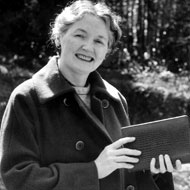
Some dreams do come true in Catherine Cookson (1906-1998) novels, but not w/o hardship and loss.  This TV movie, based on her most popular novel, was filmed on location and looks very authentic.  If you want to read the book, it’s suitable for both young adults (junior high age) and grown-ups.  Since Cookson herself grew up in a working-class/Catholic/Northern community, she truly knows her characters.  Despite being born illegitimate and poor, Cookson pulled herself up into middle-class respectability- becoming a teacher, novelist, and eventually- dame of the British Empire.    

At the turn of the 20th century, hard-working dockworker John O’Brien (Owen Teale) meets independent-minded Mary Llewellyn (Clare Holman), the teacher of his little sister Katie.  John and Mary are both concerned about young Katie’s future; she’s a bright/curious child who dreams of being a teacher.  John fears the family will not have enough money to pay for such training.  

John’s younger brother Dominic (Sean Bean) causes a lot of trouble in the family and community.  While John is sober and fair-minded, Dominic loves drinking and fighting.  Mr. O’Brien also likes to drink; he’s angered by the fact that he’s getting old and not being chosen for work as much.  Mrs. O’Brien is pregnant at the start of the story w/ her sixth child. 

Love doesn’t come smoothly for John and Mary.  The Llewellyns live in a middle-class house with fine furnishings; the O’Brien’s live in a small rowhouse near the docks.  However, they both share a love of words and a deep physical attraction.  They meet secretly, knowling that their courtship is out of the norm in their community.     

 Clarissa


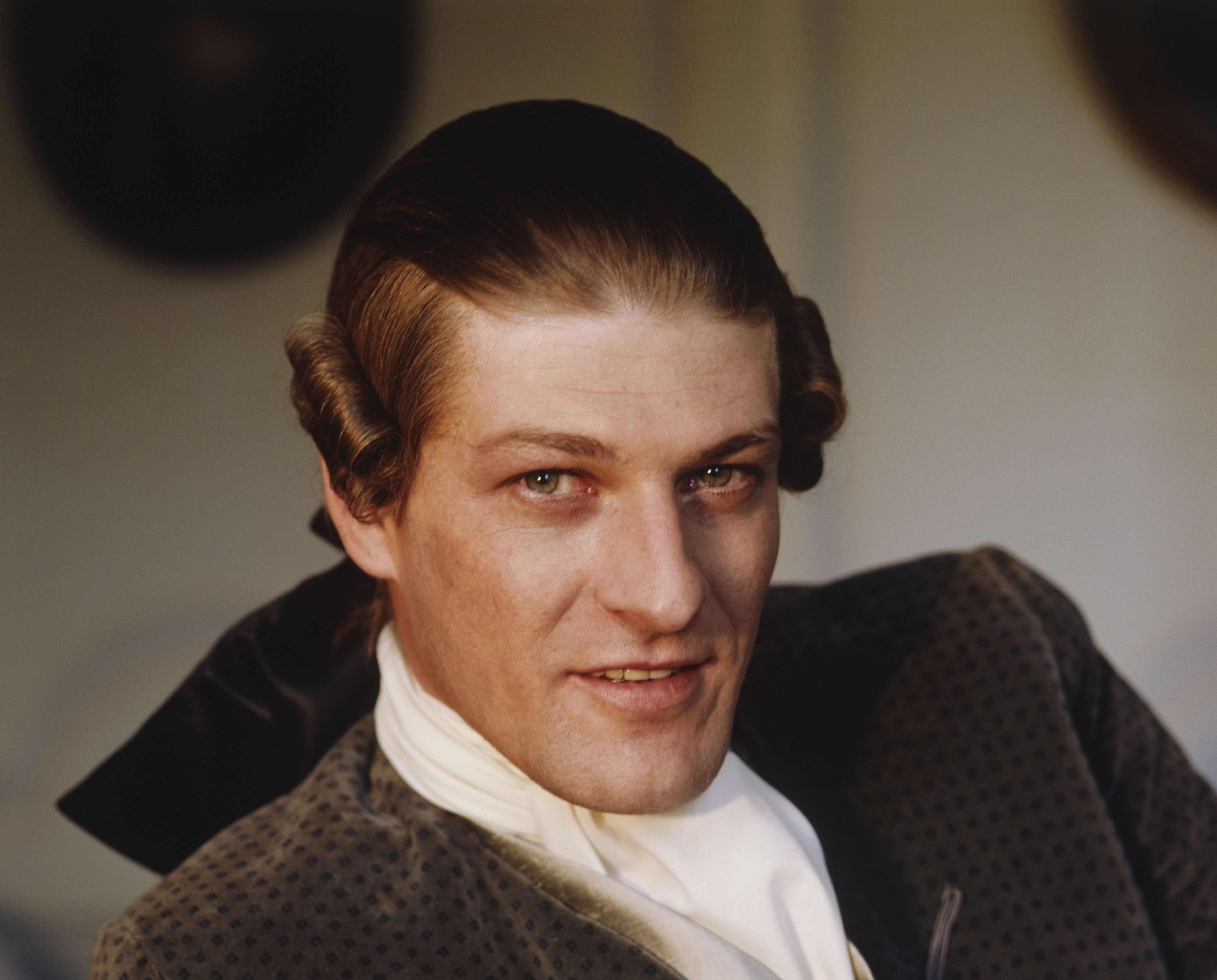
Sean Bean plays the villain Sir Robert Lovelace in this 1991 TV miniseries based on a Samuel Richardson (1689-1761) novel.  The daughter of an 18th century (recently) wealthy family, Clarissa Harlowe (Saskia Wickham), is known for her piety, obedience, and beauty.  But unlike most young women, she wants to remain single, quite satisfied w/ her books and female friends for company.  In time, her family plans to marry her off to Mr. Soames, a man she finds repellant b/c of his looks and manners.  Clarissa, feeling desperate and friendless, runs off with Lovelace, the handsome/ill-reputed nobleman who’d been sending her secret letters.     


Lovelace, a known womanizer, pretends to seek redemption by reading the Bible and spending time w/ Clarissa.  His real goal is to wear down her virtue.  He comments to his best friend that he’s “never known a virtuous maid to hold out more than a month.”  But Clarissa won’t be had so easily!  Lovelace also wants to take revenge on James, Clarissa’s cold-hearted older brother.  

Though  James, as well as his sister Arabella, are rather one-dimensional villains, Clarissa’s best friend Anne is a n interesting character.  She’s a smart and sarcastic woman w/ a steady beau, but she doesn’t respect or love him.  She keeps him waiting, wondering if marriage is the right choice.   


“The Mill on the Floss” (1997)

Running Time: 90 minutes 

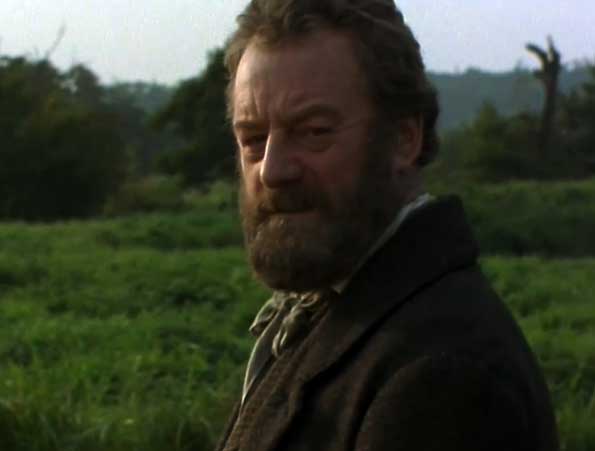
Starring: Emily Watson, James Frain, Bernard Hill, and Ifan Meredith

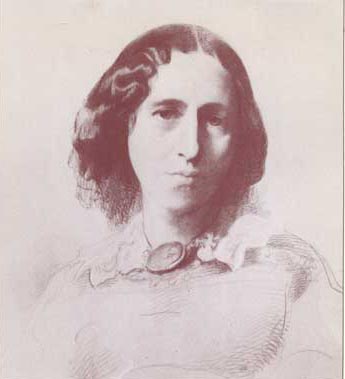
Marian Evans (pen name: George Eliot) grew up in the country, then went to the city to further her career.  The focus of her writing was often on small town outsiders, such as herself.   In her early 30s, Eliot began a long-term relationship w/ an older married man, George Henry Lewes.  He was a noted philosopher/critic who had an open marriage.  Eliot’s decision to defy the conventions of Victorian England created a bitter rift between her and her older brother, Isaac,  for most of their lives.  This conflict is at the core of her most personal novel, The Mill on the Floss, published in 1860.

The Tulliver family, headed by the strong-willed Edward (Bernard Hill) has owned/managed their mill along the River Floss for generations.   Mrs. Tulliver comes from a wealthier background, so her sisters look down on her marriage to Edward.  The family has two kids, very close in age, though different in temperment.

Eliot’s father, like Mr. Tulliver, was a businessman who had married a woman from a higher social class. His wife’s sisters were rich, ultra-respectable, and self-satisfied. These maternal aunts provided the character models for the aunts in the novel.

Mr. Tulliver decides that Tom, as the only son, should have a better future than he did.  He’s sent off to study with a local parson as an adolescent, much to the dismay of sister Maggie.  As one reader of the novel commented: “her fierce intelligence and strong streak of independence bring her into constant conflict with her family.”  Maggie seeks the love and approval of Tom, even when he treats her harshly.

At the parsonage, Tom studies alongside Phillip Wakem, the only son of the cold-hearted lawyer who’s trying to take over the land/water around the Tulliver mill.  Phillip, who is hunchbacked, is a kind boy who draws, sings, and plays the violin.  When Maggie visits, she and Phillip become fast friends.  Though their fathers despise each other, Maggie tells to Tom that “bad men can have good sons.”

Seven years later, the young adult Tom (Ifan Meredith) leaves school and gets a job at a successful trading business in the village, Guest & Co.  He sets his mind to saving all he can in order to help the family mill, which is more in danger than ever.  Edward’s health is very poor; Mrs. Tulliver has borrowed all she can from her relations.

When Phillip (James Frain) returns from Europe, it gives Maggie (Emily Watson) a reason to smile.   They resume their friendship, meeting in secret to discuss books and ideas.   Like Maggie, Eliot was extremely intelligent, energetic, imaginative and unconventional.  In the book, Maggie is described as a “strikingly attractive young woman, tall with full lips, and a crown of jet black hair.”  We can see that Phillip is deeply in love w/ her.  Tom eventually forces Maggie to choose between the family and Phillip.

Then Maggie meets Stephen Guest, the handsome/easygoing fiance of her cousin, Lucy Deane.  Maggie’s lack of social pretension makes her very charming to Stephen, and he declares his love.   Maggie admits that she loves him, too. Can she fulfill herself while still being morally responsible?