The Purchase Price (1932)

Introduction

Iconic American director Frank Capra called her “the greatest emotional actress the screen has yet known.”  Barbara Stanwyck was Brooklyn-raised, not conventionally pretty (to many producers), but very confident in her skin (onscreen).  She was very accessible, yet enigmatic, at the same time.  Her appeal came from within- those sharp eyes and unmistakably husky voice.  Stanwyck was not stuck to the prototypical “good girl” roles (early in her career, nude photos surfaced, though she denied it was her in those images).     

AFI Silver recently had a Stanwyck film retrospective.  One weekend, Victoria Wilson (author of A Life of Barbara Stanwyck: Steel-True, 1907-1940) gave introductions to the films and had Q&As afterward.  She also signed books for classic movie fans.  Wilson, a former book editor, took 15 years to write the biography, though she conducted “decades of research.” 

 The Purchase Price (1932)
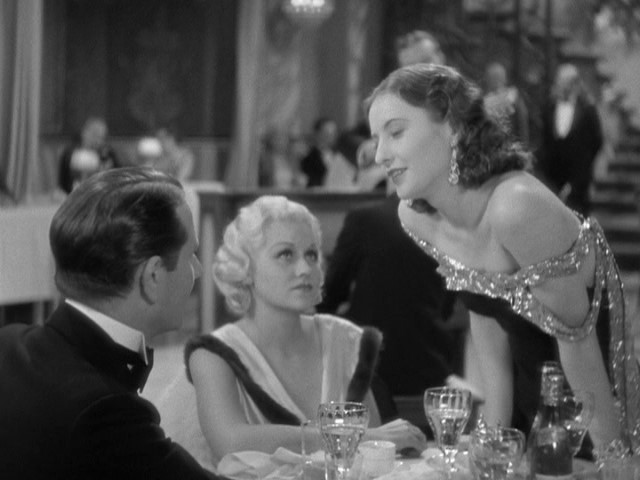
Joan (Stanwyck) sings in a nightclub in NYC

Joan Gordon (AKA Francine La Rue): I’ve been up and down Broadway since I was fifteen years old.  I’m fed up with hoofing in shows.  I’m sick of night clubs, hustlers, bootleggers, chislers [scam artists], and smart guys.  I’ve heard all the questions and I know all the answers.  And I’ve kept myself… fairly respectable through it all.  The whole atmosphere of this street gives me a high-powered headache. I’ve got a chance to breathe something else, and boy, I’m grabbing it.

Joan (Stanwyck, just aged 25) seems to lead a glamorous life, wearing fancy gowns and singing at a posh nightclub.  Too bad her dapper, small-time hood boyfriend Eddie (Lyle Talbot) is already married.  One night, she decides to give it all up.  Joan takes a new name and begins working at a lounge in Montreal, Canada.  Though he acted like the break-up was no big deal, Eddie has two men tail Joan!  Then her busybody maid gives her an idea- going as a “picture-bride” (akin to a mail-order bride) for a lonely farmer in North Dakota.  Eddie will never find her there, right?  The maid already sent in Joan’s picture, thinking that the farmer would prefer it to hers.  Joan gives the maid $100 and gets on the train to her new home.  

Jim Gilson (George Brent) and Joan marry

When Joan gets to small-town North Dakota in late Fall, she discovers that her new husband Jim (George Brent) is very handsome, yet quite serious.  They get married in town in a brief, yet funny, ceremony.  They drive (horse cart, not car) many miles to his wheat farm.  But after she rejects him on the wedding night, Jim becomes very cold toward her.  He sleeps in one corner of the living room; she takes the bedroom.

There is a role reversal- she has to win him over!  This is very rare for early Hollywood, Wilson noted.  Joan cooks, cleans, and entertains their wild neighbors without complaint.  A wealthy/divorced landowner hits on her several times, making things even more tense with Jim.  Her husband has money problems, Joan learns after a few weeks; they could lose the house/farm.  Jim suggests she go back to Montreal, but Joan refuses.   She wants this marriage to work, because she now loves her husband.  One wintry/dangerous day, Joan helps another farmer’s family after a baby is born, showing how capable Joan has become as a farmer’s wife.
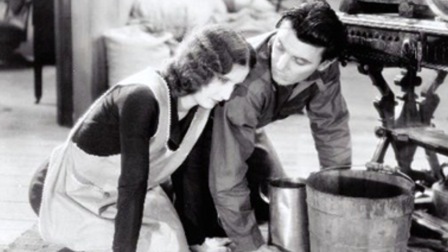
Joan tries to get close to her husband

One night, Eddie shows up, seeking refuge from a terrible snowstorm.  Jim overhears them talking, and realizes that they have a past.  He is furious at Joan, shouting “I thought you were decent!”  Joan tells Eddie they are done, but he isn’t convinced, deciding to stay in town for a while.  Joan tells Jim about her relationship with Eddie, then breaks down in tears. 

Jim goes to the bank, hoping to get an extension on his mortgage ($800).  Boldly, Joan goes to the saloon to talk to Eddie, and gets the money from him.  Jim and Eddie get into a fistfight (no stuntmen used back then), while Joan takes the money over to the banker.  Jim soon receives a letter stating he has the extension until next season. 

Joan and Jim work side by side to plant and harvest their crop, but are still living like roommates.  Their wheat turns out very well, invoking jealousy from that landowner.  One night, fire consumes most of their crop, though Jim and Joan try to stop it.  (Stanwyck did that herself, and her ankles got singed.  Her stand-in didn’t look right in the scene).  Joan collapses due to the smoke, and Jim finally realizes that he loves her, too!    

This is a small film, but you can already see the star potential in Stanwyck (her teeth weren’t yet fixed), especially in the emotional scenes.  (Not unlike Brando, Stanwyck is unafraid of revealing messy emotions, even if it looks unattractive.)  Joan redeems herself with her hard work and (unselfish) love for her husband, a stranger at the start of the film.  But what about the lack of romance?  This viewer has a good take on it:

I think she sees and appreciates the authenticity of, and the genuine goodness in, Jim, and that those qualities (not to mention he’s very handsome!) are what she falls in love with.  Also, feeling bad that she shut down his decidedly awkward, abrupt, unpolished wedding night advances, but realizing it isn’t his fault that he so totally lacks finesse with women… and that he’d meant no offensiveness, she is eager to make things right with him, and falls in love with him in the process.  -IMDB comment
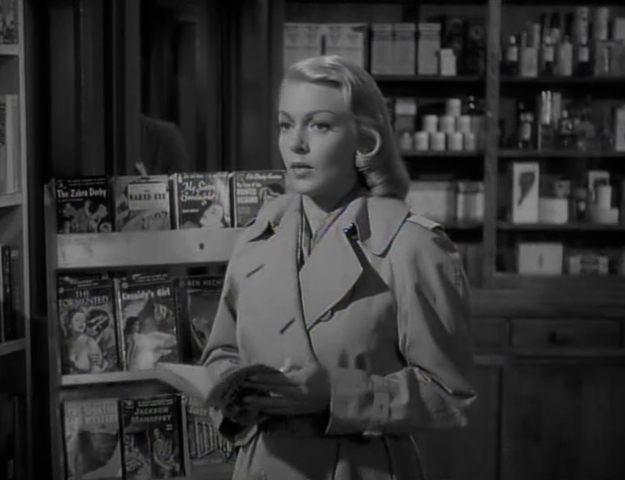
The Bad and the Beautiful (1952)

Lana Turner
Georgia Lorrison (Lana Turner)

NOTE: This review contains MAJOR spoilers! 

This film takes some time to get going, but when it gains momentum- yowza!  Near the start of the film, ambitious movie producer Jonathan Shields (Kirk Douglas) notices potential in young actress Georgia Lorrison (Lana Turner).  Boldly, he goes over to her ratty apartment very late at night.  Georgia stumbles home drunkenly and finds him just sitting in her armchair.  Georgia is a bit shocked, but then hits on Jonathan.  (That’s how she gets parts, after all.)  He’s disgusted, letting her know that she needs to quit drinking and sleeping around, if she ever hopes for a real career.

Kirk Douglas and Lana Turner
Jonathan talks (show) biz w/ Georgia

It turns out that both of them had successful fathers.  Georgia keeps a little shrine to her father, a Hollywood legend, in one corner of her place.  At first, it’s all (show) business: Jonathan boosts up Georgia’s confidence by standing up to her detractors,  believing in her potential, and promoting her for a juicy part. 

Jonathan and Georgia have a falling out

Georgia falls deeply in love with Jonathan, but he can’t return her feelings.  They have a tremendous fight instead of celebrating their mutual success.  Georgia never works with Jonathan again, but she becomes one of Hollywood’s most sought after leading ladies.

The professor (Dick Powell) and his wife (Gloria Grahame)

A Southern academic, James Lee Bartlow (Dick Powell) writes a novel which becomes very popular.  Jonathan wants the author to write the screenplay for a feature film, so he invites the unassuming professor and his devoted/lovely wife, Rosemary (Gloria Grahame) to Hollywood.  To ensure that Bartlow has time to write, Jonathan plans a weekend getaway for Rosemary and a suave actor.  It goes tragically wrong, but compels Bartlow to write a book about Rosemary.  Bartlow feels that only Georgia Lorrison is capable of bringing his wife to life onscreen. 

b&b_final

In the last scene, we see a director (one of Jonathan’s business partners), actress (Georgia), and writer (Bartlow) come close to the phone to listen in on Jonathan and a studio head. They all want to be in his light (literally) once more.  Jonathan used them to get ahead in his career, but their own careers were improved because of him

Kirk Douglas is impressive as a complicated anti-hero.  Jonathan feels alive when he’s working, but after that, he goes through a troubling time.  Douglas is more than up for the challenge of this role- you can’t see the acting!  Lana Turner is much more than a (very) pretty face.  Her character goes through a transformation- from troubled B-movie actress to headliner.  Gloria Grahame’s role is small, yet pivotal.  She’s a Southern belle who loves her husband, believes in his talent, yet is awed by the glamor of Hollywood.   

Green Dolphin Street (1947)

MGM wanted June Allison to play Marguerite opposite Lana Turner.  She turned the role down because she didn’t think anybody would believe that William could prefer her to Lana.  MGM then essentially drafted Donna Reed into the role, whose misgivings were also strong (but she had no clout at the studio). 

Doona Reed as Marguerite
Donna Reed as Marguerite

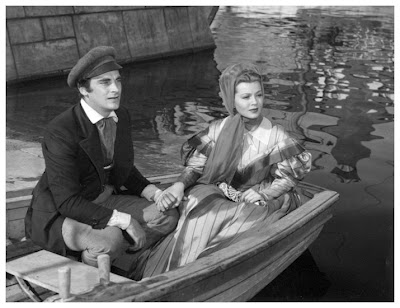
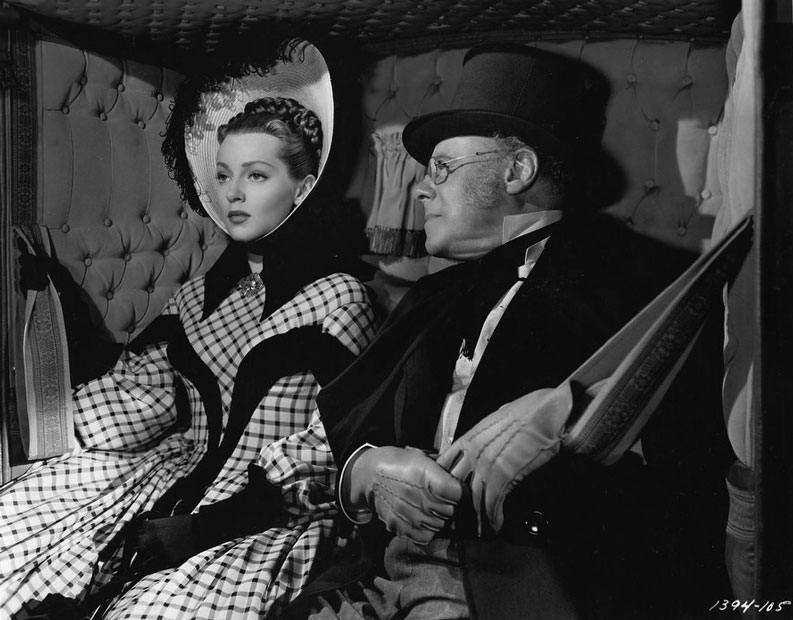
On the island of St. Pierre in 1847, young adult sisters Marianne (Turner) and Marguerite (Reed) lead happy, comfortable lives as the daughters of shipping magnate Octavius Patourel (Edmund Gwenn, who played Kris Kringle in Miracle on 34th Street) and his wife Sophie (Gladys Cooper).  Marianne has a sharp mind and knows a lot about her father’s work, which he thinks is not quite ladylike.  Marguerite is more reserved and dreamy.  From afar, Marianne is loved by a young local man, Tim Haslam (Van Heflin), much to the dismay of his girlfriend.   

When new neighbors move in next door, the sisters rush over to welcome the family: Dr. Edmund Ozanne (Frank Morgan, who played the wizard in The Wizard of Oz) and his handsome son William (Roger Hart).  At first, William is not that impressed with the girls, but thinks they’re very pretty.  But in no time, the three become good friends.  

William and Marianne dream of adventure

One day, Marianne insists on taking William out to see a large shipping vessel, The Green Dolphin.  It’s under the command of a gruff, yet kind-hearted Irishman, Captain O’Hara (Reginald Owen, who played Scrooge in A Christmas Carol).  He proudly shows the young people around his ship, and tells them a bit about his adventures.  He’s been as far away as New Zealand!  Both Marianne and William are fascinated by the thought of such a life.

Marianne with her father

Since William wants to be a sailor, Marianne convinces her father to provide the funds.  (Being a man, he can do the things she’s always dreamed of doing.)  William goes off to London for 2 years. Their families don’t realize that William and Marguerite have fallen in love; they decide to keep it a secret.  They do, however, write letters to each other.    

Lana captured Marianne’s pragmatic, incisive, ambitious nature which veils a deep-seeded vulnerability and need to be loved.  And Donna Reed was certainly lovely even next to Lana, and did well with Marguerite, who is sweet-tempered, feminine and agreeable, but not as intellectually captivating as her sister.  Marguerite is more like William.  They are both indolent, romantic and playful.  But Marianne has the drive, savvy and fortitude…  –Comment on IMDB

I’m not going to reveal too much, because I want you all to check it out!  I recommend this movie to anyone who enjoys large-scale, old-fashioned epics (such as Gone with the Wind).  However, because of its few main leads and focused theme (first love vs. love that grows over time), it seems like a small picture.  There is fine acting, sharp dialogue, and lots of character development.  I especially liked Heflin’s anti-hero character. 

Imitation of Life (1959)

This melodrama is based on a novel and directed by Douglas Sirk (known for his distinct style and focus on “women’s problems”).  In our time, his influence can be seen in Todd Haynes’ Far from Heaven and the AMC’s Mad Men.  

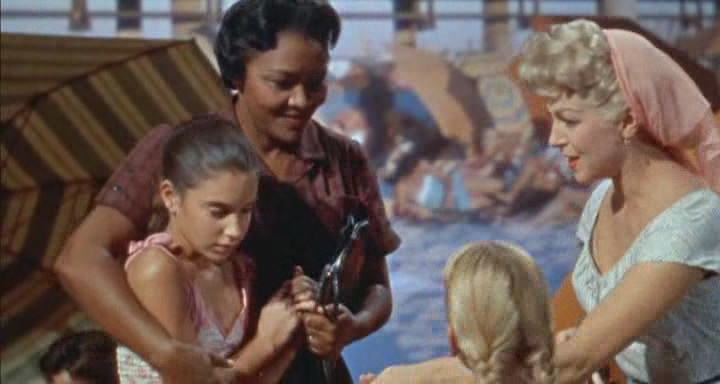
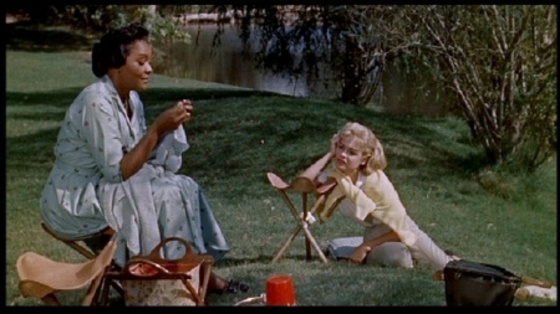
Widowed/single mother, Lora Meredith (Lana Turner), temporarily loses her 6-year old daughter, Susie, at the beach on Coney Island.  She scrambles to find the girl amid the crowd, and runs into a handsome photographer, Steve Archer (John Gavin), who offers his help.  When she finds Susie, she is with a kind black woman, Annie Johnson (Juanita Moore) and her 8-year old daughter, Sarah Jane (who has dark brown hair and looks white).  “Her father was almost white,”  Annie explains to the surprised Lora, who thought Annie was the girl’s nanny.  It turns out that Annie is also a widow, and she and her child have no place to stay.  Lora asks them over to her humble Manhattan apartment. 

In no time, the four are functioning as family.  Lora goes out into the theater world to seek work as an actress; Annie takes care of the home, kids, and picks up little jobs now and then.  The girls go to school and grow up like sisters, though conflicts arise when Sarah Jane insists on hiding her true racial identity.  For many months, Steve and Lora date.  Though he loves his art, he gets a stable job in marketing.  He’s good with Susie, too.  But he’s not as perfect as he seems…

In time, Lora achieves the success she dreamed of professionally.  She becomes a star of theater, then movies, working with notable directors.  The family moves to a spacious house on Long Island.  Annie is always there- the “wind beneath her wings”- serving as a homemaker, confidant, and partner.  In one poingnant scene, Lora admits that Annie was more of a mother to Susie than she was (because of her high ambitions).

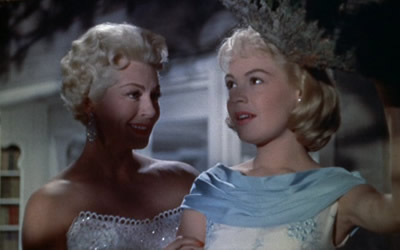
The girls grow into beautiful, charming, independant-minded teenagers.  Susie (petite, blonde Sandra Dee) has a positive outlook on life, though Sarah Jane (Susan Kohner, an actress of Czech and Mexican heritage) is troubled and restless. 

There is much to admire in this film, but also troubling aspects (reflecting the limitations of Hollywood and US.)  Why is Annie always humble, obliging, and wise?  Why doesn’t she have weak moments, like Lora?  Why weren’t African American actresses chosen to play Sarah Jane (as in the 1934 version)?  I’ll have to watch that version, too.  Some of the themes in this film are very modern: navigating a man’s world without a husband, raising a child as a single parent, and mother-daughter conflicts. 

Lora and Annie are like two sides of a coin- one has the strength to face the outside world (with her beauty and confidence), while the other has a quiet, inner strength (stemming from her spirituality).  Moore won a Best Supporting Actress Oscar for her performance. 

I was impressed by Kohner’s performance; I thought she did a fine job of a rebellious, conflicted individual seeking a place in the world. 

Gilda (1946)

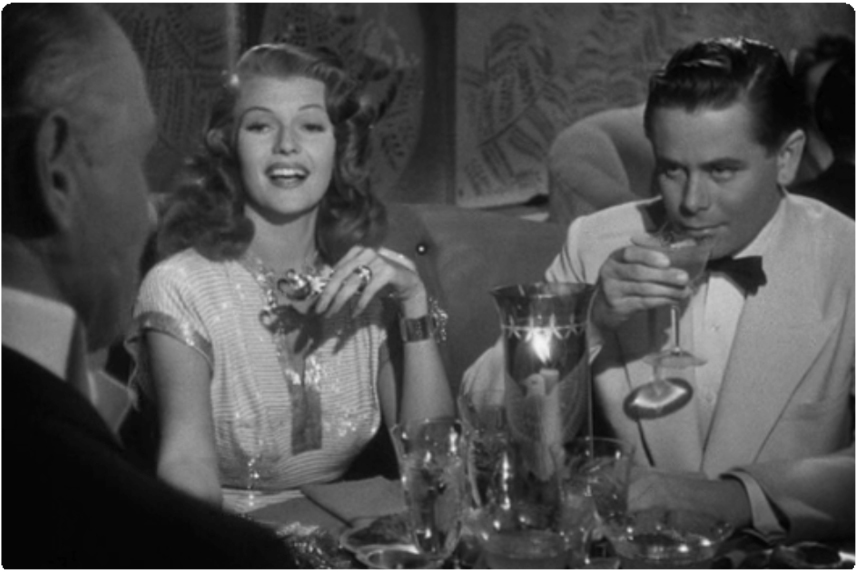
In post-WWII Buenos Aires, Argentina, petty American gambler Johnny Farrell (Glenn Ford) is rescued by wealthy businessman Ballin Mundson (George Macready).  In no time, Johnny becomes his “right-hand man,” managing his casino.  Why does Mudson help Johnny so much?  (Many critics pointed to the homoerotic dialogue and imagery in the first section of the film.)  

Ballin goes to the US for a short time; when he returns, Johnny learns that his wife is an American dancer, Gilda (Rita Hayworth), Johnny’s former love.  We can tell that they had a bitter, nasty break-up.

When Gilda is brought back to Argentina by Tom, she slaps Johnny hard across both sides of his face. In reality, Rita Hayworth’s smacks broke two of Glenn Ford’s teeth. He held his place until the take was finished.   -IMDB

Gilda: If you’re worried about Johnny Farrell, don’t be.  I hate him!
Ballin: And he hates you.  That’s very apparent.  But hate can be a very exciting emotion.  Very exciting.  Haven’t you noticed that?

While her controlling, disinterested husband is busy running his hotel/casino and overseeing a tungsten cartel, Gilda is left to her own devices.  She buys beautiful, expensive things and openly flirts with several men, so Ballin decides to make Johnny her watchdog.  The younger man resents this position, and bites back at Gilda.  He stops her from fooling around with any men, delivering her to her husband’s mansion. 

All of the goings-on of the place are observed by a lowly (yet wise) employee, Uncle Pio (Steven Geray).  He calls Johnny a “peasant” and has empathy for Gilda’s situation. There is a sub-plot involving former Nazis and a local detective.  To find out more, watch the film.

Johnny (to Gilda): What was that word?  It [decent] sounds funny coming from you.

This is an uneven film with a flimsy plot, but it’s also well-loved by many viewers.  It packs a punch because of the presence of the gorgeous femme fatale and the (almost palpable) chemistry between Hayworth and Ford.  If you’re interested in the themes explored in this film, check out Separate Tables (starring Hayworth, Burt Lancaster, Deborah Kerr, & David Niven) and The Lady from Shanghai (starring Hayworth and Welles).  I need to check out more movies with Ford; so far, I’ve seen 3:10 to Yuma, The Fastest Gun Alive, and The Courtship of Eddie’s Father.