Three Can’t Miss Films of 2012

English Vinglish

The film’s story worked on many layers, and what I especially admired is how Sridevi becomes the spokesperson for lessons without being too overt about it, save for the ending speech that hammers in the emotion, and is sure to make your eyes well up. It deals with, on a macro level, how as humans we should be helpful and tolerant to those who don’t speak our language or understand our culture, that one shouldn’t be made to think one’s superior just because, or make the other look small. And on the more micro level, the structure of the family and its importance.  All these and more, told through a story about a woman finding her inner strength to stand out, stand up and be counted, building and reinforcing confidence that she’s more than just a Laddoo machine.  -A reviewer on IMDB.com

movie_picture_English-Vinglish

Do you loathe typical Bollywood films (w/ vacuous portrayals of women, too old to play college Romeos men, and incongruous songs/dances)?  Then this is THE film for you!  (I liked it even better than Monsoon Wedding and The Namesake, two fabulous films you should check out.)  Two friends and I made the trip to Leesburg, VA to check it out; we live in Silver Spring, MD.  

Shashi Godbole (Sridevi) is a beautiful housewife and mother living a comfy life in India.  She’s also a well-known caterer of sweets in her area (called ladoos) who regrets the fact that she doesn’t speak/understand English (like her executive hubby and snarky preteen daughter).  But she’s still cool in the eyes of her little son.  When the entire fam is invited to the US for the wedding of her niece, Shashi jumps at the chance to take a fast-paced English course (led by a quirky British teacher with a motley crew of NYC immigrants).  She keeps it a secret, however, which poses certain challenges!       

english-vinglish-1a

Who is that gorgeous/talented guy who befriends Shashi in the film?  It’s French-Algerian actor, Mehdi Nebbou, who’s a BIG star in his native France. 

nebboumehdinew2012pic3

Life of Pi

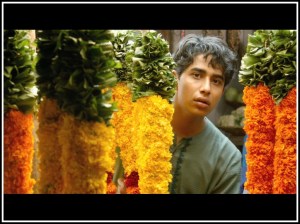
life-of-piThis is another fine film from director Ang Lee (Crouching Tiger, Hidden Dragon; Sense & Sensibility; Brokeback Mountain, etc.)  It incorporates good acting with cool visual/special effects.  The teen boy in the film NEVER acted before!  (Suraj Sharma lives in Queens and was discovered during an open casting call where his lil bro was auditioning.) 

LifeofPi2_620_112012

One of India’s finest actors, Irrfan Khan (the dad from Mira Nair’s The Namesake), plays the grown-up Pi/narrator.  Another Namesake connection: Tabu plays young Pi’s mom!  My own mom (who read the novel by Yann Martel) enjoyed the film, too, as did her friend/neighbor. 

Lincoln

In 1865, as the American Civil War winds inexorably toward conclusion, U.S. president Abraham Lincoln endeavors to achieve passage of the landmark constitutional amendment which will forever ban slavery from the United States. However, his task is a race against time, for peace may come at any time, and if it comes before the amendment is passed, the returning southern states will stop it before it can become law. Lincoln must, by almost any means possible, obtain enough votes from a recalcitrant Congress before peace arrives and it is too late. Yet the president is torn, as an early peace would save thousands of lives. As the nation confronts its conscience over the freedom of its entire population, Lincoln faces his own crisis of conscience — end slavery or end the war.  -Jim Beaver, IMDB.com
ctm_1109_DOANE_480x360

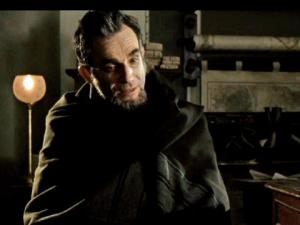
Who could’ve imagined that Irish actor Daniel Day-Lewis would one day play one of America’s most-loved presidents!?  (Liam Neeson, star of Schindler’s List was first considered for the role.)  Steven Spielberg humanizes Lincoln in this big, yet also small/personal, film.

jgl-lincoln

I esp. liked the scenes w/ Lincoln’s eldest son, Robert, played by Joseph Gordon Levitt (who is becoming one of the young’uns to watch in Hollywood now).  Of course, you may know him from the comedy 3rd Rock from the Sun

lincoln_ek_mtl

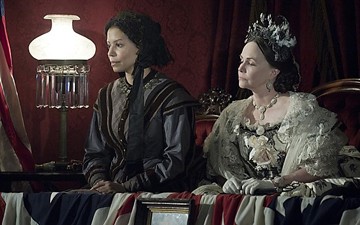
My mom was happy to see Sally Field in a big role (after some years); she plays Mary Todd Lincoln with intelligence and emotion (without ever going over the top).  Mrs. Lincoln did suffer from depression after the death of her son, Willie, as pointed out in the film.  I wanted to see more of Elizabeth Keckley (played by ER‘s Gloria Reuben), who was the dressmaker to Mrs. Lincoln. 
lincoln_allies

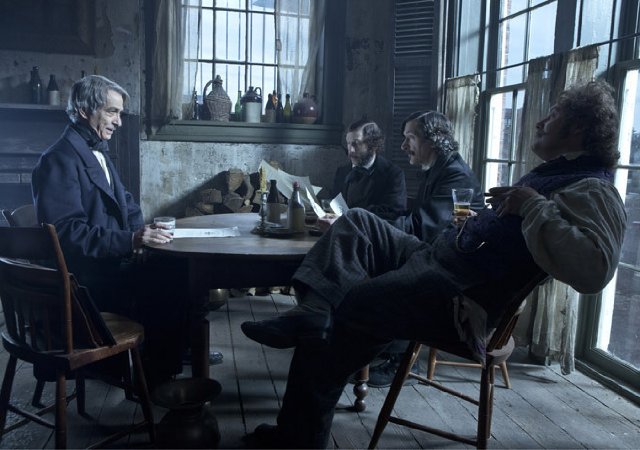
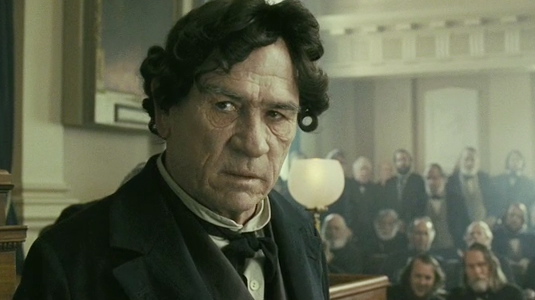
Lincoln has class (David Strathairn, one of my faves), humor (James Spader, former ’80s heartthrob), and fiery rhetoric (Lee Pace and Tommy Lee Jones in the House of Reps).  Well, Jones adds some humor, too.  And yes, the revelation about his character’s (Thaddeus Stevens’) romantic relationship is true! 
lincoln_tlj

Imitation of Life (1959)

This melodrama is based on a novel and directed by Douglas Sirk (known for his distinct style and focus on “women’s problems”).  In our time, his influence can be seen in Todd Haynes’ Far from Heaven and the AMC’s Mad Men.  

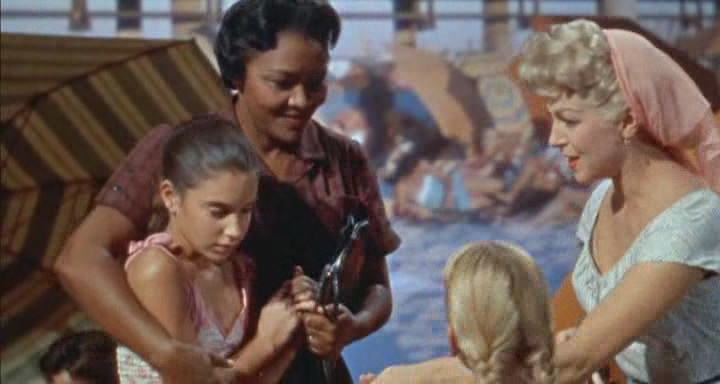
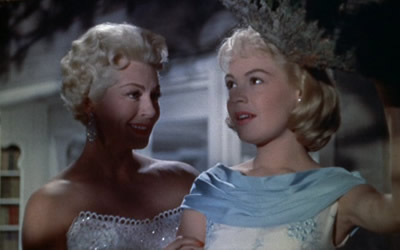
Widowed/single mother, Lora Meredith (Lana Turner), temporarily loses her 6-year old daughter, Susie, at the beach on Coney Island.  She scrambles to find the girl amid the crowd, and runs into a handsome photographer, Steve Archer (John Gavin), who offers his help.  When she finds Susie, she is with a kind black woman, Annie Johnson (Juanita Moore) and her 8-year old daughter, Sarah Jane (who has dark brown hair and looks white).  “Her father was almost white,”  Annie explains to the surprised Lora, who thought Annie was the girl’s nanny.  It turns out that Annie is also a widow, and she and her child have no place to stay.  Lora asks them over to her humble Manhattan apartment. 

In no time, the four are functioning as family.  Lora goes out into the theater world to seek work as an actress; Annie takes care of the home, kids, and picks up little jobs now and then.  The girls go to school and grow up like sisters, though conflicts arise when Sarah Jane insists on hiding her true racial identity.  For many months, Steve and Lora date.  Though he loves his art, he gets a stable job in marketing.  He’s good with Susie, too.  But he’s not as perfect as he seems…

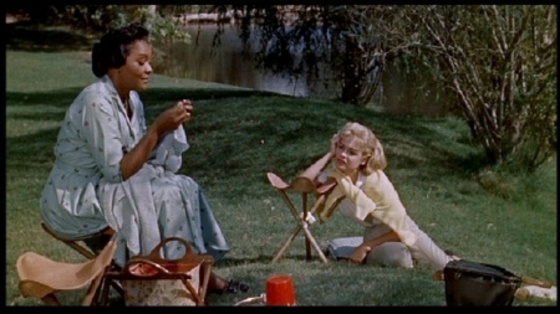
In time, Lora achieves the success she dreamed of professionally.  She becomes a star of theater, then movies, working with notable directors.  The family moves to a spacious house on Long Island.  Annie is always there- the “wind beneath her wings”- serving as a homemaker, confidant, and partner.  In one poingnant scene, Lora admits that Annie was more of a mother to Susie than she was (because of her high ambitions).

The girls grow into beautiful, charming, independant-minded teenagers.  Susie (petite, blonde Sandra Dee) has a positive outlook on life, though Sarah Jane (Susan Kohner, an actress of Czech and Mexican heritage) is troubled and restless. 

There is much to admire in this film, but also troubling aspects (reflecting the limitations of Hollywood and US.)  Why is Annie always humble, obliging, and wise?  Why doesn’t she have weak moments, like Lora?  Why weren’t African American actresses chosen to play Sarah Jane (as in the 1934 version)?  I’ll have to watch that version, too.  Some of the themes in this film are very modern: navigating a man’s world without a husband, raising a child as a single parent, and mother-daughter conflicts. 

Lora and Annie are like two sides of a coin- one has the strength to face the outside world (with her beauty and confidence), while the other has a quiet, inner strength (stemming from her spirituality).  Moore won a Best Supporting Actress Oscar for her performance. 

I was impressed by Kohner’s performance; I thought she did a fine job of a rebellious, conflicted individual seeking a place in the world. 

Gilda (1946)

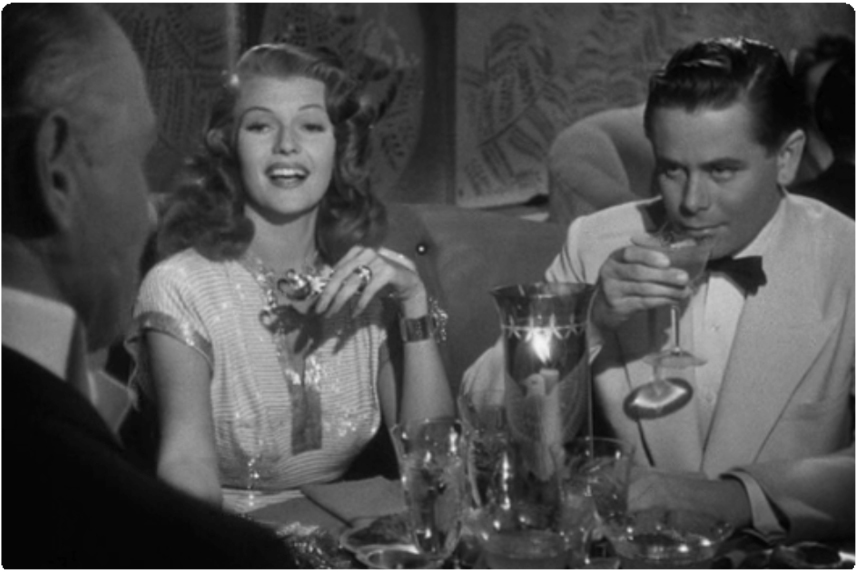
In post-WWII Buenos Aires, Argentina, petty American gambler Johnny Farrell (Glenn Ford) is rescued by wealthy businessman Ballin Mundson (George Macready).  In no time, Johnny becomes his “right-hand man,” managing his casino.  Why does Mudson help Johnny so much?  (Many critics pointed to the homoerotic dialogue and imagery in the first section of the film.)  

Ballin goes to the US for a short time; when he returns, Johnny learns that his wife is an American dancer, Gilda (Rita Hayworth), Johnny’s former love.  We can tell that they had a bitter, nasty break-up.

When Gilda is brought back to Argentina by Tom, she slaps Johnny hard across both sides of his face. In reality, Rita Hayworth’s smacks broke two of Glenn Ford’s teeth. He held his place until the take was finished.   -IMDB

Gilda: If you’re worried about Johnny Farrell, don’t be.  I hate him!
Ballin: And he hates you.  That’s very apparent.  But hate can be a very exciting emotion.  Very exciting.  Haven’t you noticed that?

While her controlling, disinterested husband is busy running his hotel/casino and overseeing a tungsten cartel, Gilda is left to her own devices.  She buys beautiful, expensive things and openly flirts with several men, so Ballin decides to make Johnny her watchdog.  The younger man resents this position, and bites back at Gilda.  He stops her from fooling around with any men, delivering her to her husband’s mansion. 

All of the goings-on of the place are observed by a lowly (yet wise) employee, Uncle Pio (Steven Geray).  He calls Johnny a “peasant” and has empathy for Gilda’s situation. There is a sub-plot involving former Nazis and a local detective.  To find out more, watch the film.

Johnny (to Gilda): What was that word?  It [decent] sounds funny coming from you.

This is an uneven film with a flimsy plot, but it’s also well-loved by many viewers.  It packs a punch because of the presence of the gorgeous femme fatale and the (almost palpable) chemistry between Hayworth and Ford.  If you’re interested in the themes explored in this film, check out Separate Tables (starring Hayworth, Burt Lancaster, Deborah Kerr, & David Niven) and The Lady from Shanghai (starring Hayworth and Welles).  I need to check out more movies with Ford; so far, I’ve seen 3:10 to Yuma, The Fastest Gun Alive, and The Courtship of Eddie’s Father. 

In the Land of Blood and Honey (2011)

Yes, this is Angelina Jolie’s movie (her directorial debut), but don’t let that put you off- it’s quite a tale!  There are no flashy directorial moves, and the pace can seem slow, but I feel the subject matter is worth a look.  However, if you are a sensitive person, this is not the film for you!  (FYI: There are 2 versions of the film- one where actors tell the story in English and the other in Bosnian/Serbian.  I saw the English version.)  The time is the recent past; the setting is the Bosnian War.  Here is some info from Wikipedia:

The war came about as a result of the breakup of Yugoslavia.  Following the Slovenian and Croatian secessions from the Socialist Federal Republic of Yugoslavia in 1991, the multi-ethnic Socialist Republic of Bosnia and Herzegovina, which was inhabited by Muslim Bosniaks (44 percent), Orthodox Serbs (31 percent) and Catholic Croats (17 percent), passed a referendum for independence on 29 February 1992.  This was rejected by the political representatives of the Bosnian Serbs, who had boycotted the referendum and established their own republic. Following the declaration of independence, the Bosnian Serbs, supported by the Serbian government of Slobodan Milošević and the Yugoslav People’s Army (JNA), mobilized their forces inside the Republic of Bosnia and Herzegovina in order to secure Serbian territory, then war soon broke out across the country, accompanied by the ethnic cleansing of the Bosniak population, especially in Eastern Bosnia.

Love in a time of conflict is not uncommon in film, but this is a compelling depiction.  This film focuses on a promising romance twisted and killed by war.  A dark-haired woman, who lives with her sister and baby nephew in a humble apartment, goes out to a bar/nightclub and dances with a blonde man; they are obviously very into each other.  There is a live band playing and the mood is joyous.


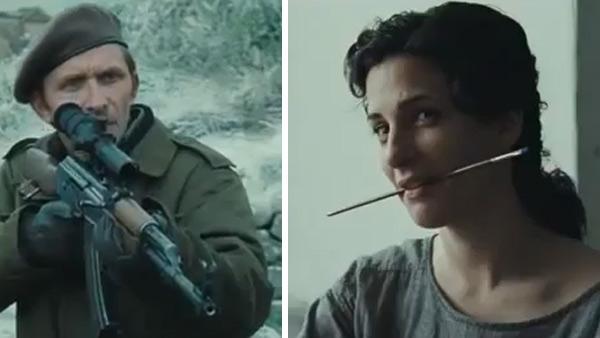
The encounter each other a time later when the woman, a Muslim painter named Ajla (Zana Marjanovic) is a prisoner in the camp run by the Serbian man, a soldier named Danijel (Goran Kostic).  Danijel meets with Ajla in private, just to talk at first, because there is no one else to relate to in the prison.  He needs to let off steam, and show her that he’s not a monster.  Danijel also softens the blow for her, while the other women are treated horribly (beaten, raped, and worked like dogs cooking and cleaning).  Is she in love with Danijel or merely protecting herself?  (It’s up to the viewer to decide.)  They think of a plan that will enable Ajla to escape the prison.   


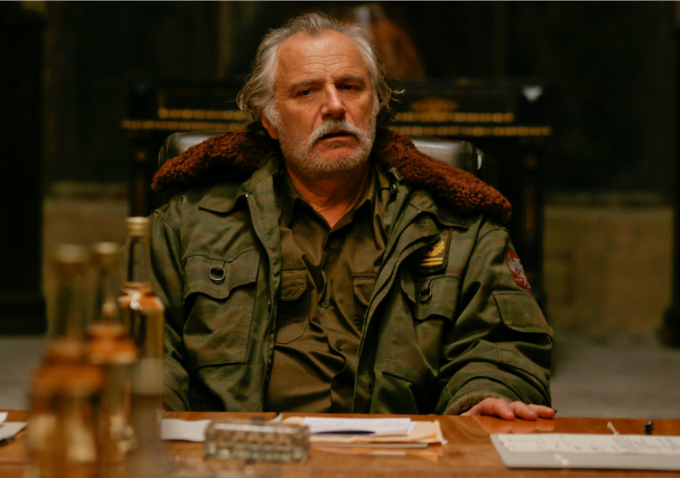
Ajla is unable to escape; she sees brutality all around her, and somehow stays sane.  Meanwhile, her sister suffers a terrible loss and joins a group of rebels.  Danijel is not the typical grunt soldier, he’s the son of a particularly successful/brutal general, Nebojsa (Rade Serbedzija).  His father is grooming him for leadership.  The stress of war gets to the younger man, and he turns on the woman closest to him.  He keeps her hidden away for quite a whille, but Ajla is not safe- not even from Danijel!  

I wished there was more information in this film about the politics of this war.  The secondary characters needed more development.  This film come off as limited at times, but the lead actors work very well together.  They have great chemistry with each other, and connect deeply with their characters.  (Nobody is a well-known face here, aside from Serbedzija.)  Ajla is dignified and strong even in the toughest situations.  Danijel slowly transforms from a rather sympathetic antagonist into a fallen, broken man.


Some films at AFI Latin American Film Festival

7 Days in Havana

Did you enjoy “Paris, I Love You?”  Then you may enjoy this film as well.  It’s a compilation of 7 different short films (directed by some famous directors from all over the world).  The setting is modern-day (communist) Cuba, where people are struggling in their personal and professional lives (just like anywhere else). 

In the first film, a young American film student (who knows only a little Spanish) goes out to a club with his cabbie looking for a beautiful girl.  He finds a rather unusual individual who defies stereotype, as does the American in his reaction. 

In another tale, a jaded/drunken Serbian director comes to Cuba to get an award.  But the highlight of his trip is meeting a  cabbie with a great talent for music.

A beautiful/ambitious singer is torn between two men- her loving/long-time boyfriend (a struggling basesball player) and a smooth-talking stranger who offers her a contract to work in Spain.  (To heighten the contrast- one man is a dark-skinned Afro-Cuban and the other is fair/redheaded.)

Calvet

This is a documentary of Jean Marc Calvet, a French artist living in Nicaragua, who is still struggling with demons (though he’s settled with a family and earns good money).  In his own words, he recounts his boyhood, addictions, various jobs (legal/illegal), and especially- his intense regret in not being there for this 18 y.o. son.  (He speaks in both French and Spanish.)  Will he be able to find his son?  If so, how will his son react to his long-absent father?       

Clandestine Childhood

Juan is an observant/sensitive 11 y.o. boy who comes from Cuba to Argentina (in 1979) with his family and a group of their comrades.  He attends school (under the name Ernesto), makes some friends, and gets a big crush on a pretty classmate.

But he’s not quite like the others- his parents and uncle are guerrillas, and the family is hiding out in an uncle’s house.  Juan also has a baby sister, Vicky.

His grandmother comes for a brief visit, and says she can care for the kids.  But Juan’s mother angrily insists that her children belong with her.