“Bramwell” (Series 1)

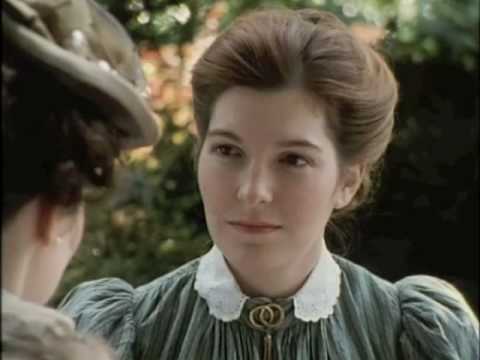
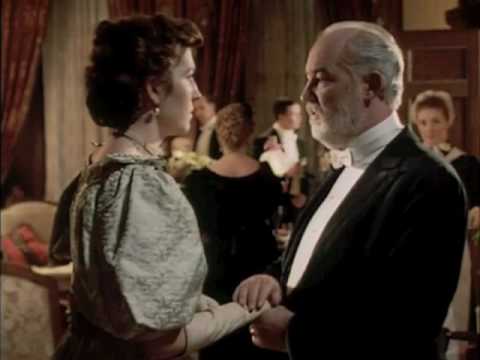
This show, which first aired on BBC in 1995, is set in late 1890s London.  Unlike most period dramas you’ve seen, there is little time spent on drinking tea and worrying about marriage, b/c  the title character is a female doctor.  She is Dr. Eleanor Bramwell (Jemma Redgrave: daughter of Corin and niece of Vannessa and Lynn)- mid-20s, outspoken, and ambitious.  After her mother died in childbirth, she was raised by her doctor father, Robert (David Calder), who runs his private practice out of their townhouse.  But in another life, he was an army surgeon.

It’s Eleanor’s dream to become a surgeon, though she barely gets to assist at East End Hospital where she works (in the 1st ep).  Most of the other doctors (male, of course) either ignore or laugh at her.  Her supervisor, an elderly and pompous surgeon, Sir Herbert (Robert Hardy), thinks that Eleanor should quit medicine, act more ladylike, and find a husband.  Her only ally is Dr. Joe Marsham, an anesthetist who comes from the North and was raised working-class.  He has the wrong accent and manners in the eyes of the other docs.  Dr. Marhsham also wants to perform surgery, but never gets a chance.

Eleanor becomes more and more disillusioned w/ her work at East End.  Her father worries that she’s “becoming too hard” and offers her a partnership w/ him.  One day, Sir Herbert unnecessarily performs surgery on a young mother (who probably had post-partum depression).   The woman dies on the operating table, but  the male docs don’t seem to care.  Eleanor is horrified and angered.  (There is blood, but don’t let a a little squemishness stop you from watching this excellent show!)

Eleanor finds another (unlikely) ally in Lady Cora Peters, a wealthy widow who is planning to set up a small infirmary w/ the legacy (money) of her late husband.  While visiting Sir Herbert at the hospital, Lady Peters is impressed by Eleanor’s determination to save a patient’s leg.  She offers the running of her infirmary (The Thrift) to the young woman.

Though Eleanor is a tough cookie, she has a lot to learn when she opens up The Thrift.  The patients are very poor, dirty, malnourished, and often drunk.  A few are violent towards each other and the staff.  In one intense scene in the 2nd ep, a patient threatens Eleanor w/ a broken bottle.  In another ep, a soldier w/ a brain injury attacks her late at night.  (Being a doctor is a risk to her reputation and safety.)

Besides being gritty, realistic, and very well-written, Bramwell is an educational show.  (You’ll see how far we’ve come w/ medical advancements!)  The father-daughter relationship is very prominent and touching.  When Eleanor pours herself a whisky after a hard day, her father is a bit shocked.  In one episode, he fixes her up w/ one of his younger army buddies.  They respect each other as professionals and speak plainly w/ each other.

“Rome” (HBO, 2005-2007)

If one of your New Year’s resolutions is to watch better TV shows, check out the HBO series Rome ASAP!  This is a very adult show w/ grown-up situations, so it’s not for the whole family.  It’s very addictive and keeps you guessing.  (Don’t go on You Tube or you’ll see spoilers!)  The setting is a pre-Christian world, so modern-day morals don’t apply.

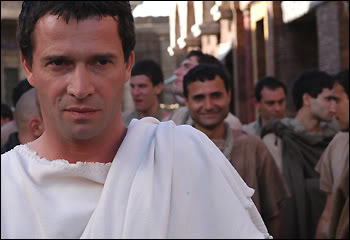
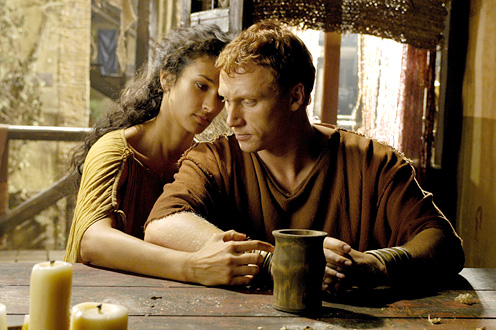
At first, I was just awed by the sheer scale and beauty of the production.  Everything looks gorgeous (including James Purefoy, above)- music, costumes, scenery.  The show was shot on location on a high budget, even for HBO.

You’ll see all levels of ancient Roman society, from plebians barely eeking out a living in gritty tenements to patricians partying in brightly painted halls.  Adding to the realism are many extras- Italians of all ages, shapes, and complexions.  The acting is top-notch- w/ familiar faces and exciting newcomers from the UK.

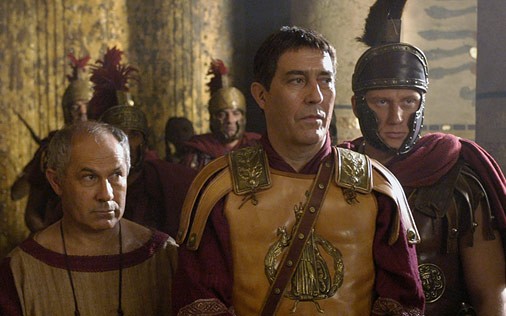
When Season 1 begins, a middle-aged Julius Caesar (Ciaran Hinds from The Mayor of Casterbridge and Persuasion), is in Gaul (now France) expanding the Roman empire and vanquishing the “wild natives.”  Pompey, Caesar’s old friend and son-in-law, is in charge of the city of Rome.  Caesar and Pompey rule as co-counsels w/ a powerful Senate (which includes Cato and Cicero).  Brutus (Tobias Menzies) looks on Caesar as a mentor, though he keeps insisting he won’t go into politics.  (He was one of my favorite characters.)

Then Pompey’s wife, Caesar’s daughter, dies tragically during giving birth.  Some senators feel that Pompey should split from Caesar and become leader of Rome.

There are many legions fighting for Caesar in Gaul; the 13th is reputed as one of his most loyal.  Mark Antony (Purefoy from Vanity Fair) is at Caesar’s side, though some patrician Romans look down on him for being an egotistical commoner w/rough speech and brutish manners.  But the soldiers love him.

Caesar’s best asset may be Posca (Nicholas Woodeson), an observant Greek slave no less clever than his master.  He helps Caesar plan battles, draft speeches, and negotiate deals.  The don’t have the typical master-slave relationship; Posca protects Caesar’s secret (he’s an epileptic).  In the Season 1 finale, when Caesar lies dead on the senate floor, Posca is the only character who sheds tears by his side.  (There are several other slaves who play significant roles in Rome.)

One particularly fine soldier from the 13th is Lucius Vorenus (Kevin McKidd, a Scotsman currently on Grey’s Anatomy) who hails from the Subura (the largest slum of ancient Rome).  He hasn’t seen his beautiful wife Niobe (Indira Varma) and two young daughters in 8 years, but fights for the Republic w/o complain.  (The Republic was akin to religion to many Romans.)

The soldier who bonds w/ Vorenus is Titus Pullo (Ray Stevenson).  Unlike the sober Vorenus, the tall/imposing Pullo loves cursing, wine, and women of the night.  He can get into a fight over the smallest matter, but Vorenus can count on him when things get tough.  Their friendship ties the entire show together.  (Vorenus and Pullo are the only soldiers mentioned by name in the journals of the real Mark Antony.)

Another reason to watch Rome are its fascinating female characters: patricians, plebians, and slaves included.  Vorenus’ wife Niobe must learn to love and understand her husband after many years.  She has a secret that could cost her her life if it ever came out.  (Why does Varma fit so well in this setting?  Her mother was half-Genovese.)

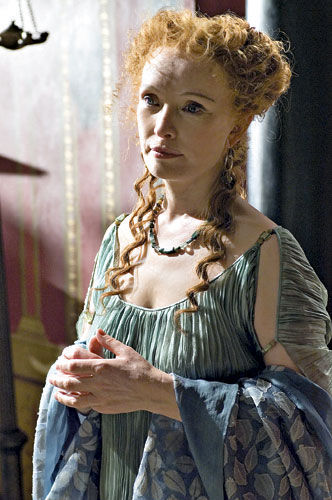
Servilia of the Junii (Lindsay Duncan from Mansfield Park and Lost in Austen) is Brutus’ mother and Caesar’s favorite female companion.  On the outside, she keeps cool and composed, like a fine lady.  But Servilia, widow of two great Romans, has a keen mind and great ambition for her son.

Caesar’s niece, Atia of the Julii (Polly Walker from BBC’s Emma), is the nemesis of Servilia.  She’s also a widow, unapolegetically ambitious and manipulative.  Atia conducts a fiery on-again, off-again relationship w/ Antony and doesn’t care what others think about it.  But is there any love there?

Octavia (Irish newcomer Kerry Condon) is Atia’s sensitive/vulnerable daughter.  She’s often pulled into Atia’s power plays.  Her mother often tells her to not slouch, dress better, and toughen up.  It’s all about survival, Atia tells her kids.  But Octavia deeply yearns for true love and some control of her life.

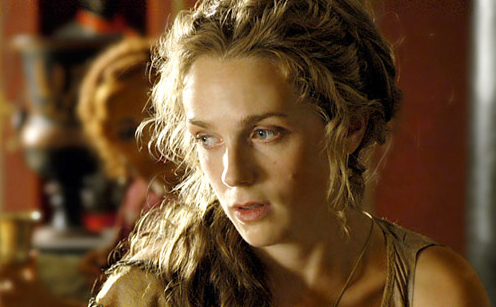
Of course Cleopatra (newcomer/theater actress Lyndsay Marshal) makes several appearances.  In Season 1, she’s a pixie-like teenager who plays vulnerable to seduce Caesar and get back the throne of Egypt from her little bro.  In Season 2, she’s the bold empress who seduces Antony, then falls deeply in love w/ him.  Antony falls hard too, but it’s not meant to last.

In my opinion, the breakout star of Rome is Max Pirkis (who made his film debut in Master and Commander)-  he plays the young nephew of Julius Caesar, Gaius Octavian.  He learns a lot from reading- words and people.  Octavian is a brilliant, cold-hearted, and calculating boy who’s not afraid to use violence.  The adult Octavian Caesar is played by newcomer Simon Woods (below).

Who is “a true Roman?”  (In one scene, a resident of his slum questions Vorenus’ heritage b/c of his red hair and Gallic features.)  What is best for a nation- some type  of representative democracy or one all-powerful leader?  How does a city deal w/jobless soldiers unskilled at everything except fighting?  What are the limits of friendship?  The depiction of timeless themes and personal relationships make this show a must-see.

Recent views and more…

Films I’ve watched recently:

Leave Her To Heaven (1945)

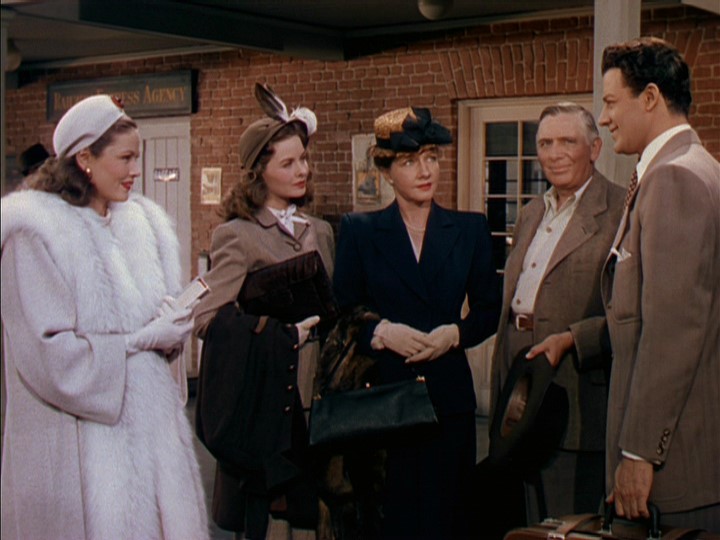
This drama about obsessive love (starring one of Hollywood’s most beautiful leading ladies, Gene Tierney) was considered controversial for its time.  Novelist Richard meets a socialite (daughter of a famous chemist) on the train to New Mexico.  He is instantly struck by her beauty.  Ellen (Tierney) is in New Mexico to meet-up w/ her mother and sister, then scatter the ashes of her beloved father.  Her family invites the well-mannered/charming Richard to spend time on their spacious vacation home. 

Ellen, a strong-willed/mysterious young woman, doesn’t hide her keen interest in Richard.  In the span of a few days, they fall deeply in love.  One night, her  former fiance (Vincent Price) drops in.  Russell is a self-assured prosecutor with his eye on politics; Ellen is very cold towards him.  Her family is surprised when Ellen suddenly proposes to Richard! 


The Last Time I Saw Paris (1954)

This drama, focusing on the joys and sorrows of marriage and sudden wealth, stars Van Johnson, Elizabeth Taylor, Walter Pidgeon, and Donna Reed.  In the exciting aftermath of WWII, a likeable/optimistic Midwestern GI named Charles (Johnson) shares a passionate kiss with a gorgeous young woman in a Paris crowd.  At a cafe, he meets a sophisticated woman, an American named Marion (Donna Reed).  It turns out that Marion is dating one of Charles’ old friends, a Frenchman named Claude.  Marion, who’s obviously interested in Charles, invites him to her house for a party.  

At the party, Charles is happily surprised to see the woman he kissed, Marion’s fun-loving younger sister, Helen (Taylor).  Though they seem like opposites, he’s down-to-earth while she lives for parties, they quickly fall in love.  The only problem is money; Helen’s father lives above his means and Charles is merely a struggling journalist/aspiring novelist.                 

I’m currently watching:

Equal Justice

This is an early ’90s courtroom drama deaing w/ ambitious/young Pittsburgh ADAs.  You can see it on Hulu; it ran for two seasons.  The cast includes a young Sarah Jessica Parker (then just 25 y.o.), former model Debrah Farentino, and several fine character actors: Jane Kaczmarek, Jon Tenney, and Joe Morton. 

The Tudors (Season 3)

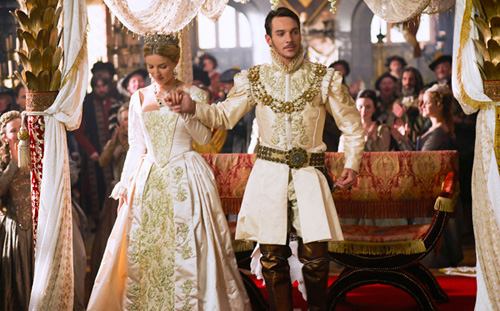
I have watched the first two episodes so far.  Henry (Jonathan Rhys Meyers) has started his married life (again) w/ Jane Seymour (Annabelle Wallis), a beautiful noblewoman who seems beyond reproach at first (b/c of her virginity, good breeding, and and mild personality).  Jane surprises and angers Henry when she speaks up for the banished Princess Mary (Sarah Bolger).  Jane quietly seeks to help women, who are “often put upon in this world.” 

There is unrest in the North (Yorkshire; Lincolnshire) as abbeys and churches (Catholic) continue to be looted and destroyed.  The clergy are disrespected and beaten, in many cases.  A group of “commons” (farmers, laborers, etc.) organize to voice their discontent.  A few nobles take on the cause.  Henry goes off on Cromwell (James Frain) when he realizes just how big the group has become.  These “pilgrims” starts marching to London, gathering more and more of supporters along the way. 

I’m currently reading:

How Starbucks Saved My Life – Michael Gates Gill

Fired after 25 yrs at one of NYC’s biggest ad agencies, the author (then in his early 60s) wonders what to do w/ his life while sitting at a Starbucks (78th & Lexington) near his childhood home.  He’s in dire need of health insurance.  Suddenly, a confident young black woman named Crystal, the manager of another Starbucks store (96th & Broadway) offers him a job.  With no other option at hand, he agrees! 


“The Pacific” (Parts 4-10)

Part 4

Robert Leckie (James Badge Dale) sees one Marine shoot himself in the head, unable to take the rain, jungle, fighting, and mental pressure.  He gets a bladder problem and is sent to spend some time recuperating at a hospital facility on a nearby island.  Leckie, who’s family has a history of mental illness, is unsettled when he sees men with psychiatric problems at the facility.

He’s surprised to see Hanson (a man from his unit) when he asks for a smoke.  Hanson is put in a solitary cell away from the other beds.  The shrink explains that Hanson tried to run away and kill himself twice on the battlefield.  He needs to be out of the fighting.  “But most men you see here are just tired.  They just need a week or two to recuperate.”


Part 5

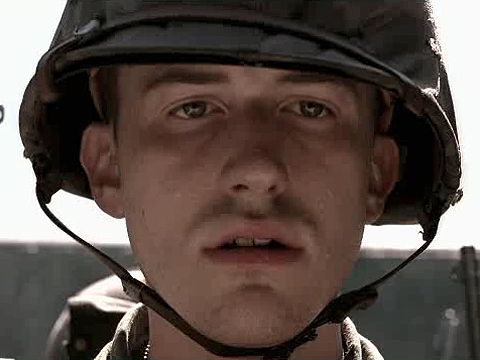
Eugene Sledge (Joe Mazzello) and Sidney Phillips (Ashton Holmes) are very happy/excited to see each other while at camp.  When Sledge asks about how the war was for Phillips, he explains that “there’s no way to describe it.”  When Sledge goes to the library tent to pick out a book to read, he has a chat with Leckie.  (I think some of the books are from Leckie’s own collection.)  When Sledge picks up the Bible, Leckie comments that he doesn’t believe in religion anymore.  “What do you believe in?” Sledge asks quietly.  “I believe in ammunition,” Leckie responds with a wry smile.  It turns out that Sledge doesn’t need the book, as he carries a tiny Bible in his pocket.
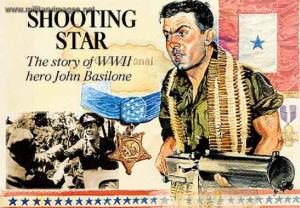
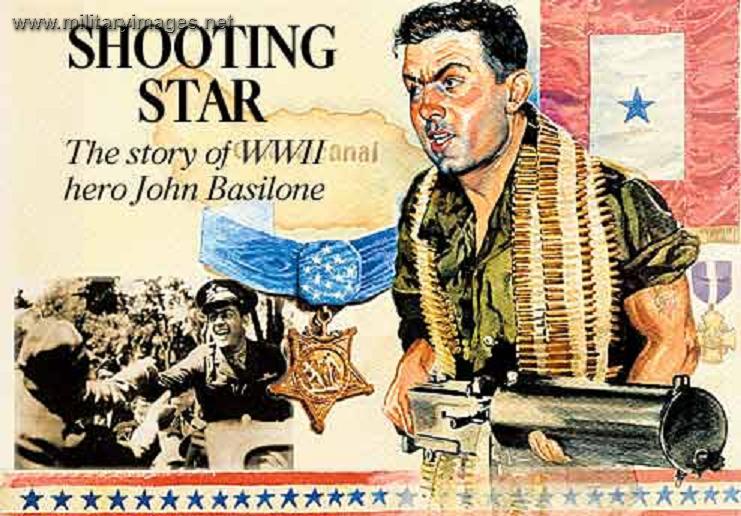
Back in the US, Congressional Medal of Honor recipient John Basilone (Jon Seda) is staying at the Biltmore and spending time with a blonde actress.  His actions are depicted in comic books- he’s famous.  His older brother (also a Marine) comes to visit him at the hotel.

So far, this is the most visually stunning, frightening, and engaging ep of the series!  The viewer follows the teenage Sledge as he storms the beach at Peleliu, where the Marines faced some of the most dangerous fighting of the war.  He prays under his breath and his eyes fill with fear as men are blown up around him.  Sledge struggles to cross the beach, amid dead bodies, explosions, etc.  Simply riveting episode!


Part 6

Phillips (Sledge’s good friend/neighbor) goes home to Mobile, Alabama and meets with Sledge’s parents.  He says some consoling words to them, concluding that “He’s w/ a great bunch of guys.  I’m not worried for Eugene.”  “Mortar men” like him and Eugene are generally behind the most dangerous action, he explains.  However, Phillips’ eyes are heavy w/ concern.

Back on Peleliu, the men want one thing- water.  They find a poisoned pond.  They face tremendous fighting, but Sledge comes through it.  He even pulls up a fellow Marine, Merriell Shelton (Rami Malek) and assists him to cross a field.  When he admits that he’s “never been that scared in his life,” Captain Haldane comments that “Anyone who says he isn’t scared out here is either lying or dead.”  He earns the nickname “Sledgehammer” from the fellow he helped.


While lying in wait one night, a Marine has a terible nightmare and keeps screaming in his sleep.  The Japanese will hear them.  Two or three other guys nearby try to hold the disturbed man down to quiet him, but it doesn’t work.  Finally, one guy hits him w/ a shovel.  In the morning, he lies dead.  Shelton says: “Better him than us.”

Leckie, who has been wounded, meets with an old friend from an earlier battle, as they head away from the Pacific on a US carrier.


Part 7

The airfield on Peleliu was taken after 3 days.  But the Japanese weren’t going to give up.  There was an intricate system (w/ about 500 caves) on the island where they were hiding.  “The enemy was ruthless.  We were doing to have to dig them out one by one,” one WWII veteran said.  They were 30 days of heavy fighting w/ many Marines killed or wounded.

One night, Sledge shoots two men, thinking they are Japanese.  But in the morning, he realizes that one was an enemy soldier, but the other was a fellow Marine who’d gotten out of his foxhole.  An older Marine is very angry that this happened; they’re not allowed out at night from their foxholes.

Sledge hears some noise coming from a bunker that was said to be cleared by the 1st Division.  When the men go to check it out, they realize several Japanese are hiding inside.  They shoot, throw grenades, and bomb the bunker.  One Marine beside Sledge may be blinded by the impact from an enemy grenade.   Sledge kills one young enemy soldier w/ his bayonet when the man runs toward him.  He is a little stunned by what he has done.  The nest day, his Capt. Haldane says: “You can’t dwell on it- not any of it.”

A tough, older Marine is scared and unable to move after a sudden and terrible attack.  The younger men are surprised that “someone like him can break.”  Sledge hugs and consoles a fellow Marine when he breaks down in tears in the middle of the night.

The captain has been killed, Sledge and his men learn while on a patrol one sunny day.  As Haldane’s body comes by on a stretcher, several men have tears in their eyes.  Sledge is full of anger, and thinks about taking out a dead enemy’s gold teeth (as Shelton had done earlier).  But he takes off the insignia instead, crying at the loss of the captain who encouraged/motivated him when he needed it the most.

Sledge and the other Marines are stunned to see some pretty/young nurses handing out cups of lemonade when they finally reach camp.  They take a long-needed bath in the ocean.


Part 8

Peleliu was taken by the US, but  many people didn’t know about the horrible fighting that occurred there.  General MacArthur didn’t use that island for any future operations.     

Gunnery Sgt. John Basilone, who’s been selling war bonds for over one year, asks to train the new Marines.  His commander says: “You make me proud to be a Marine, son.”  (Basilone’s enlistment will soon be up, and he wants to make an impact before that.)

When he arrives at Camp Pendleton, Basilone is struck by a beautiful dark-haired nurse, Lena (Annie Parisse).  It turns out that Lina is also Italian and a Marine (there are 3 stripes the arm of her white uniform).  Unlike the young Marines and other nurses, Lena is not automatically impressed by Basilone (“the hero of Guadalcanal”) when he asks her for a dinner date.  She knows about his penchant for starlets.

But John keeps on trying and she invites him to have breakfast very early (before her KP duty begins).  B/c of this, he wakes the men up at 3:30AM for a 10K run- LOL!  Lena makes coffee and French toast in the mess and they talk about food, family, and their love of Marine life.  You can see John falling in love; Lena is intrugued my him.  “It’s amazing what can happen over a cup of coffee,” John comments.
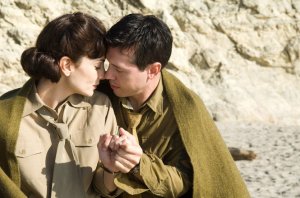
John and Lena talk, spend time at the beach, and fall deeply in love.  Though he has re-enlisted, she agrees to marry him.  They marry in a little church near Camp Pendleton.  During their honeymoon, John says that he wants six kids.  Lena gives him her little gold cross necklace that she always wore around her neck.

Basilone enters the battle at Iwo Jima alongside the Marines he trained.  “If you want to live, get off the beach!” he shouts to those men who are falling behind.  The men watch in awe as he runs, bobs, and weaves away from danger.  Suddenly, Basilone is hit directly in the chest, and falls down.  His fellows watch with wide/disbelieving eyes as their hero dies.

Part 9

This ep may be difficult to watch for some viewers.  Sledge, Shelton, and their fellow Marines are having a terrible time on Iwo Jima.  There is thick mud everywhere.  They have to dig trenches around dead bodies.  The Japanese will not surrender, so they have to be dug out.

Sledge is angered when a belligerant Japanese prisoner gets in his way.  He shoves the man away and gets a reprimand from an intelligence officer.  At another point, he comtemplates pulling out a dead Japanese soldier’s teeth (as Shelton had done before).  Shelton, surprised to see Sledge behaving in such a way, talks him out of it.  “They have bad diseases,” he says.

In one touching scene, Sledge finds an elderly Japanese woman who is mortally wounded.  She gestures to him to come and touches the barrel of his rifle.  Sledge is unable to shoot her (to end her miser); he puts down his weapon and gently cradles her in his arms.  She dies soon after.

When it seems like they can’t take it anymore, the Marines hear that “some big new weapon” has ended the war in the Pacific.  The Japanese surrendered.  Sledge, Shelton, and their division stay behind to “clean up the mess.”

Part 10

Six months after D-Day, Sledge, Shelton, and another Marine travel on a train across the South.  One man gets off in a small, dusty Texas town.  He’s waiting for his Australian girlfriend to come and marry him.  Shelton gets off in bustling New Orleans quietly, as Sledge is fast asleep.  Finally, Eugene reaches Mobile (where he is greeted by best friend Sidney).

Sidney is now engaged to one of the prettiest girls of their circle.  Eugene’s older brother (who fought in Europe) is also back safe and a married man.  He’s surprised to hear that Eugene went through the whole war w/o losing his virginity.  “There weren’t any women where I was,” he replies.  “Except nurses- and they were off-limits.”  But if Eugene goes out to in his uniform, he can get any girl, his brother says.  “No, I don’t think I’ll ever wear an uniform again,” Eugene concludes.

Leckie goes home to his parents small house in suburban New Jersey.  He gets his old job (local sports writer) back at the North Bergen County Register (w/ a $7 raise).  While typing away one night, he hears his neighbor Vera coming home from a date.  Bob’s still interested in her, though she never showed interest in him while they were growing up.  He gets into his dress blue uniform and goes over to her house to ask her out (w/ some subtle encouragement from his mother).  When Vera accepts a date for the next night with Bob, the officer gets jealous and drives off in his fancy car.

Bob takes Vera to a nice local restaurant, but he’s nervous.  He can’t keep from looking at her pretty face.  She says “you’re doing fine.”  Vera asks why he wants to spend time with her; Bob replies it’s b/c she’s someone he knows.  “You don’t really know me, Bob,” Vera corrects him with a smile.

What happened to all those letters he wrote to her about the war?  Bob explains that he never sent them. “To be honest, I never thought I’d make it.”  The words were eventually washed away with the rains, but they were “the best stuff I ever wrote,” he says.

Lena goes to Raritan, New Jersey to see the Basilone family for the first time.  Mr. Basilone compliments her in Italian.  John’s brother asks about how she’s doing.  It turns out that Lena won’t get a widow’s pension ($10,000) b/c John forgot to sign the required papers.  But she’s okay with that; she’ll continue working in the Marines.  She presents a box (w/ John’s medal inside) to his father.   Lena and Mrs. Basilone share tears and hugs.

Early one morning, while out with his father, Eugene puts down his hunting rifle and breaks down in tears.  “I’m sorry,” he says.  His father says it’s okay; they don’t have to shoot doves.  He embraces his son, says “You never have to apologize to me, Eugene.”

Eugene doesn’t feel much in a dancing mood when he goes to a party at Sidney’s house.  Sidney understands and gives him space.  When Eugene tries to enroll at a local university, all he gets are inane questions.  He spends time doing nothing for a while.  This worries his mother, but his father understands.  “You don’t know what men like him went through over there.  Just let him be for a while.”

At the end of the ep (last of series), we get to see pics of the real Marines and what happened to them after WWII.  The casting directors did a GREAT job in matching up the actual individuals w/ actors!

Well, I wanted to see this series when I heard Jon Seda (above left) was in it.  His Latin looks (he’s Puerto Rican), easy-going confidence, and charisma were BIG assets in portraying the almost larger-than-life John Basilone.  Another asset- Seda’a ability for subtlety (even when playing men that the audience has preconcieved notions about).  As some critics have commented, Seda actually looks younger and fitter than in his earlier roles!

The character I most identified with was Robert Leckie, played superbly by James Badge Dale.  In real life, Leckie wrote over 40 books- WOW!  Leckie, in my opinion, is the volunteer who has NO CLUE what he’s going into.  When he joins up, it seems like he’s going in for the experience.  He says he wants to write about it.  Also, Leckie doesn’t have a lot of confidence in himself, so he uses humor.  But he’s also a smart, observant, and sensitive guy.

In real life, Eugene Sledge was better known as the soft-spoken biology professor who retired in 1990 from the University of Montevallo.  “He didn’t fit any of the (military) stereotypes,” said one of his sons, John Sledge of Mobile. “He was gentle, scholarly, loved birdwatching.  He didn’t care about golf, football, NASCAR, and watched almost no TV.  He was a great reader who listened to Mozart … and learned the classical guitar.”  -The Birmingham News

The viewer is instantly empathetic towards Eugene (played w/ ease and quiet dignity by former child actor, Joe Mazzello).   Eugene is lanky, baby-faced, sheltered, and has a (potentially deadly) heart murmer.  In a few scenes, it looks like he might crack under pressure.  But he comes through it w/ help from his fellow Marines (who become his friends).

Unlike Band of Brothers, this series focused more time on fewer characters.  It also brought in more personal stuff- family, romance, life after war.  I liked this approach, and wish there had been more personal development in Band of Brothers.  The action in The Pacific seemed more in your face (and scarier), though I think the earlier series had MORE fights.  All the minor characters, including some respected veteran actors, did great.  Watch this series- it’s great TV!
Original “Law & Order” ends

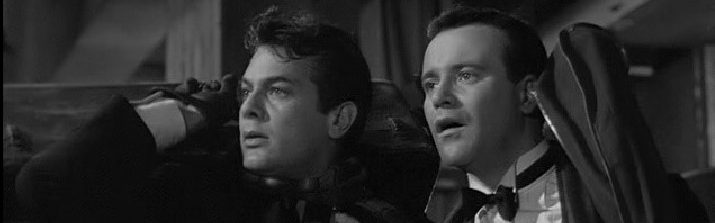
As you may’ve heard, the original L&O series has ended on NBC.  I didn’t see the last episode; I stopped watching it regularly a few years ago.  In recent years, I paid more attention to L&O: Criminal Intent and SVU (watched religiously for many years. )  L&O started out as a cutting-edge show in the early ’90s w/ timely and controversial storylines.  

The show’s top cop was life-weary veteran Det. Lenny Briscoe (Jerry Orbach: 1935-2004).  Orbach came from the theater where he acted, sang, and danced.  L&O’s best lawyer was highly principled ADA/Executive DA Jack McCoy (Sam Waterston).  Waterston is a classically-trained actor who made his mark in film, too.  McCoy hated hypocrisy and compromise, but could fight cleverly, too.  Plus, he had a cool motorcycle!  L&O has been a showcase for experienced actors and a launching pad for younger ones just starting out in the business. 

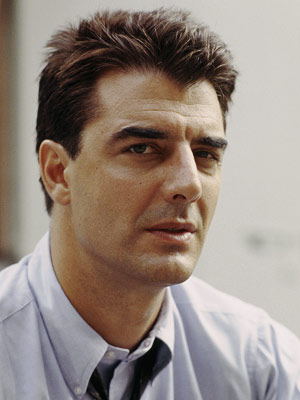
In the beginning, the characters had great chemistry together, especially Briscoe and his younger partner, Det. Mike Logan (Chris Noth).   Briscoe (recovering alcoholic) and Logan (hotheaded womanizer) were street-wise, working-class guys who had little or no interest in promotions/politics.  They just wanted to catch the bad guys.  Who could forget the story Logan told of his alcoholic mother regularly beating him with the Bible?  Sorry SATC fans, but we L&O fans saw Noth first!  (Logan kept reappearing in other series b/c fans, as well as Dick Wolf, liked him so much!)  

On to the prosecutors…  The serene and intellectual Paul Robinette (Richard Brooks) was a terrifc foil to passionate ADA Ben Stone (Michael Moriarty).  Robinette had a terrific speaking voice that exuded confidence and serenity.  Stone, on the other hand, was more openly idealistic and passionate.  In later years, Robinette made a guest starring role as a defense attorney.  Why was Brooks, a young African-American actor, let go?  It was to make way for another minority group- women.

No doubt about it, L&O has had some fine women in its cast, including the very capable Lt. Anita Van Buren (S. Epatha Merkerson).  Jill Hennessey’s L&O role was a far cry (and far better acting) than her star turn on Crossing Jordan.  Jill was very believable as a lawyer.   Claire and Jack’s ambiguous personal relationship was discussed by many fans.  Former Bond girl Carey Lowell was very believable as upper-crust, no-nonsense prosecutor Abbie Ross.  Angie Harmon’s character (Abbie Carmichael) was not written w/ subtlety like Claire or Jamie, but she did a good job w/ it.  Angie has a very strong physical presence, like Benjamin Bratt (who played Det. Rey Curtis).


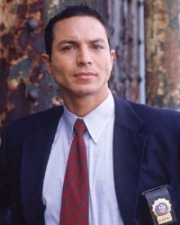
Unlike many L&O franchise cops, Rey was a grounded family man w/ traditional values.  He stuck by his wife and kids when she got ill.  Briscoe couldn’t believe that Rey only fantasized about his wife.   A classy guy in a very classy show…