Recent views and more…

Films I’ve watched recently:

Leave Her To Heaven (1945)

This drama about obsessive love (starring one of Hollywood’s most beautiful leading ladies, Gene Tierney) was considered controversial for its time.  Novelist Richard meets a socialite (daughter of a famous chemist) on the train to New Mexico.  He is instantly struck by her beauty.  Ellen (Tierney) is in New Mexico to meet-up w/ her mother and sister, then scatter the ashes of her beloved father.  Her family invites the well-mannered/charming Richard to spend time on their spacious vacation home. 

Ellen, a strong-willed/mysterious young woman, doesn’t hide her keen interest in Richard.  In the span of a few days, they fall deeply in love.  One night, her  former fiance (Vincent Price) drops in.  Russell is a self-assured prosecutor with his eye on politics; Ellen is very cold towards him.  Her family is surprised when Ellen suddenly proposes to Richard! 


The Last Time I Saw Paris (1954)

This drama, focusing on the joys and sorrows of marriage and sudden wealth, stars Van Johnson, Elizabeth Taylor, Walter Pidgeon, and Donna Reed.  In the exciting aftermath of WWII, a likeable/optimistic Midwestern GI named Charles (Johnson) shares a passionate kiss with a gorgeous young woman in a Paris crowd.  At a cafe, he meets a sophisticated woman, an American named Marion (Donna Reed).  It turns out that Marion is dating one of Charles’ old friends, a Frenchman named Claude.  Marion, who’s obviously interested in Charles, invites him to her house for a party.  

At the party, Charles is happily surprised to see the woman he kissed, Marion’s fun-loving younger sister, Helen (Taylor).  Though they seem like opposites, he’s down-to-earth while she lives for parties, they quickly fall in love.  The only problem is money; Helen’s father lives above his means and Charles is merely a struggling journalist/aspiring novelist.                 

I’m currently watching:

Equal Justice

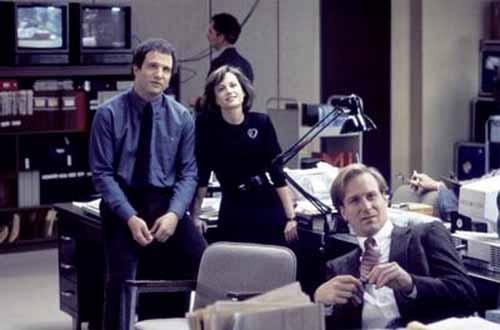
This is an early ’90s courtroom drama deaing w/ ambitious/young Pittsburgh ADAs.  You can see it on Hulu; it ran for two seasons.  The cast includes a young Sarah Jessica Parker (then just 25 y.o.), former model Debrah Farentino, and several fine character actors: Jane Kaczmarek, Jon Tenney, and Joe Morton. 

The Tudors (Season 3)

I have watched the first two episodes so far.  Henry (Jonathan Rhys Meyers) has started his married life (again) w/ Jane Seymour (Annabelle Wallis), a beautiful noblewoman who seems beyond reproach at first (b/c of her virginity, good breeding, and and mild personality).  Jane surprises and angers Henry when she speaks up for the banished Princess Mary (Sarah Bolger).  Jane quietly seeks to help women, who are “often put upon in this world.” 

There is unrest in the North (Yorkshire; Lincolnshire) as abbeys and churches (Catholic) continue to be looted and destroyed.  The clergy are disrespected and beaten, in many cases.  A group of “commons” (farmers, laborers, etc.) organize to voice their discontent.  A few nobles take on the cause.  Henry goes off on Cromwell (James Frain) when he realizes just how big the group has become.  These “pilgrims” starts marching to London, gathering more and more of supporters along the way. 

I’m currently reading:

How Starbucks Saved My Life – Michael Gates Gill

Fired after 25 yrs at one of NYC’s biggest ad agencies, the author (then in his early 60s) wonders what to do w/ his life while sitting at a Starbucks (78th & Lexington) near his childhood home.  He’s in dire need of health insurance.  Suddenly, a confident young black woman named Crystal, the manager of another Starbucks store (96th & Broadway) offers him a job.  With no other option at hand, he agrees! 


Tony Curtis (1925-2010)

The street kid who became an “American prince”

I could have been a politician or a brain surgeon.  But I didn’t have an education, so there wasn’t anything I could do but get into the movies. And, boy, did I ever.  To burst into the movies like I did…  Isn’t that neat?

Tony Curtis (born Bernard Schwartz) was one of Hollywood’s ultimate outsider-insiders.  His parents were immigrants from Hungary who settled in the Bronx.  (The actor never completely lost his Bronx accent.)  Tony didn’t speak English until he went to school at age six.  His father was a tailor; the family lived in the back of his shop.  Tony and his brothers suffered at the hands of their abusive and schizophrenic mother.  He even spent time in an orphanage when money got TOO tight for the family!  

As a kid, he was beaten up for being BOTH Jewish and good-looking.  During these fights, he took care to protect his face, feeling that ONE day it could be the making of him.  At 11, Tony joined the Boy Scouts and eventually began acting in school plays at 16 at Seward Park High School.  (To this day, this public school on the Lower East Side of Manhattan is attended by many young immigrants to the US.)  Reaching 18, he joined the Navy; this was right after Pearl Harbor. 

Because some like it VERY hot…

I was the best-looking kid in town.  It’s not what you have but what you do with it that counts.

At 23, Tony reached Hollywood and got roles in fluffly comedic films.  This was a period of learning for him.  However, he STILL faced anti-Semitism, as Jews weren’t yet fully accepted in the Hollywood studio system.  But Tony made his mark; later on, his duck-tail hairstyle would be copied by another ladies’ man- Elvis Presley.  Very cool!

Roles in some GREAT films, including his Oscar-nominated performance in The Defiant Ones (w/ Sidney Poitier) came in the late ’50s.  Hollywood took a few years to realize that Tony was more than a pretty (err, insanely gorgeous) face.   He broke a Hollywood taboo by insisting that Poitier have co-starring billing next to him.

Jack Lemmon and I always had a great time together; even though we were from different backgrounds – he was Harvard-educated, very intelligent and urbane.  We balanced each other out.

Tony acted w/ Marilyn Monroe and Jack Lemmon in the comic hit Some Like It Hot.  Tony’s lovestruck character copied Cary Grant’s posh accent to win over Marilyn’s character. 

Jerry: What are you trying to do to that poor girl, putting on a millionaire act?  And, where did you get that phony accent?  Nobody “talks loike thet!”

Aiming high… & scoring BIG

Another former NYC street kid, Burt Lancaster, recognized Tony’s talent, charisma, and ambition.  They were co-stars in two films- Trapeze and Sweet Smell of Success.  In Sweet Smell of Success, both actors transcended their looks to interpret amoral, ruthless strivers (a press agent and a popular newspaper columnist) in the Big Apple.          

J.J. to Sidney: I’d hate to take a bite outta you. You’re a cookie full of arsenic.

Swords, Sandals, & Shirtless Scenes

In the photo above, Tony jokes around w/ his Spartacus co-stars Kirk Douglas and Jean Simmons.  In the epic historical drama, Tony played Antoninus, innocent young slave of power-hungry ex-gladiator, Crassus (Laurence Olivier).  After Crassus  hits on Antoninus (during a bath in a NOT so subtle manner), he runs away to join Spartacus.

Idols United

In Operation Petticoat, Tony acted alongside Cary Grant, one of his long-time idols.   Tony played a tennis pro/playboy Navy officer who needs to be kept in line by Grant’s character- his captain.  It was a dream come true for Tony!    

Early on, I decided I didn’t want to be known as a mere actor.  I wanted to feel like a star.  I wanted to get my footprints in Hollywood on the sidewalk, which I got.  I wanted to be on the cover of all the magazines and go to parties in a limousine with a beautiful girl.  I did all of that – and more.  And I appreciate it.   

Three Reviews: “Paris Blues” (1961), “He Knew He Was Right” (2004), & “Two Lovers” (2008)

Paris Blues (1961)

This is a TERRIFIC, though lesser-known, Paul Newman-Joanne Woodward film.  (It was made after their marriage and birth of their first child.)  Trombone player Ram Bowen (Newman) and saxophonist Eddie Cook (Sidney Poitier) are expatriate American jazz musicians living in Paris.  They have a regular gig at a small/artsy/popular club, though Ram has a dream of being a serious composer.  Also, Ram is in a (friends w/ benefits) relationship w/ the singer/owner of the club, Marie.

The guys meet two beautiful American tourists- straight-talking jazz lover Lilian (Woodward) and socially-conscious teacher Connie (Diahann Carroll).  After Ram meets his old friend “Wild Man” Moore (Louis Armstrong) on a train, he confidantly approaches Connie.  This must’ve raised some eyebrows in ’61- a white man hitting on a black woman.  Of course, it was no big deal in France.  Ram invites her to hear him play at the club.  Connie brushes off his come-on and comments that she has a white friend with her.  Soon Lilian arrives to meet Connie; we see her keen interest in Ram.

Though Connie is suspicious of guys like Ram (“I know these jazz musicians…”), Lilian convinces her to go to the club that night.  When she hears Ram play, Lilian is visibly moved by the music.

Aside from romance, this film deals head-on with serious issues- ambition, racism, and drug abuse (one of the musicians at the club is addicted to cocaine).  The costumes, scenery, lighting, music, and dialogue are pitch perfect.  Newman and Poitier seem like two old friends; the chemistry between the two couples is almost palpable.  (As you may know, Poitier and Carroll were romantically involved at this time.)

Newman, who plays an anti-hero here, has some very good lines.  “Look, you don’t want me for what you want,” he tells Lilian directly when she shows interest in going out after a gig.  Lilian calmly comments that she’ll decide what she wants.  This is a grown-up look at love, not a fairy-tale story.  Check it out ASAP!


He Knew He Was Right (2004)


I watched this BBC miniseries for the second time recently.  Novelist Anthony Trollope was inspired to write the book by Shakespeare’s tragedy, Othello.  The main character, irrationally jealous husband Louis Trevelyan is also based on the author’s (often temperamental) father.

Louis (young Brit Oliver Dimsdale), a posh London gentleman, goes to the Canary Islands and falls quickly in love with Emily (Scotswoman Laura Fraser), the lovely daughter of the governor.  Though she is young and has never been in British society, he proposes marriage.  “He looks like a man who likes to have his way,” her father comments, though he feels it will be a very good match.  “Emily likes to have her way, too,” her concerned mother adds.

Emily and Louis settle in London and have a son.  Emily’s gorgeous young sis, Nora (Christina Cole) lives w/ them; she’s much admired by the bachelors in their circle.  But she falls for Louis’ best pal- young journalist Hugh Stanbury (Stephen Campbell Moore).  They can’t marry right away, as Hugh doesn’t come from money, is just getting started in his career, and has a mom and sisters to support out in the country.

To their friends, the Trevelyans seem to be the perfect marrieds.  But things start to go sour when Emily’s father’s old friend, and reputed playa, Colonel Osborne (Bill Nighy) enters the picture.  At a party, an older lady comments on his bad boy ways, alerting Louis.  Osborne visits Emily at the house; Louis doesn’t like this, as it could expose his wife to rumor and innuendo.  Emily, who is innocent/unspoiled like Desdemona, wonders why she shouldn’t see an old family friend.  “But I won’t see him if you forbid me to,” she eventually promises.

Osborne is refused entry to the house, but he approaches the couple while they’re out on a stroll in the park.  When the older man calls Emily by her first name, Louis gets visibly angry.  (In Victorian society, if a man called a woman by her first name, it could be inferred that he had intimate knowledge of her.)  Emily pulls Louis away, rushing towards home.  Finally, Louis decides to send Emily, his boy, and Nora to live in the country w/ the Stanbury ladies.  He rationalizes this decision by saying they’ll be “safe” there from Osborne.  Emily is stunned, but goes along w/ the plan.  (What other choice does she have?)  Her friends and family believe that Louis will soon come to his senses.

Aside from the main (dark/serious) storyline, there are several lighter ones to keep you entertained.  Nora and Hugh share a very tender love.  The eligible, soon to be titled Mr. Glascock (Raymond Coulthard), is intrigued by a forthwright American woman he meets while traveling in Italy.  Hugh’s sister, plain/serious Priscilla Stanbury (Amy Marston) doesn’t expect any beaus to come her way, but wants her kindly younger sis Dorothy (Caroline Martin) to marry.  When their rich/elderly aunt (Anna Massey) asks Dottie to become her companion, the world opens up for the good-hearted girl.

The flirtatious Reverend Gibson (Scotsman David Tennant) can’t seem to choose between three women in his town- Dottie and two vain, eager-to-marry sisters (character actresses Claudie Blakely and Fennella Woolgar).  Hilarity ensues when he decides on the wrong woman.


Two Lovers (2008)

Leonard Kraditor (Joaquin Phoenix), having survived heartbreak and suicide attempts, lives with his watchful (yet kindly) parents in the predominantly Russian Jewish ‘hood of Brighton Beach, Brooklyn.  He also helps out at the family laundromat, though he’s not very interested in his work; photography is his passion.  Though Leonard takes medication, we don’t know his exact illness.

One night, Michael Cohen, the man who’s going to buy the Kraditor’s business, comes over for dinner with his family.  When they are left alone, the elegant/single daughter, Sandra (Vinessa Shaw), confesses that she wanted to meet Leonard.  When she explains that she works for Pfizer, Leonard jokes that he “knows all about that.”  Sandra admires his photos; we can also tell that she’s very interested in him.  She comes across as a capable woman who could take care of the sensitive Leonard.

Leonard also happens upon his  new neighbor Michelle (Gwenyth Paltrow), who ducks into his place to escape the rebuke of her angry father.  What was he mad about?  It turns out that Michelle has an older, married lover (played by Elias Koteas).  Though we (and his observant mom, played by Isabella Rosselini) can see that Leonard has an instant crush on her, Michelle quickly comes to rely upon him.  It turns out that Michelle need a good friend- she’s battling tremendous insecurity and a drug habit.  When she calls or texts, Leonard goes running.

Leonard, Sandra, and even the troubled/rootless Michelle, will seem quite real to viewers.  They are not stereotypical Hollywood versions of people.  Often, the demons within us are worse that those found in the outside world.  We have to choose to be happy, as my mom says.

“Without Love” (1945)

Like I wrote before, Katherine Hepburn + Spencer Tracy = movie magic.  In this (lesser-known) rom com, Hepburn and Tracy play two opposites who agree on a marriage of convenience, BUT end up falling in love.  Lucille Ball co-stars as Hepburn’s tough-talking real estate agent.  Keenan Wynn plays Hepburn’s tipsy cousin, who may or may NOT have feelings for his ex-gf (Ball), though he’s engaged to a high-maintenance society woman.  Wynn and Ball provide GREAT comic relief in this film, but never go overboard! 

Wealthy young widow Jamie (Hepburn) has been living alone for several years in a big house in Manhattan.  Her cousin worries that she’s lonely.  To help the war (WWII) effort, she marries a brilliant and blunt-speaking scientist, Patrick (Tracy).  She doesn’t want love, as she feels she’s already had the love of her life.  He doesn’t want love either, having fallen for the wrong woman before.  Emotions are too messy for him.  They quickly marry, then begin working on a (top secret) invention in Jamie’s basement. 

From their first meeting, there is a spark of interest between the pair.  Patrick can play piano (which Jamie likes).  Jamie’s knowledgeable about science, having assisted her father for many years.   (She’s a big help to Patrick.)  But the BEST thing- they respect each other!

The dialogue is smart and snappy, but there are also some quiet, meaningful moments when the camera actually captures Hepburn and Tracy’s REAL love for each other.  This film is a must-see!          

http://www.imdb.com/title/tt0038256/

http://en.wikipedia.org/wiki/Without_Love

“The Pacific” (Parts 4-10)

Part 4

Robert Leckie (James Badge Dale) sees one Marine shoot himself in the head, unable to take the rain, jungle, fighting, and mental pressure.  He gets a bladder problem and is sent to spend some time recuperating at a hospital facility on a nearby island.  Leckie, who’s family has a history of mental illness, is unsettled when he sees men with psychiatric problems at the facility.

He’s surprised to see Hanson (a man from his unit) when he asks for a smoke.  Hanson is put in a solitary cell away from the other beds.  The shrink explains that Hanson tried to run away and kill himself twice on the battlefield.  He needs to be out of the fighting.  “But most men you see here are just tired.  They just need a week or two to recuperate.”


Part 5

Eugene Sledge (Joe Mazzello) and Sidney Phillips (Ashton Holmes) are very happy/excited to see each other while at camp.  When Sledge asks about how the war was for Phillips, he explains that “there’s no way to describe it.”  When Sledge goes to the library tent to pick out a book to read, he has a chat with Leckie.  (I think some of the books are from Leckie’s own collection.)  When Sledge picks up the Bible, Leckie comments that he doesn’t believe in religion anymore.  “What do you believe in?” Sledge asks quietly.  “I believe in ammunition,” Leckie responds with a wry smile.  It turns out that Sledge doesn’t need the book, as he carries a tiny Bible in his pocket.

Back in the US, Congressional Medal of Honor recipient John Basilone (Jon Seda) is staying at the Biltmore and spending time with a blonde actress.  His actions are depicted in comic books- he’s famous.  His older brother (also a Marine) comes to visit him at the hotel.

So far, this is the most visually stunning, frightening, and engaging ep of the series!  The viewer follows the teenage Sledge as he storms the beach at Peleliu, where the Marines faced some of the most dangerous fighting of the war.  He prays under his breath and his eyes fill with fear as men are blown up around him.  Sledge struggles to cross the beach, amid dead bodies, explosions, etc.  Simply riveting episode!


Part 6

Phillips (Sledge’s good friend/neighbor) goes home to Mobile, Alabama and meets with Sledge’s parents.  He says some consoling words to them, concluding that “He’s w/ a great bunch of guys.  I’m not worried for Eugene.”  “Mortar men” like him and Eugene are generally behind the most dangerous action, he explains.  However, Phillips’ eyes are heavy w/ concern.

Back on Peleliu, the men want one thing- water.  They find a poisoned pond.  They face tremendous fighting, but Sledge comes through it.  He even pulls up a fellow Marine, Merriell Shelton (Rami Malek) and assists him to cross a field.  When he admits that he’s “never been that scared in his life,” Captain Haldane comments that “Anyone who says he isn’t scared out here is either lying or dead.”  He earns the nickname “Sledgehammer” from the fellow he helped.


While lying in wait one night, a Marine has a terible nightmare and keeps screaming in his sleep.  The Japanese will hear them.  Two or three other guys nearby try to hold the disturbed man down to quiet him, but it doesn’t work.  Finally, one guy hits him w/ a shovel.  In the morning, he lies dead.  Shelton says: “Better him than us.”

Leckie, who has been wounded, meets with an old friend from an earlier battle, as they head away from the Pacific on a US carrier.


Part 7

The airfield on Peleliu was taken after 3 days.  But the Japanese weren’t going to give up.  There was an intricate system (w/ about 500 caves) on the island where they were hiding.  “The enemy was ruthless.  We were doing to have to dig them out one by one,” one WWII veteran said.  They were 30 days of heavy fighting w/ many Marines killed or wounded.

One night, Sledge shoots two men, thinking they are Japanese.  But in the morning, he realizes that one was an enemy soldier, but the other was a fellow Marine who’d gotten out of his foxhole.  An older Marine is very angry that this happened; they’re not allowed out at night from their foxholes.

Sledge hears some noise coming from a bunker that was said to be cleared by the 1st Division.  When the men go to check it out, they realize several Japanese are hiding inside.  They shoot, throw grenades, and bomb the bunker.  One Marine beside Sledge may be blinded by the impact from an enemy grenade.   Sledge kills one young enemy soldier w/ his bayonet when the man runs toward him.  He is a little stunned by what he has done.  The nest day, his Capt. Haldane says: “You can’t dwell on it- not any of it.”

A tough, older Marine is scared and unable to move after a sudden and terrible attack.  The younger men are surprised that “someone like him can break.”  Sledge hugs and consoles a fellow Marine when he breaks down in tears in the middle of the night.

The captain has been killed, Sledge and his men learn while on a patrol one sunny day.  As Haldane’s body comes by on a stretcher, several men have tears in their eyes.  Sledge is full of anger, and thinks about taking out a dead enemy’s gold teeth (as Shelton had done earlier).  But he takes off the insignia instead, crying at the loss of the captain who encouraged/motivated him when he needed it the most.

Sledge and the other Marines are stunned to see some pretty/young nurses handing out cups of lemonade when they finally reach camp.  They take a long-needed bath in the ocean.


Part 8

Peleliu was taken by the US, but  many people didn’t know about the horrible fighting that occurred there.  General MacArthur didn’t use that island for any future operations.     

Gunnery Sgt. John Basilone, who’s been selling war bonds for over one year, asks to train the new Marines.  His commander says: “You make me proud to be a Marine, son.”  (Basilone’s enlistment will soon be up, and he wants to make an impact before that.)

When he arrives at Camp Pendleton, Basilone is struck by a beautiful dark-haired nurse, Lena (Annie Parisse).  It turns out that Lina is also Italian and a Marine (there are 3 stripes the arm of her white uniform).  Unlike the young Marines and other nurses, Lena is not automatically impressed by Basilone (“the hero of Guadalcanal”) when he asks her for a dinner date.  She knows about his penchant for starlets.

But John keeps on trying and she invites him to have breakfast very early (before her KP duty begins).  B/c of this, he wakes the men up at 3:30AM for a 10K run- LOL!  Lena makes coffee and French toast in the mess and they talk about food, family, and their love of Marine life.  You can see John falling in love; Lena is intrugued my him.  “It’s amazing what can happen over a cup of coffee,” John comments.

John and Lena talk, spend time at the beach, and fall deeply in love.  Though he has re-enlisted, she agrees to marry him.  They marry in a little church near Camp Pendleton.  During their honeymoon, John says that he wants six kids.  Lena gives him her little gold cross necklace that she always wore around her neck.

Basilone enters the battle at Iwo Jima alongside the Marines he trained.  “If you want to live, get off the beach!” he shouts to those men who are falling behind.  The men watch in awe as he runs, bobs, and weaves away from danger.  Suddenly, Basilone is hit directly in the chest, and falls down.  His fellows watch with wide/disbelieving eyes as their hero dies.

Part 9

This ep may be difficult to watch for some viewers.  Sledge, Shelton, and their fellow Marines are having a terrible time on Iwo Jima.  There is thick mud everywhere.  They have to dig trenches around dead bodies.  The Japanese will not surrender, so they have to be dug out.

Sledge is angered when a belligerant Japanese prisoner gets in his way.  He shoves the man away and gets a reprimand from an intelligence officer.  At another point, he comtemplates pulling out a dead Japanese soldier’s teeth (as Shelton had done before).  Shelton, surprised to see Sledge behaving in such a way, talks him out of it.  “They have bad diseases,” he says.

In one touching scene, Sledge finds an elderly Japanese woman who is mortally wounded.  She gestures to him to come and touches the barrel of his rifle.  Sledge is unable to shoot her (to end her miser); he puts down his weapon and gently cradles her in his arms.  She dies soon after.

When it seems like they can’t take it anymore, the Marines hear that “some big new weapon” has ended the war in the Pacific.  The Japanese surrendered.  Sledge, Shelton, and their division stay behind to “clean up the mess.”

Part 10

Six months after D-Day, Sledge, Shelton, and another Marine travel on a train across the South.  One man gets off in a small, dusty Texas town.  He’s waiting for his Australian girlfriend to come and marry him.  Shelton gets off in bustling New Orleans quietly, as Sledge is fast asleep.  Finally, Eugene reaches Mobile (where he is greeted by best friend Sidney).

Sidney is now engaged to one of the prettiest girls of their circle.  Eugene’s older brother (who fought in Europe) is also back safe and a married man.  He’s surprised to hear that Eugene went through the whole war w/o losing his virginity.  “There weren’t any women where I was,” he replies.  “Except nurses- and they were off-limits.”  But if Eugene goes out to in his uniform, he can get any girl, his brother says.  “No, I don’t think I’ll ever wear an uniform again,” Eugene concludes.

Leckie goes home to his parents small house in suburban New Jersey.  He gets his old job (local sports writer) back at the North Bergen County Register (w/ a $7 raise).  While typing away one night, he hears his neighbor Vera coming home from a date.  Bob’s still interested in her, though she never showed interest in him while they were growing up.  He gets into his dress blue uniform and goes over to her house to ask her out (w/ some subtle encouragement from his mother).  When Vera accepts a date for the next night with Bob, the officer gets jealous and drives off in his fancy car.

Bob takes Vera to a nice local restaurant, but he’s nervous.  He can’t keep from looking at her pretty face.  She says “you’re doing fine.”  Vera asks why he wants to spend time with her; Bob replies it’s b/c she’s someone he knows.  “You don’t really know me, Bob,” Vera corrects him with a smile.

What happened to all those letters he wrote to her about the war?  Bob explains that he never sent them. “To be honest, I never thought I’d make it.”  The words were eventually washed away with the rains, but they were “the best stuff I ever wrote,” he says.

Lena goes to Raritan, New Jersey to see the Basilone family for the first time.  Mr. Basilone compliments her in Italian.  John’s brother asks about how she’s doing.  It turns out that Lena won’t get a widow’s pension ($10,000) b/c John forgot to sign the required papers.  But she’s okay with that; she’ll continue working in the Marines.  She presents a box (w/ John’s medal inside) to his father.   Lena and Mrs. Basilone share tears and hugs.

Early one morning, while out with his father, Eugene puts down his hunting rifle and breaks down in tears.  “I’m sorry,” he says.  His father says it’s okay; they don’t have to shoot doves.  He embraces his son, says “You never have to apologize to me, Eugene.”

Eugene doesn’t feel much in a dancing mood when he goes to a party at Sidney’s house.  Sidney understands and gives him space.  When Eugene tries to enroll at a local university, all he gets are inane questions.  He spends time doing nothing for a while.  This worries his mother, but his father understands.  “You don’t know what men like him went through over there.  Just let him be for a while.”

At the end of the ep (last of series), we get to see pics of the real Marines and what happened to them after WWII.  The casting directors did a GREAT job in matching up the actual individuals w/ actors!

Well, I wanted to see this series when I heard Jon Seda (above left) was in it.  His Latin looks (he’s Puerto Rican), easy-going confidence, and charisma were BIG assets in portraying the almost larger-than-life John Basilone.  Another asset- Seda’a ability for subtlety (even when playing men that the audience has preconcieved notions about).  As some critics have commented, Seda actually looks younger and fitter than in his earlier roles!

The character I most identified with was Robert Leckie, played superbly by James Badge Dale.  In real life, Leckie wrote over 40 books- WOW!  Leckie, in my opinion, is the volunteer who has NO CLUE what he’s going into.  When he joins up, it seems like he’s going in for the experience.  He says he wants to write about it.  Also, Leckie doesn’t have a lot of confidence in himself, so he uses humor.  But he’s also a smart, observant, and sensitive guy.

In real life, Eugene Sledge was better known as the soft-spoken biology professor who retired in 1990 from the University of Montevallo.  “He didn’t fit any of the (military) stereotypes,” said one of his sons, John Sledge of Mobile. “He was gentle, scholarly, loved birdwatching.  He didn’t care about golf, football, NASCAR, and watched almost no TV.  He was a great reader who listened to Mozart … and learned the classical guitar.”  -The Birmingham News

The viewer is instantly empathetic towards Eugene (played w/ ease and quiet dignity by former child actor, Joe Mazzello).   Eugene is lanky, baby-faced, sheltered, and has a (potentially deadly) heart murmer.  In a few scenes, it looks like he might crack under pressure.  But he comes through it w/ help from his fellow Marines (who become his friends).

Unlike Band of Brothers, this series focused more time on fewer characters.  It also brought in more personal stuff- family, romance, life after war.  I liked this approach, and wish there had been more personal development in Band of Brothers.  The action in The Pacific seemed more in your face (and scarier), though I think the earlier series had MORE fights.  All the minor characters, including some respected veteran actors, did great.  Watch this series- it’s great TV!