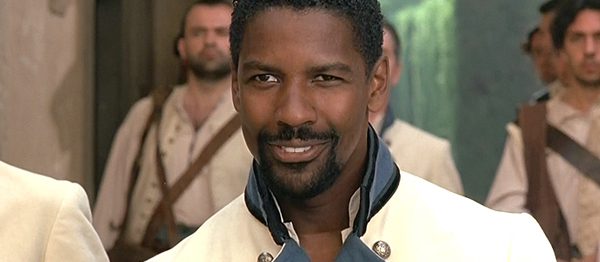
“Outlaw King” (2018) starring Chris Pine, Stephen Dillane, Billy Howle, Aaron Taylor-Johnson, & Florence Pugh

A true David vs. Goliath story of how the 14th C. Scottish “Outlaw King” Robert the Bruce used cunning and bravery to defeat the much larger and better equipped occupying English army. -Synopsis

Are you a fan of the epic movie Braveheart (1995), like me? To recap that story: A commoner, William Wallace (Mel Gibson), led a rebellion against Longshanks, AKA King Edward I of England (Patrick McGoohan), who wished to inherit the crown of Scotland for himself. When he was a boy, William’s father, brother, and many men of his village lost their lives trying to free Scotland. Once his wife, Murron (Catherine McCormack), is killed by a British soldier, William begins his quest to make his country free once and for all. He seeks to make an alliance w/ a young nobleman, Robert the Bruce (Angus Macfadyen), who yearns for the love/respect of his people (which William has). This recent Netflix movie is the (unofficial) sequel to Braveheart.

Robert the Bruce: It is our feudal duty to provide fighting men for our overlord, King Edward.
Villager: You assured us these obligations would be over!
Robert: I’d hoped they were.

I always wanted to know what happened to Robert; he was a complicated character. His father grew up partly in the English court w/ King Edward I; they fought in “the holy lands” as young men. I enjoyed this movie (for the most part); I learned that some of it is NOT historically accurate. Hey, the filmmakers of Braveheart changed a LOT of that story! The look is simply beautiful; some viewers felt that it was TOO “nice-looking” for the subject matter. I don’t agree w/ that; I’m tired of the modern trend of gray-ish/blue-tinted historical pieces! This film was shot on location in Scotland. Director David Mackenzie is known for small budget/indies; he does a good job here. However, I felt some scenes were a BIT too long or too short; I learned that the original version was quite a BIT longer (40 more mins.) As for those of you who’re sensitive to blood/gore, this is NOT the movie for you!

King Edward: It was my hope to grow old and not die on the battlefield, but I see now that the great danger in a death from natural causes is that one may be lying in one’s bed chamber thinking of all the things that have been left undone.

I was surprised to discover that the love story btwn Robert and his young/2nd wife, Elizabeth Burgh (Florence Pugh), was more interesting than the war (action) elements. Yeah, they have an arranged marriage and are separated by more than a decade, BUT slowly fall in love over several mos. However, it is NOT probable that ppl lived chastely for long, as a marriage wasn’t considered “real” until it was consummated. I’m sure the “slow burn” romance was written to appeal to modern audiences. Pine (w/ a NOT so glam haircut) does a fine job; he gets to show his range as an actor. As you may’ve heard, there is one scene where (pun intended) we glimpse the full Pine. Pugh is always FAB, no matter what material she is given! Now y’all understand why Pine and Pugh had such great chemistry in their scenes together in Don’t Worry Darling (2022).

James Douglas: Thinking about revenge? It tears on the soul, but it can also be a weapon.

When it comes to the (baddie) Brits- whoa boy- they’re ALL evil! Did you expect subtlety from a Netflix production? Edward, Prince of Wales (Billy Howle) has some serious “daddy issues” (as we saw in Braveheart); however, here he is violent and desperate to prove himself. King Edward I (Stephane Dillane) is cold/power-hungry; he can still fight at his (advanced) age. One of the allies of Bruce is James Douglas, Lord of Douglas (Aaron Taylor-Johnson), a wild-eyed/bushy bearded Scotsman bent on revenge. When I see this actor’s name, I have to cringe a little. Though James is a tough warrior w/ some cool sword skills, he doesn’t get much characterization. Taylor-Johnson will star in a superhero movie soon (no shocker). If you’re a fan of dramas like Game of Thrones, then you should check it out. I want to learn more re: Scotland’s history.

[1] …everything is crammed together quickly, if they had made a mini series they could have showed more of the story. […]

The action scenes are brilliant in the Outlaw King, and you can tell that most of it was inspired by Braveheart, from the gore, to the realism. However, I feel the movie put style over story and characters. I would watch it just for its visuals alone.

[2] A great story, impressive fight and battle scenes, care for details and a powerful, convincing lesson about fundamental values. In the age of blockbusters, it is a “must see.”

[3] The film does take certain liberties with historical accuracy, namely certain events either merged together or moved around on the timeline – all in aid of dramatic effect. Nonetheless, this does not shadow the realism that does exist, especially in terms of the savagery of warfare and intrigue, as well as the superb set pieces and costume designs that accompany the productions heavy attention to detail.

-Excerpts from IMDb reviews

#Noirvember: “The Turning Point” (1952) starring William Holden, Edmond O’Brien, & Alexis Smith

Today’s most sensational story of racket-busting! -A tagline for the movie

In a Midwestern city, Jerry McKibbon (William Holden), a cynical/no-nonsense newspaperman reconnects w/ a childhood pal, John Conroy (Edmond O’Brien) who was just promoted to special prosecutor. Johnny is engaged to a smart/elegant socialite, Amanda Waycross (Alexis Smith), who thinks he should aim for higher office. As a plain-spoken/idealist, Johnny insists that he has “no political ambitions” and is only concerned re: rooting out corruption. He starts investigating rich/influential businessman, Neil Echelberger (Ed Begley), as well as the police force; Johnny’s father, Matt Conroy (Tom Tully), is also a cop.

The director of this film, Wilhelm Dieterle, joined a traveling theater at age 16 in his native Germany. After 6 yrs, the ambitious/handsome young actor was noticed by producer/director Max Reinhardt (a big proponent of Expressionism in theater). Dieterle acted in nearly 20 movies before he also began directing in 1923. His 1st female lead was a young Marlene Dietrich- wow! In Hollywood, he directed for Warner Bros. from 1931-1934. Dieterle directed The Hunchback of Notre Dame (1939) at RKO starring Charles Laughton (Quasimodo); this was the 1st film for O’Brien and (future star) Maureen O’Hara. (I still need to watch this movie!) The dream-like romance/drama, Portrait of Jennie (1948) stars Joseph Cotten (a frequent collaborator).

Eddie Muller (TCM) called this is “an A-picture inspired by the Senate’s Committee to Investigate Organized Crime.” He felt that Carolyn Jones (in her 1st film) “steals the scene” playing a parody of Bugsy Siegel’s moll- Virginia Hill. I watched this film 2x; I was tired/sleepy on my 1st watch. There is a LOT of fast-paced/clever dialogue, so you have to pay close attention. O’Brien (a reliable character actor) and Holden (up-and-coming in Hollywood) are quite believable as friends. As Muller pointed out, there is steamy romantic chemistry btwn. Holden (one of my mom’s faves) and Smith (“perhaps ahead of her time”). The large supporting cast does a fine job; they add flavor to enrich the story. Check this out; it’s free on YouTube.

[1] Based on a Horace McCoy story, this is a fine, complex noir feature rooted in the events of its time. William Dieterle directs with his usual sure hand, pulling out fine performances.

[2] The corrupt city angle is pretty familiar. Quite a few noir films have such a premise. But, it’s all handled pretty well and I loved the VERY snappy and tough dialog. It’s a fine film for lovers of the genre and worth your time.

[3] The 85-minutes amounts to a surprisingly good blend of a complexly constructed narrative. The personal, romantic, and political all combine here in what’s clearly an effort to tap into Kefauver anti-racketeering hearings of the time. […]

While dual leads, Holden and O’Brien, low-key their parts effectively. Together, the cast makes the material more plausible than it should be.

-Excerpts from IMDb reviews

“Ain’t Them Bodies Saints” (2013) starring Casey Affleck, Rooney Mara, & Ben Foster

The tale of an outlaw who escapes from prison and sets out across the Texas hills to reunite with his wife and the daughter he has never met. –Synopsis

This is the (ambitious) debut of a young American director/writer, David Lowery; it was shot in less than one month on location (Texas; Louisiana). Yes, he cast Ruth Guthrie (Rooney Mara) just before she shot to fame! I think the true “star” of the film is Bradford Young; he’s a Black American (which is a rarity in the field of cinematography). Much of this movie was shot during “Golden Hour” (the hour before sunset). I was reminded of Days of Heaven (1978) from another indie director, Terrence Malick. Lowery knows how to set a tone and create a mood; however, this movie is NOT just about “vibes” (as the Youngbloods say). There is simple (or sometimes no) dialogue; we hear voiceover from the emotional letters sent by Bob Muldoon (Casey Affleck) while he is in jail. Music is an important element here; the songs seem like they are lifted directly from the late 1960s/early 1970s in the South.

I had a gut instinct of who would be perfect for these roles. It was those actors. Luckily for me, they said yes. -David Lowery (director) on casting

I watched this free on streaming (Tubi TV) recently; you should check it out IF looking for something original. I was interested b/c Ben Foster has a supporting role; Patrick Wheeler (Foster- sporting a mustache) is a deputy who draws Ruth out of her shell. They grew up in the same little town and attend church together. It’s obvious that the soft-spoken cop has a crush on Ruth, BUT Patrick approaches her in a gentle/respectful manner. In one touching scene, Patrick plays guitar and sings to Ruth’s young daughter (Sylvie). Foster (now 43 y.o.) may be more known for his unhinged/villain roles in recent yrs, such as 3:10 to Yuma and Hell or High Water. He has done a LOT of theater and indies over the yrs. I’ve been a fan of his since Liberty Heights (1999), a coming-of-age drama centered on a working-class/Jewish family in 1960s Baltimore (dir. by Barry Levinson). Foster (who has Jewish heritage on his father’s side) has an older brother in that movie, Adrien Brody (before he became famous).

David Lowery has constructed a beautiful, atmospheric, little indie film with this 1970s Texas crime melodrama. At every point where Lowery could have added Hollywood flourishes and gimmicks to make the film more commercial, he refuses to do so. […]

…Bradford Young deserves all the praise he has earned for his cinematography.

-Excerpt from IMDb review

Two Movies from Noir City DC (OCT 13th-26th, 2023)

Introduction

Hey y’all, how is your Fall season going? Thanks for reading! As local noir-istas may know, Noir City DC film fest is going on (OCT 13th–26th) at AFI Theatre here in my area (downtown Silver Spring, MD). Eddie Muller (TCM host; founder of the Film Noir Foundation) helped to curate the movies for this event. Muller introduced screenings on the opening weekend (OCT 13th–15th); I saw 2 movies (for the 1st time).

The Big Clock (1948) starring Ray Milland, Maureen O’Sullivan, Charles Laughton, George Macready, Pauline York, & Elsa Lanchester

The Strangest and most Savage Manhunt in History! -A tagline for the film

When a publishing tycoon, Earl Janoth (Charles Laughton), commits murder in a heat of passion, he begins to cover his tracks. Janoth frames an innocent man he doesn’t know, BUT who knew the victim, Rita Johnson (Pauline York). That man, George Stroud (Ray Milland), works for one of Janoth’s magazines and is enlisted to trap the “killer.” George must “help” his boss, elude the police, and find proof of his innocence and Janoth’s guilt!

Rita Johnson: You know, Earl has a passion for obscurity. He won’t even have his biography in ‘Who’s Who.”
George Stroud: Sure. He doesn’t want to let his left hand know whose pocket the right one is picking.

Kenneth Fearing’s 1946 novel and this film adaptation bear many similarities to Samuel Fuller’s novel Dark Page (1944) and its screen adaptation Scandal Sheet (1952). Janoth’s right-hand man/lawyer, Steve Hagen (George MacCready), does his dirty work; they’re close (though- b/c of censorship- we don’t see how much). Neo-noir fans will find similarities btwn this movie and (the 2nd adaptation of The Big Clock) No Way Out (1987) dir. by Roger Donaldson. In that movie, Sen. Brice (Hackman) has a V clever/loyal aide, Scott (Will Patton), who cleans up his messes (and is obviously in love w/ the politician).

Don Klausmeyer: Our organization, the Janoth Publications, is trying to find someone, possibly a collector of your pictures.
Louise Patterson: So have I- for fifteen years.

Milland got the roles that Cary Grant turned down, Muller noted; he’s best known for The Lost Weekend (1945) and Hitchcock’s Dial M for Murder (1954). Like Michael Douglas, he has the air of a man who could be a “regular” guy, yet w/ a “shady” side. According to Muller, Louise Patterson (Elsa Lanchester) is based on (IRL American artist) Alice Neel. Laughton and Lanchester were married at this time, though we later learned that he was gay. Director John Farrow and Maureen O’Sullivan (who plays Georgette Stroud) were also married. Unlike what you’d expect from a “typical” noir, there are some of funny moments; Lanchester made my audience LOL during a few scenes.

Act of Violence (1948) starring Van Heflin, Robert Ryan, Janet Leigh, Mary Astor, & Phyllis Thaxter

The Manhunt No Woman Could Stop! -A tagline for the film

Robert Ryan is like one of my top 2 or 3 actors in noir. -Eddie Muller, in intro to the film

WWII veteran Frank Enley (Van Heflin- age 40) is a family man/builder in SoCal. He has a modest house, a beautiful/young wife, Edith (Janet Leigh- just 21 y.o.) and toddler son; he’s respected as a “war hero” in his small town community. One day, he learns that Joe Parkson (Robert Ryan- age 39) is searching for him; he is out for revenge, b/c of something which occurred while they were POWs. Joe drags his right leg as he walks; he carries a handgun. Ann (Phyllis Thaxter- age 29) is the woman following Joe, in the hopes of stopping him from doing something drastic. When Frank has to leave for a builders convention in LA, Joe is close behind! When Frank happens upon a bar, he meets Pat (Mary Astor- in a daring/unglamorous role at age 40).

Joe [to Edith]: Sure, I was in the hospital, but I didn’t go crazy. I kept myself sane. You know how? I kept saying to myself: Joe, you’re the only one alive that knows what he did. You’re the one that’s got to find him, Joe. I kept remembering. I kept thinking back to that prison camp. One of them lasted to the morning. By then, you couldn’t tell his voice belonged to a man. He sounded like a dog that got hit by a truck and left in the street.

No one wore makeup on this movie. Zinnemann wanted somewhat of a documentary look. -Cheyney Ryan (son of Robert Ryan) on the podcast Robert Bellissimo At The Movies (10/12/22)

Some viewers were surprised to see issues tackled so soon after the end of WWII. At the forefront is the question: How does an individual adjust to “normal” life after surviving war? I was excited to watch this movie; it’s currently NOT on any streaming platform. This is a tense noir that’s unpredictable both in its character development and plotting. It’s V well-paced (at only 82 mins), has great dialogue, and important themes. Director Fred Zinnemann (an Austrian Jew who fled Europe before WWII) went on to work on some big movies: High Noon (1952) and From Here to Eternity (1953). As Muller said, Zinnemann learned that both parents were killed in a Nazi concentration camp. The writers of the screenplay are Robert L. Richards and Collier Young (husband of actress/director Ida Lupino).

Edith: Suppose there is a grain of truth to it. Suppose you did have some kind of trouble with him. I can understand how something like that could happen in a prison camp.
Frank: No. You don’t know what happened.
Edith: What was it Frank? Whatever you did you must have had reasons.
Frank: You can always find reasons. Even the Nazis had reasons.

Ryan (who Scorsese called “one of the greatest actors in American film”) and Lupino later starred together in 2 unique noirs- On Dangerous Ground (1951) and Beware, My Lovely (1952). Ryan and Leigh were co-stars in the Western The Naked Spur (1953). Ryan (nearly 6’4″) towers over almost all the others; his simmering rage adds to the intimidating effect. When he talks w/ Edith, his voice is NOT loud/frightening, BUT holds pain/regret. I wanted to see more of Joe’s relationship w/ Ann; they discussed re: what happened in wartime (unlike Frank and Edith). The two leads are opposites in looks: Ryan is brown-haired w/ small/dark eyes, while Heflin is blonde/wide-eyed. Heflin (almost 6″ tall) gets to stretch himself, showing more depth (and emotion) than is usually required of his “Everyman” roles. Leigh does a fine job w/ her role (opposite these experienced men) at such a young age (early in her career). I really liked the cinematography; light, dark, and shadow are used quite effectively.

[1] One of the most daring elements of the film is its suggestion that Heflin is deserving of forgiveness, because the codes of conduct that govern men in the theater of war are different from those that govern us in our day-to-day lives. That maybe doesn’t seem like a daring thing to say now, but at the time it would have been.

Heflin and Ryan are both terrific; Ryan is one of my favorite film noir actors. But the women in the film make quite an impression If the mens’ world- both at war and at home- is one of violence and revenge, it’s the women who act as the voice of reason and sanity, trying to impose a sense of stability amid the chaos.

[2] This grim look at a couple of de-mobbed soldiers continuing their private war at home rarely get mentioned in lists of essential noirs; maybe, upon release in 1949, it was just a little too close for comfort- hinting a truths the victorious American public were unwilling to acknowledge. If so, the film has yet to be rediscovered- or reappraised. […]

Though the script opts for a strange and bitter “redemptive” ending, the acrid taste of Act of Violence lingers long.

-Excerpts from IMDb reviews

Re-watching “The Searchers” (1956) starring John Wayne, Jeffrey Hunter, Vera Miles, Ward Bond, & Natalie Wood

Introduction

The Searchers was voted both the 13th “Greatest Film” of all time and the “Greatest Western” of all time by Entertainment Weekly. It was among the 1st 25 movies to be selected by the LOC for preservation in The National Film Registry in 1989. In 2007, AFI ranked this as the #12 Greatest Movie of All Time. Steven Spielberg, Martin Scorsese, George Lucas, Jean-Luc Godard, John Milius, and Paul Schrader regard this as one of the films that have most influenced them. David Lean (British filmmaker) noted that the way that the landscape was shot (by director John Ford) influenced scenes in Laurence of Arabia (1962).

While on the desert locale, Ford was stung by a scorpion. Worried about his investment, financial backer C.V. Whitney asked Wayne, “What if we lose him? What are we going to do?” Wayne offered to check in on the “stricken” director. A few minutes later he came out of Ford’s trailer and said to Whitney, “It’s OK. John’s fine, it’s the scorpion that died.” LOL!

Synopsis

In 1868, a hardened/middle-aged Confederate veteran of the Civil War, Ethan Edwards (John Wayne), turns up on the small Texan ranch of his brother (Aaron). Instead of settling down to a life of peace, Ethan chooses to embark on a journey of revenge, after Comanches- lead by Chief Scar (Henry Brandon)- who murdered his family, burned their home, and abducted his 2 nieces: Lucy (a teen) and Debbie (9 y.o.) Ethan is joined by a young man (1/8 Cherokee)- Martin Pawley (Jeffrey Hunter)- an orphan/unofficial member of the Edwards family. The 15 y.o. Debbie is played by Natalie Wood (who was still in HS); she has about 10 mins. of screen time in the final act. Young Debbie is played by Lana, Wood’s sister.

The screenplay was adapted by Frank S. Nugent from Alan Le May’s 1954 novel. It was based on the real Comanche kidnapping of Cynthia Ann Parker, a young white girl in Texas in 1836. Parker, who was given the name “Narua” (“one who was found”) would become mother of a Comanche chief, Quanah Parker. She was recaptured after 25 yrs. and never adjusted to life among whites, starving herself to death after the illness/death of her remaining child. Yikes!

Blood Family vs. Found Family

It is V clear that Ethan does NOT consider Marty (who is part Navajo) to be part of his family; he keeps telling the younger man to stop calling him “uncle.” This MAY seem cold/mean to some viewers; after all, Ethan is the one who found Marty out in the desert (after his parents died). He has been raised for many yrs. in the same household as Aaron’s kids. Marty considers the Edwards kids to be his siblings; he refers to Debbie as “my sister.”

Some astute viewers wondered: Is Ethan Debbie’s birth father? Several times, Ford hinted that Ethan had had an affair w/ Aaron’s wife, and was possibly the father of Debbie. Ethan’s thirst for vengeance then could stem NOT from the murder of his brother, BUT of Martha (the woman he’d loved). On a recent re-watch, I saw the subtle clues! In the 1st act, Ethan and Martha share a few meaningful looks. In an early family dinner, Aaron, Lucy and Ben (both blonde-haired) are on one side of the table; on the opposite side are Martha, and Debbie (who all have dark brown hair). Martha strokes Ethan coat when she brings it to him. When the local preacher/sheriff, Rev. Capt. Clayton (Ward Bond), asks why he hung around Texas so long, there is a moment where it looks like Martha wants to speak (before Ethan answers).

Hate, Racism, & Revenge

The actors playing Comanche Indians are ALL Navajo, w/ the exception of Brandon (a German-born Jew). The language, clothing, and dances seen are Navajo, NOT Comanche. Much of the film’s plot is revealed on a prop that most viewers rarely notice. Just before the deadly raid on the homestead, the tombstone (of Ethan’s mother) that Debbie hides next to reveals the source of his hatred for Comanches. The marker reads: “Here lies Mary Jane Edwards killed by Comanches May 12, 1852. A good wife and mother in her 41st year.” We learn that Marty’s parents were also killed by Comanches, BUT he doesn’t have hate for Native Americans. Marty is NOT nice to the Native woman (“Look”) who follows them, thinking that he has bought her (instead of a blanket). Ethan jokes about Marty’s “wife,” who meets a tragic end (at the hand of a different tribe).

Comedy & Romance

There are some light-hearted scenes, a few which hold up, while others are cringe-y. Marty and Laurie (Vera Miles- before Psycho fame) grew up in this same community and are in love, BUT (like some IRL couples) can’t seem to communicate. When the local men first leave to search for the girls, Marty shakes Laurie’s hand good-bye- LOL! Two yrs, later, when Ethan and Marty (w/ facial hair) come to the Jorgensen home, Laurie throws herself into Marty’s arms and kisses him first. Laurie is more sensible/mature than Marty; he acts petulant/boyish when angry. Since Hunter (captain in the Star Trek failed pilot; Jesus in King of Kings) was in his late 20s while filming, it doesn’t seem fitting. In their 5 yrs, of separation, Marty writes Laurie one letter; he hasn’t had a LOT of education (we assume). Laurie fears becoming an “old maid;” there were NOT many options for husbands in the Old West.

Laurie’s father, Mr. Jorgensen (John Qualen- veteran character actor) talks w/ a thick Norwegian-like accent. Laurie’s replacement beau, Charlie McCorry (Ken Curtis), speaks in drawling/slow manner which is annoying! Curtis objected to the accent, BUT Ford argued it’d get him noticed in a thankless role. In the dance scene before the (failed) wedding, the males are some of the most famous stunt men of the era: Chuck Hayward, Terry Wilson, John Hudkins, Fred Kennedy, Frank McGrath, and Chuck Roberson. After this scene, the crew nicknamed them “Ford’s chorus girls” – LOL! The role of the eager/young cavalry officer, Lt. Greenhill, is played by Patrick (Wayne’s son).

Ethan Edwards: Hero or Anti-Hero?

There is TOO much anger, bitterness, and hate in Ethan for him to be close to others. Even after yrs. on the road together, he and Marty don’t become (emotionally) close. He makes Marty his heir when he thinks that he’ll die, BUT Marty refuses. Until his sudden turn in the 3rd act, Ethan considers Debbie to be ruined/savage; she won’t be able to live w/ whites. We are relieved when he decides NOT to kill Debbie! Godard commented that no matter how much he despised the actor’s right-wing political beliefs, every time he saw Wayne taking up Debbie in his arms at the end, he forgave him for everything. What did you think of the ending shot? Is the door closing on Ethan b/c his time (and way of thinking) is coming to an end?

This was one of Wayne’s 3 personal faves, along w/ She Wore a Yellow Ribbon (1949) and The Quiet Man (1952). These films were all directed by Ford. Unlike his usual manner, Wayne decided to stayed in character between takes. When a Navajo child became ill w/ pneumonia, Wayne had his pilot take the little girl to a hospital in his private plane. For this good deed, the Navajos named him “The Man With The Big Eagle.”

[1] An integral part of the combined elements that makes THE SEARCHERS great is Max Steiner’s outstanding score. It is the picture’s driving force – its backbone. Steiner’s music propels the film forward, unifies the narrative and gives greater density to its key scenes. In fact without his music much of the picture’s impact would be considerably diminished.

[2] Ethan Edwards is probably the most racist man Wayne ever portrayed on the screen, yet we feel sympathy for him at the same time. It’s been a hard and bitter life on the frontier for him. Just as it’s been for the Indians as well. Chief Scar, played by Henry Brandon, is Wayne’s opposite number and he makes clear what he thinks of whites. Two of his sons were killed and he’s going to take many white scalps in reprisal.

[3] With all of Ford’s unique ‘touches’ clearly in evidence (the doorways ‘framing’ the film’s opening and conclusion, with a cave opening serving the same function at the film’s climax; the extensive use of Monument Valley; and the nearly lurid palette of color highlighting key moments) and his reliance on his ‘stock’ company of players (Wayne, Ward Bond, John Qualen, Olive Carey, Harry Carey, Jr, Hank Worden, and Ken Curtis), the film marks the emergence of the ‘mature’ Ford, no longer deifying the innocence of the era, but dealing with it in human terms, where ‘white men’ were as capable of savagery as Indians, frequently with less justification.

-Excerpts from IMDb reviews