JxJ Film Festival: Seder-Masochism

Loosely following a traditional Passover Seder, events from the Book of Exodus are retold by Moses, Aharon, the Angel of Death, Jesus, and the director’s own father. But there’s another side to this story: that of the Goddesses, humanity’s earliest deities. “Seder-Masochism” resurrects the Great Mother in a tragic struggle against the forces of patriarchy. -IMDB synopsis

…filled with tap-dancing Moses, the ten plagues, the visage of God (speaking in the voice of her late father), and swaying, cartwheeling, singing and spiraling Goddesses. Set to popular blues, rock, soul and spirituals, this film is an emotional, searing indictment of violence… -Excerpt from IMDB review

Wow, the world (esp. of creative ppl, or those who follow their work) is SO small! I met this filmmaker, Nina Paley, in NYC at a small Meetup event for the (now archived) blog, Sepia Mutiny. I followed several of that blog’s contributors; she was friends w/ members of this group (consisting of South Asians from around the US and world). Paley’s first animated film was Sita Sings the Blues; it focused partly on her relationship w/ her former husband (who transferred to India for his job) and also on the trials faced by the goddess Sita in the Hindu religion. This film is more closer to home for Paley (a secular Jewish woman); it’s about the Seder meal story, as well as her relationship w/ her (recently deceased) father.

The animation here is much more sophisticated; I’m not sure how to describe this type of graphic art. In the dialogues, there are humorous moments, along w/ very touching ones (giving us a glimpse into the dynamics of the filmmaker’s family). Paley’s father plays the Voice of God; he had an ambivalent relationship to his religion, though was proud to be of Jewish heritage. This film also has a big musical component; I think 3 of the songs she chose were new to me. These songs include spirituals, which are most often attributed to African-Americans. Since Paley believes in “free use,” you can download and view it yourself! Follow this link: https://sedermasochism.com/

JxJ Film Festival: Chewdaism: A Taste of Jewish Montreal

This is a funny, charming, and quite educational documentary created by (and starring) two pals since high school of Ashkenazi heritage, Eli Batalion and Jamie Elman. They are (obviously) foodies who grew up in the ‘burbs of Montreal, Quebec, Canada. Eli and Jamie are both self-described “liberal Jews” and part of a comedy troupe (YidLife Crisis); they perform in Yiddish. Some of you (theater fans) may know re: the Yiddish-language theaters of NYC; these also existed in post-WWII Montreal. I noticed that this film drew in more of a younger audience (20s-30s) than some of the other films in the festival.

Eli and Jamie (who have great chemistry and joke around often) are joined on their journey by a young historian (Zev Moses) from the Museum of Jewish Culture. They start by going to a family-owned bagel restaurant (Fairmount) that has been around for 100 yrs. It’s in a neighborhood that was the center of Jewish life in the 1910s-1960s. The Russian Jews arrived first (pre-WWII); they got the sense that “something bad could happen” if they didn’t emigrate. The current owner explains that the first bagels were shaped like horseshoes, then they became a full circle (representing the circle of life). Bagels were all the same (made w/ sesame seed on top), until one day, a customer recommended poppy seeds.

For a “light lunch,” they head to a small lunch restaurant (Wolensky’s) that still looks like it did in the 1940s. It’s a family business that serves simple sandwiches w/ bologna and salami. Many factories (w/ many newly arrived immigrant workers) were situated in this area, so places to grab a quick lunch were in demand. Next, they head to another restaurant for huge corned beef sandwiches! They talk to historians along the way, including non-Jews and a young Hasidic woman. In Montreal, Jews historically faced many hardships, including not speaking English (or French), being discriminated against (even in college admissions and while working as doctors), and being excluded from certain neighborhoods and professions.

For dinner (and dessert), Eli and Jamie head to the ‘burbs to have dinner w/ a large family of Sephardic Jews and some of their close friends. We get to know a bit about the Sephardic heritage; these individuals have parents who came from Morocco and Iraq. In the ’60s and ’70s, Sephardic and Askenazi Jews weren’t always on friendly terms; the earlier arrivals looked down on the newer ones at times. The food at this gathering looks amazing! There is a dish w/ stewed tomatoes (along w/ several other stews), couscous w/ different roasted vegetables, and desserts (some of which are also eaten by Muslims during Ramadan). Check out this site to learn more re: this film: https://www.yidlifecrisis.com/chewdaism-watch

Chewdaism will continue to play at film festivals, and the filmmakers have partnered with the tourist board Tourisme Montréal, which will use it to lure visitors to the city. They’re hoping for a TV release, possibly on PBS, down the line. Jewish Journal (April 24, 2019)

More Movie Trailers

The Aftermath (in theaters this FRI, March 15th) – Starring Keira Knightley, Alexander Skarsgard, & Jason Clarke

Set in postwar Germany in 1946, Rachael Morgan (Keira Knightley) arrives in the ruins of Hamburg in the bitter winter, to be reunited with her husband Lewis (Jason Clarke), a British colonel charged with rebuilding the shattered city. But as they set off for their new home, Rachael is stunned to discover that Lewis has made an unexpected decision: They will be sharing the grand house with its previous owners, a German widower (Alexander Skarsgård) and his troubled daughter. In this charged atmosphere, enmity and grief give way to passion and betrayal. -Synopsis by Fox Searchlight Pictures

Long Shot (in theaters May 3rd) – Starring Charlize Theron, Seth Rogen, Alexander Skarsgard, Andy Serkis, Bob Odenkirk, Randall Park, & June Diane Raphael

Fred Flarsky (Seth Rogen) is a gifted and free-spirited journalist with an affinity for trouble. Charlotte Field (Charlize Theron) is one of the most influential women in the world. Smart, sophisticated, and accomplished, she’s a powerhouse diplomat with a talent for…well, mostly everything. The two have nothing in common, except that she was his babysitter and childhood crush. When Fred unexpectedly reconnects with Charlotte, he charms her with his self-deprecating humor and his memories of her youthful idealism. As she prepares to make a run for the Presidency, Charlotte impulsively hires Fred as her speechwriter, much to the dismay of her trusted advisors. A fish out of water on Charlotte’s elite team, Fred is unprepared for her glamourous lifestyle in the limelight. However, sparks fly as their unmistakable chemistry leads to a round-the-world romance and a series of unexpected and dangerous incidents.

The Sun is Also a Star (in theaters May 17th) – Starring Yara Shahidi & Charles Melton

College-bound romantic Daniel Bae and Jamaica-born pragmatist Natasha Kingsley meet—and fall for each other—over one magical day amidst the fervor and flurry of New York City. Sparks immediately fly between these two strangers, who might never have met had fate not given them a little push. But will fate be enough to take these teens from star-crossed to lucky in love? With just hours left on the clock in what looks to be her last day in the U.S., Natasha is fighting against her family’s deportation as fiercely as she’s fighting her budding feelings for Daniel, who is working just as hard to convince her they are destined to be together.

Aladdin (in theaters May 24th) – Starring Will Smith, Mena Massoud, Naomi Scott, Marwan Kenzari, & Nasim Pedrad. Directed by Guy Ritchie.

Actor Will Smith released the final full movie trailer (after mos. of speculation & waiting) today on his YouTube channel!

Quick Reviews of Recent Views (FEB 2019)

A Star is Born (2018)

There is something missing in this movie, BUT I don’t know what! It could’ve been 15-20 mins shorter. It’s (mostly) predictable, BUT has some nice dialogue and scenes; I esp. liked the first 3rd of it. Lady Gaga did a good job in her movie debut; she has acted before on TV (FYI). Bradley Cooper’s tan makes him look a BIT older and worn out, BUT he’s still got that engaging smile and blue eyes. I was impressed by how well he played the guitar and sang (much better than debacles made by Gerard Butler in Phantom and Russell Crow in Les Mis). I learned that he had help from Willie Nelson’s son (a back-up guitarist in the film). The meet cute scene is quite well done; Jack is impressed w/ Ally’s voice. The parking lot scene was also good; they open up to each other as friends first. And yes, Gaga and Cooper have an easy chemistry (as many others have pointed out)! It’s easy to feel empathy for Ally as she goes from struggling unknown singer/songwriter to Grammy-winning pop star. I loved all the scenes w/ Sam Elliott; I wanted to see a BIT more of him (though the Oscar nom was well-deserved). Unlike the older versions (I’ve seen them all, aside from the Streisand/Kristofferson film), the man gets a FEW more scenes and is more sympathetic. Cooper does a good job for a newbie director.

Cold War (2018)

I don’t understand the love for this Polish film (which got an Oscar nom); it was playing recently at AFI (across the street). The B&W photography is very nice to look at, BUT Roma does it better. The main song which is woven through the story is lovely, and a BIT haunting. There is NOT enough characterization of the leads (an older male composer and a younger female singer). Sorry, that’s a deal-breaker for me (as my regular readers can guess)! Why are these people even in love!? The 88 mins. seems much longer- a bad sign also.

Everybody Knows (2018)

This is a Spanish language film (released earlier this month in the US) which stars Penelope Cruz and Javier Bardem, BUT was written/directed by Iranian Asghar Farhadi (who won an Oscar previously). Some of you may have seen A Separation or The Salesman, two of his critically-acclaimed films; this movie was actually shot before The Salesman. The scenery is gorgeous, the tone shifts (from joyous to tense), and each supporting character gets their own moment to shine. Cruz and Bardem are married; they have great chemistry together! Even w/ no makeup and mussed up clothes, they look great, and project charisma and star power (BUT in a toned down way). The acting is in the eyes mainly. Even w/ the mystery at the center, you’ll find things common from Farhadi’s other works: extended families, long-held secrets, money pressures, and class issues. My two gal pals and I really liked it!


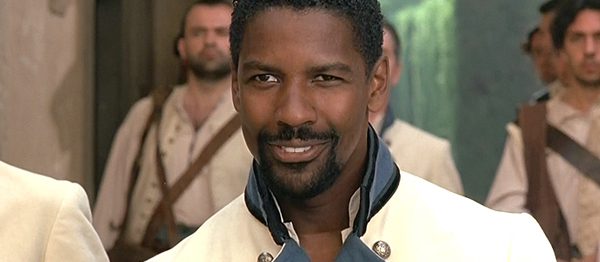
Glory (1989) starring Matthew Broderick, Denzel Washington, Cary Elwes, Morgan Freeman, & Andre Braugher

I re-watched this Civil War drama on TCM recently; it’s one of my fave (and most-watched) films! The music is used very well; each scene is enhanced by it, incl. the battles. It was originally released in the Summer of 1989; Fathom Events will be having its 30th anniversary screening later this year in select cities/theaters. Kevin Jarre (a white man) was inspired to write the screenplay when he saw monument to Shaw on Boston Common (shown in the closing credits). Jarre’s inspiration came from two books: (1) One Gallant Rush: Robert Gould Shaw and His Brave Black Regiment (1989) by Peter Burchard, a novel that itself was based on letters written by Shaw and (2) Lay This Laurel (1973), a photographic tribute to the Civil War sculpture of Augustus Saint-Gaudens with text by American writer/arts patron Lincoln Kirstein. Jarre has a brief (yet notable) cameo as the white Union soldier who shouts “Give ’em hell, 54!”

Edward Zwick was initially apprehensive about how his African-American cast would feel about this telling of a crucial part of their history by a young Jewish director. To his delight and relief, he found his cast to be very affable and good-humored towards him, some of them even grateful that he was brave enough to tackle such an important subject. Zwick and Denzel Washington (here in his breakout role) would continue to work together on other (successful) movies. The director later commented (during a promo tour for Courage Under Fire) that “Denzel is always doing something interesting. I don’t want to take the camera off him.”

Several of the extracts from Shaw’s supposed letters to his mother (in voice-over narration) were taken from Army Life in a Black Regiment, an 1870 book by Thomas Wentworth Higginson (who commanded the 1st South Carolina Regiment). The historical figures in this movie are: 1) Francis George Shaw, Sarah Blake Sturgis Shaw, and Ellen Shaw (direct relatives of Robert Gould Shaw), 2) John Albion Andrew, the governor of Massachusetts, 3) Charles Garrison Harker and George Crockett Strong, Union generals, 4) Charlotte Forten Grimké, an antislavery activist, 5) James Montgomery, Union colonel, and (6) Frederick Douglas, former slave turned abolitionist, speaker/activist.

Any negro taken in arms against the Confederacy will immediately be returned to a state of slavery. Any negro taken in Federal uniform will be summarily put to death. Any white officer taken in command of negro troops shall be deemed as inciting servile insurrection and shall likewise be put to death.” Full discharges will be granted in the morning to all those who apply. Dismissed. -Shaw reads a proclamation sent from the Confederate Congress

Zwick explained that, for the flogging scene of Trip (Washington in his Best Supporting Actor Oscar winning role), the actor was lashed at full contact, with a special whip, that would not cut his back, but still stung. For the final take, Zwick hesitated calling “Cut!” to signal the flogging to stop, and the result was Washington’s spontaneous tear down his cheek. The deep scars on Trip’s back were Washington’s idea; they showed how Trip was already a survivor of many lashings (being a runaway slave w/ a willful nature).

That Col. Shaw- he a hard man! -Jupiter Sharts comments, tired after a tough day of drills

He’s a boy. A scared white boy. -Trip quickly retorts with disgust

At first, the regiment is only given manual labor; this was a fact w/ the “colored” soldiers. They were also given less pay; in real life, Shaw was the one who protested this matter. As my A.P. American Government teacher commented, Shaw used his class privilege (incl. his sense of entitlement and rank) to get what is needed for his men (shoes, uniforms, and rifles); we see this in the scene in the Quartermaster’s office. Shaw is surprised at how quickly his men learn (even under their tough, racist Irish drill sergeant). Broderick’s small, youthful face and micro-expressions (when Shaw was uncertain, nervous, or looked in over his head) were played so well. Andre Braugher (currently on the comedy series Brooklyn Nine-Nine) has perhaps the most interesting role; Thomas is an educated, free man who has never before had to fight for his survival. Trip takes an instant disliking to Thomas; they come from such different backgrounds, though both are young black men yearning to prove their worth. Thomas was partly based on a successful freedman who owned a shop in Boston.

I ain’t fightin’ this war for you, sir. -Trip quietly explains to Shaw (after being praised for his skill in battle)

Unfortunately, most of Elwes’ scenes were cut from the film. He and Broderick did not get along, according to Zwick; I think they also had differing acting styles and personalities. Many scenes/subplots were cut from both the theatrical version and DVD; these include Shaw and Forbes attending school together and fencing one another. Nearly all of the scenes of veteran actress Jane Alexander (Shaw’s mother) were cut. Freeman (who brings gravitas to this film, being older and more experienced than his co-stars) did his own stunts, as Zwick asked of all his actors. He used his own experience (Air Force) to inform how relationships would be formed in the unit.

At the end of the film, Shaw is thrown into the mass grave with the black soldiers. Normally, officers were given formal burials, but the Confederacy had such contempt for the black regiment, that the officers were thrown in with the regular soldiers (w/ no honors). After the war, Shaw’s parents visited the site where their son had died. When asked if they wished to have his body exhumed, so they could take it home to Boston for burial, they declined. “We would not have his body removed from where it lies, surrounded by his brave and devoted soldiers,” explained his father, Francis George Shaw. “We can imagine no holier place than that in which he lies, among his brave and devoted followers, nor wish for him better company. What a bodyguard he has!”

Related Links

Article by historian (a consultant on the film):

Fathom Events: Glory