12 Years a Slave (NOW PLAYING)

I will not fall into despair!  I will keep myself hardy until freedom is opportune!  -Solomon Northrup

This film is being called a Pan-African film, since the director (Steve McQueen) is a black Briton, the star (Chiwetel Ejiofor) is Nigerian-British, and the female lead (Lupita Nyong’o) is Kenyan.  As we have seen, outsiders are  often the best storytellers of the American experience, of which slavery is a (large) part. 

Solomon (Chiwetel Ejiofor) and fellow slaves in sugarcane field

I went to see this film during its second week of release; the theater was packed.  Yes, it was difficult (at times) to handle. One of my friends, a lawyer with a background in civil rights, commented that “it should be taught in schools.”  Based on a true story (memoir), 12 Years a Slave basically blows every other film I’ve seen about slavery out of the water; nothing even comes close!  

Alex Haley’s Roots (starring a young LeVar Burton) is a fine TV miniseries, but will look outdated to younger viewers.  Even one of my favorite films, Glory, is told mainly through the eyes of its white hero, Col. Robert Gould Shaw (Matthew Broderick), not the enlisted men of the 54th Massachusetts Colored Regiment (including Andre Braugher, Morgan Freeman, and Oscar-winning Supporting Actor Denzel Washington).  Queen (starring a young Halle Berry) is another of Haley’s stories turned mini-series; many will find the (inherently unequal) romance between a white boy and one of his family’s slave girls problematic.  Amistad is a powerful film, but it’s focus is mainly on a group of white abolitionist men; Ejiofor has a small role as an interpreter in that film. 

SPOILERS: Don’t read further if you have not yet seen, or don’t want to know, details from this film.
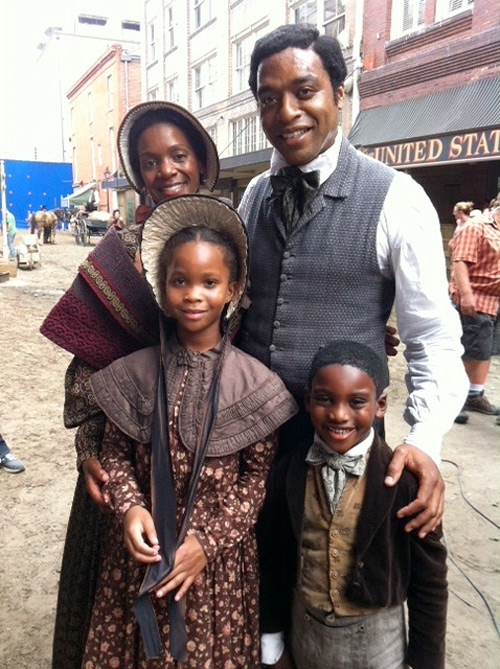
Solomon with his family

This film is told in flashbacks through the eyes of a free man and talented violinist, Solomon Northrup (Ejiofor, finally in a star-making role).  He lives a comfortable life with his loving wife (a well-respected cook) and two adoring children in upstate NY at the start of the tale.  He has a fondness for nice clothes.  One day, two white men from Washington, DC, approach Solomon about making some (fast) money with their traveling circus show.  Solomon goes to DC with them and works for 2 weeks, before they drug him (during a lavish dinner) and sell him into slavery.  Solomon wakes up in a dark cell, chained up like an animal, but there’s nothing he can do (being in Virginia).  He keeps crying out that he’s a “free man,” but no one will listen.    

Solomon gets to know the others being held with him, including a well-spoken woman, Eliza (Adepero Oduye), who was once the favored slave of her owner, and has a daughter by him.  She also has a adolescent son, who Solomon comforted when he was separated from his family.  After this master died, his daughter had them all sold. Solomon, Eliza, and a dozen others are taken further South (via large riverboat).  

One young man, Clemens (Chris Chalk from The Newsroom), explains that he shouldn’t be sold further South, since he was taken from his master.  He talks tough about escaping by attacking the sailors, though they are greatly outnumbered.  Another man (Michael K. Williams from The Wire) is stabbed to death before he can make a move.  (I read that fans of The Wire were especially shocked to see such a strong man killed so easily/quickly.)  A beautiful young woman grabs onto Solomon’s hand, not in passion, but with loneliness.  We wonder how long ago was she loved by anyone

Solomon and Clemens (Chris Chalk) witness brutality on the boat

Paul Giamatti plays a callous/brutal slave trader, ironically named Mr. Freeman, and does an excellent job.  Clemens is “rescued” by his rightful master, to whom he clings like a thankful little boy.  Why?  Because it’s the master he knows, and has treated him decently.  Freeman separates Eliza from her son without flinching, since he can get a great price for a healthy, adolescent boy.  

Solomon and fellow enslaved meet slave trader Mr. Freeman (Paul Giamatti)

When a kindly slaveowner, Mr. Ford (Benedict Cumberbatch), tries to buy Eliza and her daughter together, Freeman ups the price of the little girl.  He can get a fine price for her in Louisiana, since she’s half-white and “will grow to beauty.”  (This is what Eliza feared all along- shudder!) 

Eliza (Adepero Oduye) gives into despair

He [Mr. Ford] has a debt problem and can’t manage his business- he sells human beings in order to make himself solvent.  -Benedict Cumberbatch

Mr. Ford, who runs a small mill, buys Solomon and Eliza.  When they get to his home, Ford comments to his wife that the separation “couldn’t be helped.”  Mrs. Ford lightly tells Eliza: “Your children will soon be forgotten.”  (This made the audience gasp with shock.)  Solomon tries to calm Eliza, but she stays despondent.  Mrs. Ford grows “weary” of Eliza’s crying and has her sold away. 

It doesn’t take long for Solomon’s intelligence to show, impressing Master Ford, but garnering the wrath of his insecure overseer, Tibeats (Paul Dano), who has a keen dislike of the African race.  (That song he sings is horrid!)  When Solomon’s plan works, Mr. Ford presents him with a violin.
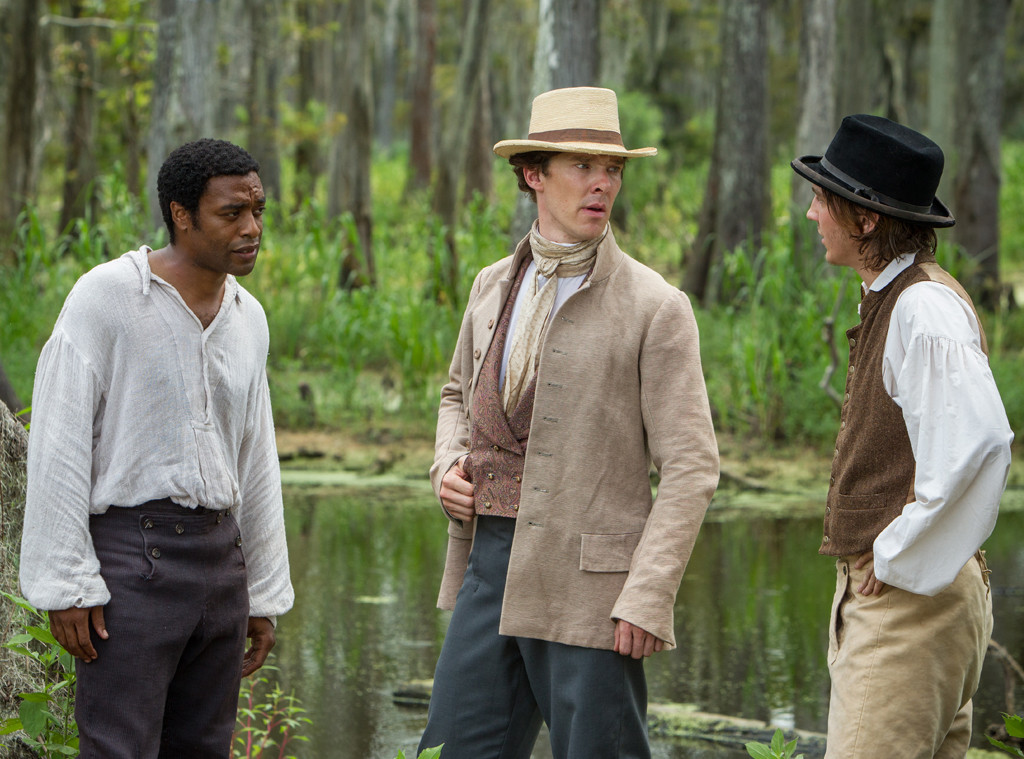
Solomon impresses Mr. Ford (Benedict Cumberbatch), not overseer Tibeats (Paul Dano)
Solomon impresses his owner Mr. Ford (Benedict Cumberbatch), not overseer Tibeats (Paul Dano)

Who can forget the long, yet highly effective, hanging scene?  Wow!  McQueen keeps the camera focused (for a long time) on Solomon, struggling to stay alive, while the other slaves go about their daily routine.  Thus, the audience can’t look away!  Master Ford takes Solomon into the house one night to protect him.  After barely escaping death, Solomon lies in the foyer, shaking and speechless.  Ford fetches his rifle, knowing that Tibeats and his brothers seek to kill Solomon.  He tells Solomon that he’ll “transfer the debt” to Mr. Epps.  I was a bit surprised to see Cumberbatch (the quintessential posh Brit) in this film, but he did a fine job, as usual.       
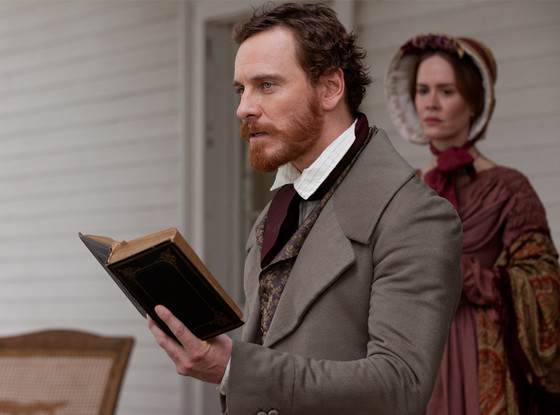
Edwin Epps (Michael Fassbender) reads The Bible while his wife (Sarah Paulson) looks on

How brutal is Mr. Epps?  Well, during a recent Daily Show interview, Irish actor Michael Fassbender explained that the saying “don’t be such an Epps” still exists in a part of Louisiana.  Master Epps owns a cotton plantation, twists The Bible to his liking, and is liberal with the whip.  From the start, Epps takes a dislike to Solomon (who is smarter than his owner, but not so good at picking cotton).  A petite, soft-spoken slave woman, Patsey (Nyong’o), is the best picker in the field.  “God give her to me,” Epps comments, after he praises her work.  (Fassbender is quite creepy in this scene!) 

Mistress Epps scratches the face of Patsey (Lupita Nyong'o)
Mistress Epps scratches the face of Patsey (Lupita Nyong’o)

It turns out that alcohol is not Epps’ only weakness- he wants Patsey to yield to his “love” (though he doesn’t know the meaning of the word).  When Epps comes to Patsey late at night, she stays as still as she can and won’t look him in the eyes.  Mistress Epps (Sarah Paulson from Studio 60 on the Sunset Strip) focuses all her rage at Patsey (throwing a heavy vase; scratching her cheek) in front of the other slaves.  (I’ve never seen Paulson in such a meaty film; she’s very scary!)  
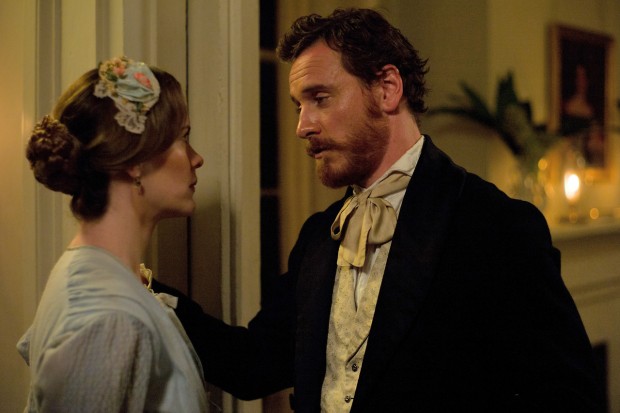
Epps puts his wife in her place

We get to see Patsey singing and making straw dolls in the fields.  And we see the desperation in Epps’ eyes when he’s near Patsey.  Why is his wife so one-note?  What’s her deal?  An African-American journalist shares her analysis:     

A white woman’s rage: privileged with no position, positioned with no power, powerful with no promise of independence, fidelity or safety.  The white woman could not properly direct her rage at her husband, she could not rail against white male supremacy. She too was in hell, and Black enslaved women were the only ones in the chambers below her.  -Michaela Angela Davis

Patsey seeks respite with friendly Mistress Shaw (Alfre Woodard)

[Slave narratives are…] vital for us to have our feet on balanced ground in the future. I think it’s a chunk of our history that we are in denial about and that we don’t accept. And it is the root, I would say, of our contemporary domestic problems.  -Alfre Woodard

On her off day, Patsey spends time with Mistress Shaw (Alfre Woodard, one of my favorite actresses), the wife of a neighboring farmer, who used to be a slave herself.  Master Shaw fell in love with her, she encouraged his affections, and now lives in ease and comfort.  “In time, the good Lord will handle ’em all,” she tells Solomon, when she sees his downtrodden face.  Patsey and Solomon have some tea with her, a brief respite from their lives. 
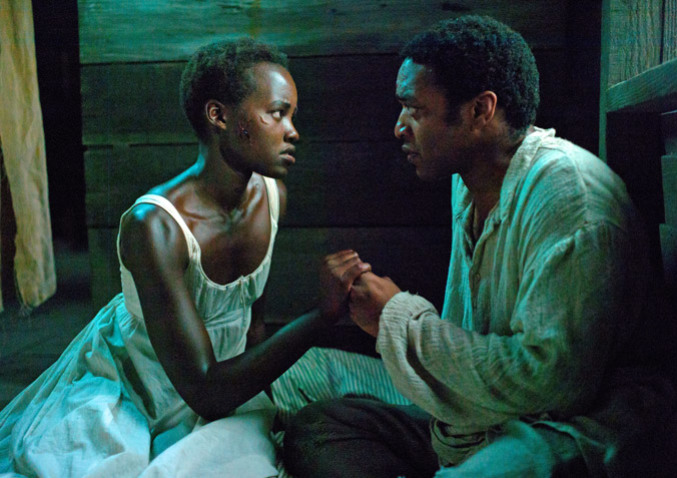
Patsey begs Solomon to end her misery

One of the saddest scenes in the film is when Patsey wakes Solomon up late at night, and begs him to drown her in the nearby river.  She doesn’t have the courage to kill herself, and knows it’s not the Christian way.  Solomon is horrified by her request- he can’t do that! 
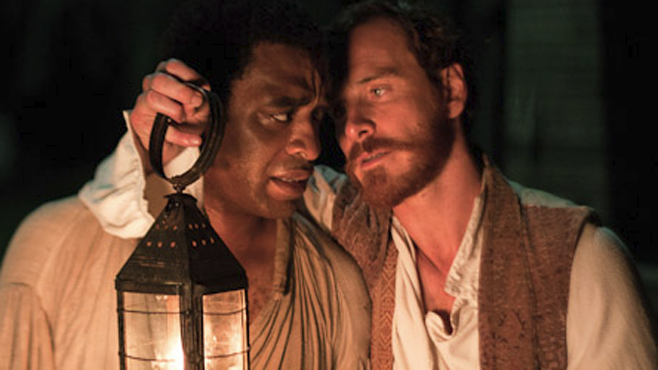
Solomon convinces Epps to trust him over Armsby

A white indentured man, Armsby (Garrett Dillahunt from Raising Hope), comes to work on the farm.  When he brings in a small load of cotton, Epps gives him a few encouraging words, but whips a few of the slaves (who were also bad pickers that day).  After Solomon is whipped, Armsby tends to his wounds and tells his life story.  Solomon asks him to mail a letter, but he’s not to be trusted!  When Epps confronts Solomon, he has to think fast and convince his master that Armsby (the newcomer) is the liar.  Notice how Epps often leans on his slaves, as if they’re furniture?  But in this scene (pictured above), I thought the director was also trying to show the terrible embrace of slavery in which these two men were bound.    
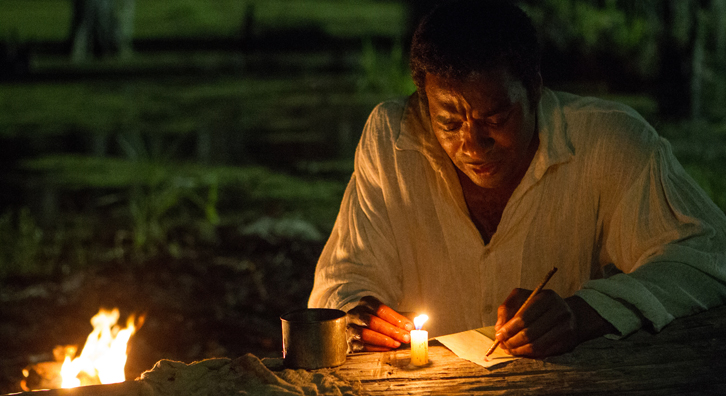
Solomon uses blackberry juice to secretly write a letter

After a long internal struggle, Solomon reconciles himself to his position as a slave (like all the others in the fields).  He joins fellow slaves in song in one pivotal scene. 

Bass (Brad Pitt) is against slavery

When a traveling builder from Canada, Mr. Bass (Brad Pitt, also a producer), comes to work on a project, Solomon finds a sensible/sympathetic ear.  This self-made man is not scared to tell Epps that he feels slavery is inherently wrong.  Finally, Solomon reveals his story and gives him a letter.  Notice how Bass is sitting on a beam above Solomon?  (Some critics found Pitt’s presence distracting, but I saw no problem.)
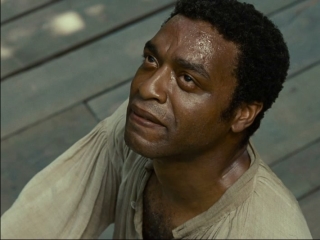
Solomon looks up at Bass

There is no Hollywood ending here; an elderly white store owner travels down South to vouch for Solomon.  Epps rages at him, but Solomon quietly follows his old acquaintance to a carriage.  Patsey watches as Solomon rides away; we know she’ll probably never escape her horrible life.  When Solomon returned to his family, I felt the tears coming.  There was a big “whoa” from the audience.  His daughter is married with a baby son.  Solomon’s son is taller than him now.  Solomon is overcome with emotion, realizing how much he missed (it was stolen from him).  He bows his head, cries, and says “forgive me for my lateness.”  His wife quietly replies, “There is nothing to forgive.”  He survived- that was his heroic act.          

Director Steve McQueen and his cast

Ejiofor (if you don’t know his work already) will steal your heart in this movie.  His large, expressive eyes say it all, even when Solomon has to swallow his pride (being a free man) and stay silent.  When he tries to run away, but runs smack into a lynching in progress, it’s just so heartbreaking! There is nothing showy or overdone- he simply inhabits the character.  At one (silent) point, he looks directly into the camera, as if to say “Yes, this really happened.”  Fassbender, who has worked with McQueen on several other films, creates a crazed, obsessed, alcoholic- a very compelling villain. 

The cinematography is also very effective- we see the brutality of slave life in the (often) gorgeous environment.  The director takes some risks, but they pay off.  Nudity is used, not to titillate, but to point out the powerlessness of enslaved black bodies.  Long takes show us the seriousness of the topic- no romanticizing here.  The bloody whipping scene involving Epps, Patsey, and Solomon will stay in your mind for a long time.    

Remember the Night (1940)

Introduction

I think Christmas is almost a “device” in this movie. It isn’t a “Christmas” movie, although Christmas certainly helps.  Rethink it as MacMurry taking Stanwyck home for the Fourth of July parade and picnic. I think it almost works, although there is nothing like the atmosphere that Christmas conjures up.

-IMDB comment

Stanwyck and MacMurray in Double Indemnity

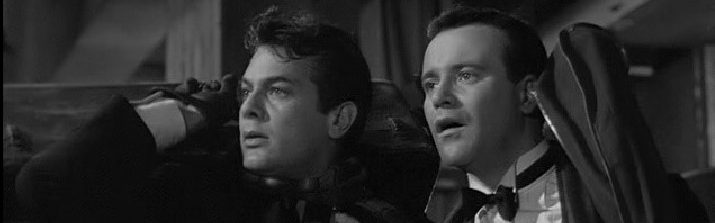
I saw this secular Christmas-themed film (at AFI Silver) with my parents, who are also fans of Double Indemnity, which also stars Barbara Stanwyck and Fred MacMurray.  This film was made 4 years prior to that film noir.  Once again, the theme is redemption- a thief who realizes what she’d been missing in her childhood, falls in love (with a man and his family), then faces the consequences of her crime.  (Don’t you think Benedict Cumberbatch resembles a young MacMurray?  )

Remember the Night (1940)

Lee Leander: Now there’s nothing as dangerous as a square shooter. If all men were like you, there wouldn’t be any nice girls left.

On the night before Christmas Eve, up-and-coming ADA John Sargeant (MacMurray), decides to bail out Lee Leander (Stanwyck), the thief (with tree strikes) whose case was postponed for the holidays.  The bail bondsman takes her over to John’s apartment, much to his confusion/shock.  John, being a decent guy (see above quote), decides to take Lee out for dinner.  They run into the judge who presided over their trial- oops! 

John wonders how a normal person like her can turn to crime, and she tells him her way of thinking.  They get to know each other a bit- turns out their both from small towns in Indiana.  Every Christmas, John drives home for the holidays, and he offers to take Lea along with him.  Lee’s tough gal façade fades, and she becomes very emotional.   She doesn’t even know if her mother is alive, since she’s “never” been back home after coming to NYC.      

Lee and John in a cow field

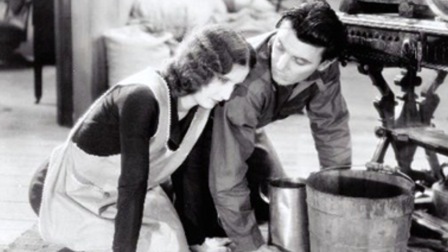
There are some funny/wacky scenes in small-town Pennsylvania, after they (unknowingly) trespass on a very angry/gun-toting farmer’s land.  They end up at the justice of the peace’s office, but John is not very adept at lying, but Lee is an old hand.  Lee creates a little fire in a small wastebasket, enabling them to get away.  John is shocked, yet also impressed, by her quick thinking.  

When they reach Lee’s hometown, her mother (remarried) wants nothing to do with her.  It’s a dark, well-done scene- not what you’d see in the cloying/unrealistic Hallmark holiday movies of recent times.  While Lee tries to explain her side to her mother, John is quietly/calmly supportive. 

The scene at Lee’s childhood home when John takes her back home to her mother’s house is such a chilling scene…  Listening to her mother’s “good riddance” speech and Lee’s comments in the yard afterward… it’s just such a creepy, lonesome moment, filled with utter rejection…

But when he asks Lea’s mother her name and she responds “The name doesn’t concern you.”  His delivery of “It certainly does not” gives me the chills.  It just says so much of his character.

-IMDB comments

With John's loving family
With John’s loving family

There’s a moment when John is playing the piano and his family is gathered around when Lee looks around her in wonder.  Barbara Stanwyck did a brilliantly subtle job of expressing the thought “What would it have been like to have grown up in a home like this?” in that brief moment.

-IMDB comment

Jack’s family includes his level-headed mother Mrs. Sargeant (played by Beulah Bondi, Ma Bailey from It’s a Wonderful Life), doting Aunt Emma, and (comic relief) farm boy, Willy.  They rush about getting everything perfect for John’s arrival.  (John explained earlier that he grew up quite humble, but in the past few years, has been able to provide well for his family.)  Lee is happily surprised by their lovely farmhouse and friendly demeanor.  They gather about the piano (John plays some) and sing songs. 

Being the honest man, John admits to his mother that Lee is a thief with no family to go to, not his “special lady.”  His mother is still sympathetic toward Lee.  The next morning, they even give Lee a few presents!

John and Lee embrace

Over the next few days, Aunt Emma sees that Lee and John are falling in love.  At the barn dance, she beams with happiness as she watches the couple dance and kiss.  Mrs. Sargeant is worried, so she  has a serious (yet gently worded) talk with Lee the night before they leave for NYC.  She explains exactly how hard John worked to get to where he is in his life.  Lee says she’d never ruin his life, but admits that she’s in love with her son.  

On the way back, they take a road through Canada, and end up in Niagara Falls.  They admit their love for each other.  John tells Lee that she can get away now, if she wants.  She refuses, because she wants to face up to her sentence.  John feels guilty, since the jury was about to acquit her (before the holiday recess).  

Back in the courtroom, John begins to treat Lee in such a harsh manner, garnering her sympathy from the jury.  After a few questions, Lee realizes what he’s doing, and begs the judge to allow her to plead guilty.  In the final scene, before Lee is taken away by the prison matron, John explains that her sentence probably won’t be too long.  Lee’s ready to face anything (now that she’s loved).        

The Purchase Price (1932)

Introduction

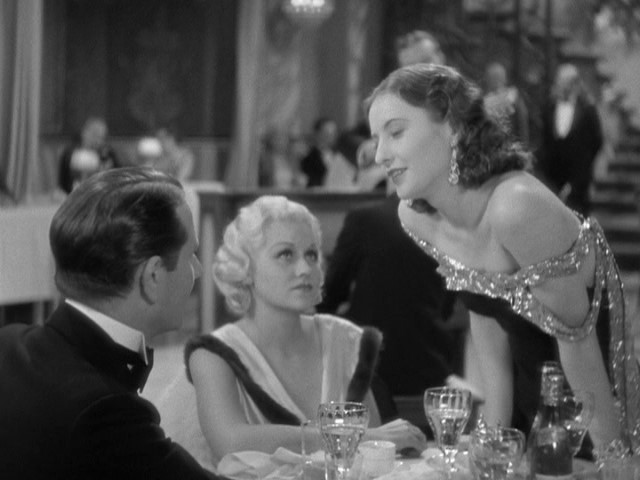
Iconic American director Frank Capra called her “the greatest emotional actress the screen has yet known.”  Barbara Stanwyck was Brooklyn-raised, not conventionally pretty (to many producers), but very confident in her skin (onscreen).  She was very accessible, yet enigmatic, at the same time.  Her appeal came from within- those sharp eyes and unmistakably husky voice.  Stanwyck was not stuck to the prototypical “good girl” roles (early in her career, nude photos surfaced, though she denied it was her in those images).     

AFI Silver recently had a Stanwyck film retrospective.  One weekend, Victoria Wilson (author of A Life of Barbara Stanwyck: Steel-True, 1907-1940) gave introductions to the films and had Q&As afterward.  She also signed books for classic movie fans.  Wilson, a former book editor, took 15 years to write the biography, though she conducted “decades of research.” 

 The Purchase Price (1932)

Joan (Stanwyck) sings in a nightclub in NYC

Joan Gordon (AKA Francine La Rue): I’ve been up and down Broadway since I was fifteen years old.  I’m fed up with hoofing in shows.  I’m sick of night clubs, hustlers, bootleggers, chislers [scam artists], and smart guys.  I’ve heard all the questions and I know all the answers.  And I’ve kept myself… fairly respectable through it all.  The whole atmosphere of this street gives me a high-powered headache. I’ve got a chance to breathe something else, and boy, I’m grabbing it.

Joan (Stanwyck, just aged 25) seems to lead a glamorous life, wearing fancy gowns and singing at a posh nightclub.  Too bad her dapper, small-time hood boyfriend Eddie (Lyle Talbot) is already married.  One night, she decides to give it all up.  Joan takes a new name and begins working at a lounge in Montreal, Canada.  Though he acted like the break-up was no big deal, Eddie has two men tail Joan!  Then her busybody maid gives her an idea- going as a “picture-bride” (akin to a mail-order bride) for a lonely farmer in North Dakota.  Eddie will never find her there, right?  The maid already sent in Joan’s picture, thinking that the farmer would prefer it to hers.  Joan gives the maid $100 and gets on the train to her new home.  

Jim Gilson (George Brent) and Joan marry

When Joan gets to small-town North Dakota in late Fall, she discovers that her new husband Jim (George Brent) is very handsome, yet quite serious.  They get married in town in a brief, yet funny, ceremony.  They drive (horse cart, not car) many miles to his wheat farm.  But after she rejects him on the wedding night, Jim becomes very cold toward her.  He sleeps in one corner of the living room; she takes the bedroom.

There is a role reversal- she has to win him over!  This is very rare for early Hollywood, Wilson noted.  Joan cooks, cleans, and entertains their wild neighbors without complaint.  A wealthy/divorced landowner hits on her several times, making things even more tense with Jim.  Her husband has money problems, Joan learns after a few weeks; they could lose the house/farm.  Jim suggests she go back to Montreal, but Joan refuses.   She wants this marriage to work, because she now loves her husband.  One wintry/dangerous day, Joan helps another farmer’s family after a baby is born, showing how capable Joan has become as a farmer’s wife.

Joan tries to get close to her husband

One night, Eddie shows up, seeking refuge from a terrible snowstorm.  Jim overhears them talking, and realizes that they have a past.  He is furious at Joan, shouting “I thought you were decent!”  Joan tells Eddie they are done, but he isn’t convinced, deciding to stay in town for a while.  Joan tells Jim about her relationship with Eddie, then breaks down in tears. 

Jim goes to the bank, hoping to get an extension on his mortgage ($800).  Boldly, Joan goes to the saloon to talk to Eddie, and gets the money from him.  Jim and Eddie get into a fistfight (no stuntmen used back then), while Joan takes the money over to the banker.  Jim soon receives a letter stating he has the extension until next season. 

Joan and Jim work side by side to plant and harvest their crop, but are still living like roommates.  Their wheat turns out very well, invoking jealousy from that landowner.  One night, fire consumes most of their crop, though Jim and Joan try to stop it.  (Stanwyck did that herself, and her ankles got singed.  Her stand-in didn’t look right in the scene).  Joan collapses due to the smoke, and Jim finally realizes that he loves her, too!    

This is a small film, but you can already see the star potential in Stanwyck (her teeth weren’t yet fixed), especially in the emotional scenes.  (Not unlike Brando, Stanwyck is unafraid of revealing messy emotions, even if it looks unattractive.)  Joan redeems herself with her hard work and (unselfish) love for her husband, a stranger at the start of the film.  But what about the lack of romance?  This viewer has a good take on it:

I think she sees and appreciates the authenticity of, and the genuine goodness in, Jim, and that those qualities (not to mention he’s very handsome!) are what she falls in love with.  Also, feeling bad that she shut down his decidedly awkward, abrupt, unpolished wedding night advances, but realizing it isn’t his fault that he so totally lacks finesse with women… and that he’d meant no offensiveness, she is eager to make things right with him, and falls in love with him in the process.  -IMDB comment

Short reviews of recently viewed films

Admission

Admission

This is an above average rom-com, starring Tina Fey (who doesn’t love her!?) and Paul Rudd  (ditto), but w/ some unexpected twists and some smart/funny dialogue.  The young characters performed pretty well, I thought.  It was cool to see Michael Sheen (has own Showtime series now) and Gloria Reuben (ER), who plays Fey’s rival co-worker, after a long time! 

The Butler

Lee-Daniels-The-Butler-

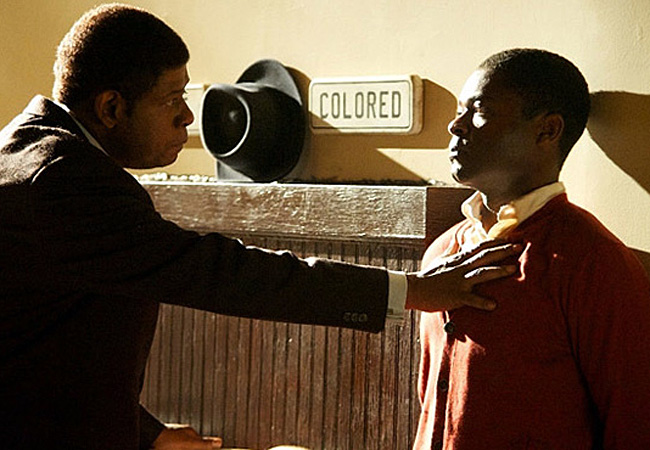
Director Lee Daniels said that he envisioned this film (based on a true story) primarily as “a love story between a father and son.”  Forest Whitaker, who plays apolitical/humble/hard-working butler Cecil Gaines, is flawless (as usual).  Oprah has an unique air/look about her (in the role of bored/troubled housewife); she does a good job.  English actor David Oyelow0 does a fine job as Louis, the older son in the family, who becomes immersed in Civil Rights movement after going off to college.  Louis’ strand of the story is the most interesting part of the film. It’s a good film, but not great (as several viewers agreed).  It didn’t evoke much emotion from me, aside from the shocking early tragedy and the lunch counter/protest scenes.  Something (intangible) is missing!

Diana (NOW PLAYING)

Diana - 2013

It’s refreshing to see a South Asian man, English actor Naveen Andrews (who plays Dr. Hasnat Khan, a brilliant Pakistani surgeon/PhD student), on the big screen.  And portrayed as a love interest to Naomi Watts (Diana, Princess of Wales)- pretty neat, right?  No, sadly, this film is a bore.  Maybe it’s the pedestrian dialogue?  Or the slow pacing?  It looks like a TV movie, as one journalist and many viewers commented.  Watts gets Diana’s mannerisms and girlish vulnerability right, but she has little else to work with here.  What a waste of talent! 

Django Unchained

Django-Unchained-Tarantino

django-unchained-ld

django-unchained-3

Oh, it’s well produced, filmed and edited. But that can’t save the totally bizarre banality of the story and the plot – never mind the gratuitous violence. 

Exactly- the (bloody/brutal) wrestling scene between the two men in Candie’s private club was almost too much to take! 

I thought DiCaprio and Waltz were brilliant, but brilliant performances can’t save a bad film. 

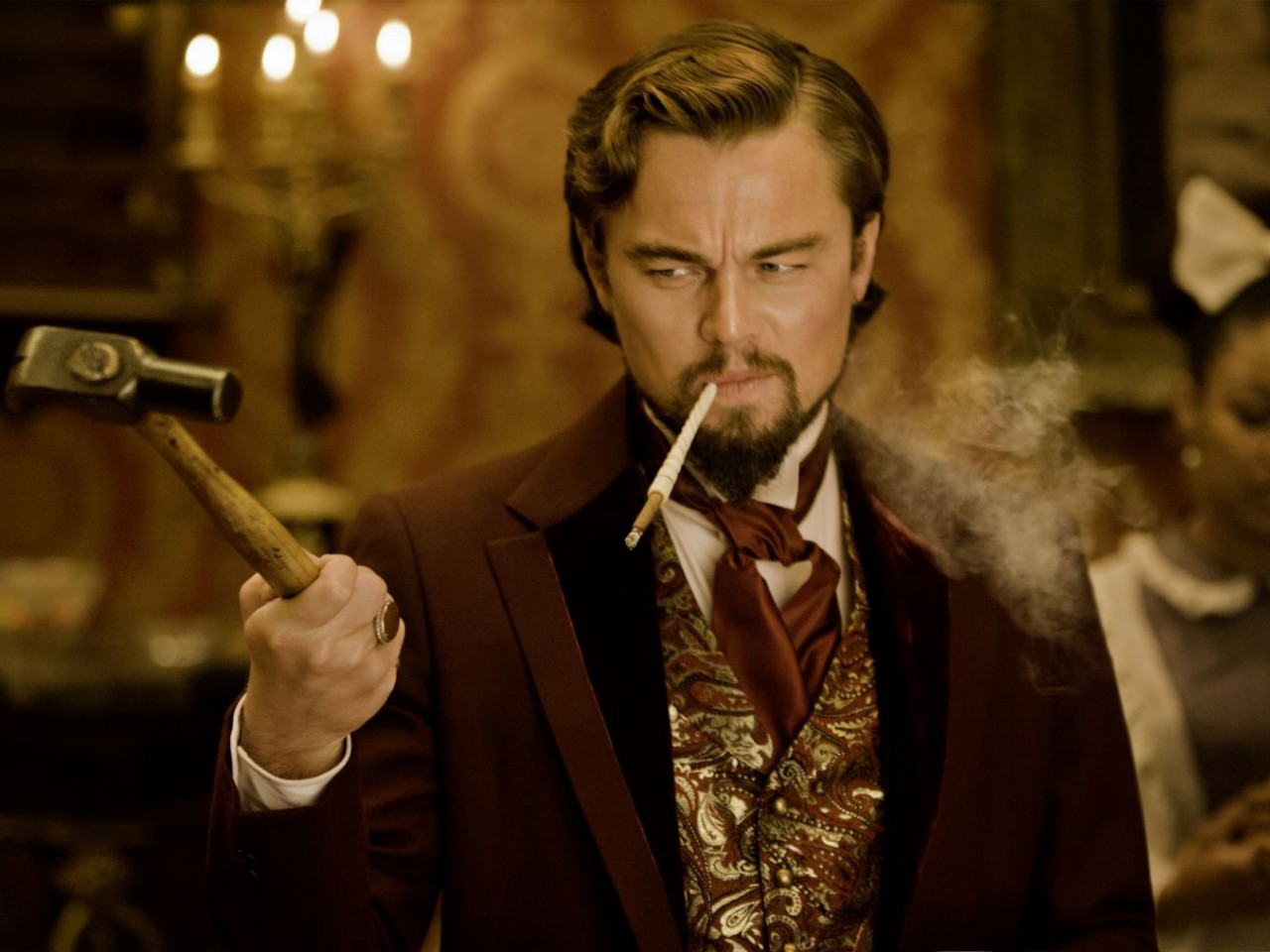
Christoph Waltz did a fine job (as in Inglourious Basterds).  It’s a difficult task to act in one’s second language, also.  And DiCaprio gets better with age. 

I liked the father/son symbolism when Schultz told Django the Brunhilde Story.  It was tender and touching…

Django wasn’t the hero- Dr. Schultz was, I was surprised to discover.  Tarantino’s direction/writing and Foxx’s acting turned the lead man into the sidekick.  Oops!   

What was that scene with the masked vigilantes even there for?  The scene was a complete waste if footage… comic relief that fell flat on its face.

There is not much to laugh at in this disjointed film.  If you can’t deal respectfully with a topic like slavery… I don’t know what to say.  And talk about self-indulgent- Tarantino has a distracting cameo and the film clocks in close to 3 hours!   

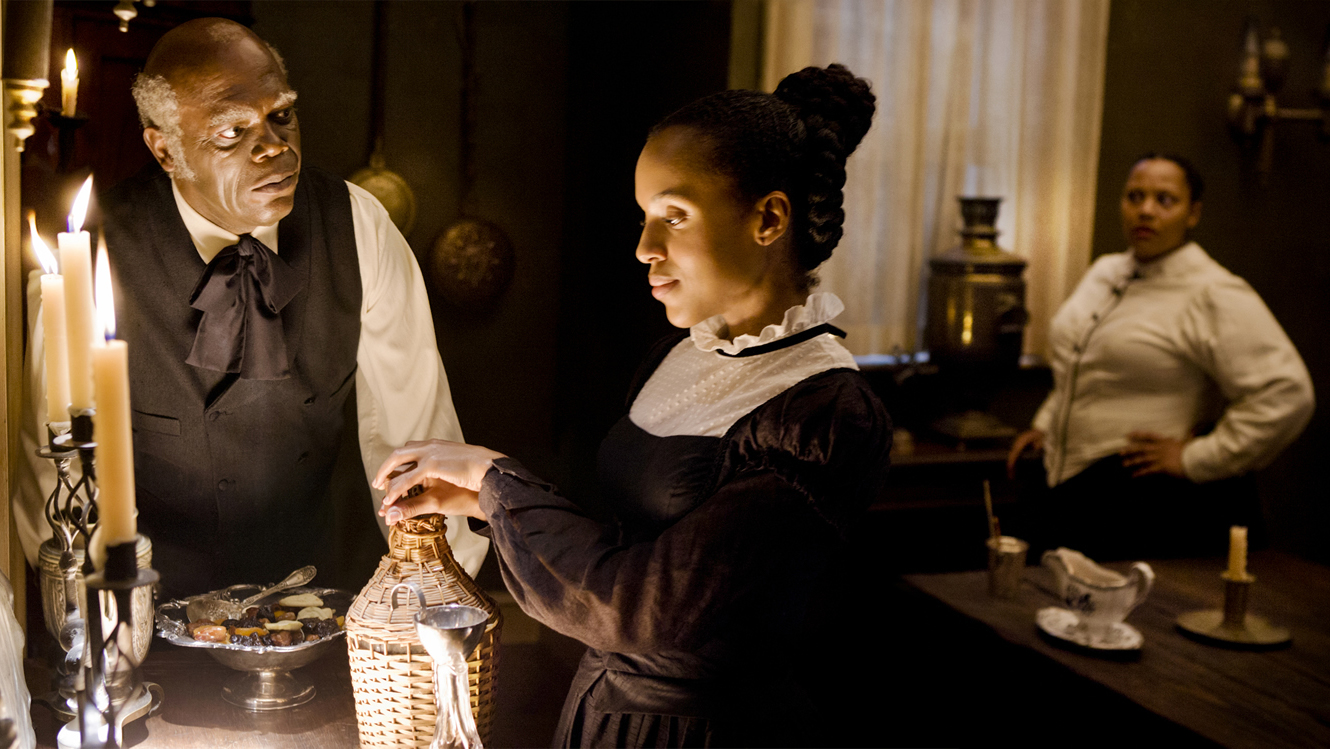
Candie is fascinated by Django, and sees in him, possibly, the ability and will to do what Old Ben could not.  Django can see that Candie is captivated, even when Schultz cannot.  The change that Django represents is not the kind of change that Candie will accept.

One journalist wrote that the “love story in the film is between Django and Candie,” not his wife (played by Kerry Washington, star of Scandal).  Kerry’s fans won’t have much to applaud- Broomhilda is merely a damsel in distress in the film.  What a waste of a multi-faceted actress!   

-Viewer comments from IMDB (with my analysis)