“Anna Karenina” (BBC – 2000)

Happy families are all alike; every unhappy family is unhappy in its own way.

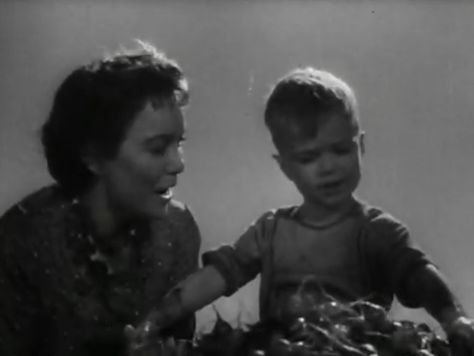
Sometimes fine actors just don’t have chemistry w/ each other!  This is the main problem in the 2000 BBC miniseries based on Leo Tolstoy’s well-known, tragic love story.  Helen McCrory (in the title role) and Kevin McKidd (who plays Count Vronsky) don’t generate much heat, which is a crucial part of the story.  She is an especially good actor w/ a great voice and onscreen presence.  Her few scenes w/ the little boy who played her son were touching.

In the 1997 version (w/ Sean Bean and Sophie Marceau), the leads not only look good together, but actually look like they are in love.  Though that film has its own flaws, it has much more passion in it.

The director in the miniseries made some odd choices.  Sometimes a handheld camera is not needed, but it’s used anyway.  There are too many close-ups and not enough light.  In the ’97 version, when Anna and Vronsky first meet, you can see their mutual attraction.  But in this version, the crucial moment becomes ho-hum.  Anna just looks at Vronsky for a moment through her veil- a lost opportunity for the director.  Their first dance is much more romantic/dramatic in the’97 version.  (It reminded me of Scarlett and Rhett’s first dance in Gone with the Wind.)

The actors who rise to the occasion in the miniseries are Douglas Henshall (Constantine Levin) and Paloma Baeza (Princess Kitty).  Henshall, whose real Scottish accent pops out in a few scenes, is the long-haired/bearded gentleman farmer w/ a past.  He thinks too much and worries if he’ll ever win over Kitty, who is innocent and young.  Baeza’s character starts out as a silly girl w/ a crush on the dashing Vronsky.  In time, Kitty learns about love and blossoms into a mature/sensitive wife.
 No one may build their happiness on another’s pain.

Anna’s philandering brother Stiva (played by Mark Strong) and his wife Dolly(played by Amanda Root) both get some nice lines.  “I love him, but I don’t respect him,” Dolly admits toward the end of the film.  She tolerates her husband’s affairs (just as many Russian nobles did at that time).

Anna and Vronsky’s love affair is atypical for their circle.  They truly are in love, not just fooling around b/c of lust or boredom.  Stephen Dillane (who plays Karenin) won’t give Anna a divorce, so she and Vronsky can’t marry.  Anna is forbidden to see her 8 y.o. son and becomes a social outcast.  Vronsky can’t give his baby daughter his name w/o that divorce.

Every time I tried to display my innermost desires – a wish to be morally good – I met with contempt and scorn, and as soon as I gave in to base desires I was praised and encouraged.  –Leo Tolstoy wrote two years after publication of Anna Karenina

After Levin meets Anna, he tell her brother that he liked her b/c “she’s so honest.”  Anna eventually spirals downward, turning to alcohol and opium.  She accuses Vronsky of betraying her w/ a younger woman.  Vronsky goes off to take care of some business for his mother.  But Anna is so paranoid and desperate by this point that she throws herself under a train.

Some recent views

Witness for the Prosecution

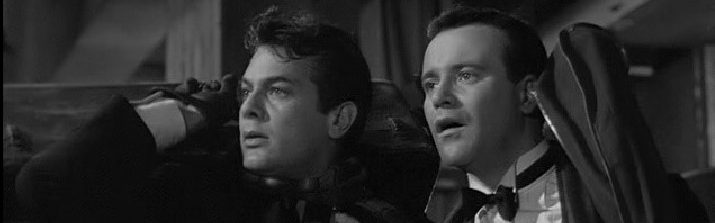
This 1957 courtroom-drama, based on an Agatha Christie story, starts out slow, but really packs a punch!  The stars are Tyrone Power (playing against type), Marlene Dietrich (very compelling), and Charles Laughton (providing most of the humor).  There is a lot of dialogue, but it’s very well-crafted.  Famed London lawyer Sir Wilfrid (Laughton) takes on the case of Leonard Vole (Power) mainly because he’s intrigued by Vole’s German wife, Christine (Dietrich).  Leonard, charming yet jobless, is the prime suspect in the murder of a wealthy widow he befriended.  Christine, who is cold and clever, doesn’t act like the typical worried wife.  Sir Wilfrid tells Christine that a woman w/ her personality won’t be seen sympathetically by the jury.  I don’t want to give too much away, so check out this film for yourself.          


The Fifteen Streets

Some dreams do come true in Catherine Cookson (1906-1998) novels, but not w/o hardship and loss.  This TV movie, based on her most popular novel, was filmed on location and looks very authentic.  If you want to read the book, it’s suitable for both young adults (junior high age) and grown-ups.  Since Cookson herself grew up in a working-class/Catholic/Northern community, she truly knows her characters.  Despite being born illegitimate and poor, Cookson pulled herself up into middle-class respectability- becoming a teacher, novelist, and eventually- dame of the British Empire.    

At the turn of the 20th century, hard-working dockworker John O’Brien (Owen Teale) meets independent-minded Mary Llewellyn (Clare Holman), the teacher of his little sister Katie.  John and Mary are both concerned about young Katie’s future; she’s a bright/curious child who dreams of being a teacher.  John fears the family will not have enough money to pay for such training.  

John’s younger brother Dominic (Sean Bean) causes a lot of trouble in the family and community.  While John is sober and fair-minded, Dominic loves drinking and fighting.  Mr. O’Brien also likes to drink; he’s angered by the fact that he’s getting old and not being chosen for work as much.  Mrs. O’Brien is pregnant at the start of the story w/ her sixth child. 

Love doesn’t come smoothly for John and Mary.  The Llewellyns live in a middle-class house with fine furnishings; the O’Brien’s live in a small rowhouse near the docks.  However, they both share a love of words and a deep physical attraction.  They meet secretly, knowling that their courtship is out of the norm in their community.     

 Clarissa


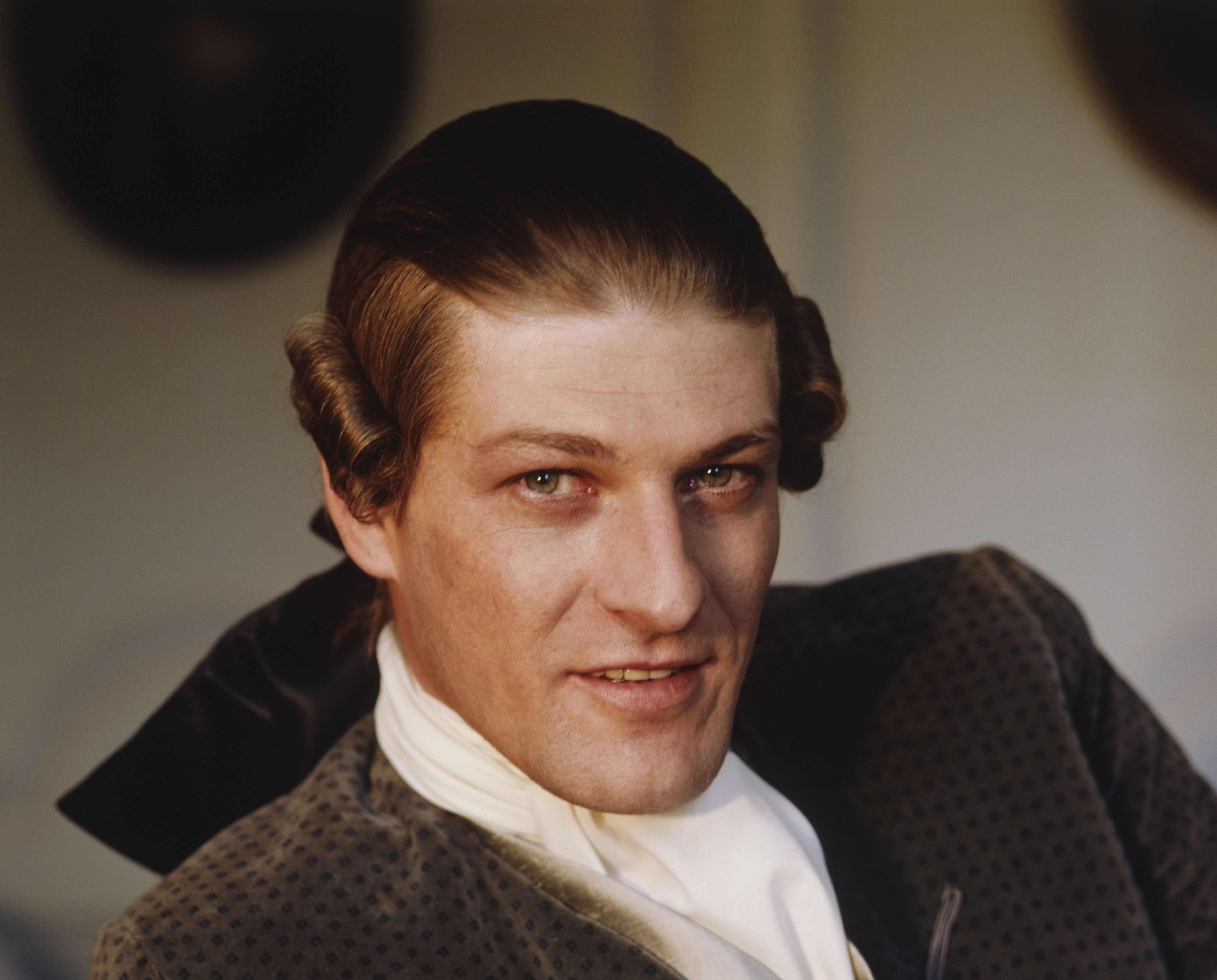
Sean Bean plays the villain Sir Robert Lovelace in this 1991 TV miniseries based on a Samuel Richardson (1689-1761) novel.  The daughter of an 18th century (recently) wealthy family, Clarissa Harlowe (Saskia Wickham), is known for her piety, obedience, and beauty.  But unlike most young women, she wants to remain single, quite satisfied w/ her books and female friends for company.  In time, her family plans to marry her off to Mr. Soames, a man she finds repellant b/c of his looks and manners.  Clarissa, feeling desperate and friendless, runs off with Lovelace, the handsome/ill-reputed nobleman who’d been sending her secret letters.     


Lovelace, a known womanizer, pretends to seek redemption by reading the Bible and spending time w/ Clarissa.  His real goal is to wear down her virtue.  He comments to his best friend that he’s “never known a virtuous maid to hold out more than a month.”  But Clarissa won’t be had so easily!  Lovelace also wants to take revenge on James, Clarissa’s cold-hearted older brother.  

Though  James, as well as his sister Arabella, are rather one-dimensional villains, Clarissa’s best friend Anne is a n interesting character.  She’s a smart and sarcastic woman w/ a steady beau, but she doesn’t respect or love him.  She keeps him waiting, wondering if marriage is the right choice.   


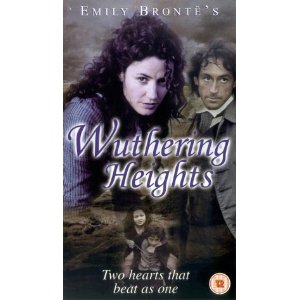
“Wuthering Heights” (PBS – 1998)

Robert Cavanah said: …It occurred to me that he was simply a man made of the simplest drives and needs and wants, and they were all summed up in three words – love of Cathy.  I never played him as a villain, just a man of enormous capacity for love, who had it all slapped back in his face.

This version of Wuthering Heights was made for British TV, then shown on Masterpiece Theatre (PBS) in the USThe Northern accent used by the actors suits the story.  Unfortunately, the Earnshaw home is a humble cottage, not a gothic house.  This was no doubt due to budget limitations.  As several others mentioned, this film gives us chunks of dialogue straight from the novel.  Very cool!

The anti-hero protagonist, Heathcliff, is played by Scottish character actor Robert Cavanagh.  He’s not handsome, but has a great voice and strong screen  presence.   There are a couple of scenes where he gets very rough with wife Isabella Linton, but overall, this Heathcliff is not a complete monster.  He’s very much a product of his difficult past.

The actor who does justice to Heathcliff’s vulnerable/confused side is Ralph Fiennes.  Great acting is in the eyes, as Barbara Stanwyck said, and it’s all there w/ Fiennes!  He’s accessible in some ways, but still mysterious.  Olivier was very strong in the 1939 version, but a bit too much of a gentleman in some scenes.

My 20s were torture. I found men terrifying. I didn’t know how to relate to them and, because of that, there was no way I could have stood on a stage and asked people to look at me. I just wasn’t comfortable in my skin.  -Orla Brady

I really liked this Cathy, who is played by Irish actress Orla Brady.  Her unusually beautiful face doesn’t detract from her fine acting.  I was especially impressed when she showed Cathy’s strong/willful side.  Of course, no one can top La Binoche in the 1992 version!

The love between the doomed pair is portrayed in a more earthy (perhaps lustful) manner, not all pie in the sky.  Some viewers seemed to like it; others wanted more innocence/romance.  Speaking of innocence…  The younger generation are portrayed very well by Sarah Smart and Matthew Macfadyen.  (Yes, that’s a youthful Matthew as Hareton Earnshaw.  And he’s holding a puppy.  Awww…)

I think it would be awesome to have another version of this story w/ age-appropriate actors.  (This was done successfully by Franco Zeffirelli in the 1968 version of Romeo and Juliet.)  The younger Heathcliff and Cathy would have to be around 6-8 y.o. and the older ones 16-18 y.o.  If the lovers are teens, things will make more sense to viewers.  After all, it’s a odd to see 25-35 y.o. actors running through the moors, crying all night, and becoming furious at the slightest matter.

The latest BBC version was quite good, thanks mostly to Tom Hardy, who is a very intriguing actor.  He has a mystery about him, like Fiennes.  Heathcliff should be dangerous w/o alienating the audience completely.

Click below to see a cute vid w/ Macfadyen:

http://www.youtube.com/watch?v=L3HNt7S2A0Q

Two films starring Jane Wyman

So Big (1953)

This film is based on Edna Farber’s novel of the same name.  It was directed by Robert Wise, who later directed The Sound of Music.  Farber also wrote Giant, which was made into a film starring Elizabeth Taylor, Rock Hudson, and James Dean.   Like Giant, So Big is a story of family and values.

Selina Peak (Wyman) is a teenager at a girls’ boarding school in 1890s Chicago when her father suddenly dies.  His huge fortune has dwindled down to nothing, and even household furnishings must go to auction, including a fine portrait of Mr. Peak painted by John Singer Sargeant.  Because of her close friend Julie’s father, Mr. Hempel, Selina gets a position as schoolteacher in the small farming town of New Holland, a community of Dutch immigrants several hours away from Chicago.  Mr. Hempel made his fortune by selling hogs to the town, and he’s grateful.

Selina approaches her new, no-frills type of life with cheerfulness, remembering a lesson her father taught her- there are two kinds of people in this world, wheat and emerald.  The people who take care of the land, grow food, and provide for the survival of others are wheat.  Those who see the beauty of the world and work in creative ways are emerald.  The world needs both kids of people.

Selina boards with the warm-hearted, yet traditional, Pool family and begins teaching in a one-room schoolhouse.  Roelf, the adolescent son of the Pools, already works in the fields with his father.  Though he’s “too old for school” unlike his two sisters, Roelf still has a desire to read and improve his piano playing.  Selina recognizes Roelf’s potential, and encourages him by giving lessons at home and allowing him to use the school’s piano.  Roelf (emerald) wants to get out of New Holland and see the world.

At the church box supper auction, Selina meets Purvis DeJong (wheat), a tall and rugged widower who’s courting a wealthy older widow.  Purvis’ head turns toward Selina, and he goes quickly to her side, much to the amusement of the locals.  They make fun of Purvis because his farm is in the lowlands and doing badly.  He admits to Selina that he doesn’t have “a head for figures.”  Buyers at Hay Market swindle him when he goes to sell his meager crops.  Selina decides to give him math lessons.  Purvis calls her “Little Lina” and seems more interested in romance than studying.  This upsets Roelf, who has a huge crush on his teacher.

Eventually, Lina marries Purvis and settles into the role of a farmer’s wife.  She has a son named Dirk, who is nicknamed So Big, because she has big plans for his future.  Dirk sees beauty in everyday things, like his mother.  “A modest amount of success” comes to Lina as the farm specializes and modernizes.  Lina is able to send her son to college to become an architect.  Though he seems to be a kind young man, Dirk wants success to come quickly, envying the comfortable lives of his wealthier peers and social-climbing girlfriend.  Lina, who values hard work, worries that Dirk is embracing the wrong values of the modern age.

Lina embodies the pioneering spirit of American women of the late 20th century.  These were the women who left established cities, worked beside their husbands and children on humble farms, and valued an honest day’s labor.  They didn’t have much time to cry or complain.  They had to work to survive, so their children wouldn’t have as much to struggle against.  These were the mothers who raised “the greatest generation.”


Miracle in the Rain (1956)

This is a film about love, romance, and forgiveness.  Ruth (Wyman) is a hardworking secretary for a shoe company in NYC who’s scarred by the fact that her musician father abandoned the family when she was a girl.  Her mother, who’s depressed and in frail health, tells her never to trust men because “they’re all nice, until they find someone else.”  Ruth rarely has time to go out or meet eligible men, as she must care for her mother.

One rainy day after work, Ruth meets Art (Van Johnson), a talkative and cheerful soldier from Tennessee.  He’s stationed nearby and doesn’t have much to do, so he invites himself to her apartment.  Art makes himself at home, even singing and playing the (long-silent) piano.  Ruth hands Art an unfinished composition of her father’s to show to his songwriter friend.

Like that song, the main issue in Ruth’s life, is unresolved.  We learn that her father is playing at a fine restaurant in the city,  but he can’t face his family yet.  And falling in love with Art is not the end of Ruth’s story; he’s a catalyst for positive change in her life.

“Pride & Prejudice” (2005)

Running Time: 127 minutes

Starring: Keira Knightley, Matthew Macfadyen, Brenda Blethyn, Donald Sutherland, Rosamund Pike, Carey Mulligan, Jena  Malone, Simon Woods, Tom Hollander, Rupert Friend,  and Judy Dench

We all know that the camera loves Keira Knightley, just like Michelle Pfeiffer.  But Keira’s not just a pretty face.  “She worked like a dog,” then first-time director, Joe Wright, says on the fun/informative commentary track of the DVD.  Wright’s version of the P&P story (that many know and love) is a must-see!  (When I saw it in the theater, I wasn’t very impressed.  I think it takes a second look to appreciate all that’s going on under the surface.)

The Bennet parents are humanized by Blethyn and Sutherland.  Pike is the perfect Jane.  Malone (who’s American like Sutherland) does a terrific British accent and plays the flighty Lydia w/ gusto.  The adorable Carey Mulligan makes her film debut as Kitty.

I think looking at it now, Darcy would seem much more snobbish in our understanding of the word than he would then. To somebody like Darcy, it would have been a big deal for him to get over this difference in their status, and to be able to say to Lizzie that he loved her.  –Matthew Macfadyen

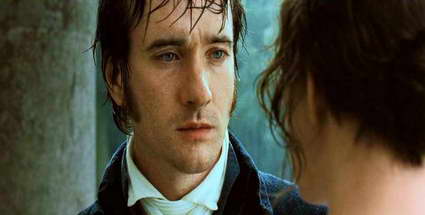
Macfadyen (a theatrically-trained actor) is a terrific Mr. Darcy- tall, slim, subtle, and not too much of a pretty boy.  He looks posh and elegant in all the costumes, but never overly imposing.  Darcy’s feelings are reigned in tightly, but his eyes are expressive.  And don’t forget that voice– one of the most gorgeous in all of show business!


“They just fancy each other,” Wright comments, noting the deep physical attraction between Lizzie and Darcy.  When she follows Jane to Netherfield Hall on foot, Lizzie’s hair gets mussed and her hem gets muddy.  Darcy is shocked, like best pal Bingley and his sis Caroline, but also intrigued.  He has never met a woman like her before!

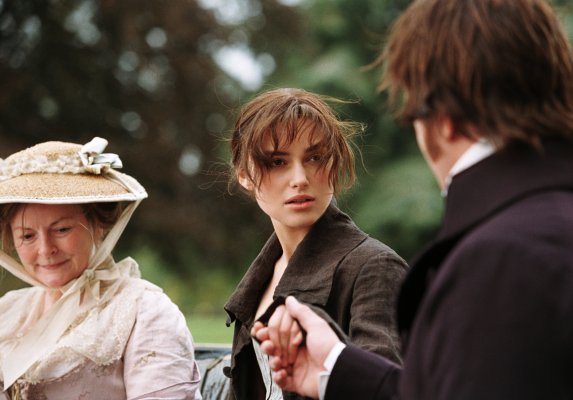
When Jane gets over her bad cold, and she and Lizzie have to leave, Darcy helps Lizzie onto the carriage.  This is the first time they touch, and he’s very affected by it.

For the Netherfield ball, Lizzie makes a special effort to look cute, hoping to meet the dashing Wickham.  To her surprise, Darcy asks her to dance!  This dance sequence is one of the best moments of the film.  (Dances were very important in Austen’s time; it was one of the few times young, single people could meet, chat, and hold hands.)

This film was almost entirely shot on location- in Derbyshire, Kent, Lincolnshire, etc.  Pemberly in this version is actually the house of the Duchess of Devonshire.  (Interestingly, Keira played the role of Georgiana in The Duchess in 2008.)

We can’t overlook the rainy scene!  Toward the end, Darcy leans in close and almost kisses Lizzie.  Wow…

Check it out here: http://www.youtube.com/watch?v=1R-Zg5es7mg