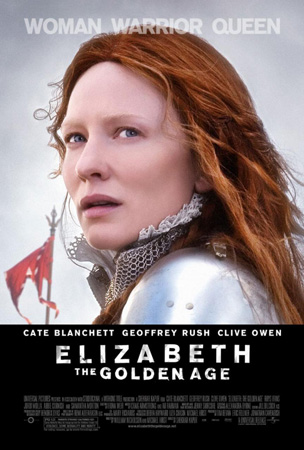
“Elizabeth: The Golden Age” (2007)

The “definitive” Queen Elizabeth of modern film (Cate Blanchett), director Shekhar Kapur, and the Queen’s “master of intrigue” Lord Walsingham (Geoffrey Rush) return to create a strong sequel.  The costumes, especially those of Elizabeth, are some of the MOST beautiful, intricate things ever seen!  The unusually high camera angles often used reminding the viewer of bigger forces at play in the world (God?  Destiny?) than the machinations of rulers.  There are new chracters to explore as well: sailor/adventurer/privateer, Walter Raleigh (Clive Owen); beautiful, sweet, young lady of the court (Abbie Cornish); the religiously fanatical King Phillip of Spain (Jordi Molla); the steely Mary, Queen of Scots (Samantha Morton).

This is my second viewing of the film; I saw it in the theater this past winter.  It’s the kind of film you MUST see in the theater to appreciate fully.  Kapur envisions this film as light (Elizabeth) vs. dark (Philip); he explains this in the Special Features of the DVD.  Elizabeth is now a mature woman and a confidant ruler, but her country is in trouble.  Spain has an incredibly strong navy (the Armada had more than 2,000 ships), the Inquisition (which Elizabeth says will take away “freedom of conscience and thought”), and a ruler who seeks to glorify God by conquering Britain.

At home, the Virgin Queen must deal with cousin Mary, who has many Catholic supporters plotting for Elizabeth’s demise.  Mary is imprisoned, but still sending out letters to the world.  England is about 50% Catholic, but the queen vows “I will not punish thought- only action.”  Elizabeth stood for religious tolerance, even when her Privy Council said that she should be more tougher on disloyal subjects (speaking/writing against her).
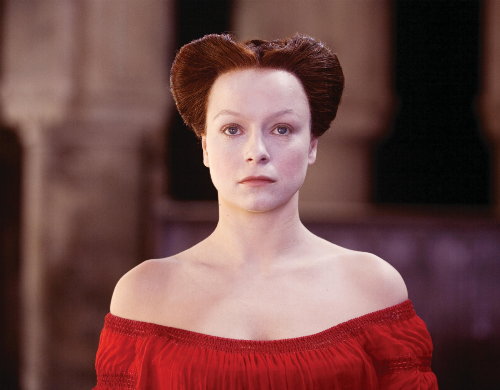
One day, while walking with her ladies from church, Elizabeth meets Raleigh.  He gallantly drops his cloak in order to cover up a puddle.  She is definitely amused and intrigued by the man, as is Beth (her favorite lady-in-waiting).  Raleigh is handsome, bold, and has been to the New World; he presents to the court Native Americans, potatoes, tobacco, and gold (captured from Spanish ships, of course).  You may know that Virginia was named in honor of Queen Elizabeth.
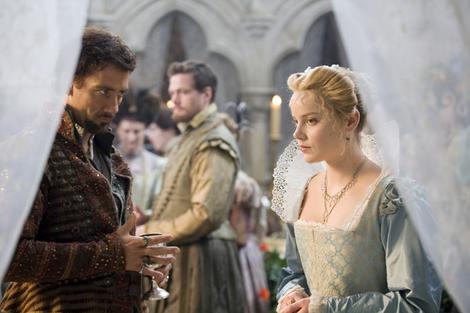
Raleigh speaks with Beth Throckmorton, one of Elizabeth’s closest ladies.

Raleigh was known to be one of Elizabeth’s “favorites” in real life.  In this film, Elizabeth is drawn NOT only to the (very charming) man himself, but to the life of adventure her leads.  She has never been away from British shores, and yearns to see more of what is “beyond the court.” 

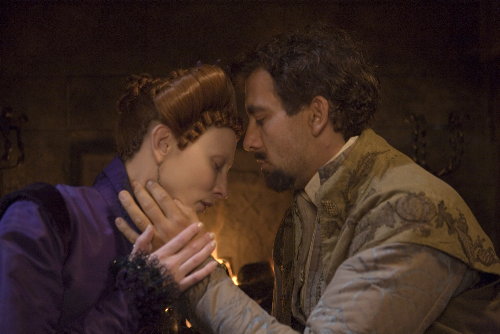
In the above picture, Elizabeth is enthralled as she listens to Raleigh’s account of life at sea.  This section of the film reminded me of Shakespeare’s tragic play, Othello.  (Desdemona fell in love with Othello because of his stories.)
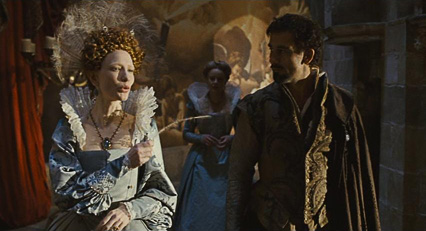
Raleigh wants the Queen’s favor; however, he also shows concern for her as a person and friend.  Though the hair, make-up, and clothes (obviously) proclaim him the “hero” character, the acting is mostly in Clive Owen’s eyes.
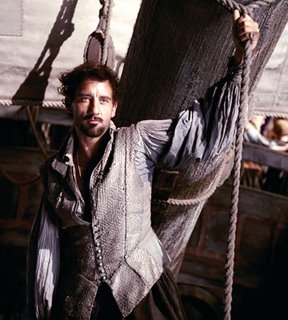
Sir Walter Raleigh (he was knighted by the Queen) aboard his ship, The Tiger.

Some people have complained about the (big) show of emotion in one scene involving the Queen, Beth and Raleigh.  (I understand that, because I thought it was a BIT too much as well.)  But who among us is always in control?  The Queen is NOT ONLY a ruler, she is a woman (who probably would’ve liked to have a husband and family- like most other women of her day).
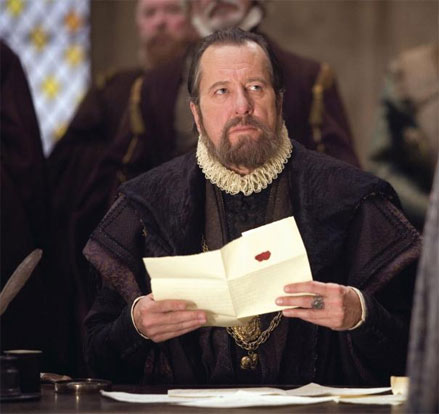
The dialogue was pretty good, but there were a few places where I thought it could’ve been more subtle.  Modern audiences are NOT as dim as MANY screenwriters think!  The acting, especially by Cate, is VERY good.  In my opinion, this actress can play ANY role.  Geoffrey Rush is strong (as always) but low-key.  He was known as “the spymaster” who had eyes and ears all over Europe; his main concern is the Queen’s safety.
What struck me the most was the beauty of the locations (especially the many different cathedrals), the visual effects, and the scenes between Cate and Clive.  They had a good connection that was based on respect, I feel.  The music was not overly dramatic, unlike in many “epic” scale films.  Check out this film ASAP!
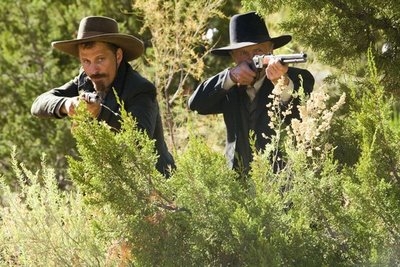
New Movie I Want to See!


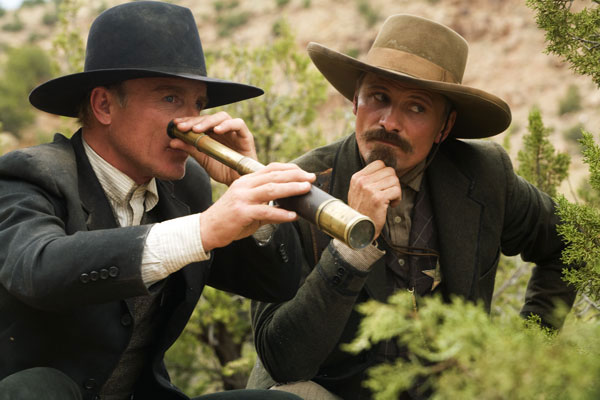
Appaloosa

A Western starring Ed Harris (also director), Viggo Mortensen, Jeremy Irons, & Renee Zellweger

Virgil Cole (Harris) and Everett Hitch (Mortensen) are long-time friends who make their living as lawmen (police for hire) in troubled, frontier towns like Appaloosa, New Mexico.  Their lives are complicated by murdering landowner (Irons) and young widow (Zellweger).

First of all- WOW, what a talented cast!  And Harris and Mortensen were TERRIFIC together in A History of Violence.  You could clearly see that these two actors LOVED working together in that film.  I also feel that they have similar style of acting (low-key).  Their looks also suit the Western genre, especially in Harris’ case.  I’m curious to see Irons as an American bad guy, too!


Excerpts from recent New York Times review:

“Mr. Harris can be an imposingly serious actor, his face hard and unyielding as quarried stone, but there is often a saving glint of mischief in his eye.  …He leavens the atmosphere of costumed rigidity and somber stoicism with sly, relaxed humor.”

“…Mr. Mortensen’s performance resides almost entirely in his eyes, which register tiny, unmistakeable nuances of surprise, suspicion and amusement.”


Check links below for more info:

http://nytimes.com/movies

http://www.imdb.com/title/tt0800308/

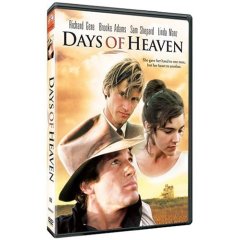
Movie Review: “Days of Heaven”

There is a pervading sadness to the movie, like a memory of something wonderful that could have been, that should have been, that almost was, and is all the more tragic because it was in your hands but slipped through your fingers. This is not a movie for everyone, but if you believe that film can be one of the highest forms of art, this is the film to see. 

–IMDB review

What is it really about?  Fleeting beauty. There aren’t any random shots in the film at all, each frame and edit is a word or period for thought and mood. What joys and disappointments to be found in life. The churning machines, the lighting, the chatter, the dialogue-free actions… 

–IMDB message board 


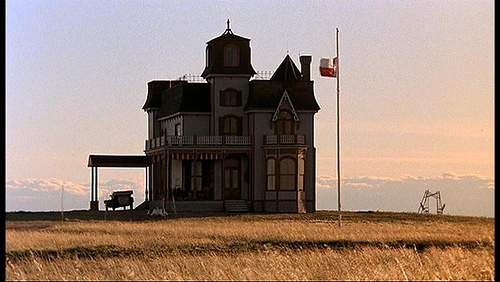
This is a very visually engaging and beautiful film that came out in 1978.  It was directed by Terrence Malick (mostly known for The Thin Red Line and The New World).  If you know his work, don’t worry, this movie is not overly long (only 94 minutes) and languorous!  The acting is subtle and the dialogue is simple, but you’ll be drawn in by the hopeful young characters and the natural beauty around them.  Oh, and the characters are beautiful, too!   

In the opening, Bill (Richard Gere- young and very striking), his girlfriend Abby (Brooke Adams- also youthful, but bright; wife of multi-talented Tony Shalhoub), and Bill’s pre-teen sister Linda (the narrator) are struggling to get by in pre-WWI Chicago. 
Bill, who has a short temper, gets into a fight (for no apparent reason) with an older man at his job; he unwittingly kills the man.  The self-made family travel (via train) to work on a wheat farm (during harvest time) in the Texas panhandle.  Bill and Abby, who are deeply in love and very comfortable with each other, pose as brother and sister in order to prevent “talk” about them.  

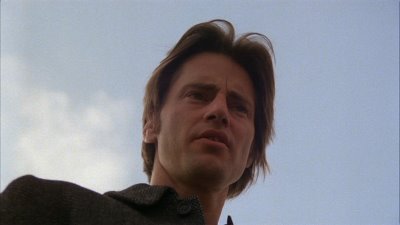
The Farmer (Sam Shepard- also a noted playwright; I think he resembled Viggo Mortensen as a young man) is wealthy, but looks sad and lives alone in his huge house (no relatives; single).  He becomes interested in Abby; Brooke Adams’ beauty is in her large expressive eyes.  The Farmer asks another employee about Abby, then one day, gathers up courage to speak to her.  After harvest, he suggests that she stay on to work on his farm.  The work would be easier, and it would be a more stable life.

When Abby mentions this idea to Bill, he doesn’t get jealous.  Bill overheard the doctor saying The Farmer doesn’t have long to live.  The family becomes friendly with the lonely man.  Very soon, we realize that The Farmer is in love with Abby.  The Farmer, who is kind and gentle, could give Abby a financially secure life.  But what will happen after she decides to marry The Farmer?  Will Bill be able to handle it?  (It’s not easy to be part of a love traingle!)  


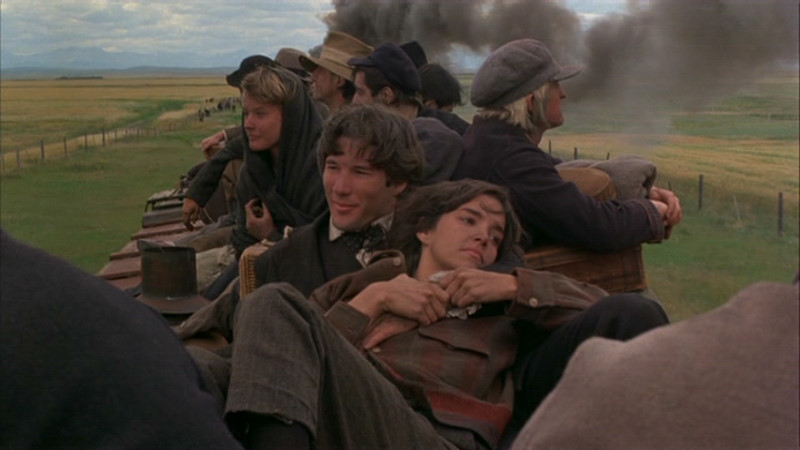
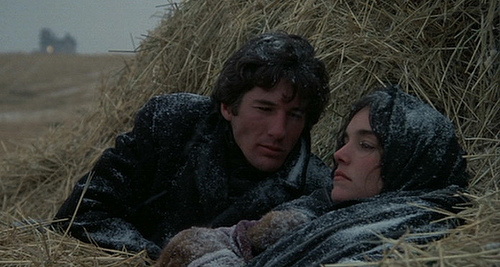
I really like the shot below because it shows the harshness of their lives, though they are beautiful and young. 

The last 30 minutes are very interesting; the action picks up a lot!  Sam Shepard suits the role of a farmer very well with his tall, lean build and shy, quiet demeanor.  His character is easy to sympathize with!  Brooke Adams and Richard Gere look comfortable doing the hard labor of farmwork.  Gere grew up on a small farm in upstate New York.  You can believe that Abby and Bill are a loving couple, but their relationship is not (totally) secure.  I found her to be a very watcheable character.  It’s too bad that there wasn’t more dialogue- that’s what I like best in films.  However, you could see the conflict in the characters’ eyes, faces, body language. 


Check out this film when you’re in a reflective mood, or looking for something different from the ordinary.   

Mini-Series Review: “Elizabeth I” (HBO Films)


More than 400 years ago, an intelligent, independent-minded woman (Queen Elizabeth I of England) faced issues that we ladies still face: gaining respect in a male-dominated field (i.e. government), finding the right man to marry (who would also be acceptable to her people), and not-so-friendly relatives (Mary, Queen of Scots).  The British monarch (nearing middle-age in Part I this mini-series) is played by the truly regal Helen Mirren, who can be smart, tough, and vulnerable.  Her closest friend/long-time love is Robert Dudley, the dashing Earl of Leicester (Jeremy Irons).  In the Cate Blanchett film, Joseph Fiennes played the (young) Leicester.  Irons is probably one of the few actors capable of going head-to-head with Mirren.  They also look terrific as a romantic pair, and seem like intellectual equals.


Her closest advisors, Lord Francis Walsingham and Lord Burghley, are pressing her to (finally) marry.  They think they have the man- the Duke of Anjou, heir to the throne of France; their union would unite Protestant England with Catholic France.  Thus, they could fight off Spain, a very formidable Catholic nation at that time.  (Religion was a part of government in Western Europe in those days.)  Elizabeth is not opposed to marrying and bearing children (she knows her duty), but who will be the man for her?  Leicester is jealous; he says: “No one could be close as we too, Bess.”  She explains that she must marry royalty, so he’s not a valid choice. 


Leicester is her friend, confidant, and… more (though she is still a virgin).  A doctor assures her advisors this is true, and that she can bear children.  The queen’s body belongs to the people, not only to her.  As the Queen readies to meet her (arranged) match, all the men around her look nervous.  Will the Duke convert, or be a “quiet Catholic?”  Will his temperament suit Elizabeth?  Meanwhile, she wonders if the Duke is handsome.  Some things never change! 


There is a fun scene on a boat where the Duke reveals himself; he came in disguise.  There is an instant spark of attraction between the pair!  Elizabeth is happily surprised, and ready to make the best of it.  After a few weeks of wooing, her “contentment” is marred by Leicester’s arrival.  Is he a jealous man only thinking of himself?  Or is he worried about his country’s future? 


It soon becomes apparent that her people are against the marriage as well.  Doesn’t she deserve love, just like anyone else?  Out of the blue, the French minister blurts out something about Leicester and Lady Essex, a recently widowed woman of the court.  Watch Mirren’s reaction- it’s terrific!  She only exposes Elizabeth’s true emotion in a quick burst then is the composed Queen once more.            


Then scene, where she sits looking over the marriage contract surrounded by her council, is even stronger.  The men fearfully eye the pen in her hand.  Mirren reveals the Queen’s (natural) longings as a woman before breaking down in tears.  But it is merely a brief outburst; she will sacrifice for her country.  After bravely dealing with personal disappointments, Elizabeth hears of a papal decree which causes her to fear for her life! 


If you’d like to know more, check out Elizabeth I.  In Part II of the series, the male lead is played by the gorgeous Hugh Dancy (as impulsive, ambitious Earl of Essex).  Despite the (big) age difference, Mirren and Dancy create great chemistry together.   I know it’s available at the Virgin Megastore (where I bought it this past winter) and at Blockbuster.  The total time is 211 minutes with two special features, one re: the filming and another about the life of the real Elizabeth. 


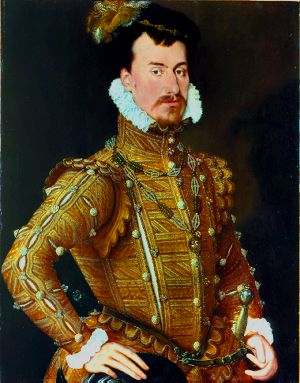
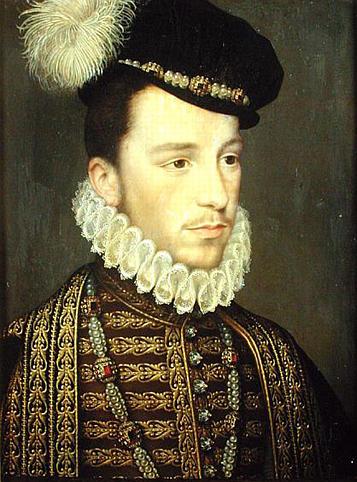
Below are portraits of the real Dudley, Anjou, and Essex (in case you were curious)!


Robert Dudley, Earl of Leicester
 
Duke of Anjou
Duke of Anjou
The Second Lord Essex
The Second Earl of Essex


Classic Movie Review: “A Streetcar Named Desire”

Captivating, troubled, unpredictable, vulnerable- these words could describe Vivien Leigh, Marlon Brando, and the characters they played in this multi-Oscar winning movie. A Streetcar Named Desire was re-mastered and re-released in 1993; I have that 2-disc director’s edition of the film containing 3 minutes of extra/extended scenes and loads of special features.  (I love special features!)  

Blanche: I don’t want realism.  I want magic!

One of Hollywood’s most successful and controversial directors, Elia Kazan, was hand-picked by playwright Tennessee Williams for this film.  Kazan had directed the Broadway play, too; his body of work includes: A Tree Grows in Brooklyn, Gentleman’s Agreement (starring Gregory Peck), East of Eden (starring James Dean; Marlon Brando tested for the part, too), and On the Waterfront (also with Brando).  All the major actors (Brando, Kim Hunter, and Karl Malden) had worked in theater.  Though Jessica Tandy was on Broadway, she wasn’t a big enough star, according to Warner Bros.  So, Vivien Leigh, who’d done the play in London, was brought on-board.


Stanley: Be comfortable. That’s my motto up where I come from. You gonna shack up here? Well, I guess I’m gonna strike you as being the unrefined type, huh?

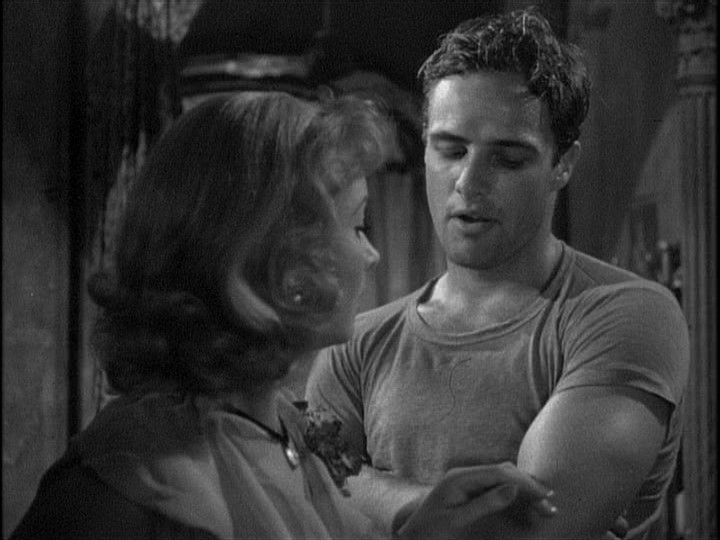
Well-bred, well-educated Blanche DuBois (Leigh) travels (via train and streetcar, of course) from small-town Mississippi to visit her younger sister Stella (Hunter) in hot, crowded New Orleans.  Blanche, a sensitive woman, almost can’t believe to what depths her sister has sunk.  Stella and her husband make their home in a stuffy, run-down apartment in the French Quarter. Their rowdy neighbors/friends drink too much, gamble, and make noise around the clock.  But most shocking of all- Stella has married Stanley Kowalski (Brando in a star-making role).  Stanley is a crude, volatile, working-class man of Polish descent.  (There are derogatory remarks about his background, denoting the prejudice of that time.)  Blanche is definitely not shy speaking about Stanley’s faults!


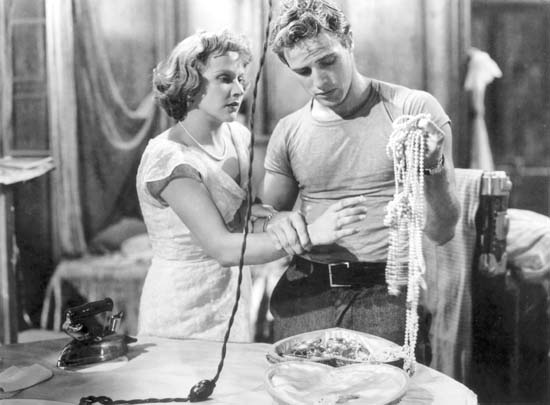
Stanley: That’s pearls, Stella, ropes of ’em. What is your sister – a deep sea diver?


We realize quickly that Stanley resents the presence of Blanche (with her fine clothes, jewels, perfume, and criticism).  Perhaps he sees her as a threat to his relationship with Stella?  Blanche is herself nervous and guarding secrets beneath her genteel Southern belle facade.  (I won’t give you too many details!)  Stella senses something is wrong.  Why has Blanche come to visit before the end of Spring term?  (She’s a high school English teacher.)  How did she lose their family estate?  But Stella mainly wants to keep the peace in her home, because who knows what will set off her husband?


Stella and Stanley’s relationship is based on lust; this repulses Blanche (she calls it brutal desire).  

Stella: I wish you’d stop taking it for granted that I’m in something I want to get out of. 


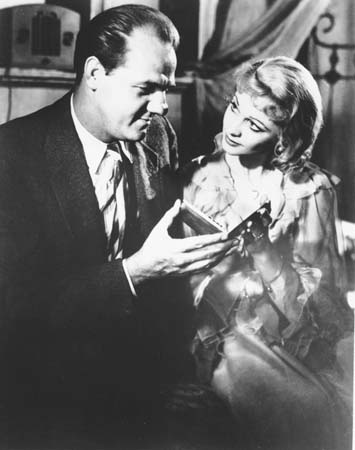
Stella seems happy about her life while Blanche is in a precarious situation: aging (over 30) and nearly penniless.  Then, tall and quiet Mitch (Malden) takes an interest in Blanche.  Could Blanche find some happiness with Mitch? 


Mitch and Blanche

Mitch: I have never known anyone like you.


Brando, though not yet 30, is simply amazing in this film; you won’t be able to take your eyes off him!  Brando was considered “naturalistic” and “realistic”- an actor who broke the mold of leading man in the 1950s.  And because of his penetrating eyes, brooding face, and muscular physique, Stanley is both attractive and repugnant to us.  Stanley is a drunken brawler one minute, then a contrite and confused little boy the next.  There is “ambivalence” in Stanley and in Brando, as Kazan said, that makes us wonder at his motivations.  “Brando was a genius,” says Malden in a behind-the-scenes interview on the DVD.  Check out this movie classic ASAP!


You showed me a snapshot of the place with them columns, and I pulled you down off them columns…