From the Terrace (1960) starring Paul Newman & Joanne Woodward

terrace_boating

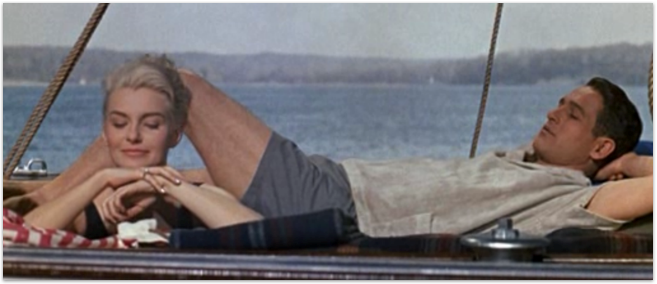
Alcoholism, dysfunctional families, romance, infidelity (w/ its gendered double-standards), and America’s obsession w/ money and power are  the main themes in this (ahead of it’s time) melodrama.  I watched it last night (on Netflix); of course, Paul Newman and Joanne Woodward (who were married for 2 years at that time) were the draw.  Wow, if you want to see some HOT onscreen chemistry, check out their scenes together (first half of the film)!  As for Newman, he’s the definition of Hollywood’s total package (looks, presence, talent, the ability to be both humorous and serious, etc.) 

terrace_driving

In 1946, Aflred Eaton (Newman) returns to suburban Philly after serving in the Navy (WWII) to the loving arms of… his household staff.  His parents checked out long ago.  His father (Leon James) puts all his heart into his steel mill and mourning someone who will never return.  His mother (Myrna Loy) has turned to alcohol and another man.  A private nurse lives with her- a great shock to Alfred.  As his best pal, Alex Porter (a young and dapper George Grizzard), says he “needs to get out of that house” and their expectations.  Like many young folks, Alfred heads to NYC.

In a few months time, Alfred falls in love with Mary St. John (platinum-haired Woodward), a blue blood from Delaware.  She is engaged to another man and her parents would not approve of Alfred’s “qualifications,” Alex quickly explains.  “There are all types of qualifications,” Alfred slyly retorts.  After winning Mary’s hand, he starts working with Alex on designing/selling small planes on Long Island, but grows tired of being left out of the decision-making.  (The business was financed by the Porter family.)  An accident of chance propels Alfred into the society, then business, of one of the wealthiest financiers on the East Coast.  Alfred throws himself into his work, repeating his father’s mistake, and neglects Mary (not content to sit at home alone in their fancy Manhattan apartment). 

The Catered Affair (1956)

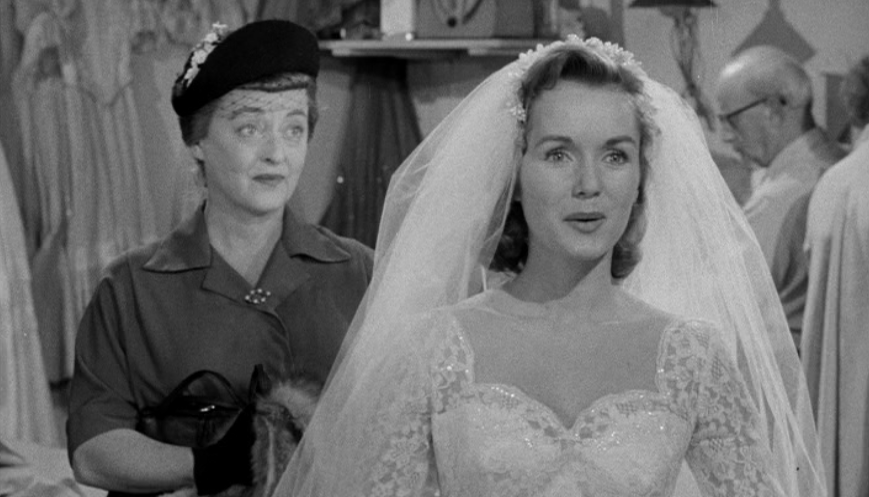
This is a great little movie filled with real life heartache and genuine emotion. Bette Davis gives a strong performance as the matriarch of the family determined to give her only daughter a proper wedding even though the family can’t afford to do so.  Ernest Borgnine is perfectly cast as the slovenly, hard working taxi cab driver.  In fact, everyone is up to par in this film, but it’s the real life situations that tug at your heart strings.  IMDB review

catered1

The trick is not to become somebody else.  You become somebody else when you’re in front of a camera or when you’re on stage.  There are some people who carry it all the time.  That, to me, is not acting.  What you’ve gotta do is find out what the writer wrote about and put it into your mind.  -Ernest Borgnine on his method of acting

I watched this film, written by Paddy Chayefsky (Marty), last weekend w/ my parents; they had seen it before and really liked it.  It took me a FEW minutes to realize that the mother was Bette Davis- LOL!  She is totally transformed; they gave her a “make-under,” as we’d say today.  Tom (Borgnine) and Agnes Hurley (Davis) are working-class/devout Irish-Catholics living in a small apartment in the Bronx with a daughter, son, and Agnes’ older brother.  Tom, a taxi driver, has been saving money for many years to buy a cab and license (medallions don’t come cheap nowadays either).  They both become concerned when their eldest child, daughter Jane (Debbie Reynolds in an early role), announces that she’s getting married to her long-time beau, a teacher- Ralph (Rod Taylor). 

catered2

Jane, who has an office job, insists that she wants a very small wedding and no reception.  Agnes thinks that’s not good enough, lamenting to Tom: “We never did anything for that girl!”  Agnes knows what she missed out on, and now wants those experiences for her daughter.  In no time, Jane’s wedding planning gets out of hand, thanks to the wishes of Agnes and Ralph’s parents (who are more better off financially).   Jane tells Ralph she doesn’t want to end up like her parents.  We learn more about the Hurleys (strained/seemingly loveless) marriage.  Agnes awkwardly tells Jane that marriage is not like dating; there will be sacrifices and compromises (mostly made by women). 

Mid-Season Trailers/TV Spots

Backstrom (Fox) – A police procedural set in Portland; starring Rainn Wilson (The Office)

Empire (Fox) – A family drama series set in the hip hop music world; starring Terrence Howard & Taraji P. Henson; premieres WED, 1/7

Galavant (ABC) – A 4-week musical comedy miniseries starting SUN, 1/4 

The Nightly Show with Larry Wilmore (Comedy Central)

Togetherness (HBO)A comedy created by Jay & Mark Duplass; starring Mark Duplass & Amanda Peet; premieres SUN, 1/11

Younger (TV Land) – A comedy from Darren Star (SATC); starring Broadway star Sutton Foster, Debi Mazar, & Hilary Duff; premieres WED, 1/14

Angel Face (1952) & Midnight Cowboy (1969)

Angel Face (1952)

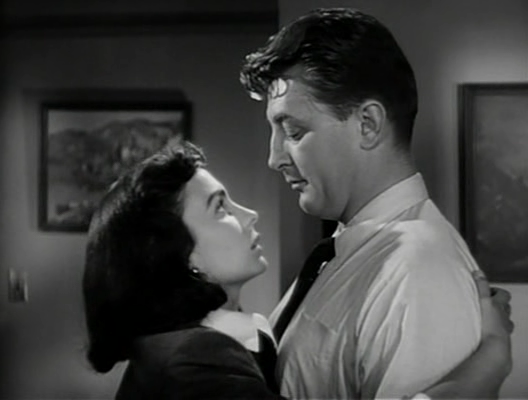
Ambulence driver/paramedic Frank Jessup (Robert Mitchum) underestimates 19 y.o. heiress-to-be Diane Tremayne (Jean Simmons) in one of famed director Otto Preminger’s lesser-known (noir) films.  The couple meet under odd circumstances- an accident (or maybe not) occurs at the SoCal mansion where she lives w/ her novelist father and his wife, potentially fatal to the stepmother.  Frank is intrigued by Diane’s beauty and moody/mysterious ways.  She  takes it a BIT more seriously…

Later that night, Diane drives into town and approaches him for a date.  Though Frank has a steady gf (a nurse) he decides to take Diane out for dinner and dancing.  It’s all harmless fun, or so he thinks…

This film has twists and turns- it kept me guessing.  It’s a psychological drama, for the most part.  Frank, who’s older and more experienced w/ life, thinks he can handle Diane.  But he doesn’t realize the complex/troubled mind she has, or what this petite lady is capable of.  Diane offers him a cushy job as the family chauffeur w/ an apt.

Jean Simmons REALLY shines in her role of the (unexpected) femme fatale, going toe-to-toe w/ Mitchum.  She creates a complicated, troubled, yet VERY watcheable character in Diane.  Mitchum, on the other hand, is sometimes TOO calm/collected.  (I wanted to see more anger/emotion from Frank.)  But his screen presence, charisma, and confidence almost make up for it.


Midnight Cowboy (1969)

I never saw this film until last week, though it’s quite famous/controversial.  The two leads (Jon Voight and Dustin Hoffman) do a FINE job, no doubt about it!  However, this film is difficult to emotionally connect to at times.  The shooting style is unusual, esp. for its time.  There are flashbacks that provide glimpses into a character’s troubled past, BUT don’t tell the complete story.  There is a weird, disjointed, lengthy scene at a party towards the end.

Joe Buck (Voight) is a handsome 28 y.o. dishwasher from small-town Texas who comes to NYC looking to work as a “hustler.”   He dreams of charming and seducing older ladies and making big money.  But he’s totally clueless.  He happens to meet Ratso Rizzo (Hoffman), a talkative/street-smart trickster w/ a bad leg.

An unlikely, yet mutually beneficial, friendship develops between the two opposites.  In Joe, Ratso sees the strong, able-bodied guy he’d like to be.  Ratso helps Joe navigate through the cruel city, and shares what little he has w/ the wide-eyed innocent.

Three Reviews: “Paris Blues” (1961), “He Knew He Was Right” (2004), & “Two Lovers” (2008)

Paris Blues (1961)

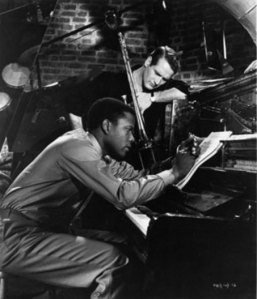
This is a TERRIFIC, though lesser-known, Paul Newman-Joanne Woodward film.  (It was made after their marriage and birth of their first child.)  Trombone player Ram Bowen (Newman) and saxophonist Eddie Cook (Sidney Poitier) are expatriate American jazz musicians living in Paris.  They have a regular gig at a small/artsy/popular club, though Ram has a dream of being a serious composer.  Also, Ram is in a (friends w/ benefits) relationship w/ the singer/owner of the club, Marie.
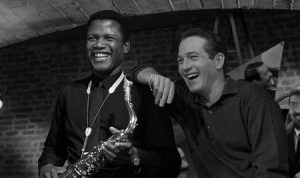
The guys meet two beautiful American tourists- straight-talking jazz lover Lilian (Woodward) and socially-conscious teacher Connie (Diahann Carroll).  After Ram meets his old friend “Wild Man” Moore (Louis Armstrong) on a train, he confidantly approaches Connie.  This must’ve raised some eyebrows in ’61- a white man hitting on a black woman.  Of course, it was no big deal in France.  Ram invites her to hear him play at the club.  Connie brushes off his come-on and comments that she has a white friend with her.  Soon Lilian arrives to meet Connie; we see her keen interest in Ram.

Though Connie is suspicious of guys like Ram (“I know these jazz musicians…”), Lilian convinces her to go to the club that night.  When she hears Ram play, Lilian is visibly moved by the music.

Aside from romance, this film deals head-on with serious issues- ambition, racism, and drug abuse (one of the musicians at the club is addicted to cocaine).  The costumes, scenery, lighting, music, and dialogue are pitch perfect.  Newman and Poitier seem like two old friends; the chemistry between the two couples is almost palpable.  (As you may know, Poitier and Carroll were romantically involved at this time.)

Newman, who plays an anti-hero here, has some very good lines.  “Look, you don’t want me for what you want,” he tells Lilian directly when she shows interest in going out after a gig.  Lilian calmly comments that she’ll decide what she wants.  This is a grown-up look at love, not a fairy-tale story.  Check it out ASAP!


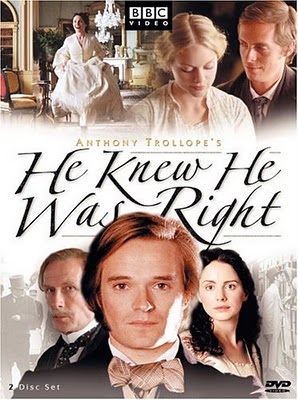
He Knew He Was Right (2004)


I watched this BBC miniseries for the second time recently.  Novelist Anthony Trollope was inspired to write the book by Shakespeare’s tragedy, Othello.  The main character, irrationally jealous husband Louis Trevelyan is also based on the author’s (often temperamental) father.

Louis (young Brit Oliver Dimsdale), a posh London gentleman, goes to the Canary Islands and falls quickly in love with Emily (Scotswoman Laura Fraser), the lovely daughter of the governor.  Though she is young and has never been in British society, he proposes marriage.  “He looks like a man who likes to have his way,” her father comments, though he feels it will be a very good match.  “Emily likes to have her way, too,” her concerned mother adds.

Emily and Louis settle in London and have a son.  Emily’s gorgeous young sis, Nora (Christina Cole) lives w/ them; she’s much admired by the bachelors in their circle.  But she falls for Louis’ best pal- young journalist Hugh Stanbury (Stephen Campbell Moore).  They can’t marry right away, as Hugh doesn’t come from money, is just getting started in his career, and has a mom and sisters to support out in the country.
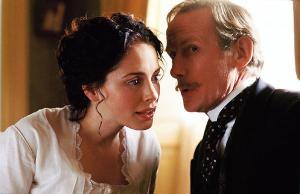
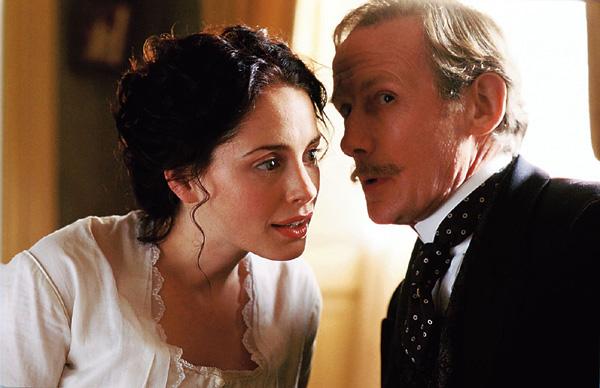
To their friends, the Trevelyans seem to be the perfect marrieds.  But things start to go sour when Emily’s father’s old friend, and reputed playa, Colonel Osborne (Bill Nighy) enters the picture.  At a party, an older lady comments on his bad boy ways, alerting Louis.  Osborne visits Emily at the house; Louis doesn’t like this, as it could expose his wife to rumor and innuendo.  Emily, who is innocent/unspoiled like Desdemona, wonders why she shouldn’t see an old family friend.  “But I won’t see him if you forbid me to,” she eventually promises.
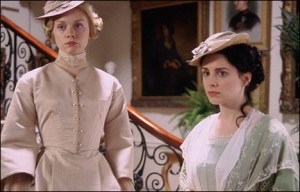
Osborne is refused entry to the house, but he approaches the couple while they’re out on a stroll in the park.  When the older man calls Emily by her first name, Louis gets visibly angry.  (In Victorian society, if a man called a woman by her first name, it could be inferred that he had intimate knowledge of her.)  Emily pulls Louis away, rushing towards home.  Finally, Louis decides to send Emily, his boy, and Nora to live in the country w/ the Stanbury ladies.  He rationalizes this decision by saying they’ll be “safe” there from Osborne.  Emily is stunned, but goes along w/ the plan.  (What other choice does she have?)  Her friends and family believe that Louis will soon come to his senses.

Aside from the main (dark/serious) storyline, there are several lighter ones to keep you entertained.  Nora and Hugh share a very tender love.  The eligible, soon to be titled Mr. Glascock (Raymond Coulthard), is intrigued by a forthwright American woman he meets while traveling in Italy.  Hugh’s sister, plain/serious Priscilla Stanbury (Amy Marston) doesn’t expect any beaus to come her way, but wants her kindly younger sis Dorothy (Caroline Martin) to marry.  When their rich/elderly aunt (Anna Massey) asks Dottie to become her companion, the world opens up for the good-hearted girl.
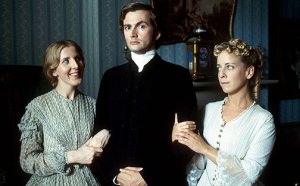
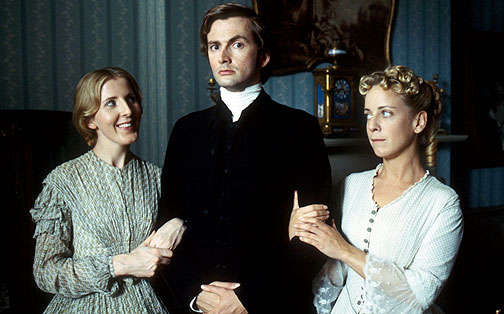
The flirtatious Reverend Gibson (Scotsman David Tennant) can’t seem to choose between three women in his town- Dottie and two vain, eager-to-marry sisters (character actresses Claudie Blakely and Fennella Woolgar).  Hilarity ensues when he decides on the wrong woman.


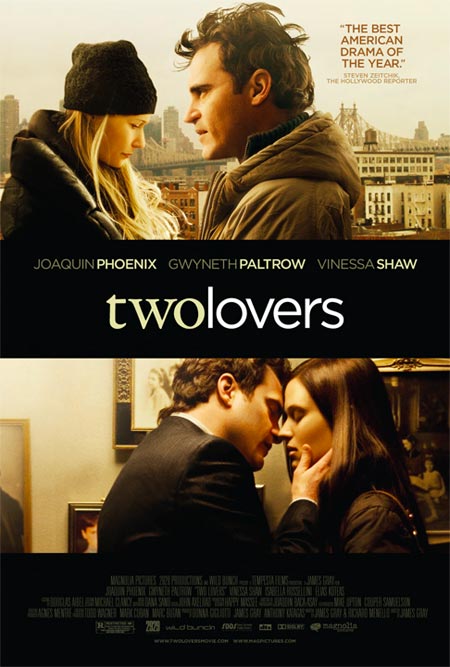
Two Lovers (2008)

Leonard Kraditor (Joaquin Phoenix), having survived heartbreak and suicide attempts, lives with his watchful (yet kindly) parents in the predominantly Russian Jewish ‘hood of Brighton Beach, Brooklyn.  He also helps out at the family laundromat, though he’s not very interested in his work; photography is his passion.  Though Leonard takes medication, we don’t know his exact illness.

One night, Michael Cohen, the man who’s going to buy the Kraditor’s business, comes over for dinner with his family.  When they are left alone, the elegant/single daughter, Sandra (Vinessa Shaw), confesses that she wanted to meet Leonard.  When she explains that she works for Pfizer, Leonard jokes that he “knows all about that.”  Sandra admires his photos; we can also tell that she’s very interested in him.  She comes across as a capable woman who could take care of the sensitive Leonard.
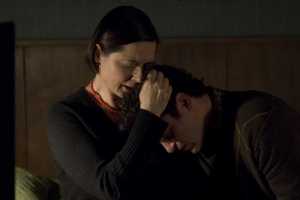
Leonard also happens upon his  new neighbor Michelle (Gwenyth Paltrow), who ducks into his place to escape the rebuke of her angry father.  What was he mad about?  It turns out that Michelle has an older, married lover (played by Elias Koteas).  Though we (and his observant mom, played by Isabella Rosselini) can see that Leonard has an instant crush on her, Michelle quickly comes to rely upon him.  It turns out that Michelle need a good friend- she’s battling tremendous insecurity and a drug habit.  When she calls or texts, Leonard goes running.

Leonard, Sandra, and even the troubled/rootless Michelle, will seem quite real to viewers.  They are not stereotypical Hollywood versions of people.  Often, the demons within us are worse that those found in the outside world.  We have to choose to be happy, as my mom says.