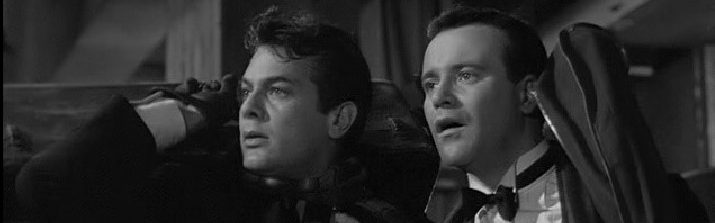
Belle (2014)

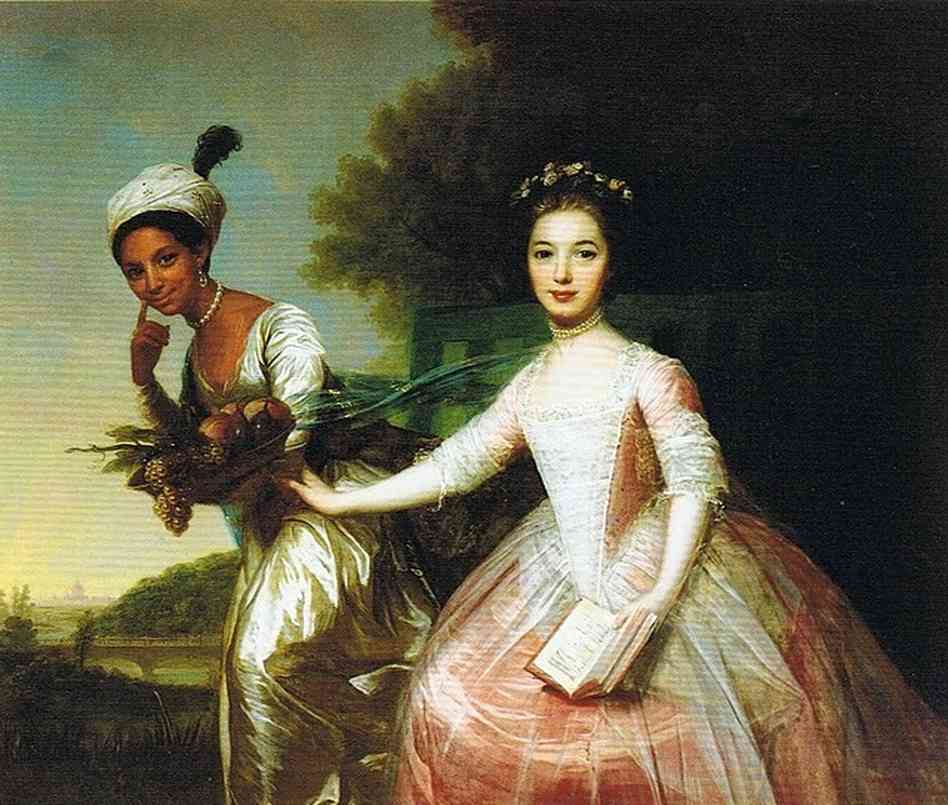
dido_portrait
Portrait of Dido Elizabeth Belle and her cousin Lady Elizabeth Murray

This film, released early in 2014 in the US, is a must-see, especially for fans of historical dramas and Jane Austen!  Issues of class privilege, marriage/property, and slavery arise.  In the portrait (above), the viewer’s eye is drawn to Dido, who seems full of vivacity, while her cousin seems more proper/sedate. 

Belle_movie_poster
The poster for the film

The poster itself intrigued many people walking through theater lobbies- a pretty biracial woman dressed in finery.  The film was directed by Amma Asante, the daughter of Ghanian immigrants to England; she is also an actress and writer.  The luminous lead actress is Gugu Mbatha Raw, the daughter of a black South African doctor and white British nurse.  (FYI:  That’s natural beauty- Gugu wore no makeup during filming, since there was none for Belle’s complexion.)
095_Belle_ScreenGrab_039.JPG
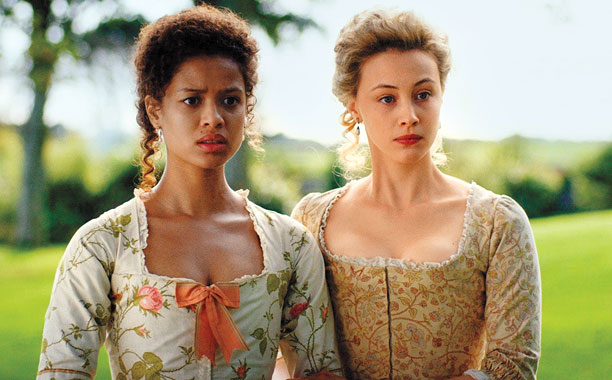
Belle & Elizabeth all grown up

The young Belle is brought by her naval officer father (Matthew Goode) to live in the household of his childless uncle, William Murray, the first earl of Mansfield (Tom Wilkinson, superb as ever) and his wife (Emily Watson, in a low-key role).  All we know is that the child’s mother was an African slave  found aboard a Spanish vessel.  Already living on the vast country estate is another girl, Elizabeth Murray (newcomer Sarah Gadon), the daughter of another of  Lord Mansfield’s nephews.  The girls grow up together, like sisters, though Belle is of a different status (too high to dine with the servants, yet too low to dine w/ the family). 
Belle_Judge
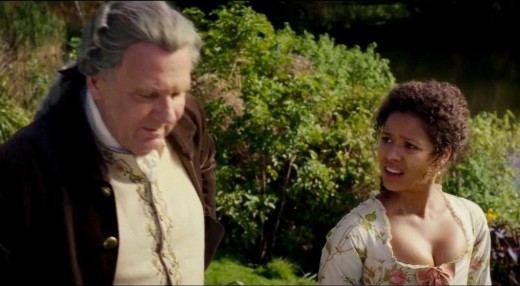
Lord Mansfield & Belle talk

Lord Mansfield is also Chief Justice of the Royal Court, and as in the film, the real Dido assisted her great-uncle w/ his daily correspondence.  I especially enjoyed the debate/discussion scenes between these two! 

Belle_docks
Belle & John

 The idealistic son of the local parson, John Davinier (newcomer Sam Reid, a solid performance) comes to study law with Lord Mansfield.  He mentions an important court case involving slave cargo, and she wants to learn more.

Related Links:

All Things Considered (NPR): Film review by critic Bob Mondello

Morning Edition  (NPR): Interview w/ director Amma Assante

Tell Me More (NPR): Interview w/ actress Gugu Mbatha-Raw

Season Finale: Game of Thrones – “The Children”

Myles McNutt's avatarCultural Learnings

GameOfThronesTitle2

“The Children”

June 15, 2014

“You remember where the heart is?”

Each season of Game of Thrones has been an exercise in selective adaptation, but its fourth season has been a feat of adaptive engineering. Working primarily with material from the third book but leaning heavily on the fourth and fifth in certain storylines, it is the season that has emphatically taken the “book-to-season” adaptation comparison off the table.

At the same time, though, the season has been organized around key climaxes taken directly from the third book in the series. Moreso than in other seasons, you could tell the writers were having to stretch storylines to maintain the timing they had established, creating material to flesh out the scenes on The Wall to justify the Battle of Castle Black taking place in episode nine or finding things for Arya and the Hound to do so that their scenes in…

View original post 1,653 more words

Game of Thrones – “The Watchers On The Wall”

Myles McNutt's avatarCultural Learnings

GameOfThronesTitle2

“The Watchers On The Wall”

June 8, 2014

“Blackwater” was about convergence. It was the inevitable collision between Stannis’ claim to the throne and the Lannister powers controlling it. In truth, Stannis’ side of the battle was pretty thin, sketched in without a whole lot of detail beyond Davos and his son. It was really about how Stannis’ attack changed the power dynamics at King’s Landing, whether through Cersei’s steely resolve, Tyrion’s ingenuity and intelligence, or Joffrey’s cowardice. At a stage when this was still ostensibly a show with the Stark family as its protagonist, it was an early example of the richness of stories in King’s Landing, capable of carrying an entire episode on its own.

“The Watchers On The Wall” wants to be “Blackwater.” Neil Marshall has returned as director. Mance Rayder’s not dissimilar to Stannis, in terms of development at this stage in their respective narratives, an…

View original post 1,878 more words

Game of Thrones – “The Mountain and the Viper”

Myles McNutt's avatarCultural Learnings

GameOfThronesTitle2

“The Mountain and the Viper”

June 1, 2014

“Traditions are important – what are we without our history?”

One of the perils of being a book reader watching Game of Thrones has been the fact that so many of the biggest moments have been “surprises” in the context of the narrative. We look to events like the Red Wedding, or the Purple Wedding, or Ned Stark’s fate on the Steps of Baelor as key events in the narrative, but we can’t necessarily share the anticipation of those events with viewers who have no idea they’re coming.

This is why “The Mountain and the Viper” is such a fun episode as a reader writing about the show. For once, the show has built in its own hype machine, setting up the trial by combat and building suspense for it over the past two episodes. The week off for Memorial Day…

View original post 1,906 more words
