“The Big Combo” (1955) starring Cornel Wilde & Richard Conte

Capt. Peterson: You’re a cop, Leonard. There’s 17,000 laws on the books to be enforced. You haven’t got time to reform wayward girls. She’s been with Brown three and a half years. That’s a lot of days… and nights.

This is a lesser-known/low-budget noir w/ snappy dialogue, a jazz score (rare for that period), and fine B&W cinematography. It has its good points, but the femme fatale isn’t compelling, and a few scenes seem slow. A determined cop, Lt. Leonard Diamond (Cornel Wilde from Leave Her to Heaven), is told to stop surveillance of suave mob boss, Mr. Brown (Richard Conte from Thieves’ Highway). Leonard’s captain says it’s costing the police department too much money w/ no results after 6 mos. Diamond makes one last attempt to uncover evidence against Brown by going to Brown’s girlfriend, Susan Lowell (Jean Wallace- wife of Wilde and resembling Grace Kelly), who is chaperoned by two henchmen- Fante (Lee Van Cleef) and Mingo (Earl Holliman).

Mr. Brown: I’m trying to run an impersonal business. Killing is very personal. Once it gets started, it’s hard to stop.

This was one of the very first American films to imply a man going down on a woman; I was a bit surprised! Brown maneuvers around Susan, stopping briefly at her lips, but then dropping out of frame, seemingly down past her waist. Leonard is clearly having a “friends w/ benefits” relationship w/ the burlesque dancer, Rita (Helene Stanton). Her show outfit is sparkly and skimpy, even by today’s standards. Also, the film openly infers that Fante and Mingo are a gay couple who live together, kill together, and seem to love each other (note the basement scene).

 In a performance brimming with cool menace, Conte is fond of saying `First is first and second is nobody.’

And Brown is obsessed with his prowess with women as Diamond is with capturing him and wooing his moll. The film is filled with risque sexual allusions…

What almost ruined this picture for me was the hideously annoying performance of actress Jean Wallace…

-Excerpts from IMDB reviews

“The Breaking Point” (1950) starring John Garfield, Patricia Neal, & Phyllis Thaxter

[1] Peppered with sparkling dialogue throughout, everything in the film is splendidly executed. The movie just rattles along at a well defined pace.

[2] ...this contains one of John Garfield’s best performances. Always a fine actor, he gets under the skin of his character and makes you understand his desperation and moral conflict, he’s riveting every second he is on screen.

[3] The relationship between Juano Hernandez’ Wesley and Garfield’s Harry is about as race neutral as it could be. … they are partners – and they seem truly friends beyond their business relationship.

-Excerpts from IMDB reviews

Tagline: There’s nothing more deadly than a gentle man pushed too far!

This film is smart, touching, entertaining, well-acted, and well-shot. The Breaking Point comes from a novel by Ernest Hemingway (To Have and Have Not). This was identified by critic Thom Andersen as an example of film gris, a suggested sub-category of film noir w/ a left-wing narrative. Michael Curtiz, who also directed Casablanca, shows he had a tough side. The screenplay by Ranald MacDougall is considered (in certain scenes) to be even better than the novel! TCM’s Eddie Muller noted that star John Garfield thought this was his best performance and the film of which he was most proud. He provided many ideas to the producers and director, unofficially taking on an executive producer role. This was Garfield’s second to last role before being blacklisted.

Harry: A man alone ain’t got a chance.

Garfield was the type of leading man who resembled a working man- rugged, blue collar, and wearing a leather jacket. This kind of leading man would rise to prominence after WWII w/ actors such as: James Dean, Marlon Brando, Paul Newman, and Steve McQueen. In Balboa, CA, Capt. Harry Morgan (Garfield) doesn’t quite fit in during peacetime. He earned a Purple Heart for his service in WWII, but now struggles to make payments on his boat and provide for his family (wife and two daughters). The domestic scenes between Harry and wife- Lucy (Phyllis Thaxter)- are touching and realistic. Though devoted to her stubborn husband, she’s determined and strong-willed. Harry’s mate, Wesley Park (Juano Hernandez- a pioneer among Black actors), is loyal, wise and patient; they worked together on the boat for 12 yrs. Unlike some other characters of the period, “he is not an example of noble Black suffering” (as Muller commented). Wesley has a shy/young son who walks to school w/ Harry’s daughters.

Harry: [to Leona as she reaches into his shirt pocket for a cigarette] Yuh know, one of these days you’re gonna get your arm broke reachin’ for something that don’t belong to yuh.

Leona: It’s all in a good cause.

The femme fatale in the story is Leona Charles (Patricia Neal); she meets Harry on one of his trips down to Mexico w/ her older male friend, Hannagan (Ralph Dumke). Leona is a platinum blonde, wears nice clothes, and leads w/ her feminine charms. Harry tries to ignore her (but in a nice manner); she keeps trying to get him interested. After the two-week fishing trip, Hannagan suddenly flies off before paying Harry, and stranding Leona! A shady lawyer, F.R. Duncan (Wallace Ford), offers to help Harry make up for the loss and maybe earn a lot more. Harry has never done anything illegal, but now is faced w/ a desperate situation.

Spoiler-Free Review: “Indian Matchmaking” (2020)

[1] This show is basically romanticizing patriarchy.

[2] If there is any critique, it’s not that of arranged marriages, but of the unspoken biases, the pressure of marriage, and cringeworthy laundry list of preferences that constantly perpetuate.

[3] I was fuming at Geeta’s “women need to adjust more.” I have SO many issues with this show… the matchmaker’s job depends on the patriarchal society, but it is truly representative of the culture. Truly representative. Which is the sad part.

[4] The fact that so many people cringed watching it only proves how real those people felt to us. The appeal lies in the fact that whether you laugh or scream, it’s difficult to deny that the whole thing has a wallop of truth to it.

[5] This is the whole purpose of the show: to make people cringe and relate at the same time so that they can understand that what’s wrong and what needs to be changed.

-Excerpts from IMDB reviews from Indians in the diaspora

This is THE show (on Netflix) being discussed the past week on Twitter! While Helen of Troy may’ve launched a 1,000 ships, this show probably launched a 1,000 think-pieces. Indian Matchmaking sprung from the mind of Smriti Mudhra (a millennial documentary filmmaker raised in the US); she was nominated for an Oscar for her short film- St. Louis Superman (2019). Now, I know what some of you are thinking- isn’t this a reality show!? A pop culture critic was calling it a mash-up of The Real Housewives, Monsoon Wedding, and The Bachelor. Mudhra described it as a “commercial docu-series” on an interview w/ professor Sree Srinivasan on his YouTube channel (see comment below for full video).

For the first few days after its release, I resisted watching it (b/c I usually don’t watch everything that’s “popular”). Then, last SUN, I gave in… and quickly realized WHY so many viewers found it “cringey.” I found it partly cringe-worthy, but also partly tolerable (as in I couldn’t look away). There are two characters (one in US, one in India) who I could relate to. I will keep this spoiler-free, BUT I must warn you that sensitive issues will come up (see comments below for further reading). Is this show regressive, or is it revealing hard truths re: the arranged marriage process (“holding a mirror to nature”)? Are desis hungry for representation? Is this show enjoyable? Let me know your thoughts below!

The show follows 7 single individuals of Indian heritage (ranging in age from mid-20s to mid-30s) living in the US and India. They’re clients of the narrator/main protagonist, Sima Taparia, who refers to herself as “Mumbai’s Top Matchmaker.” Her business is “booming,” as arranged marriage is the norm in India (no stats are given on this, but it’s part of the culture). Sima Auntie (as she is commonly known) explains that she works w/ more “traditional families” who see marriage as a union of two families, not only the couple. The clients in India are among the 1% (elite): a jeweler (Pradhyuman), an engineer who went to college in the US (Akshay), and a fashion designer/entrepreneur (Ankita). The clients in the US are middle to upper-middle class; this group includes an educator in Austin (Vyasar), a lawyer in Houston (Aparna), a Guyanese dance teacher/entrepreneur in New Jersey (Nadia), and a Sikh divorced mom in Colorado (Rupam). Sima chooses matches for these people and sets them up on arranged dates, sometimes w/ family in tow.

There is no mention of how much money clients pay Sima over the 8 eps (around 30 minutes each), I assume it’s a hefty sum. It’s also assumed (by us in the desi diaspora) that most of Sima’s clients are Hindu, wealthy, and come from the upper caste; other viewers may or may not realize this. There is no discussion of the caste system. Some words are defined onscreen; “biodata” (a sort of resume for singles) is explained in detail. There are several instances where the words “tall, slim, and fair” (as in light-skinned) are used to describe prospective matches or clients’ preferences. Colorism is a big problem in India, as well as other nations of the world. The way these words are used may not shock most desis, but this show isn’t only being watched by us. It was a BIT jarring- at first. The words “good character” and “good heart” were used often to describe individuals.
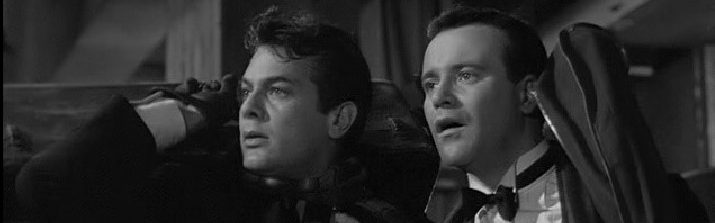
“They Drive By Night” (1940) starring George Raft, Humphrey Bogart, Ann Sheridan, & Ida Lupino

[1] The dialogue is salty and well-delivered… while the background stuff- the diners, rented rooms and garages- is beautifully detailed and always believable.

[2] …it features a top-flight cast of actors who are usually fun to watch.

[3] It’s mile-a-minute banter delivered by pros (this film played a big part in landing bigger roles for Bogie).

-Excerpts from IMDB reviews

[Paul is checking out Cassie, a waitress, at a roadside diner.]

Cassie Hartley: All right, that’s enough of the X-ray treatment.

This is the story of the Fabrini brothers, ladies’ man Joe (George Raft) and married man Paul (Humphrey Bogart), independent-minded truckers somewhere in California. They’d like to buy their own rig, but can’t afford one. There is tough competition and long-haul trucking is dangerous. Cassie Hartley (Ann Sheridan) is the wise-cracking waitress the brothers pick up on the road. Joe obviously has eyes for her. Later that night, they witness a terrible accident after a fellow trucker falls asleep at the wheel! Later on, circumstances drive them to work for Ed Carlsen (Alan Hale), a former trucker who runs his own business. His much younger wife, Lana (Ida Lupino), is very interested in Joe.

Joe Fabrini: Do you believe in love at first sight?

Cassie Hartley: It saves a lot of time.

This film is considered an underrated/lesser-known noir. Raft and Bogart are close in age and have great chemistry, so you believe them as brothers. It’s refreshing to see Bogie (before he became a leading man) as a regular guy; I don’t think I’ve seen him smile so much! I reviewed Thieves’ Highway (1949) earlier on this blog; it also deals w/ the trucking business. The screenplay of They Drive by Night was based on a novel by A. I. “Buzz” Bezzerides, who wrote Thieves’ Highway (based on his experiences as a first gen American/former trucker).

Producer Mark Hellinger’s wife, Gladys Glad (a former showgirl on Broadway for Ziegfeld), was responsible for getting this film made. Hellinger brought home a stack of scripts to read, skimmed this script, but felt that “nobody would pay money to see a bunch of truck drivers.” Glad read this script, liked it, and pressured her husband to read it. The film became the sleeper hit for Warner Bros. It was directed by Raoul Walsh and shot in just 33 days (in sequence).


“The Wedding Guest” (2018) starring Dev Patel & Radhika Apte

Jay (Dev Patel) is a quiet/mysterious Muslim man who travels from London to the Punjab region of Pakistan, supposedly to attend the wedding of a friend. He brings along duct tape, guns, several cell phones, and a plan to kidnap the bride-to-be, Samira (Radhika Apte). Despite his cold efficiency, the plan quickly gets out of control, sending Jay and his hostage on the run across the border and through different parts of India. Jay has various names and identities, so carries several passports and credit cards. He was hired by a wealthy man who is now nervous to meet up and pay. The kidnapping and fallout make international news (Samira is a British citizen). The story evolves into a road trip, but w/ settings we usually don’t see in movies.

The film (which I saw last week free On Demand) has British and Indian producers. It has some twists and turns, but isn’t a typical thriller. It seems to me like a neo noir (in some aspects). The British writer/director, Michael Winterbottom, is known for out of the box films; I’ve seen Jude and The Claim. The cinematographer, Giles Nuttgens, has shot several films in India (incl. Earth, Fire, Water, and Midnight’s Children w/ director Deepa Mehta). The music, composed by Harry Escott, is unique and helps to create tension. The attraction between Patel and Apte develops as they open up to each other (slowly); they have good chemistry together.

[1] The movie benefits enormously from Dev Patel’s excellent work. He is in virtually every frame of the movie. Indian actress Radhika Apte… turns out to be a worthy sparring partner for Patel.

[2] You’ll like this movie if you like human characters, feelings, & relationships, along with a “slice of life” style, where you witness the characters move through a time & set of shared experiences together & may end well, badly, or anywhere in between.

Patel is now a mature leading man — in this movie, a bit of a Jean Reno type. He’s deadpan, but I like it.

-Excerpts from IMDB reviews