Two Films (w/ “North & South” actors)


The Glass Virgin (1995)

What qualities makes one a “gentleman” or “lady?”  Is one’s identity determined from birth, or can it change?  These are the questions at the core of Catherine Cookson’s The Glass Virgin.  As a child in 1870s England, Annabelle LeGrange is sheltered by her mother and servants.  One day, her curiosity leads her to see something long kept hidden. 

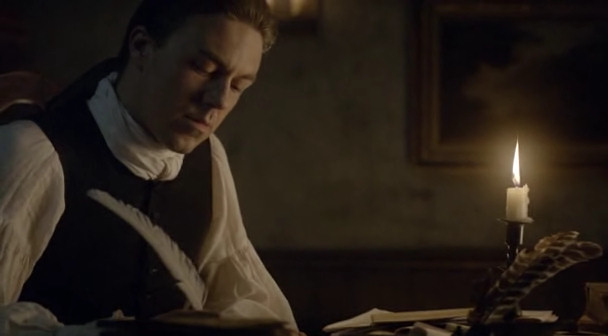
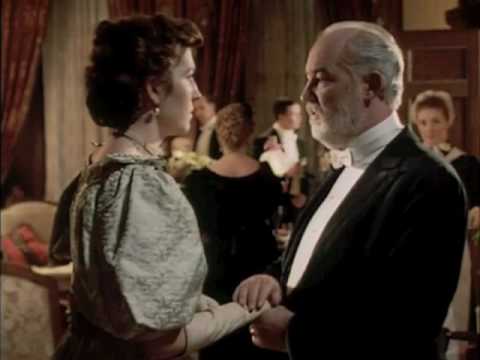
During a trip into town, Annabelle is rescued from a runaway coach by a young outsider, Miguel Mendoza (Brendan Coyle).  Seeing his strength, Mr. LaGrange offers him a job.  Miguel, who is actually Irish, says he’ll only work w/ horses.  In time, he teaches Annabelle to ride, and they become good friends.       

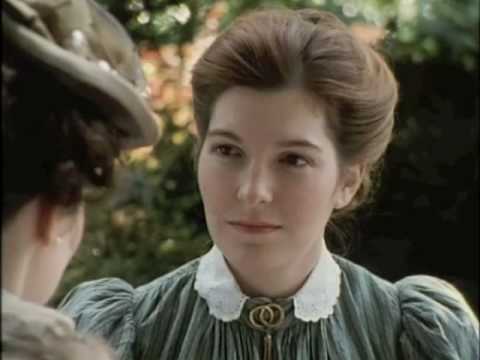
The 17 y.o. Annabelle (a young Emily Mortimer) flees from her life of upper-middle class comfort when her true parentage in revealed and her “father” arranges a marriage to be rid of her.  Annabelle’s only ally is Miguel, who insists on traveling w/ her to find another life.  The pair find work on a small farm, then a bigger one run by a good-hearted, fair-minded family.  They say they are cousins and live as such, never as a couple.   

Over the course of one tough, life-changing year, Annabelle learns and matures into her own person.  She teaches Miguel to read, and says that he has a lot of potential.  He falls in love w/ her, but keeps it hidden, as her station in life was so above his.  Can Annabelle marry a working-class man?  What will she do when called back to her mother and old way of life?


This film is not very well-made and had a low budget; it was a TV miniseries.  There are no frills, some bad (wooden) acting from supporting players, and weird transitions.   Most of the dialogue is very simple.  (Honestly, I watched it just b/c Brendan Coyle was in it.  He does a great job, as usual!)  Emily Mortimer, who was a newcomer to film then, takes some time to grow into her role.

Some viewers thought it was weird that an older friend from childhood became a love interest.  (But wait, what about Emma and Mr. Knightley?  He was 16 yrs older than her.)  Those who read the novel noted that Miguel was only 10 yrs older than Annabelle.  I had a Renaissance Lit prof who said that “we shouldn’t put the values from our modern world onto the past.”            


The Impressionists (2008)

This is one of the most gorgeous films I’ve ever seen!  (It ranks up there w/ A Walk in the Clouds, which Rogert Ebert praised as the “type of movie you’d want to live in.”)  It’s actually a 3-part miniseries, has a strong ensemble cast, and is a true story. 

The elderly Claude Monet (Julian Glover) talks about his life, and that of his fellow Impressionist painters, to a reporter.  The younger Monet (Richard Armitage) left home, served in the army, then went to Paris to study.  At the school, he met the wealthy/jovial Renoir (Charlie Condou) and doctor-in-training- Bazille (James Lance).  They chafed against their “old school” teacher’s methods and eventually went off by themselves to paint.  As we know, Monet was inspired by the outdoors (nature) and always sought to “capture the light.” 


The young artists deal w/ money troubles, various romances, government art critics (that seek to protect the image of “good art”), and their own frustrations.  There are stories about quirky painters, such as Cezanne- a hermit who’s actually from a wealthy family.  There are interesting tales behind famous paintings.  Did you know that the woman in the green dress became Monet’s first wife?  He approached her in the marketplace and asked to paint her portrait. 

Monet’s second wife (played by Amanda Root) was the former wife of his benefactor.  At first, she didn’t see what was the big deal about his work- LOL!  One reason that I liked this film was that two of my fave actors were playing a couple.  (Below is an Impressionistic promo pic w/ RA and Root.) 


If you haven’t yet, watch RA and Coyle together in the 2004 BBC miniseries North & South!  Here is a short clip:

http://www.youtube.com/watch?v=fM0gsBnbfrc

You can watch the entire film here:

http://www.youtube.com/watch?v=oN58WAmuuqI


“Garrow’s Law” (Series 1)

Who’d have thought late 18th century London (just a few years after our American Revolution) would be such an exciting setting for a courtroom drama!?  The cases you see on this TV show are based on real cases of the Georgian era.  The protagonist is a confidant, intelligent, and passionate young man  ahead of his time.  He doesn’t just want to practice the law- he wants to change it (as the system is rigged heavily against defendants).  Hmmm… sounds a bit like the young John Adams!

All lawyers aren’t bad- LOL!  William Garrow, the son of a humble headmaster (principal), didn’t go to Oxford.  He learned at his father’s school, then studied with a mentor (a solicitor) in Billingsgate.  Being ambitious and energetic, he eventually pushed aside paperwork (writing briefs) and became a barrister.  He tried his first case at age 23- unthinkable in our time!  Garrow is the one credited w/ the the phrase “innocent until proven guilty.”  He didn’t play it safe, even in his personal life.

Garrow (Andrew Buchan, who had supporting roles in the newest Jane Eyre and Cranford) is an eager hothead when we first meet him.  His mentor, Mr. Southouse (musical theater and TV veteran Alun Armstrong), cautions him against speaking too boldy in court and losing the sympathy of the (very powerful) judges.  Garrow wants to address the jury, and does on several occasions, though this is frowned upon.

p01zvthm


MP Sir Arthur Hill (Rupert Graves, most recently seen in Sherlock), is impressed by Garrow’s performance in court.  His beautiful, well-read, and opinionated wife, Lady Sarah (Lyndsey Marshal from Rome) is also impressed.  However, at their dinner party, we quickly learn that Garrow’s politics are quite different from Sir Arthur’s.


Lady Sarah admires Garrow’s strong convictions (in line with many of her own forward-thinking ideals).  She often observes trials, sitting beside the judge and other notable people.  Lady Sarah even pays for Garrow to help a poor young servant.  Their mutual respect and admiration eventually grows into more (you’ll have to see).  Also, politics and his ambition create a big distance between Arthur and Sarah.

The dialogue on this show is very well-written!  (It sounds fresh, though it’s not modern.)  The production value is very high.  The sets, costumes, and music are all perfect for the period.  Buchan even looks boyishly handsome in a powdered white wig, black robe, and chunky heeled shoes.

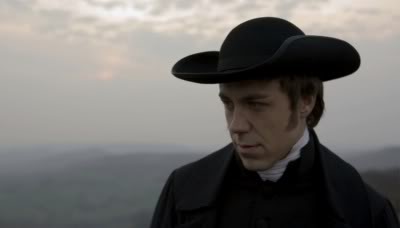
Buchan played clergyman St. John Rivers, Jane’s buttoned-up (and very emotionally repressed) cousin/suitor, in the 2006 BBC version of Jane Eyre.

In Cranford and Return to Cranford, Buchan played carpenter/family man Jem Hearne.

NOTE: Do NOT read further unless you want to know details from S1 eps.

Episode 1

p01gkwxr.jpg

You will learn that the law is not a game for gentleman. -Garrow to Silvester (an Oxford-educated prosecutor)

Garrow has been buried in paperwork, but gets a case at the Old Bailey in Ep 1. Everything was rigged against the defendant, as Southouse explains after giving Garrow the brief the night before the trial. He can’t visit his client in jail. He won’t be given a copy of the indictment. He won’t get to hear re: the evidence the prosecution has against his client. (Yikes, we’ve come a LONG way!)

The prisoner in the dark has too long been left to rot for want of counsel. -Garrow says to Sir Arthur Hill, a minister at Parliament

You lack manners. You were too angry and you lost control. -Southouse says to a disenchanted Garrow after his loss

silvester_garrow

The second case Garrow gets is thanks to Lady Sarah, who insists that her involvement be kept a secret, b/c it’d be like “an infidelity” in the eyes of her more conservative husband. A young unmarried washerwoman, Elizabeth Jarvis, has been accused of “infanticide” (though she insists her baby was stillborn). Garrow and Lady Sarah interview the defendant in Newgate Prison (VERY unusual), then have an independent doctor (“surgeon”) examine Elizabeth, then the body of her deceased child.

How can it be an improvement in my court where I play a lesser part? -Judge Bullard says (bemused) to Lady Sarah during lunch break from court

Episode 2

gl12

By now, Garrow has some claim to fame, and he likes getting the approval (since his parents are deceased). He (hesitantly) takes on the VERY unpopular case of a young man accused of cutting beautiful young gentlewomen in broad daylight. The defendant’s doting mother insists her son could never do such things, though he loves drinking, pros, and runs through money. The media refers to him as “The Monster,” and in time, so do the public. BUT just b/c a defendant is unlikeable doesn’t mean he’s guilty!

Episode 3

gl32

This ep focuses a BIT more on Garrow’s petsonal life; we see that he has more to learn still (though in court, he has a way w/ juries). When he thinks Silvester insulted Lady Sarah (who Garrow is in love w/), he challenges his nemesis to a duel. Mr. Southouse is bewildered, thinking Garrow is crazy and needs to bow out. But Garrow’s hot-headed/stubborn side wins over!

The main case Garrow handles is that of a noted “thief-taker” (bounty hunter to us modern folk) who could be using less clever/scared thieves to commit bigger crimes for his gain.

Episode 4

We are of like minds, you and I. -Garrow says to Lady Sarah

Sir Arthur tells Garrow his good news, which could mean that Lady Sarah could be lost to him forever. She insists that she won’t leave her husband.

The crux of this ep centers on the case of a businessman/husband/father to 3 young children, Joseph Hamer. He has been imprisoned in Newgate for 3 mos. ONLY for gathering w/ those who think like him and exercising free speech. His wife, Mary, impresses Southouse and Garrow w/ her convinction and strength; she wants the BEST defense for the man she loves. There has been NO charge (reminds one of Guantanamo cases) yet, BUT Garrow will take the case.

Your case, Joseph, is played out in the shadow of the guillotine. They [the aristocracy] fear you. -Garrow puts things into context when he meets his defendant

Late one night, Joseph is dragged from his cell to a meeting w/ ministers of Parliament (incl. Sir Arthur). They grill the humble shoemaker w/ questions, BUT he asks for actual charges. Lady Sarah wonders what’s all the noise-the jailers and heavy shackles disturbed her quiet. She meets Joseph in the hall, and realizes that her husband MAY be on the wrong side of justice. Finally, Joseph gets his day in court, BUT the charge is “high treason” (so he could be hanged)!

“Downton Abbey”: Top 10 Moments

10. The Thomas-William smackdown- you knew it was gonna happen! 

9.  Suffragette-to-be Lady Sibyl’s various ploys to help Gwen, the ambitious second housemaid, get a secretary job were sweet and funny.  (Becoming a secretary would be a step up for Gwen, whose parents are farmhands.) 

8.  Mr. Carson, the butler and head servant, encouraging and consoling Lady Mary (his favorite) 

7.  The rivalry between The Dowager Countess of Grantham (Violet) and Isobel Crawley (Matthew’s mother)-playing out in their scenes together, esp. re: the village hospital and flower show   

6.   Anna plainly and clearly says “I love you, Mr. Bates.”  When she adds “I know a lady shouldn’t say such things, but I’m not a lady,” he objects by saying that she’s “the finest lady” he’s ever known.  Wonderful!

5.  The Countess (Cora) tells The Dowager Countess (w/o using many words) about the incidents surrounding their Turkish guest’s death

4.  Lord Grantham breaking down in tears after the loss of the baby (a son)

3.  Lady Edith writing her (tell-all) letter to the Turkish ambassador in London

2.  Anna and Mr. Bates’  (almost) kiss in the backyard

1.  Lady Mary and Matthew’s (long-awaited) kiss in the dining room

“Bramwell” (Series 1)

This show, which first aired on BBC in 1995, is set in late 1890s London.  Unlike most period dramas you’ve seen, there is little time spent on drinking tea and worrying about marriage, b/c  the title character is a female doctor.  She is Dr. Eleanor Bramwell (Jemma Redgrave: daughter of Corin and niece of Vannessa and Lynn)- mid-20s, outspoken, and ambitious.  After her mother died in childbirth, she was raised by her doctor father, Robert (David Calder), who runs his private practice out of their townhouse.  But in another life, he was an army surgeon.

It’s Eleanor’s dream to become a surgeon, though she barely gets to assist at East End Hospital where she works (in the 1st ep).  Most of the other doctors (male, of course) either ignore or laugh at her.  Her supervisor, an elderly and pompous surgeon, Sir Herbert (Robert Hardy), thinks that Eleanor should quit medicine, act more ladylike, and find a husband.  Her only ally is Dr. Joe Marsham, an anesthetist who comes from the North and was raised working-class.  He has the wrong accent and manners in the eyes of the other docs.  Dr. Marhsham also wants to perform surgery, but never gets a chance.

Eleanor becomes more and more disillusioned w/ her work at East End.  Her father worries that she’s “becoming too hard” and offers her a partnership w/ him.  One day, Sir Herbert unnecessarily performs surgery on a young mother (who probably had post-partum depression).   The woman dies on the operating table, but  the male docs don’t seem to care.  Eleanor is horrified and angered.  (There is blood, but don’t let a a little squemishness stop you from watching this excellent show!)

Eleanor finds another (unlikely) ally in Lady Cora Peters, a wealthy widow who is planning to set up a small infirmary w/ the legacy (money) of her late husband.  While visiting Sir Herbert at the hospital, Lady Peters is impressed by Eleanor’s determination to save a patient’s leg.  She offers the running of her infirmary (The Thrift) to the young woman.

Though Eleanor is a tough cookie, she has a lot to learn when she opens up The Thrift.  The patients are very poor, dirty, malnourished, and often drunk.  A few are violent towards each other and the staff.  In one intense scene in the 2nd ep, a patient threatens Eleanor w/ a broken bottle.  In another ep, a soldier w/ a brain injury attacks her late at night.  (Being a doctor is a risk to her reputation and safety.)

Besides being gritty, realistic, and very well-written, Bramwell is an educational show.  (You’ll see how far we’ve come w/ medical advancements!)  The father-daughter relationship is very prominent and touching.  When Eleanor pours herself a whisky after a hard day, her father is a bit shocked.  In one episode, he fixes her up w/ one of his younger army buddies.  They respect each other as professionals and speak plainly w/ each other.

“Anna Karenina” (BBC – 2000)

Happy families are all alike; every unhappy family is unhappy in its own way.

Sometimes fine actors just don’t have chemistry w/ each other!  This is the main problem in the 2000 BBC miniseries based on Leo Tolstoy’s well-known, tragic love story.  Helen McCrory (in the title role) and Kevin McKidd (who plays Count Vronsky) don’t generate much heat, which is a crucial part of the story.  She is an especially good actor w/ a great voice and onscreen presence.  Her few scenes w/ the little boy who played her son were touching.

In the 1997 version (w/ Sean Bean and Sophie Marceau), the leads not only look good together, but actually look like they are in love.  Though that film has its own flaws, it has much more passion in it.

The director in the miniseries made some odd choices.  Sometimes a handheld camera is not needed, but it’s used anyway.  There are too many close-ups and not enough light.  In the ’97 version, when Anna and Vronsky first meet, you can see their mutual attraction.  But in this version, the crucial moment becomes ho-hum.  Anna just looks at Vronsky for a moment through her veil- a lost opportunity for the director.  Their first dance is much more romantic/dramatic in the’97 version.  (It reminded me of Scarlett and Rhett’s first dance in Gone with the Wind.)

The actors who rise to the occasion in the miniseries are Douglas Henshall (Constantine Levin) and Paloma Baeza (Princess Kitty).  Henshall, whose real Scottish accent pops out in a few scenes, is the long-haired/bearded gentleman farmer w/ a past.  He thinks too much and worries if he’ll ever win over Kitty, who is innocent and young.  Baeza’s character starts out as a silly girl w/ a crush on the dashing Vronsky.  In time, Kitty learns about love and blossoms into a mature/sensitive wife.

 No one may build their happiness on another’s pain.

Anna’s philandering brother Stiva (played by Mark Strong) and his wife Dolly(played by Amanda Root) both get some nice lines.  “I love him, but I don’t respect him,” Dolly admits toward the end of the film.  She tolerates her husband’s affairs (just as many Russian nobles did at that time).

Anna and Vronsky’s love affair is atypical for their circle.  They truly are in love, not just fooling around b/c of lust or boredom.  Stephen Dillane (who plays Karenin) won’t give Anna a divorce, so she and Vronsky can’t marry.  Anna is forbidden to see her 8 y.o. son and becomes a social outcast.  Vronsky can’t give his baby daughter his name w/o that divorce.

Every time I tried to display my innermost desires – a wish to be morally good – I met with contempt and scorn, and as soon as I gave in to base desires I was praised and encouraged.  –Leo Tolstoy wrote two years after publication of Anna Karenina

After Levin meets Anna, he tell her brother that he liked her b/c “she’s so honest.”  Anna eventually spirals downward, turning to alcohol and opium.  She accuses Vronsky of betraying her w/ a younger woman.  Vronsky goes off to take care of some business for his mother.  But Anna is so paranoid and desperate by this point that she throws herself under a train.