Show Boat (1951) starring Kathryn Grayson, Ava Gardner, & Howard Keel

The Cotton Blossom, owned by the Hawks family, is a show boat known for musical entertainment traveling down the Mississippi River. Julie LaVerne (Ava Gardner) and her husband, Steve (Robert Sterling), are the leading actors of the show. After a jealous boat hand calls the local police on Julie (who’s father was white and mother black), they’re forced to leave; interracial marriages were forbidden (in the 1890s). Magnolia (Kathryn Grayson), Captain Andy’s (Joe E. Brown) pretty young daughter, becomes the new attraction; she has a great smile, a good voice, and learned much by watching Julie. Her leading man is Gaylord Ravenal (Howard Keel), a charming/handsome gambler, who is impressed w/ her at first sight. The two fall quickly in love and marry, w/o the approval of her mother, Parthy (Agnes Moorhead).

Nolie soon faces reality; gambling means more to her husband than anything. She confronts him after he gambles away their fortune; he leaves in the middle of the night. Nolie runs into two old friends, Ellie May and Frank (Marge and Gower Champion), who sang and danced on the show boat. They’re going to perform at a nightclub; Nolie tags along. None of them know that Julie is working at the same club; she is backstage and recognizes the song Nolie sings. Julie leaves the club abruptly, angering the manager and owner, b/c she hears that Nolie needs a job.

A few yeard later, Julie meets Gaylord on a gambling boat, and realizes that he’s Nolie’s runaway husband. Julie gives him a piece of her mind, and shows him an ad w/ the captain, Nolie, and his little daughter. Gaylord swears that he never knew he had a child. Julie begs him, if he ever sees her old friend, to never tell how low she has sunk. Gaylord decides to go to Natchez (where the show boat is docked) and seek forgiveness from his family.

I’ve seen this colorful MGM musical (written by Jerome Kern and Oscar Hammerstein II) maybe 3 times. I recall loving the songs (and having the CD); my favorite songs are “Ol’ Man River” and “Life Upon the Wicked Stage.” Looking at it today (on TCM), there are some pretty good performances (esp. from Gardner). The role of Julie (who passes as white) is tragic, though she is beautiful, talented, and loyal (esp. to Steve, who eventually leaves her). She turns to alcohol and her singing suffers. At the end, Julie is left w/ nothing, b/c this society has no place for her.

[1] Ava is, as always, ridiculously and insanely gorgeous. In fact, I would have liked to have seen more of her than I did. It’s a stretch for a white woman to play a bi-racial woman, but she did it with what seemed like such ease. She accompanies so much with a look (which is evident as she watches Gay and Nolie sail off together with Kim — you all know what I’m talking about). 

[2] Now for Marge & Gower Champion: who couldn’t love them? Gower is this sort of… fluid-like creature with a stature and grace like Fred Astaire, but instead of Astaire’s “lanky movements” that defined his style, he somehow executes the more athletic, brisk movements that defined Gene Kelly’s style. And Marge has to be just about the cutest little person I have ever seen (great facial expressions!) and one of the most talented dancers… I’ve ever seen grace a screen. “I Could Fall Back on You” and “Life Upon the Wicked Stage” are two of the most outstanding moments in the movie. You’ll love them.

[3] Musically of course, the film is a masterpiece and though my favourite tune is “Make Believe”, I was extremely impressed by the version of Ol Man River sung by the actor William Warfield who must have had one of the most brilliant voices I have ever hear! I confess to never having heard of this gentleman prior to seeing the film and had imagined the singer to be Paul Robeson. 

-Excerpts from IMDB reviews

Some Trivia Behind the Film

  • The original production of Showboat opened in the Ziegfeld Theater on December 27, 1927 and ran for 572 performances.
  • Even though the character of “Magnolia” is supposed to look up to “Julie” in an older-sister type of relationship, in reality, Kathryn Grayson and Ava Gardner were born in the same year.
  • The Breen Censorship Office tried to raise an objection against the use of the “miscegenation sequence,” but they were unable to do so because the 1936 film had already used it (setting a precedent).
  • Lena Horne mentions in her biography that she wanted to do the role of Julie badly, but only got as far as performing a single number in the “Clouds” film in the opening “Show Boat” vignette. America was still a segregated nation in 1950; interracial romance was taboo onscreen.

A Star is Born (1937) starring Janet Gaynor & Fredric March

In rural North Dakota, a petite redheaded young woman, Esther Blodgett (Janet Gaynor), goes often to the movies; she also wants to be in them. When she admits this to her family, her little brother laughs, her father is confused, and her aunt considers it foolish (saying Esther needs a husband). Her 70-something grandmother, Lettie (May Robson), is the only one supports her, even giving Esther her own life savings. 
Esther, everyone in this world who has ever dreamed about better things has been laughed at, don’t you know that? But there’s a difference between dreaming and doing. The dreamers just sit around and moon about how wonderful it would be if only things were different. And the years roll on and by and by they grow and they forget everything, even about their dreams. -Grandmother (Lettie) explains to Esther
After a month, Esther still has no job, but makes a new pal who also lives in her hotel- Danny (Andy Devine)- an aspiring director. In a few more months, Danny gets an assistant director job. One night, he recommends Esther for a waitress gig at the home of a studio head, Oliver Niles (Adolphe Menjou). Norman Maine (Fredric March), a handsome/successful/middle-aged actor, can’t take his eyes off her; this is the same man she watched growing up! 
Do you mind if I take just one more look? -Norman asks Esther (after dropping her off after the studio party)
With some prodding from Norman, Oliver prepares a contract for Esther (AKA Vicki Lester). It turns out that her artless personality and girl-next-door looks appeal to audiences. After they marry, the couple go on a honeymoon out West, and Norman even gives up alcohol. And the rest is what dreams are made of, right? Well, it’s not that easy… and Esther discovers the reality behind the glamour quick enough.
His work is beginning to interfere with his drinking. -A reporter comments re: Norman
Norman’s previous heavy drinking, as well as late-night practical jokes, have put off many directors. Though he brought the studio success for many years, Oliver explains that it’s no longer profitable to keep on Norman. The actor says he understands, yet finds it increasingly difficult (on his ego) to be a house husband. Alas, Esther’s love is not enough for Norman! 
[1] March displays just the right degree of brashness, of knowingness, and a combination of ego and a real actor’s almost complete lack of ego. It’s a miraculous piece of work. The script for this version was partly written by Dorothy Parker and Alan Campbell and it shows. It’s an acerbic and, at times, savage movie about the movies, quite cynical for a major studio picture of it’s day.
[2] March… strikes just the right balance between Norman’s vulnerability and his pomposity. You never doubt that he loves Esther.  
[3] I guess Hollywood knows itself better than anyone else and films about the industry can be scathing. The star is a creature with a fragile ego, one moment a whim can move mountains, a slip in public affections and no one wants to know you. March as Maine has been slipping for some time and he catches on, way too late. But as March is going down, Gaynor is on the up escalator and they meet mid point and fall in love. How they deal with their joint careers or lack thereof in one case is what A Star is Born is all about. 
[4] This movie has been done three times: this one in 1937, then in 1954 and finally 1976. Of course, this story – rags to riches in the acting business – was done first by others – principally Katharine Hepburn in Morning Glory (1933) and, oddly enough, again in Stage Door (1937), and again with Hepburn ably assisted by a host of well-known Hollywood actors… The difference with Star, of course, is it’s maybe the first movie to dig into Hollywood screen acting and make an attempt to lay it bare.
-Excerpts from IMDB reviews
Some Trivia Behind the Film
  • The first all-color film nominated for an Academy Award for Best Picture.
  • The movie got its story-line from What Price Hollywood? (1932).
  • It has been speculated that the story was inspired by the real-life marriage of Barbara Stanwyck and her first husband, Frank Fay.
  • The character of Norman Maine was based on several real actors, including John Barrymore, who was considered for the role.
  • During Esther’s screen test, she is dressed in an antebellum costume and surrounded by other actors in Civil War uniforms. This is an in-joke reference to the fact that the producer of A Star is Born, David O. Selznick, had recently bought the rights to adapt Margaret Mitchell’s novel Gone With the Wind and was undergoing a highly publicized national search for an actress to play the lead role, Scarlett O’Hara. 

The Odd Couple (1968) starring Jack Lemmon & Walter Matthau

[1] …the movie is a revelation. The script reveals surprising depth about love, hate, and human relationships. 

[2] …it’s a portrait of two friends helping each other through the agony of divorce. It’s also damn funny from start to finish, but it’s the kind of comedy that arises from realistic, stressful, and just plain awful situations.

[3] I remember something that Roger Ebert said in an interview with Martin Scorcese. Ebert said that “Raging Bull” was a great movie. People would protest that they didn’t want to see it, because they didn’t want to see a film about boxers. No, Ebert insisted. The subject matter of a film is not the heart of the film. Rather, it’s how well a film is made that matters. An expertly made film about boxers is better than a badly made film about a topic you may be interested in. So, no, I’m not a man; I’m not divorced. But “The Odd Couple” was so well made that I fell in love with it. I surprised myself by laughing out loud throughout the film. 

-Excerpts from IMDB reviews

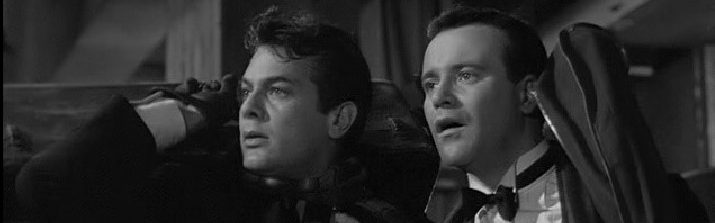
Felix’s (Jack Lemmon- one of my faves) wife, Frances, has left him and he’s thinking of suicide. His friends sense his depression and one of them, Oscar (Walter Matthau), volunteers to take him in (after all, he has a HUGE apt on the UWS of Manhattan). The two of them are polar opposites- Oscar is fun-loving, extroverted, and V messy; Felix is a cautious, introverted, and an OCD-type of neat-freak. Being around Oscar cheers Felix up, but he quickly starts to irritate Oscar.

Don’t threaten me with jail, Blanche, because it’s not a threat. With my expenses and my alimony, a prisoner takes home more pay than I do. -Oscar comments to his ex-wife (over the phone)

I know him. He’s too nervous to kill himself. Wears his seat belt in a drive-in movie. -Oscar explains to his poker buddies (close friends) re: Felix

Funny, I haven’t thought of women in weeks. -Felix comments to Oscar (after Oscar proposes they set up a dinner date w/ his British neighbors- the Pidgeon sisters)I fail to see the humor. –Oscar replies

I put order in this house. For the first time in months, you’re saving money. You’re sleeping on clean sheets. You’re eating hot meals for a change and I did it. -Felix explains to Oscar

You leave me little notes on my pillow. Told you 158 times I can’t stand little notes on my pillow. “We’re all out of cornflakes. F.U.” Took me three hours to figure out F.U. was Felix Ungar! -Oscar tells Felix (in their “break-up” scene)

I know him. He’ll kill himself just to spite me. Then his ghost will come back, following me around the apartment, haunting and cleaning, haunting and cleaning, haunting and cleaning… -Oscar laments to his friends (as they drive around looking for Felix)

This screenplay (written by Neil Simon) is full of hilarious lines; Simon also had a hit on Broadway w/ his play. Simon, who MANY consider to have a great ear for dialogue, died this past August at age 91. Felix is based on his older brother, Danny, who was also a playwright. Lemmon and Matthau (real-life friends) are perfect together! As a reviewer noted, buddy comedies are ALL about the actors and script. I’d NEVER seen this famous film before, BUT it’s a must-see! The term “odd couple” is a part of American pop culture; it’s often used to describe people who don’t seem to belong together. After this film, there were spin-offs, incl. 2 sitcoms (one of which was long-running) and even a cartoon. 

Click below to watch a NYT video tribute of Neil Simon. 

Network (1976) starring Faye Dunaway, William Holden, Peter Finch, & Robert Duvall

Last week, Future Tense (a program of the New America foundation) had a free screening of this classic film. Julia Turner, editor-in-chief of Slate magazine, introduced the film, then did a brief discussion/Q&A afterwards. I regularly listen to her on the Slate Culture Gabfest. Director Sidney Lumet and screenwriter Paddy Chayefsky claimed that the film was NOT meant to be a satire, BUT a reflection of what was really happening. 

This is not a psychotic episode. This is a cleansing moment of clarity. I’m imbued, Max. I’m imbued with some special spirit. It’s not a religious feeling at all. It’s a shocking eruption of great electrical energy. I feel vivid and flashing, as if suddenly I’d been plugged into some great electromagnetic field. I feel connected to all living things. To flowers, birds, all the animals of the world. And even to some great, unseen, living force. -Howard explains to Max (after his on-air breakdown) 

This film follows TV execs (at UBS, a fictional network) ready to do anything to boost ratings—incl. sacrificing journalistic values and cashing in on veteran news anchor, Howard Beale (Australian actor Peter Finch) who goes off-script during one night’s live broadcast. A young/ruthless Director of Programming, Diana Christensen (played w/ scenery-chewing gusto by Faye Dunaway), wants to exploit this for the good of UBS (and her career). After all, Howard’s rantings garnered high ratings (esp. for a news show). Howard is NOT fired, but given a new show; he quickly becomes a media icon, drawing millions of viewers to UBS and influencing their everyday behaviors. 

Diana starts up a relationship w/ an older news producer, Max Schumacher (iconic leading man William Holden). Max is concerned about his old friend Howard’s mental health, yet also attracted to Diana’s energy and beauty.  Diana also seems to have some sort of alliance w/ a higher-level exec, Frank Hackett (Robert Duvall). There is coldness, yet also sly humor, in Duvall’s performance. Lumet told Dunaway that he would edit out any attempts on her part to make her character sympathetic and insisted on playing her w/o vulnerability. This portrayal of a female on the up-and-up is problematic, esp. in out modern society, which Julia noted. Dunaway also has a GREAT wardrobe in this film; I esp. liked the books and coat (which we see in the reunion scene w/ Max on the street). 

The movie won four Academy Awards and became a fixture of pop culture. Beatrice Straight (who plays Louise, the long-suffering wife of Max) has the briefest performance ever to win an Oscar (Best Supporting Actress). The well-known character actor- Ned Beatty (who plays Mr. Jensen)- remarked that actors should never turn down work b/c: “I worked a day on ‘Network’ and got an Oscar nomination for it.” Aaron Sorkin has claimed that Chayefsky, particularly his script for Network, were inspiration for his own writing. Roger Ebert added the film to his Great Movies list and said it was “like prophecy. When Chayefsky created Howard Beale, could he have imagined Jerry Springer, Howard Stern, and the WWF?” The audience I saw it w/ would ALSO add Donald Trump to that list; there were MANY (knowing) laughs!

[1] The scenes between old chums Finch and William Holden are some of the best written scenes in any American movie until the Coen brothers emerged. Finch is superb, superb! And Holden, at the end of a legendary career, gives a performance of such ferocious sincerity…

[2] The performances are just as brilliant as the social commentary. Each actor becomes so absorbed into their characters that you can’t even tell they’re acting. It feels like you’re watching these people in their daily lives, interacting and becoming more and more corrupt. 

[3] This is certainly a film for the history books. Every connoisseur of film should be exposed to this movie at some point in their life. If you happen to be cynical, then you will love every minute of this movie as its stark view of life in the 1970’s (and onward) touches the hard of even the hardest of cynics. For those educators out there, GREAT film for classes on Media and Politics.

-IMDB comments

Pygmalion (1938) starring Leslie Howard & Wendy Hiller

This isn’t exactly like My Fair Lady (sorry, if you’re looking for that)! There are NO songs (plus or minus, depending on the viewer), it’s in B&W, and considered a more realistic version of George Bernard Shaw’s story (inspired by Greek myth of Pygmalion and Galatea). In contrast to Audrey Hepburn’s Eliza, Brit actress Wendy Hiller (who some of you may know from the beloved Canadian Anne of Avonlea mini-series) is more of a plain Jane, though tall and elegant in bearing (when she has to be). Leslie Howard’s Prof. Higgins is younger (a plus, IF you want to play up the romance angle) than Rex Harrison. His speech is less showy, more matter-of-fact, yet still cutting (esp. towards Eliza).

Howard also co-directed this film (as I learned from TCM); he’s much more than Ashley from Gone with the Wind.  Though his looks and usual style of acting are NOT my favorite, you have to respect a guy w/ such a long line of (mostly well-made) films. There are a few points in this film where my attention drifted (just being real- it’s a ’30s film after all). I think fans of this story (and classics in general) should give it a watch. 

There’s lots of women has to make their husbands drunk to make them fit to live with. -Eliza explains at tea (to Mrs. Higgins’ guests)

Walk? Not bloody likely. I’m going in a taxi. -Eliza declares to Freddy when he offers to walk her home 

Some Trivia re: the Film:

Shaw was the first person to have won both the Academy Award and the Nobel Prize. 

The first British film to use the word “bloody” in its dialogue; this word was an expletive , so considered extremely vulgar.

In the British version, Howard says “damn;” in the American one, he says “hang” or “confounded.” This was a year before David O. Selznick fought the Hays Office over permission for Clark Gable to say “Frankly, my dear, I don’t give a damn” at the end of Gone with the Wind (1939).

The scene in which Eliza accidentally swallows a marble during an elocution lesson does not appear in the original play. During rehearsals for this scene, a pained expression came over Hiller’s face; when she spat out the marbles she had in her mouth she said, “Leslie, I’ve swallowed one!” Howard replied: “Never mind, there are plenty more.” This caused such amusement among the crew that it was added to the film, then later to its musical version, My Fair Lady.