Pride & Prejudice turns 200 – BBC article
Jane Austen’s Pride & Prejudice at 200 – NPR story
Mr. Darcy vs. Mr. Thornton – Comparing two of our most-loved (fictional) men
Pride & Prejudice turns 200 – BBC article
Jane Austen’s Pride & Prejudice at 200 – NPR story
Mr. Darcy vs. Mr. Thornton – Comparing two of our most-loved (fictional) men

A portrait of Jane Austen
It is a truth universally acknowledged, that a single man in possession of a good fortune must be in want of a wife.
Thus begins one of the most-loved/discussed novels of English literature. It has been read in high schools, colleges, etc., by most of the women we know. We keep coming back to this book, and don’t forget the numerous TV/film adaptations.

Modern-day JA fan, Amanda (Jemima Rooper), gets Lost in Austen (2008) with Darcy (Elliot Cowan)
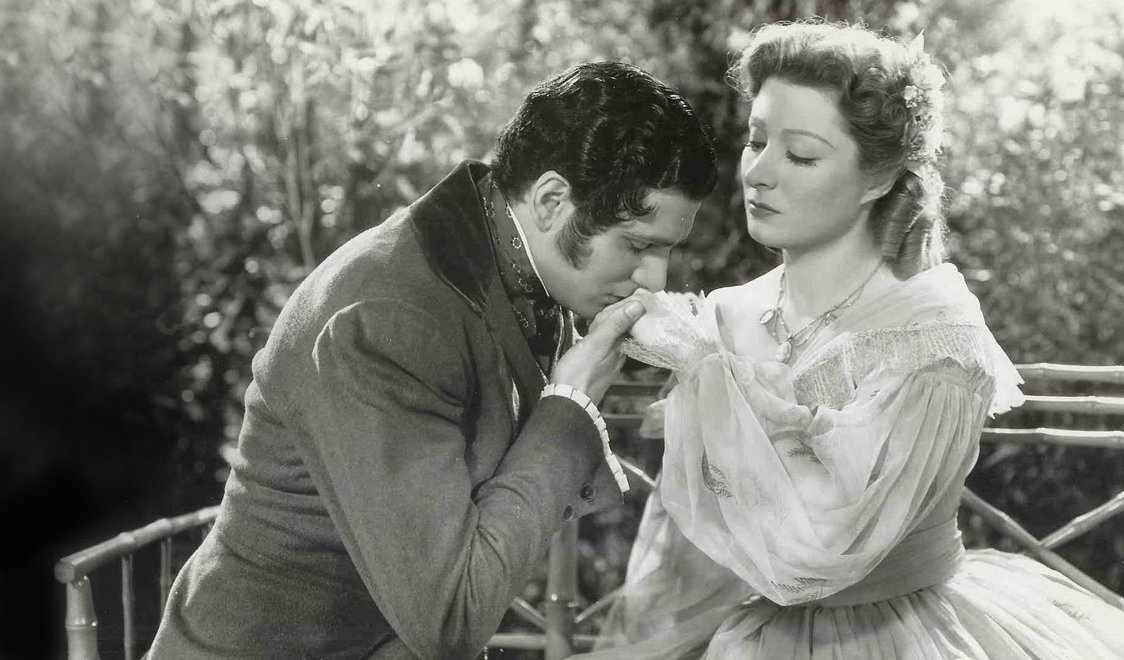
Darcy (Laurence Olivier) & Elizabeth (Greer Garson) in the 1940 film
It seems like Lizzie and Darcy are almost as iconic as Romeo and Juliet when it comes to famous couples. Other relationships are also important: Lizzie and her beautiful/shy older sister Jane, Lizzie and her hands-off father, Mr. and Mrs. Bennett (an odd couple), Lizzie (romantic) and older friend Charlotte (practical), etc. Let us focus on the main love story…

Jennifer Ehle (an American) as Elizabeth (A&E, 1995)

Keira Knightley as Elizabeth (2005)
She is tolerable; but not handsome enough to tempt me; and I am in no humour at present to give consequence to young ladies who are slighted by other men.

David Rintoul as Darcy (1980)
Ouch! Suffice it to say, Darcy does not make a positive first impression on Lizzie, her family, and the community-at-large. He doesn’t even dance once at the assembly ball in Meryton, which makes him look proud, vain, and disagreeable. (He later explains that he’s not at ease talking to strangers.)

My favorite Darcy: Colin Firth (A&E, 1995)
A geological sample of Darcy’s core, as portrayed so beautifully by Firth, would show the following layers: at the bottom, his breeding and wealth. Undeniable. On top of that, confusion, the push-pull of class–egad, 10,000 pounds a year and a house 10 times larger than Downton Abbey! -Elinor Lippman, Huffington Post (January 28, 2013)
Mr. Darcy soon drew the attention of the room by his fine, tall person, handsome features, noble mien; and the report which was in general circulation within five minutes after his entrance, of his having ten thousand a year.
Mr. Darcy’s sly humor comes out when Lizzie and Caroline are walking about the room. (Lizzie went to Netherfield, Bingley’s house, when Jane became ill.)
You either chuse this method of passing the evening because you are in each other’s confidence, and have secret affairs to discuss, or because you are conscious that your figures appear to the greatest advantage in walking; — if the first, I should be completely in your way; — and if the second, I can admire you much better as I sit by the fire.
Yes, vanity is a weakness indeed. But pride — where there is a real superiority of mind, pride will be always under good regulation.
Well, Darcy knows he’s an eligible bachelor, but he won’t be caught easily. (He’s not easily impressed- he’s still be a bachelor at the age of 28.)

Matthew MacFadyen as Darcy (2005)
…But disguise of every sort is my abhorrence. Nor am I ashamed of the feelings I related. They were natural and just.
Darcy’s first proposal is is very surprising to Lizzie- she tells him off! (After all, she thinks he’s treated Wickham very unfairly and ruined Jane’s chance at happiness with Bingley.) I really like the lines above that Darcy says, about how he hates to hide his true feelings.
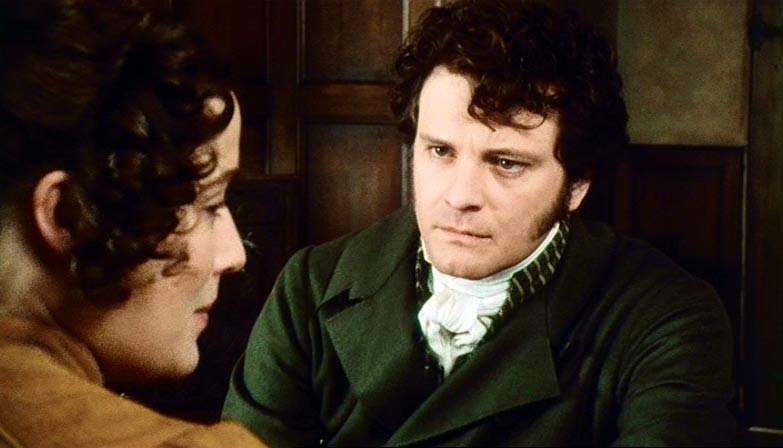
Elizabeth (Ehle) tells Darcy (Firth) about family troubles
When all hell breaks loose (because of Lydia’s running away with Wickham), Darcy becomes very concerned. We see his sympathtic side (above), but we won’t discover until much later just how much he has helped the Bennett family. (Actions speak louder than words.) If Lydia and Wickham hadn’t been married off quickly, then the the other sisters would’ve been tainted for life. Elizabeth felt guilty because she hadn’t revealed Wickham’s true character to others; Darcy had to protect Georgiana, his teenage sister, so he couldn’t expose Wickham either.
…Let me thank you again and again, in the name of all my family, for that generous compassion which induced you to take so much trouble, and bear so many mortifications, for the sake of discovering them.
If you will thank me,” he replied, let it be for yourself alone. That the wish of giving happiness to you might add force to the other inducements which led me on, I shall not attempt to deny. But your family owe me nothing. Much as I respect them, I believe I thought only of you.
The crisis, and its aftermath, propels the love story forward, though the couple are not together. Lady Catherine becomes a catalyst when she barges in on the Bennetts and insists that Lizzie never become engaged to her nephew. Darcy hopes to have another chance with Lizzie. (Bingley and Jane finally getting engaged brings happiness to them both, too.)
As a child I was taught what was right, but I was not taught to correct my temper. I was given good principles, but left to follow them in pride and conceit. Unfortunately an only son (for many years an only child), I was spoilt by my parents, who, though good themselves (my father, particularly, all that was benevolent and amiable), allowed, encouraged, almost taught me to be selfish and overbearing; to care for none beyond my own family circle; to think meanly of all the rest of the world; to wish at least to think meanly of their sense and worth compared with my own. Such I was, from eight to eight and twenty; and such I might still have been but for you, dearest, loveliest Elizabeth! What do I not owe you! You taught me a lesson, hard indeed at first, but most advantageous. By you, I was properly humbled. I came to you without a doubt of my reception. You shewed me how insufficient were all my pretensions to please a woman worthy of being pleased.
How can you not love such words, these characters, and such a terrific ending!?


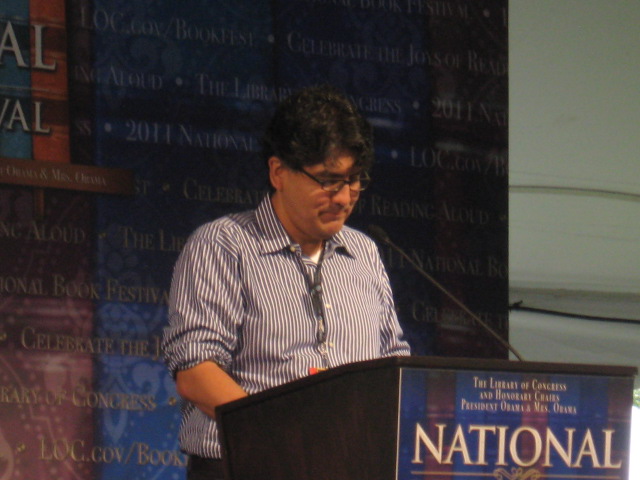
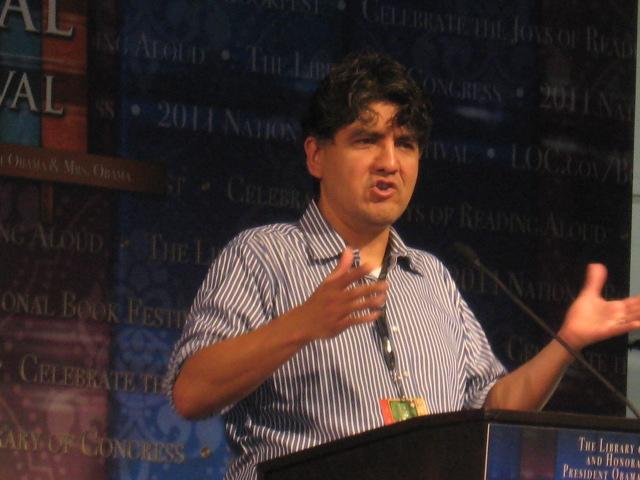


I recently went to the Nat’l Book Festival held annually here in DC. It’s a FREE event and suitable for ALL ages. I heard several authors speak, including Sherman Alexie, one of my favorite authors. He has overcome a LOT in his life to become a success: illness, alcoholism and many deaths in the family, absentee father, and poverty being some of the issues. Alexie’s desire for something better lead him to a HS (off the reservation) in a lower-middle class white town. He was the ONLY Indian student at that time. “I don’t know how it happened, but there were four PhDs teaching there.” He is a GREAT speaker and VERY funny! He also wrote the screenplays for Smoke Signals and The Business of Fancydancing.
Being a BIG fan, I knew some of the anecdotes and jokes he told. Alexie came to my high school in 1996 (before he was well-known). I learned that the doc who performed surgery on him (when he was an infant w/ an enlarged brain) was a Greek Muslim man. “I know some people are nervous about that kind of stuff… but not me. I’m like ‘Go Allah!'” he exclaimed. I bought his most recent book of poems and short stories, War Dances, which he autographed. It was PRETTY exciting for me (even more than when I met Jhumpa Lahiri and Chitra Divakaruni)!



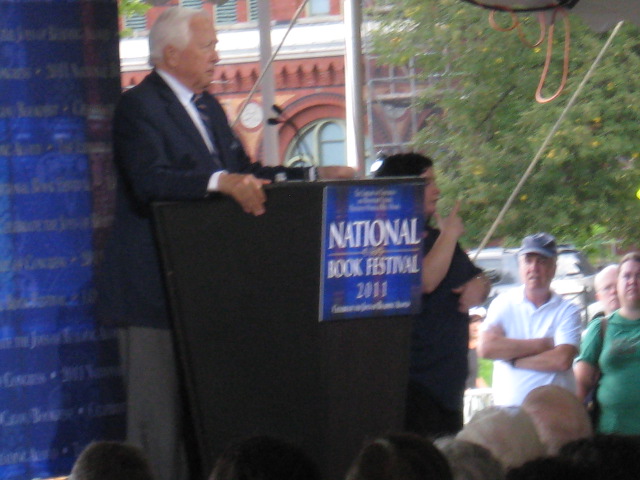
I also heard David McCullough speak; he got a BIG crowd. “Thank you for making history come alive,” a young grad student commented to the author. He is JUST as humble, gentlemanly, and well-spoken as you’ve seen on TV. Like Alexie, he spoke re: the importance of teachers and librarians. Much of his research was done in the Library of Congress, not Paris! After his talk, there was a live 1 hr. CSPAN 2 interview session where the famous historian took Qs from crowd, callers, and emails. McCullough’s latest book is The Greater Journey: Americans in Paris. Basically, it’s about several young/ambitious/pioneering 19th century Americans (including Mark Twain) who traveled to France to further their education. I still need to make time to read his book on John Adams. (The HBO series was AWESOME, so do check that out!)
But you must give him some sign, Mr. Trask, some sign that you love him… or he’ll never be a man. All his life he’ll feel guilty and alone unless you release him.

Director Elia Kazan wanted Marlon Brando for the lead role that went to breakout star James Dean. In this film, based on John Steinbeck’s novel, Dean plays bitter/tortured teen Caleb (Cal) Trask, who is constantly overshadowed by his sunny/easygoing brother Aron (Richard Davalos). The boys’ farmer father Adam (Raymond Massey) is deeply religious, reading the Bible aloud each night. He’s an emotionally closed-off man who admits that he’s “never understood” Cal’s moods/behaviors/desires.
Aron’s girlfriend Abra (Julie Harris) is a pleasant/kind girl who finds Cal frightening at first, then slowly gets to know (and even sympathize) with him. The setting, early 20th century Salinas valley of California, is “ironic” in this film because of the conflicted people (critic Kenneth Turan noted). Cal believes Adam only loves Aron. He (instinctively) finds out about his long absent mother, Kate (Jo Van Fleet). Adam is described as “kind” and “conscientious” by his friends/neigbbors; Kate is a former “drifter” who is running a “sinful” house (where men drink, gamble, etc.).

East of Eden contains (obvious) biblical themes; Cal and Aron are compared to Cain and Abel at one point. This film contains universal themes and intruiging characters who don’t always act how you expect; for example, Aron is strongly against fighting (WWI). Viewers of his time must’ve been surprised by Dean’s performance, but he’s not unlike today’s teenagers who are trying to prove their worth and and fit in.
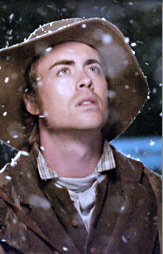
This sweet and sunny film was adapted from an early Thomas Hardy novel (surprise, surprise)! Beautiful, educated, and sweet-tempered Fancy Day (Keeley Hawes) comes from Exeter to take the job of schoolteacher in the village of Mellstock to be near her sick father, a retired gamekeeper. Dick Dewy (James Murray), his father, and a few of their friends are amateur musicians, so they sing carols on Christmas Eve. He falls in love w/ Fancy at first sight when she comes to the window to praise their song. (Murray bears a striking resemblance to Stephen Campbell Moore, another young British actor.)
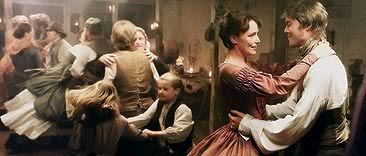
Dick is tongue-tied when he sees Fancy after church, but manages to invite her to a party.

But the humble carrier (moving man) is not Fancy’s only admirer. She catches the eye of successful, middle-aged farmer, Mr. Shiner, and the village’s new pastor, Parson Maybold (Ben Miles).

One man offers her security; another offers adventure. But Fancy has great chemistry w/ Dick, who strives to win her affection, unaware that her father feels he’s beneath her.

This story covers Hardy’s main themes- rural/small town life, working vs. middle class customs, courtship between those of different status, and the individual’s search for a place in the world.
 Knightleyemma