Tag: History
Midnight’s Children (TRAILER)
I saw the film this past Saturday (National Geographic Society); it was part of DC Film Fest. It will be in wide release (US) on Friday, April 26.
Running Time: 146 minutes
Languages: English, Hindi, Urdu
Director: Deepa Mehta (the Canadian Indian filmmaker of Bollywood Hollywood, Earth, Fire, Water, & more)

Screenwriters: Salman Rushdie (British Indian author of the novel; he also does the narration) & Mehta
Starring: Shabana Azmi (Indian; internationally-acclaimed veteran actress), Seema Biswas (Indian; co-starred in Water), Rahul Bose (Indian; indie film actor), Samrat Chakrabarti (British American actor/musician; co-starred in Season 3 of HBO’s In Treatment), Sarita Choudhury (British American; recently seen in Showtime’s Homeland), Charles Dance (British; currently seen on HBO’s Game of Thrones), Khulbushan Kharbanda (Indian veteran actor), Anupam Kher (Indian veteran actor; recently seen in Silver Linings Playbook), Zaib Shaykh (Canadian Pakistani; recently starred on Little Mosque on the Prairie), & several newcomers from the worldwide South Asian diaspora
Director of Cinematography: Giles Nuttgens (British; has worked on all of Mehta’s films)
Soundtrack Composer: Nitin Sawhney (British Indian)
Read more: Recreating Bombay’s Child: An interview with actor Satya Babha
In the Land of Blood and Honey (2011)

Yes, this is Angelina Jolie’s movie (her directorial debut), but don’t let that put you off- it’s quite a tale! There are no flashy directorial moves, and the pace can seem slow, but I feel the subject matter is worth a look. However, if you are a sensitive person, this is not the film for you! (FYI: There are 2 versions of the film- one where actors tell the story in English and the other in Bosnian/Serbian. I saw the English version.) The time is the recent past; the setting is the Bosnian War. Here is some info from Wikipedia:
The war came about as a result of the breakup of Yugoslavia. Following the Slovenian and Croatian secessions from the Socialist Federal Republic of Yugoslavia in 1991, the multi-ethnic Socialist Republic of Bosnia and Herzegovina, which was inhabited by Muslim Bosniaks (44 percent), Orthodox Serbs (31 percent) and Catholic Croats (17 percent), passed a referendum for independence on 29 February 1992. This was rejected by the political representatives of the Bosnian Serbs, who had boycotted the referendum and established their own republic. Following the declaration of independence, the Bosnian Serbs, supported by the Serbian government of Slobodan Milošević and the Yugoslav People’s Army (JNA), mobilized their forces inside the Republic of Bosnia and Herzegovina in order to secure Serbian territory, then war soon broke out across the country, accompanied by the ethnic cleansing of the Bosniak population, especially in Eastern Bosnia.

Love in a time of conflict is not uncommon in film, but this is a compelling depiction. This film focuses on a promising romance twisted and killed by war. A dark-haired woman, who lives with her sister and baby nephew in a humble apartment, goes out to a bar/nightclub and dances with a blonde man; they are obviously very into each other. There is a live band playing and the mood is joyous.

The encounter each other a time later when the woman, a Muslim painter named Ajla (Zana Marjanovic) is a prisoner in the camp run by the Serbian man, a soldier named Danijel (Goran Kostic). Danijel meets with Ajla in private, just to talk at first, because there is no one else to relate to in the prison. He needs to let off steam, and show her that he’s not a monster. Danijel also softens the blow for her, while the other women are treated horribly (beaten, raped, and worked like dogs cooking and cleaning). Is she in love with Danijel or merely protecting herself? (It’s up to the viewer to decide.) They think of a plan that will enable Ajla to escape the prison.
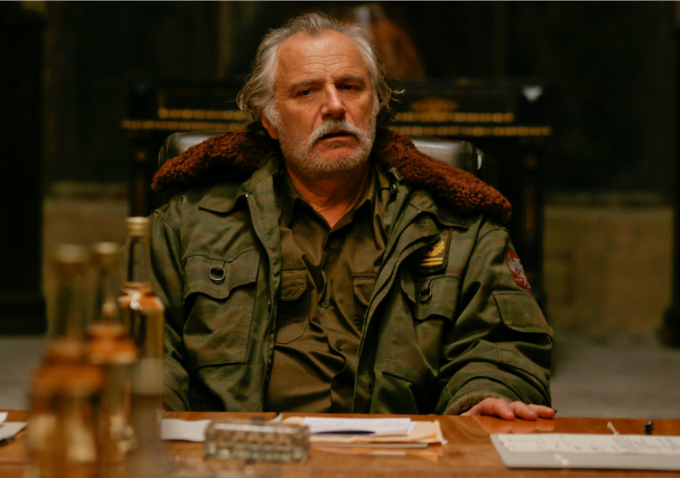
Ajla is unable to escape; she sees brutality all around her, and somehow stays sane. Meanwhile, her sister suffers a terrible loss and joins a group of rebels. Danijel is not the typical grunt soldier, he’s the son of a particularly successful/brutal general, Nebojsa (Rade Serbedzija). His father is grooming him for leadership. The stress of war gets to the younger man, and he turns on the woman closest to him. He keeps her hidden away for quite a whille, but Ajla is not safe- not even from Danijel!
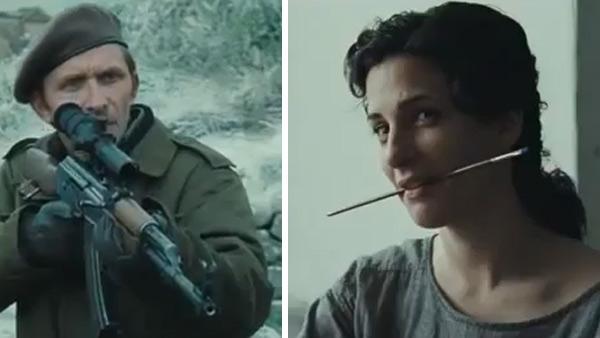
I wished there was more information in this film about the politics of this war. The secondary characters needed more development. This film come off as limited at times, but the lead actors work very well together. They have great chemistry with each other, and connect deeply with their characters. (Nobody is a well-known face here, aside from Serbedzija.) Ajla is dignified and strong even in the toughest situations. Danijel slowly transforms from a rather sympathetic antagonist into a fallen, broken man.
Some films at AFI Latin American Film Festival
7 Days in Havana
Did you enjoy “Paris, I Love You?” Then you may enjoy this film as well. It’s a compilation of 7 different short films (directed by some famous directors from all over the world). The setting is modern-day (communist) Cuba, where people are struggling in their personal and professional lives (just like anywhere else).
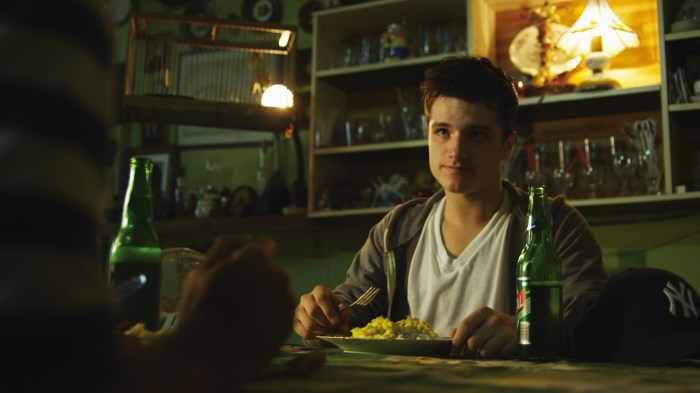
In the first film, a young American film student (who knows only a little Spanish) goes out to a club with his cabbie looking for a beautiful girl. He finds a rather unusual individual who defies stereotype, as does the American in his reaction.

In another tale, a jaded/drunken Serbian director comes to Cuba to get an award. But the highlight of his trip is meeting a cabbie with a great talent for music.

A beautiful/ambitious singer is torn between two men- her loving/long-time boyfriend (a struggling basesball player) and a smooth-talking stranger who offers her a contract to work in Spain. (To heighten the contrast- one man is a dark-skinned Afro-Cuban and the other is fair/redheaded.)
Calvet

This is a documentary of Jean Marc Calvet, a French artist living in Nicaragua, who is still struggling with demons (though he’s settled with a family and earns good money). In his own words, he recounts his boyhood, addictions, various jobs (legal/illegal), and especially- his intense regret in not being there for this 18 y.o. son. (He speaks in both French and Spanish.) Will he be able to find his son? If so, how will his son react to his long-absent father?
Clandestine Childhood

Juan is an observant/sensitive 11 y.o. boy who comes from Cuba to Argentina (in 1979) with his family and a group of their comrades. He attends school (under the name Ernesto), makes some friends, and gets a big crush on a pretty classmate.

But he’s not quite like the others- his parents and uncle are guerrillas, and the family is hiding out in an uncle’s house. Juan also has a baby sister, Vicky.

His grandmother comes for a brief visit, and says she can care for the kids. But Juan’s mother angrily insists that her children belong with her.
“Garrow’s Law” (Series 1)

Who’d have thought late 18th century London (just a few years after our American Revolution) would be such an exciting setting for a courtroom drama!? The cases you see on this TV show are based on real cases of the Georgian era. The protagonist is a confidant, intelligent, and passionate young man ahead of his time. He doesn’t just want to practice the law- he wants to change it (as the system is rigged heavily against defendants). Hmmm… sounds a bit like the young John Adams!
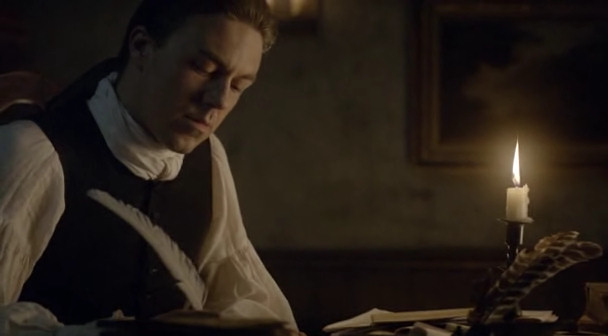
All lawyers aren’t bad- LOL! William Garrow, the son of a humble headmaster (principal), didn’t go to Oxford. He learned at his father’s school, then studied with a mentor (a solicitor) in Billingsgate. Being ambitious and energetic, he eventually pushed aside paperwork (writing briefs) and became a barrister. He tried his first case at age 23- unthinkable in our time! Garrow is the one credited w/ the the phrase “innocent until proven guilty.” He didn’t play it safe, even in his personal life.
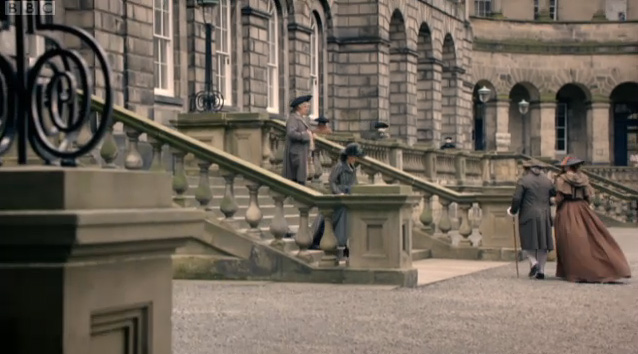
Garrow (Andrew Buchan, who had supporting roles in the newest Jane Eyre and Cranford) is an eager hothead when we first meet him. His mentor, Mr. Southouse (musical theater and TV veteran Alun Armstrong), cautions him against speaking too boldy in court and losing the sympathy of the (very powerful) judges. Garrow wants to address the jury, and does on several occasions, though this is frowned upon.

MP Sir Arthur Hill (Rupert Graves, most recently seen in Sherlock), is impressed by Garrow’s performance in court. His beautiful, well-read, and opinionated wife, Lady Sarah (Lyndsey Marshal from Rome) is also impressed. However, at their dinner party, we quickly learn that Garrow’s politics are quite different from Sir Arthur’s.
Lady Sarah admires Garrow’s strong convictions (in line with many of her own forward-thinking ideals). She often observes trials, sitting beside the judge and other notable people. Lady Sarah even pays for Garrow to help a poor young servant. Their mutual respect and admiration eventually grows into more (you’ll have to see). Also, politics and his ambition create a big distance between Arthur and Sarah.

The dialogue on this show is very well-written! (It sounds fresh, though it’s not modern.) The production value is very high. The sets, costumes, and music are all perfect for the period. Buchan even looks boyishly handsome in a powdered white wig, black robe, and chunky heeled shoes.
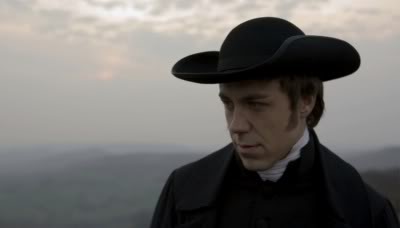
Buchan played clergyman St. John Rivers, Jane’s buttoned-up (and very emotionally repressed) cousin/suitor, in the 2006 BBC version of Jane Eyre.

In Cranford and Return to Cranford, Buchan played carpenter/family man Jem Hearne.
NOTE: Do NOT read further unless you want to know details from S1 eps.
Episode 1

You will learn that the law is not a game for gentleman. -Garrow to Silvester (an Oxford-educated prosecutor)
Garrow has been buried in paperwork, but gets a case at the Old Bailey in Ep 1. Everything was rigged against the defendant, as Southouse explains after giving Garrow the brief the night before the trial. He can’t visit his client in jail. He won’t be given a copy of the indictment. He won’t get to hear re: the evidence the prosecution has against his client. (Yikes, we’ve come a LONG way!)
The prisoner in the dark has too long been left to rot for want of counsel. -Garrow says to Sir Arthur Hill, a minister at Parliament
You lack manners. You were too angry and you lost control. -Southouse says to a disenchanted Garrow after his loss

The second case Garrow gets is thanks to Lady Sarah, who insists that her involvement be kept a secret, b/c it’d be like “an infidelity” in the eyes of her more conservative husband. A young unmarried washerwoman, Elizabeth Jarvis, has been accused of “infanticide” (though she insists her baby was stillborn). Garrow and Lady Sarah interview the defendant in Newgate Prison (VERY unusual), then have an independent doctor (“surgeon”) examine Elizabeth, then the body of her deceased child.
How can it be an improvement in my court where I play a lesser part? -Judge Bullard says (bemused) to Lady Sarah during lunch break from court
Episode 2

By now, Garrow has some claim to fame, and he likes getting the approval (since his parents are deceased). He (hesitantly) takes on the VERY unpopular case of a young man accused of cutting beautiful young gentlewomen in broad daylight. The defendant’s doting mother insists her son could never do such things, though he loves drinking, pros, and runs through money. The media refers to him as “The Monster,” and in time, so do the public. BUT just b/c a defendant is unlikeable doesn’t mean he’s guilty!
Episode 3

This ep focuses a BIT more on Garrow’s petsonal life; we see that he has more to learn still (though in court, he has a way w/ juries). When he thinks Silvester insulted Lady Sarah (who Garrow is in love w/), he challenges his nemesis to a duel. Mr. Southouse is bewildered, thinking Garrow is crazy and needs to bow out. But Garrow’s hot-headed/stubborn side wins over!
The main case Garrow handles is that of a noted “thief-taker” (bounty hunter to us modern folk) who could be using less clever/scared thieves to commit bigger crimes for his gain.
Episode 4
We are of like minds, you and I. -Garrow says to Lady Sarah
Sir Arthur tells Garrow his good news, which could mean that Lady Sarah could be lost to him forever. She insists that she won’t leave her husband.
The crux of this ep centers on the case of a businessman/husband/father to 3 young children, Joseph Hamer. He has been imprisoned in Newgate for 3 mos. ONLY for gathering w/ those who think like him and exercising free speech. His wife, Mary, impresses Southouse and Garrow w/ her convinction and strength; she wants the BEST defense for the man she loves. There has been NO charge (reminds one of Guantanamo cases) yet, BUT Garrow will take the case.
Your case, Joseph, is played out in the shadow of the guillotine. They [the aristocracy] fear you. -Garrow puts things into context when he meets his defendant
Late one night, Joseph is dragged from his cell to a meeting w/ ministers of Parliament (incl. Sir Arthur). They grill the humble shoemaker w/ questions, BUT he asks for actual charges. Lady Sarah wonders what’s all the noise-the jailers and heavy shackles disturbed her quiet. She meets Joseph in the hall, and realizes that her husband MAY be on the wrong side of justice. Finally, Joseph gets his day in court, BUT the charge is “high treason” (so he could be hanged)!

