Recent views & downloads

MOVIES

A Walk in the Sun (1945)

Can you have a good war film w/o an overkill of fighting?  Yes, and it can be funny, smart, and poignant, too.  This film has an ensemble cast (who have great chemistry together) lead by Dana Andrews.  (I’m sure that the recent Band of Brothers series was partly influenced by this film!)

http://www.imdb.com/title/tt0038235/     

The Inn of the Sixth Happiness (1958) 

This is a big, sweeping, captivating drama starring (the always engaging) Ingrid Bergman as Gladys Aylward, an undervalued English housemaid turned dedicated missionary.  The young, single, and determined Gladys puts her (Christian) faith into action, helping get rid of footbinding, lower illiteracy, and lessen cruelty in 1920s northern China.  Along the way, she adopts many children, who have been abandoned or orphaned.  She falls in love, though hers is not a typical Hollywood romance (which I REALLY liked).  This is a must-see for all fans of classic films!    

http://www.imdb.com/title/tt0051776/

Up in the Air (2009)

This is a simple, sharp, and timely film that REALLY packs a punch!  I just saw it tonight, and was (pleasantly) surprised; I don’t want to have an empty backpack.  The always handsome/watcheable George Clooney fits his role to a tee, as do the two main ladies-gorgeous Vera Farmiga and newcomer Anna Kendrick.  Check it out on HBO.

http://www.imdb.com/title/tt1193138/ 

Vanity Fair (BBC; 1998)

British actress Natasha Little truly inhabits the role of Becky Sharp, the beautiful, charming, and clever Victorian woman who must live by her wits alone, as she has no connections or family wealth.  Becky’s oldest friend, Amelia Sedley is Melanie to Becky’s Scarlett.  Dashing/newly rich George Osborne is a male version of Becky (but more ruthless).  Rawdon Crawley (a mustached Nathaniel Parker) is the gambling man who loves, yet doesn’t quite understand, his wife Becky.  William Dobbin (Philip Glenister) is Amelia’s (often ignored) knight in shining armor.  (Natasha Little also co-starred in the big screen version alongside Reese Witherspoon.   Director Mira Nair said she was VERY impressed by her performance in this miniseries.)    

http://www.imdb.com/title/tt0159090/

SONGS

In the past 2 wks, I’ve heard some great (classic) country songs.  Did you know that Freddy Fender is Mexican- American and sings in Spanish and English?  I was esp. impressed by Waylon Jennings’ voice! 

Below are some recent iTunes downloads:

David Allan Coe

The Ride

Willie, Waylon, and Me 

Freddy Fender 

Before the Next Teardrop Falls

Since I Met You Baby 

The Kendalls

Heaven’s Just a Sin Away

Makin’ Believe

Lynn Anderson

How Can I Unlove You 

Waylon Jennings

Sweet Dream Woman

The Wurlitzer Prize (I Don’t Wanna Get Over You)


East of Eden (1955)

But you must give him some sign, Mr. Trask, some sign that you love him… or he’ll never be a man.  All his life he’ll feel guilty and alone unless you release him.

Director Elia Kazan wanted Marlon Brando for the lead role that went to breakout star James Dean.  In this film, based on John Steinbeck’s novel, Dean plays bitter/tortured teen Caleb (Cal) Trask, who is constantly overshadowed by his sunny/easygoing brother Aron (Richard Davalos).  The boys’ farmer father Adam (Raymond Massey) is deeply religious, reading the Bible aloud each night.  He’s an emotionally closed-off man who admits that he’s “never understood” Cal’s moods/behaviors/desires.

Aron’s girlfriend Abra (Julie Harris) is a pleasant/kind girl who finds Cal frightening at first, then slowly gets to know (and even sympathize) with him.  The setting, early 20th century Salinas valley of California, is “ironic” in this film because of the conflicted people (critic Kenneth Turan noted).  Cal believes Adam only loves Aron.  He (instinctively) finds out about his long absent mother, Kate (Jo Van Fleet).  Adam is described as “kind” and “conscientious” by his friends/neigbbors; Kate is a former “drifter” who is running a “sinful” house (where men drink, gamble, etc.).

East of Eden contains (obvious) biblical themes; Cal and Aron are compared to Cain and Abel at one point.  This film contains universal themes and intruiging characters who don’t always act how you expect; for example, Aron is strongly against fighting (WWI).  Viewers of his time must’ve been surprised by Dean’s performance, but he’s not unlike today’s  teenagers who are trying to prove their worth and and fit in. 

Some recent views

Witness for the Prosecution

This 1957 courtroom-drama, based on an Agatha Christie story, starts out slow, but really packs a punch!  The stars are Tyrone Power (playing against type), Marlene Dietrich (very compelling), and Charles Laughton (providing most of the humor).  There is a lot of dialogue, but it’s very well-crafted.  Famed London lawyer Sir Wilfrid (Laughton) takes on the case of Leonard Vole (Power) mainly because he’s intrigued by Vole’s German wife, Christine (Dietrich).  Leonard, charming yet jobless, is the prime suspect in the murder of a wealthy widow he befriended.  Christine, who is cold and clever, doesn’t act like the typical worried wife.  Sir Wilfrid tells Christine that a woman w/ her personality won’t be seen sympathetically by the jury.  I don’t want to give too much away, so check out this film for yourself.          


The Fifteen Streets

Some dreams do come true in Catherine Cookson (1906-1998) novels, but not w/o hardship and loss.  This TV movie, based on her most popular novel, was filmed on location and looks very authentic.  If you want to read the book, it’s suitable for both young adults (junior high age) and grown-ups.  Since Cookson herself grew up in a working-class/Catholic/Northern community, she truly knows her characters.  Despite being born illegitimate and poor, Cookson pulled herself up into middle-class respectability- becoming a teacher, novelist, and eventually- dame of the British Empire.    

At the turn of the 20th century, hard-working dockworker John O’Brien (Owen Teale) meets independent-minded Mary Llewellyn (Clare Holman), the teacher of his little sister Katie.  John and Mary are both concerned about young Katie’s future; she’s a bright/curious child who dreams of being a teacher.  John fears the family will not have enough money to pay for such training.  

John’s younger brother Dominic (Sean Bean) causes a lot of trouble in the family and community.  While John is sober and fair-minded, Dominic loves drinking and fighting.  Mr. O’Brien also likes to drink; he’s angered by the fact that he’s getting old and not being chosen for work as much.  Mrs. O’Brien is pregnant at the start of the story w/ her sixth child. 

Love doesn’t come smoothly for John and Mary.  The Llewellyns live in a middle-class house with fine furnishings; the O’Brien’s live in a small rowhouse near the docks.  However, they both share a love of words and a deep physical attraction.  They meet secretly, knowling that their courtship is out of the norm in their community.     

 Clarissa


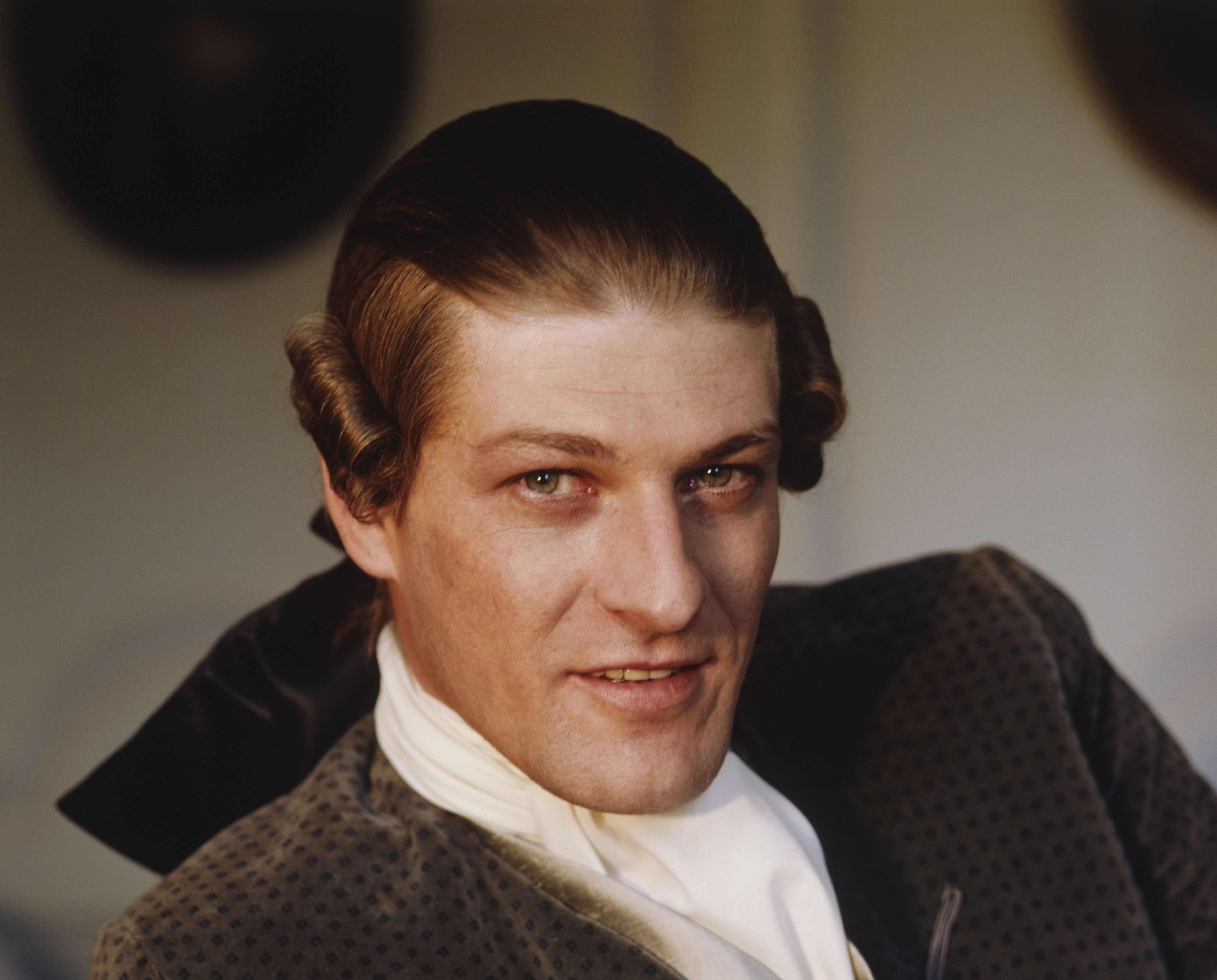
Sean Bean plays the villain Sir Robert Lovelace in this 1991 TV miniseries based on a Samuel Richardson (1689-1761) novel.  The daughter of an 18th century (recently) wealthy family, Clarissa Harlowe (Saskia Wickham), is known for her piety, obedience, and beauty.  But unlike most young women, she wants to remain single, quite satisfied w/ her books and female friends for company.  In time, her family plans to marry her off to Mr. Soames, a man she finds repellant b/c of his looks and manners.  Clarissa, feeling desperate and friendless, runs off with Lovelace, the handsome/ill-reputed nobleman who’d been sending her secret letters.     


Lovelace, a known womanizer, pretends to seek redemption by reading the Bible and spending time w/ Clarissa.  His real goal is to wear down her virtue.  He comments to his best friend that he’s “never known a virtuous maid to hold out more than a month.”  But Clarissa won’t be had so easily!  Lovelace also wants to take revenge on James, Clarissa’s cold-hearted older brother.  

Though  James, as well as his sister Arabella, are rather one-dimensional villains, Clarissa’s best friend Anne is a n interesting character.  She’s a smart and sarcastic woman w/ a steady beau, but she doesn’t respect or love him.  She keeps him waiting, wondering if marriage is the right choice.   


Two films starring Jane Wyman

So Big (1953)

This film is based on Edna Farber’s novel of the same name.  It was directed by Robert Wise, who later directed The Sound of Music.  Farber also wrote Giant, which was made into a film starring Elizabeth Taylor, Rock Hudson, and James Dean.   Like Giant, So Big is a story of family and values.

Selina Peak (Wyman) is a teenager at a girls’ boarding school in 1890s Chicago when her father suddenly dies.  His huge fortune has dwindled down to nothing, and even household furnishings must go to auction, including a fine portrait of Mr. Peak painted by John Singer Sargeant.  Because of her close friend Julie’s father, Mr. Hempel, Selina gets a position as schoolteacher in the small farming town of New Holland, a community of Dutch immigrants several hours away from Chicago.  Mr. Hempel made his fortune by selling hogs to the town, and he’s grateful.

Selina approaches her new, no-frills type of life with cheerfulness, remembering a lesson her father taught her- there are two kinds of people in this world, wheat and emerald.  The people who take care of the land, grow food, and provide for the survival of others are wheat.  Those who see the beauty of the world and work in creative ways are emerald.  The world needs both kids of people.

Selina boards with the warm-hearted, yet traditional, Pool family and begins teaching in a one-room schoolhouse.  Roelf, the adolescent son of the Pools, already works in the fields with his father.  Though he’s “too old for school” unlike his two sisters, Roelf still has a desire to read and improve his piano playing.  Selina recognizes Roelf’s potential, and encourages him by giving lessons at home and allowing him to use the school’s piano.  Roelf (emerald) wants to get out of New Holland and see the world.

At the church box supper auction, Selina meets Purvis DeJong (wheat), a tall and rugged widower who’s courting a wealthy older widow.  Purvis’ head turns toward Selina, and he goes quickly to her side, much to the amusement of the locals.  They make fun of Purvis because his farm is in the lowlands and doing badly.  He admits to Selina that he doesn’t have “a head for figures.”  Buyers at Hay Market swindle him when he goes to sell his meager crops.  Selina decides to give him math lessons.  Purvis calls her “Little Lina” and seems more interested in romance than studying.  This upsets Roelf, who has a huge crush on his teacher.

Eventually, Lina marries Purvis and settles into the role of a farmer’s wife.  She has a son named Dirk, who is nicknamed So Big, because she has big plans for his future.  Dirk sees beauty in everyday things, like his mother.  “A modest amount of success” comes to Lina as the farm specializes and modernizes.  Lina is able to send her son to college to become an architect.  Though he seems to be a kind young man, Dirk wants success to come quickly, envying the comfortable lives of his wealthier peers and social-climbing girlfriend.  Lina, who values hard work, worries that Dirk is embracing the wrong values of the modern age.

Lina embodies the pioneering spirit of American women of the late 20th century.  These were the women who left established cities, worked beside their husbands and children on humble farms, and valued an honest day’s labor.  They didn’t have much time to cry or complain.  They had to work to survive, so their children wouldn’t have as much to struggle against.  These were the mothers who raised “the greatest generation.”


Miracle in the Rain (1956)

This is a film about love, romance, and forgiveness.  Ruth (Wyman) is a hardworking secretary for a shoe company in NYC who’s scarred by the fact that her musician father abandoned the family when she was a girl.  Her mother, who’s depressed and in frail health, tells her never to trust men because “they’re all nice, until they find someone else.”  Ruth rarely has time to go out or meet eligible men, as she must care for her mother.

One rainy day after work, Ruth meets Art (Van Johnson), a talkative and cheerful soldier from Tennessee.  He’s stationed nearby and doesn’t have much to do, so he invites himself to her apartment.  Art makes himself at home, even singing and playing the (long-silent) piano.  Ruth hands Art an unfinished composition of her father’s to show to his songwriter friend.

Like that song, the main issue in Ruth’s life, is unresolved.  We learn that her father is playing at a fine restaurant in the city,  but he can’t face his family yet.  And falling in love with Art is not the end of Ruth’s story; he’s a catalyst for positive change in her life.

Three Must-See Classics

Daisy Kenyon (1947)

I saw this (lesser-known) film classic on Hulu a few days ago.  It’s a very smart, mature, and full-bodied movie (w/ many important themes).  Unlike some old B&W films, this one will definitely engage modern-day viewers (such as fans of Mad Men). 


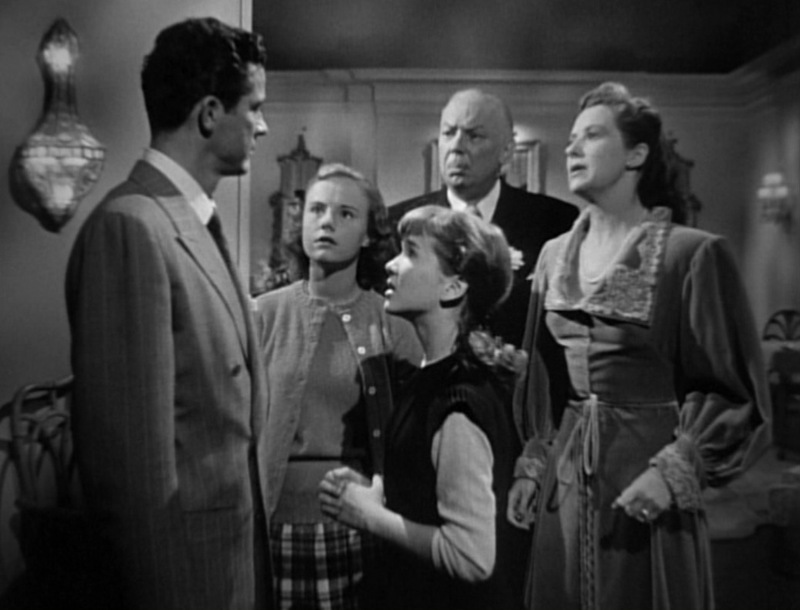
Daisy Kenyon (Joan Crawford) is a strong,  independent-minded commercial artist living in NYC.  She has been involved for a few years w/ lawyer Dan O’Mara (Dana Andrews), who lives on Park Ave. w/ his wife and two daughters.  He’s often in the papers and travels to DC regularly to consult w/ politicians.  Dan is used to getting his own way, though he works in his father-in-law’s firm.

Daisy and Dan have broken up in the past, but they love each other.   But  Daisy refuses to live in the fancy apt. Dan has picked out for her; she wants to preserve her independence.

One night, Daisy decides to go out on a date w/ a single soldier, Peter Lapham (Henry Fonda).  He’s wondering if he should continue w/ the army or go back to designing ships.  We get the sense that Peter needs someone.  When he declares his love for Daisy, she is surprised yet intrigued.

In the meantime, Dan is off in California working on a pro-bono case. His client is a Japanese-American former GI whose farm was stolen from him while he was serving in Europe.  Daisy is very proud that Dan’s working on this case, though his father-in-law doesn’t see any merit in it.

Dan is very worried about his girls- aged 11 and 13.  His wife and his younger daughter have a very combative relationship.  Dan is appalled when he learns that his wife has hit the girl (as is Daisy).

Daisy, Dan, and Peter handle their love triangle in a very mature fashion.  There are no fistfights here!  Even after Daisy marries Peter and Dan gets a divorce, their story is not smoothed out.


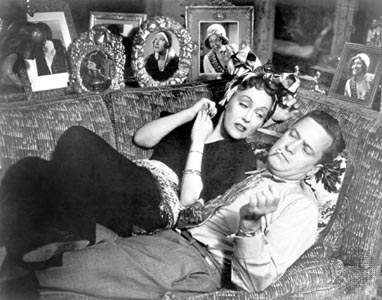
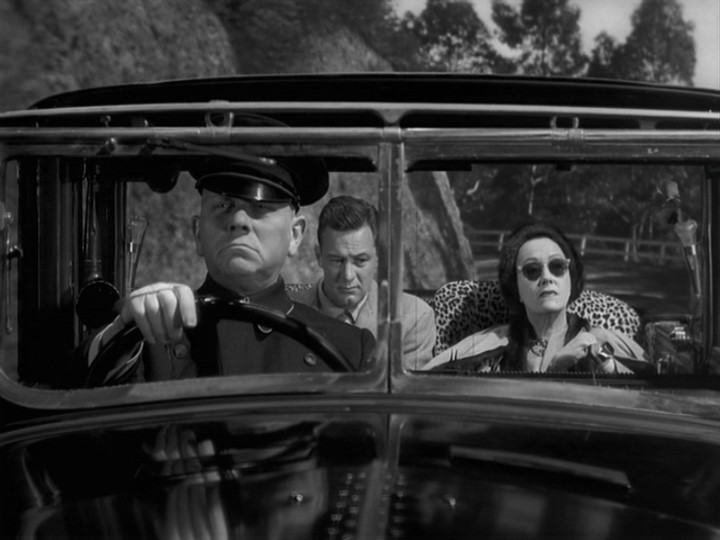
Sunset Boulevard (1950)

I saw this film after several years and thought it had some very fine scenes ans clever/funny dialogue.  Joe Gillis (William Holden) is a Hollywood screenwriter who’s desperate for work and behind on rent.  Running from the law, he drives into the garage of a crumbling mansion owned by silent movie star Norma Desmond (Gloria Swanson).

She’s quite a character (somewhat reminiscent of Miss Favesham in Dickens’ Great Expectations),  and wants Joe to help her w/ her own screenplay.  But that’s not all she wants!  Soon, Norma is picking out new clothes for Joe, moving his meager belongings into a huge bedroom adjacent to hers, and introducing him to her old pals.

Though Norma is consumed w/ dreams of making a comeback, she’s also a very lonely woman.  Joe feels no attraction for her, but likes the cushy life she can provide.

In the meantime, Joe meets  22 y.o.  script reader- Betty (Nancy Olsen), who’s the girlfriend of an assistant director.  She’s  a pretty, smart, and optimistic woman.  Betty loved Joe’s short stories from years back and wants to adapt one into a screenplay.  She asks for Joe’s help, so he starts sneaking out of the mansion at night to write.         


Marty (1955)

This is a true gem of a film that viewers will be thinking/talking about for days after they see it!  Marty Piletti (Ernest Borgnine) is a stocky, unassuming, 34 y.o. Bronx butcher who’s contantly being asked (by customers and extended Italian family) why he’s not yet married.  His brothers and sisters have all married and left the family home, now shared by him and his mother.

When his mother presses him to go out on a Saturday night, Marty exclaims that he’s tired of trying to find a girl.  “Whatever girls are looking for, I don’t got it!” he concludes in frustration.  But he still goes out (to the Starlight Ballroom).     

At the ballroom, a 29 y.o. teacher from Westchester named Clara (Betsy Blair, wife of Fred Astaire) is on a date w/ a guy who’s clearly not interested.  In the course of the evening, Marty and Clara dance and chat.  Marty, who’s used “to other people telling me their problems” can’t stop talking (probably b/c he feels comfortable w/ Clara).  She keeps smiling and admits she’s having a good time, too.

Marty and Clara, though from different backgrounds, are both kind, good-hearted people.  In one particularly great scene, Marty talks about his father, who “was an ugly guy, but a great father.”  He comments that there has to be more than good looks for two people to have a long, happy marriage.  (My mom says this too!)